 Bellingham Exterior
 Decks Built for How Happy Valley Actually Weathers
Happy Valley sits close enough to Bellingham Bay and the rest of the Whatcom County coastline that the same salt-tinged air and long wet season affecting the rest of the city shows up here too — just filtered through more tree cover and, in a lot of spots, a sloped or wooded lot. That combination changes how a deck should be built. A design that works fine in a dry inland climate can start failing here within a few seasons if it wasn't planned around our rain totals, our shade, and the moss that comes with both. A custom deck for this neighborhood isn't about a fancier railing detail — it's about substructure, drainage, and material choices that match the site.
This page covers what we actually look at when we build a deck in Happy Valley: the ground conditions, the material tradeoffs, the framing details that determine whether a deck lasts 10 years or 30, and what our process looks like from first walk-through to final sign-off.
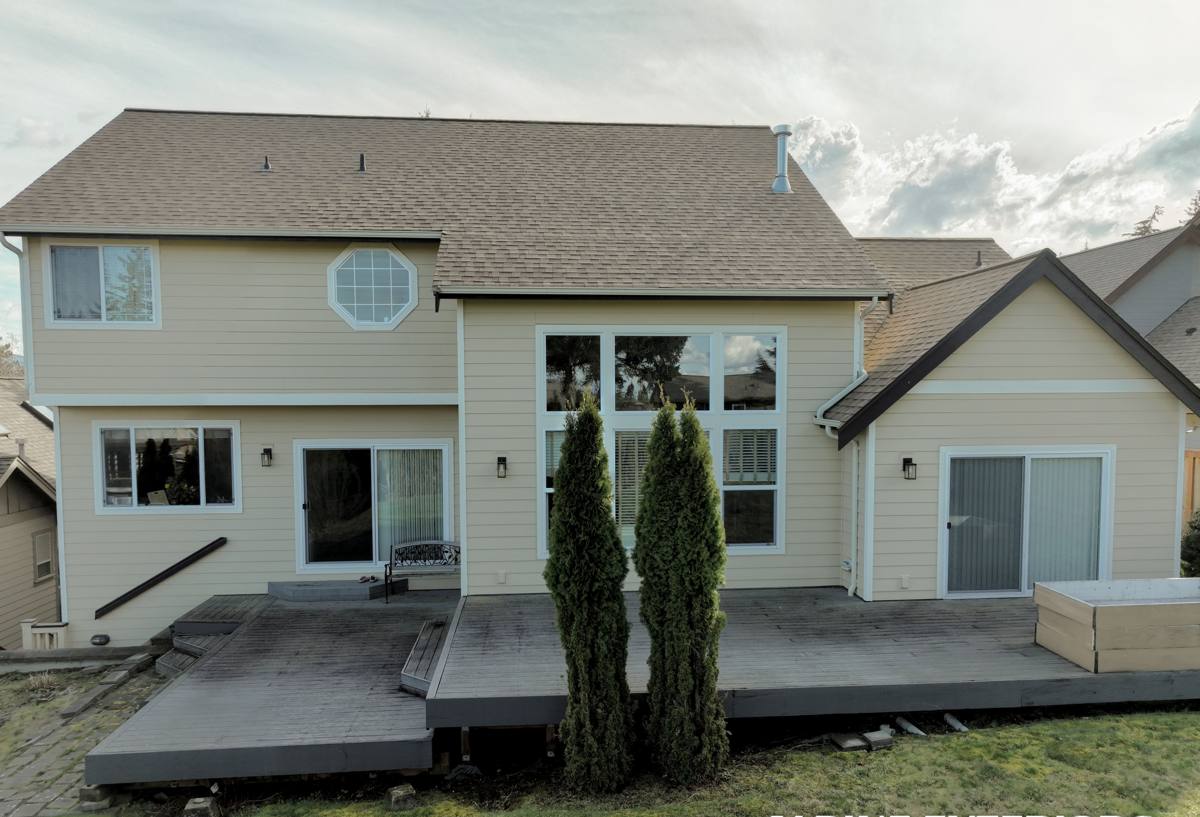
What Happy Valley's Site Conditions Do to a Deck
Every neighborhood in Bellingham deals with rain. What varies lot to lot is how much of that moisture actually dries out between storms, and Happy Valley's mix of mature trees, hillside grading, and proximity to the bay makes that a bigger factor than it might seem.
Shade, Moss, and Standing Moisture
Tree canopy is common on Happy Valley lots, and it's a mixed blessing for a deck. It's good for shade and privacy, but it also means less sun and wind to dry the deck surface between rain events. That's exactly the condition moss and algae need to take hold. Left unaddressed, moss holds moisture against the decking surface, which accelerates rot in wood and can make composite boards slick and dark over time. We factor board spacing, orientation, and drainage into the design specifically to reduce how long water sits on the surface.
Salt Air and Hardware Corrosion
Bellingham's proximity to the Salish Sea means a low but steady level of salt content in the air across the region, Happy Valley included. It's not the same exposure as a waterfront deck, but it's enough over years to matter for anything metal — fasteners, brackets, and railing hardware. Standard coated screws and joist hangers can start showing surface corrosion well before the wood around them fails, which is a common reason older decks develop loose boards or weak connections even when the framing lumber itself still looks fine.
Sloped and Wooded Lots
A fair number of Happy Valley properties have grade changes or sit close to trees, which affects footing placement, post height, and how much of the structure ends up shaded or tucked against a hillside. We treat every lot's grading and drainage pattern as part of the design conversation, not an afterthought handled once framing starts.
Choosing Decking Material for This Climate
There's no single "best" decking material — there's a best fit for your site, your budget, and how much upkeep you actually want to do. In a shaded, damp neighborhood like Happy Valley, moisture and moss resistance matter more than they might in a drier, sunnier part of the county.
| Material | Upfront Cost | Moss / Moisture Behavior | Maintenance | Typical Lifespan Here |
|---|---|---|---|---|
| Cedar | Moderate | Naturally rot-resistant but still needs airflow and drying time; can stain from tannins | Annual cleaning, periodic sealing or staining | 15–20 years with upkeep |
| Pressure-treated fir/pine | Lowest | Treated for rot but still absorbs moisture; prone to moss in shaded spots without sealing | Regular sealing, more frequent board replacement | 10–15 years |
| Capped composite (e.g. TimberTech, capped Trex lines) | Higher | Sealed cap resists moisture absorption and staining; still needs cleaning to prevent surface algae | Occasional washing, no sealing or staining | 25–30+ years |
| Uncapped composite | Moderate-high | More moisture-absorbent than capped boards; can mold or discolor faster in shade | More frequent cleaning than capped composite | 15–20 years |
We don't push one brand or material on every project. Where a lot gets good sun and airflow, a well-sealed wood deck can perform well and costs less up front. Where a lot is shaded most of the day — common in Happy Valley — we're more likely to recommend a capped composite specifically because it doesn't give moss and algae the same foothold that raw or lightly sealed wood does. That's a maintenance-and-moisture call, not a brand preference.
Framing and Substructure — Where Decks Actually Fail
Most deck failures we see don't start with the visible decking boards. They start underneath, in the framing, ledger connection, and footings — the parts that are hardest to inspect once the deck is built and easiest to under-build if a crew is cutting corners.
Ledger Attachment and Flashing
Where a deck attaches to the house, proper flashing is what keeps rain from working its way behind the siding and into the rim joist. In a climate with as much sustained rain as ours, a poorly flashed ledger board is one of the most common sources of hidden rot — and it's often invisible until the damage has already spread into the house framing. We flash every ledger connection to shed water away from the structure, not just seal it and hope.
Footings on Grade and Sloped Ground
On the sloped or uneven lots common around Happy Valley, footing depth and placement need to account for how water moves across the site, not just soil bearing capacity. Footings set too shallow or in a low spot that collects runoff will move over time, which shows up later as a deck that feels bouncy or slightly out of level.
Joist Spacing and Hardware Grade
Composite decking in particular has manufacturer-specified joist spacing requirements that are tighter than what's typical for wood decking — skipping that spec is a common shortcut that leads to a springy deck surface. We also use corrosion-resistant, coated or stainless fasteners and structural hardware throughout, given the salt content in our regional air.
Railings and Hardware Built for the Coast
Railings take more direct weather exposure than almost any other part of the deck, and they're also the part most people touch every time they use the space. We spec fastener and bracket hardware rated for coastal or high-moisture exposure rather than standard interior-grade hardware, and we pay attention to post attachment methods that resist the kind of wood movement that comes with our wet-dry seasonal cycle. A railing system that's solid the day it's installed but starts wobbling in two years usually comes down to hardware grade, not the railing style itself.
Our Process for a Happy Valley Deck Project
- Site walk-through: We assess grade, drainage, sun/shade exposure, tree proximity, and existing structure condition before discussing design.
- Design and material conversation: Based on the site conditions, we talk through decking material, footing plan, and railing options with honest tradeoffs on cost and maintenance.
- Permitting: We handle the permit application and coordinate required inspections through the City of Bellingham or Whatcom County, depending on the property's location.
- Demolition and footings: Removal of any existing structure, followed by footing layout and placement matched to the site's grading and soil conditions.
- Framing: Ledger flashing, joist layout, and structural hardware installed to spec — this is the stage that determines the deck's long-term performance.
- Decking, railings, and finish work: Surface installation, railing systems, stairs, and any finish carpentry or lighting.
- Final walk-through: We review the completed deck with you and cover basic maintenance specific to the material you chose.
Permits and Local Requirements
Most new deck construction and many deck replacements in Bellingham and unincorporated Whatcom County require a building permit, particularly once the deck is attached to the house or built above a certain height. Requirements can vary depending on exactly where a property sits relative to city limits, so we confirm the applicable jurisdiction and pull the correct permit before work starts rather than treating it as optional paperwork. Skipping this step is a common issue we see on older, owner-built decks when it comes time to sell a house or add onto an existing structure.
Maintenance Checklist for Happy Valley Homeowners
Whatever material you choose, a little seasonal attention goes a long way in this climate. This is the routine we recommend to clients here:
- Clear leaves and debris from between boards and off ledger flashing before fall rains set in
- Sweep or rinse moss and algae growth off the surface at least once a year, more often in heavily shaded areas
- Check railing posts and stair stringers annually for movement or loosening hardware
- Inspect the ledger board connection at the house for any signs of water staining or gaps in flashing
- For wood decks, plan on resealing or restaining every 2–3 years depending on sun exposure
- Keep nearby vegetation trimmed back to allow airflow and sunlight across as much of the deck surface as possible
Why Local Experience in This Neighborhood Matters
A crew that mostly builds decks in drier climates, or that treats every job with the same generic spec sheet, is going to miss the details that matter here — the flashing detail that keeps a shaded ledger board dry, the footing depth that accounts for a sloped, tree-covered lot, the hardware grade that holds up to salt content in the air over a decade instead of three years. We build decks across Bellingham and Whatcom County regularly enough to know which shortcuts show up as callbacks two winters later, and we design around them from the start rather than after the fact.
If you're planning a new deck or replacing one that's showing its age, we're happy to walk the site with you and talk through what makes sense for your specific lot. Fill out the form below for a free, no-pressure estimate.