 Bellingham Exterior
 Siding That Has to Work Against Bellingham Bay, Not Just Sit There
Happy Valley is one of Bellingham's older, more established neighborhoods — a mix of home ages, mature tree canopy, and sloped lots that create very different exposure conditions from one property to the next. Some homes sit shaded and damp under evergreens most of the year. Others catch open wind and salt-laden air rolling in off Bellingham Bay. Both situations put real, sustained stress on exterior siding, just in different ways. A siding installation done right in this neighborhood has to account for whichever version of that stress your specific lot deals with — not a generic Whatcom County average.
We install siding across Bellingham, but Happy Valley jobs come with their own pattern of problems we've learned to plan for in advance: moss and algae staining on shaded north walls, moisture that lingers in siding seams longer than it should because of tree cover, and a slow creep of salt-air corrosion on fasteners and trim that homeowners further inland never have to think about. None of that is exotic. It's just what happens to exterior materials in a coastal Pacific Northwest neighborhood over ten, twenty, thirty years — and it's exactly why the installation details matter more here than the marketing on the siding box.
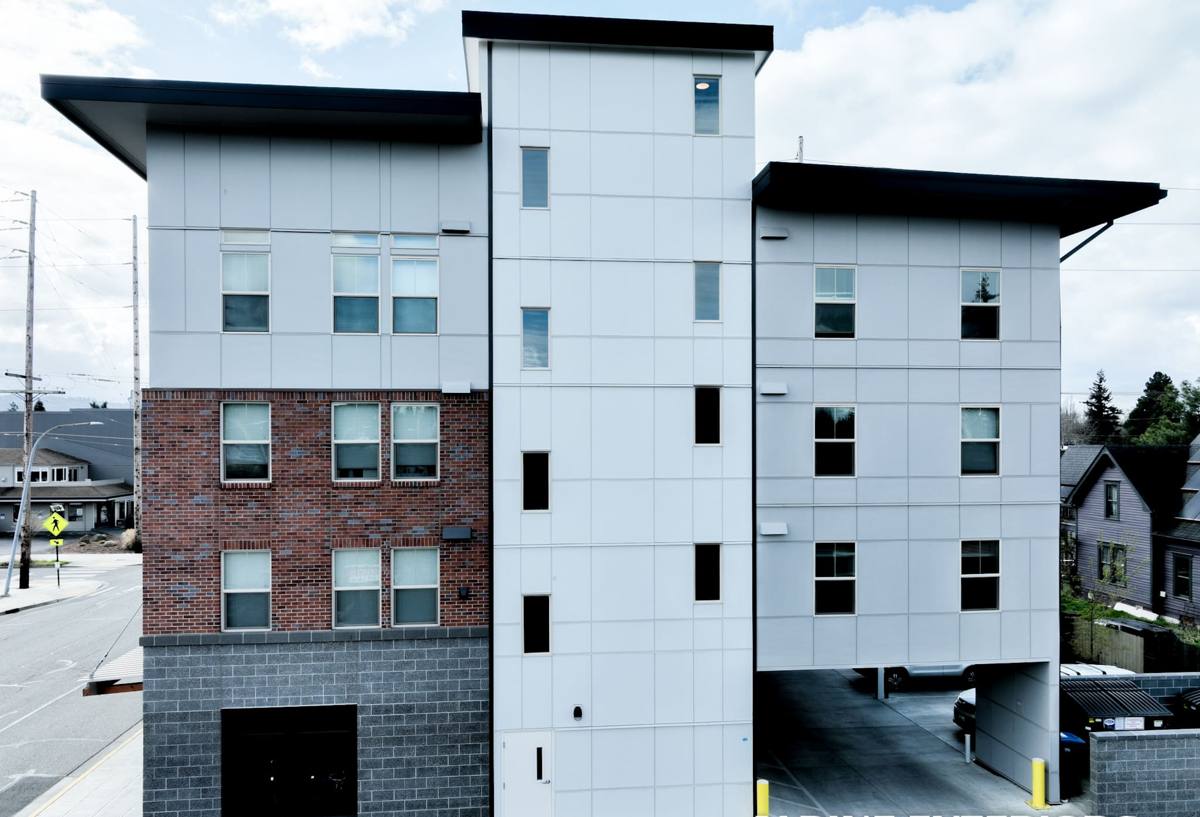
What Happy Valley's Climate Actually Does to Siding
Salt Air
Proximity to Bellingham Bay means airborne salt is a constant, low-level presence, even for homes that aren't waterfront. Salt accelerates corrosion on exposed metal — fasteners, flashing, trim screws — and speeds up the breakdown of finishes that aren't formulated to resist it. Over years, this is usually what causes premature fading, streaking, or fastener bleed-through on lower-grade siding products, long before the panel itself physically fails.
Driving Rain
Bellingham's rain isn't just frequent, it's often wind-driven, especially during fall and winter storms. Wind-driven rain doesn't just wet a wall surface — it pushes moisture sideways and upward into laps, seams, and penetrations that a calm, straight-down rain would never reach. Siding systems and flashing details that work fine in a drier climate can fail here specifically because they weren't installed with wind-driven exposure in mind.
Moss Season
Shaded, tree-covered lots — common throughout Happy Valley — stay damp longer after every rain event, which is exactly what moss and algae need to take hold. Moss on siding isn't just cosmetic. It holds moisture directly against the surface, and on the wrong substrate, that sustained dampness is a slow path to rot, delamination, or paint failure. A siding installation on a shaded Happy Valley lot needs to assume moss pressure from day one, not treat it as a future maintenance surprise.
What a Correct Siding Installation Actually Involves
Most siding failures we get called out to inspect aren't a bad product — they're a product installed without respect for the details that keep water moving out and away from the wall. In a climate like this, those details aren't optional extras. They're the job.
- A continuous, correctly lapped weather-resistive barrier behind the siding — the drainage plane doing the real work of keeping bulk water out of the wall assembly
- Properly flashed and sealed penetrations at every window, door, vent, and utility line, since these are the most common points where wind-driven rain finds a way in
- Correct fastening — the right fastener type, spacing, and depth for the specific siding product, not "close enough"
- Proper clearances at grade, decks, patios, and roof lines, so siding isn't sitting in a splash zone or trapping moisture against untreated wood
- Manufacturer-specified caulking and sealant only where the manufacturer actually calls for it — over-caulking traps moisture just as reliably as skipping it does
- Ventilated rainscreen detailing on shaded or high-moisture walls, giving trapped moisture somewhere to go instead of sitting against the back of the panel
Skip any one of these and the siding itself becomes almost beside the point — water finds the gap, and it's usually years before the damage shows up on the surface where anyone notices it.
Why We Install Only James Hardie Fiber Cement
We made a deliberate decision to install James Hardie fiber cement siding exclusively — we don't offer vinyl, LP SmartSide, cedar, primed spruce, or other fiber cement brands. That's not a sales preference, it's a standard we hold because of what we've seen these materials do, and not do, in a climate exactly like this one.
Fiber cement is non-combustible, which matters increasingly to insurers and homeowners alike. It doesn't warp, rot, or feed pests the way wood products can, and it holds paint and factory finishes far more stably than wood substrates exposed to constant damp-dry cycling. James Hardie specifically engineers regional HZ product lines for climate zones, which means the product going on a Happy Valley wall is formulated with Pacific Northwest moisture exposure in mind, not a generic national spec.
The factory-applied ColorPlus finish is also a real advantage in a salt-air, high-moisture environment: it's baked on under controlled conditions, which gives more consistent, longer-lasting color and weather resistance than field-applied paint fighting damp air and marine salt from day one. Combined with a strong transferable warranty when installed to spec, it's simply the product system we trust to hold up on this coastline — which is why it's the only one we put our name behind.
How James Hardie Compares to Alternatives Homeowners Ask About
| Factor | James Hardie Fiber Cement | Vinyl | Wood / Primed Spruce |
|---|---|---|---|
| Moisture behavior | Engineered for damp climates, resists warping and swelling | Doesn't absorb moisture but can warp or buckle with heat/cold cycling | Absorbs moisture, prone to rot without diligent maintenance |
| Salt air resistance | Factory finish holds up well against coastal exposure | Can chalk, fade, or become brittle over time | Finish breaks down faster; wood is vulnerable to salt-accelerated decay |
| Moss/algae resistance | Dense, stable surface resists moisture retention | Surface can trap moisture at seams and panel laps | Porous surface is highly susceptible to moss and mildew |
| Fire rating | Non-combustible | Combustible, can melt or warp near heat sources | Combustible |
| Finish longevity | Factory-baked ColorPlus finish, long warranty | Color is through-body but can fade unevenly | Requires repainting/restaining on a recurring cycle |
Our Process for a Happy Valley Siding Installation
1. On-Site Assessment
We walk the property and look at the specific exposure your home actually has — shade patterns, wind direction, proximity to the bay, drainage at grade, and the condition of the existing wall assembly underneath the current siding. This is where a Happy Valley job starts to look different from a job three miles inland.
2. Tear-Off and Substrate Inspection
Once old siding comes off, we inspect the sheathing and framing underneath for any existing moisture damage, especially on shaded walls where problems tend to hide longest. Anything compromised gets addressed before new siding ever goes on — covering it up is how small problems become expensive ones.
3. Weather-Resistive Barrier and Flashing
We install a continuous drainage plane and properly integrate flashing at every window, door, and penetration, lapped correctly, top to bottom, to shed wind-driven rain the way this climate demands.
4. James Hardie Installation to Manufacturer Spec
Panels, fasteners, clearances, and sealant use all follow James Hardie's installation requirements exactly — this is also what keeps the manufacturer's warranty intact, which only holds if the installation meets spec.
5. Final Walkthrough
We review the finished work with you, including how the product will weather over time and what routine care, if any, it actually needs — which for Hardie is minimal compared to the alternatives.
Signs a Happy Valley Home May Need New Siding
Homeowners often wait until damage is visible from the street, but the earlier signs are usually smaller and easier to miss:
- Persistent moss or algae growth that returns quickly after cleaning, especially on shaded or north-facing walls
- Soft, spongy, or discolored siding near ground level, decks, or roof-to-wall intersections
- Paint that's peeling, bubbling, or failing unevenly rather than just fading uniformly
- Visible gaps, warping, or separation at panel seams and corners
- Rust streaking near fasteners or trim, a common sign of salt-air corrosion on metal components
- A musty smell or interior wall staining, which can indicate moisture has already gotten behind the siding
Cost Factors for Siding Installation
Every home is different, but the same variables drive most of the cost difference between one Happy Valley siding job and another:
| Factor | Why It Matters |
|---|---|
| Home size and wall complexity | More corners, dormers, and roof lines mean more cutting, flashing, and labor |
| Existing siding removal | Tear-off and disposal of old material adds time, especially with multiple layers |
| Substrate condition | Any rot or moisture damage found underneath needs repair before new siding goes on |
| Access and lot slope | Steep or wooded Happy Valley lots can require extra staging and care |
| Siding profile and trim detail | Lap width, trim style, and accent detailing affect material and labor |
| Rainscreen/ventilation needs | Heavily shaded walls may warrant added ventilation detailing for long-term moisture control |
Why Hiring a Crew That Already Works Happy Valley Matters
Siding installation is a trade where the details you can't see later are the ones that determine whether the job lasts fifteen years or fifty. A crew that already knows Happy Valley's mix of shaded, sloped, and salt-exposed lots isn't guessing at flashing details or rainscreen needs — they've already seen what happens when those details get skipped on a house very much like yours. That local pattern recognition is worth more than a lower bid from a crew treating every job as a blank slate.
It also matters for accountability. A contractor working in your neighborhood regularly has a reputation to protect there, and a warranty claim doesn't mean chasing down someone who's moved on to a different region entirely.
What to Ask Before Hiring a Siding Contractor
- Are they a certified or preferred James Hardie installer, and can they explain why they use that product specifically?
- Do they inspect and repair substrate damage before installing new siding, or just install over it?
- Can they explain their flashing and weather-resistive barrier approach in plain terms, not just brand names?
- Do they carry proper licensing and insurance for work in Washington State?
- Will the manufacturer's warranty stay valid based on how they install the product?
- Do they have experience with homes in your specific type of lot — shaded, sloped, or bay-exposed?
If your Happy Valley home's siding is showing moss, moisture damage, or just age, we're happy to take a look and walk you through what we're seeing — no pressure, no obligation. Fill out the form below to schedule a free estimate.