 Bellingham Exterior
 Why Sudden Valley Puts Siding to the Test
Sudden Valley sits back in the trees along Lake Whatcom, and that setting is part of what makes it a great place to live — and part of what makes it hard on exterior materials. Heavy tree canopy means long stretches of shade on north- and east-facing walls, which slows drying time after every rain. Add in the marine air that moves inland off Bellingham Bay and the Salish Sea, and you get a siding environment that rarely gets a break: driving rain in the fall and winter, damp shoulder seasons, and a moss season that can stretch for months on shaded walls, fences, and rooflines.
Siding in a spot like this isn't just cosmetic. It's the first line of defense against moisture finding its way into wall sheathing and framing. Products that handle sun and dry heat fine in other parts of the country can struggle here — swelling, delaminating, or feeding moss and mildew growth when they stay damp for days at a time. That's the backdrop for every recommendation on this page.
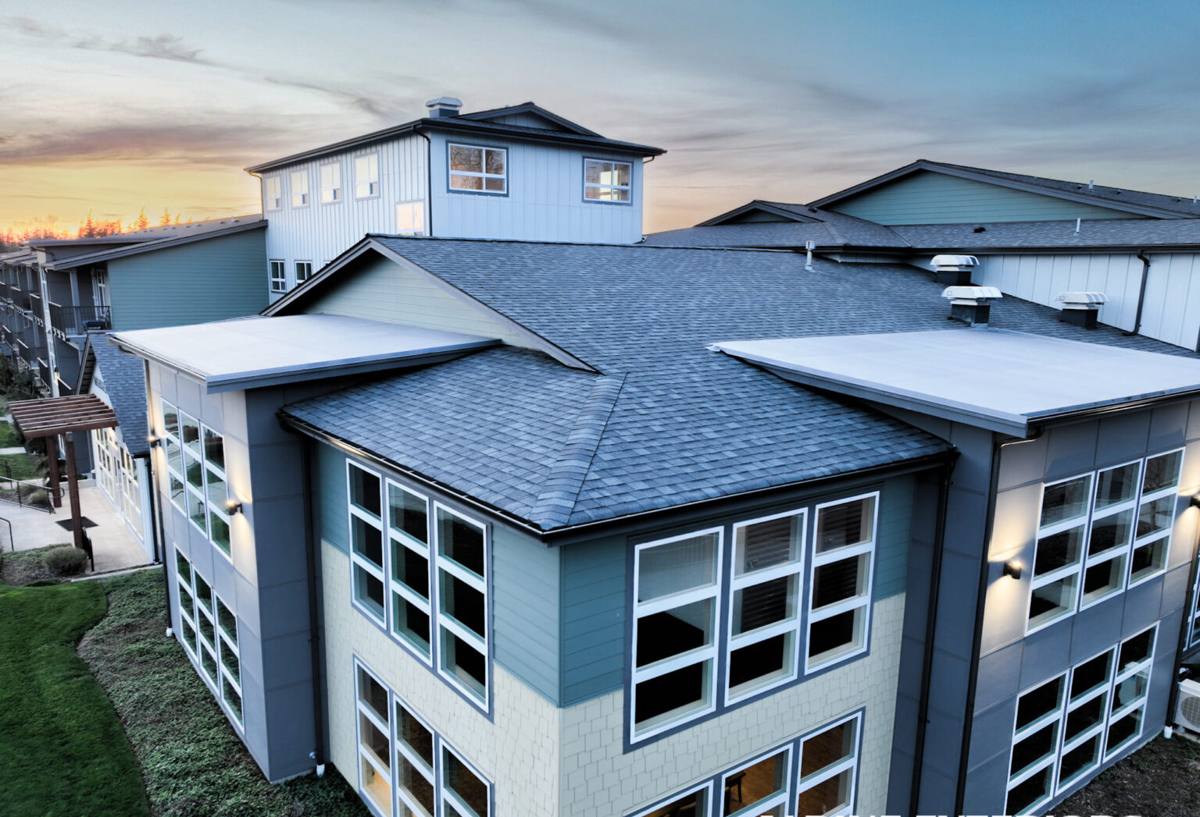
Why We Install James Hardie Fiber Cement — and Nothing Else
We install James Hardie fiber cement siding exclusively. We don't offer vinyl, LP SmartSide, Cemplank, Allura, primed spruce, or cedar, and that's a deliberate standard, not a lack of options. Each of those products has legitimate strengths, but each also carries a trade-off — moisture sensitivity, maintenance burden, dimensional movement, or a shorter track record — that we're not willing to put on a home in a climate like this one.
Fiber cement is made from cement, sand, and cellulose fibers, cured into a dense, stable board. It doesn't absorb water the way wood-based products can, it won't feed insects, and it's non-combustible — a real consideration in a region that has seen more wildfire smoke and dry-season risk in recent years even in typically wet Western Washington. For a lake community with tree cover on every lot, that combination of moisture resistance and fire performance is hard to match.
What Homeowners Actually Notice
- Paint holds its color and doesn't chalk or fade the way it can on wood siding within a few years
- Butt joints and seams stay tight instead of gapping as boards swell and shrink with the seasons
- No soft spots developing at the bottom courses near grade, decks, or sprinkler overspray
- Moss and algae wash off the surface instead of taking root in it
The Right Hardie Product Line for This Neighborhood
James Hardie engineers its siding in different formulations for different climate zones, and matching the right one to Sudden Valley's conditions matters more than most homeowners realize. The HZ5 product line is engineered for climates with sustained moisture and freeze-thaw cycling — which describes the Lake Whatcom basin well. It's formulated to resist moisture intrusion and cracking better than the standard HZ10 formulation sold in warmer, drier regions of the country.
We typically recommend HardiePlank lap siding as the primary field material, with HardieTrim for corners and window/door casings and HardiePanel or HardieShingle as accent material where a home's design calls for texture variation. All of it comes through in the ColorPlus factory finish, which is baked on and cured under controlled conditions rather than applied on site — a meaningful difference in a place where field-painting windows can be short and unpredictable.
ColorPlus Factory Finish vs. Field-Applied Paint
| Factor | ColorPlus Factory Finish | Field-Applied Paint |
|---|---|---|
| Cure conditions | Controlled, consistent, baked-on | Dependent on site weather and drying time |
| Coverage evenness | Uniform across every board | Can vary by crew, batch, and coat count |
| Touch-up system | Matched touch-up available from Hardie | Requires matching paint and re-coating |
| Repaint interval | Long-interval warranty coverage | Typically shorter before fading requires attention |
| Best fit for shaded, wet walls | Cures before installation, unaffected by damp job-site conditions | Slow cure in shade and humidity can affect adhesion |
What a Correct Installation Actually Involves
Fiber cement siding is only as good as the installation behind it. Most of the problems we get called out to look at on other contractors' work aren't failures of the material — they're shortcuts taken during install that let moisture in behind a product that's otherwise doing its job.
Details That Matter Most in This Climate
- Water-resistive barrier and flashing: A continuous weather barrier with properly lapped and sealed flashing at every window, door, and penetration — installed so water sheds outward, not into the wall cavity
- Clearances: Manufacturer-specified gaps at grade, roof lines, decks, and horizontal trim so siding doesn't sit in standing water or wick moisture from soil and mulch
- Fastening: Correct nail or screw type, spacing, and depth — over-driven fasteners crack the board's face and create a moisture entry point that shows up as staining or cracking within a season or two
- Joint treatment: Butt joints caulked or flashed per Hardie's published details, not just butted together and painted over
- Ventilation: A rain screen or drainage gap where the wall assembly calls for it, so any moisture that does get behind the cladding has somewhere to go
Skipping any one of these doesn't show up on day one. It shows up in year three or four, as staining, soft trim, or paint failure at the joints — right around the time a homeowner assumes the material itself let them down, when it was actually the install.
Dealing with Moss, Shade, and Standing Moisture
Sudden Valley's tree cover is a landscaping asset and a siding challenge at the same time. Walls that sit in shade most of the day dry slower after every rain, which is exactly the condition moss and algae need to establish. Fiber cement won't feed organic growth the way wood-based siding can, but moss will still take hold on any exterior surface that stays damp and shaded long enough — including gutters, trim, and fascia around the siding.
Two things help more than any product choice: keeping gutters and downspouts clear so water isn't sheeting down the wall face, and keeping tree limbs and shrubs pulled back enough that air can actually move across the siding. We factor this into how we detail trim and flashing on shaded elevations, since those walls need slightly more conservative water management than a wall that gets full sun and dries out fast.
How Our Process Works
1. On-Site Assessment
We walk the exterior, check the condition of existing siding, trim, and flashing, and look specifically at grade clearances, deck ledger connections, and any areas showing past moisture damage — common trouble spots on lake-adjacent, tree-shaded lots.
2. Scope and Product Selection
We spec HardiePlank HZ5 for the field, matched trim and accent products, and a color from the ColorPlus palette, then walk through the full scope in writing before any work starts — no verbal-only estimates.
3. Tear-Off and Structural Check
Old siding comes off down to the sheathing so we can actually see what's underneath. If there's rot or water damage from a prior installation, we address it before anything new goes up — covering a problem with new siding doesn't fix it.
4. Weather Barrier and Flashing
New water-resistive barrier and flashing go in at every penetration, window, and door, detailed to shed water outward per manufacturer specs.
5. Installation to Spec
Siding, trim, and accents go up with correct fastening, clearances, and joint treatment — the details covered above, applied consistently across every elevation, including the shaded ones that need it most.
6. Final Walkthrough
We review the finished job with the homeowner, cover basic care and what to watch for, and make sure everything matches what was scoped at the start.
What Drives Cost on a Sudden Valley Home
| Cost Factor | Why It Matters Here |
|---|---|
| Home size and elevation count | More wall area and more corners/trim detail means more material and labor |
| Existing damage found at tear-off | Rotted sheathing or framing from prior moisture intrusion adds repair scope |
| Access and site terrain | Sloped, wooded lots common around Lake Whatcom can affect staging and equipment access |
| Trim and accent complexity | Shingle accents, multiple trim profiles, or custom color add labor beyond flat lap siding |
| Product line selection | HZ5 formulation and premium ColorPlus colors are priced differently than base options |
We don't publish flat per-square-foot pricing because these factors genuinely change the number from one house to the next — which is why every quote starts with an actual look at the home, not a phone estimate.
Why Hire a Crew That Already Works This Neighborhood
Sudden Valley isn't a typical suburban grid — narrower access roads, wooded lots, and homes built across several different eras all mean an installer needs to actually understand the terrain and the building stock, not just show up with a generic install process. A crew that regularly works this area already knows how local moisture patterns behave against a wall, what clearance issues tend to show up on older Whatcom County builds, and how to stage material and equipment on lots that aren't flat, open driveways.
That familiarity shows up in small decisions throughout a job — where to add extra flashing attention on a shaded wall, how to sequence work around a rainy forecast instead of forcing installation in the wrong conditions, and knowing which older homes in the area are likely to have moisture issues hiding behind the existing siding before tear-off even starts.
Get a Straightforward Estimate
If you're weighing a siding replacement on your Sudden Valley home, we're happy to take a look and give you a straightforward, no-pressure assessment of what your home actually needs. Fill out the form below to schedule a free estimate.