 Bellingham Exterior
 Why York Homes Need Siding Built for This Climate
York sits close enough to Bellingham Bay and the surrounding waterways that salt-laden air is a constant factor on exterior materials, even on houses that aren't waterfront. Add Whatcom County's long, wet winters — driving rain that comes in sideways off the water, months of overcast humidity, and a moss season that can run from fall through spring — and you have a climate that is genuinely hard on siding. Materials that perform fine in a dry inland climate often struggle here: they absorb moisture, they hold onto algae and moss spores, or their finish breaks down faster than the manufacturer's brochure suggests.
Siding for a York home isn't a cosmetic decision. It's a moisture-management system that has to shed rain, resist salt corrosion on fasteners and trim, and stand up to organic growth without constant scrubbing or repainting. That's the lens we use on every siding job in this neighborhood.
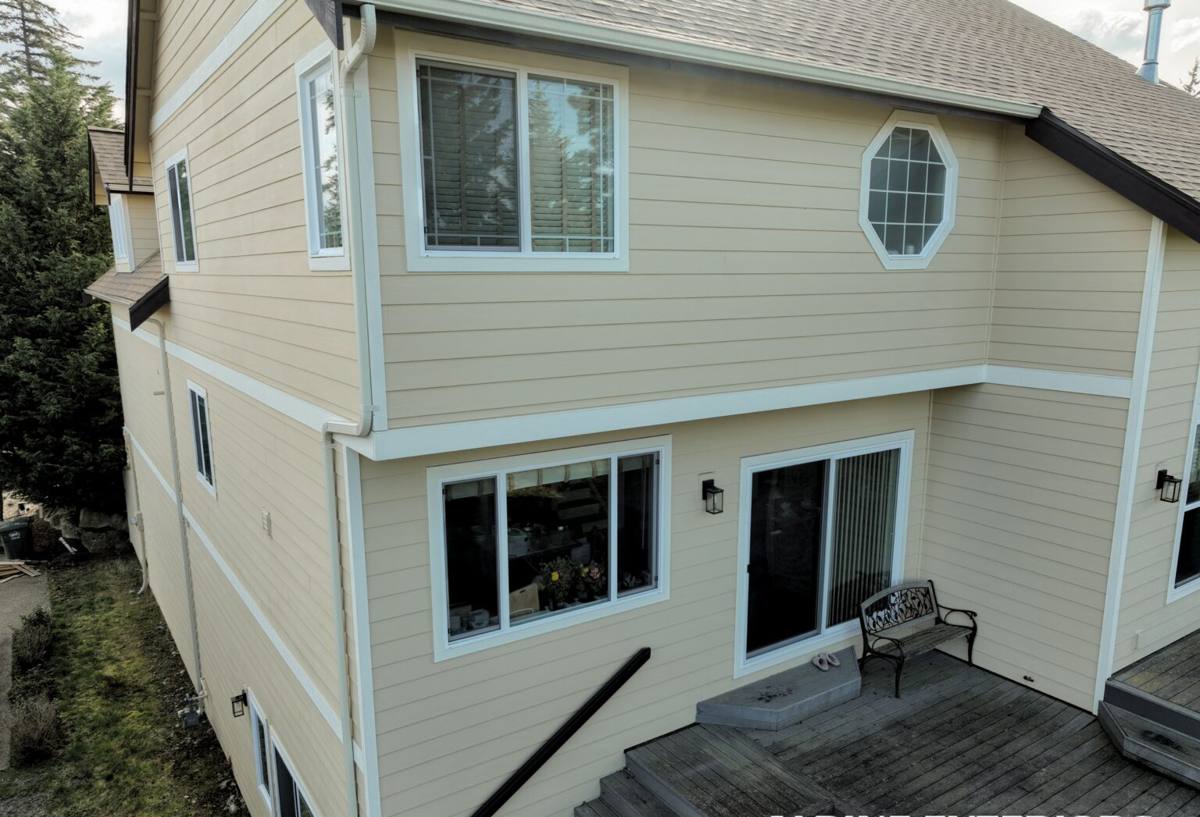
What York's Housing Stock Means for the Job
York is one of Bellingham's older, established neighborhoods, and the housing reflects that — a mix of early-to-mid-century homes alongside newer infill and remodels. Older homes in this kind of neighborhood typically come with a few recurring conditions we plan for before the first piece of siding goes up:
- Original wood sheathing or older plywood that may have hidden moisture damage behind the existing siding, especially near grade, decks, and window sills
- Multiple layers of past siding or paint that need to come off cleanly rather than be covered over
- Trim, soffits, and window details that were built to a style worth matching, not just covering up
- Additions or remodels where the original wall assembly and a newer one meet, creating tie-in points that are easy to get wrong
None of that is unusual for a neighborhood this age, but it does mean a siding job here is rarely a simple strip-and-replace. It starts with an honest look at what's underneath.
Why We Only Install James Hardie
We install James Hardie fiber cement exclusively — not vinyl, not LP SmartSide, not Cemplank or Allura, not primed spruce or cedar. That's a deliberate standard, not a sales preference. Hardie's fiber cement is non-combustible, holds a factory-applied ColorPlus finish that doesn't rely on field painting to perform, and is engineered in specific product lines (including HZ formulations built for wetter, harsher climates) that are a genuine match for what Western Washington throws at a house year-round.
Other products have real strengths — vinyl is inexpensive and low-maintenance in dry climates, cedar has a look some homeowners love, engineered wood siding installs quickly. But in a salt-air, high-moisture, moss-prone environment like York, those products come with trade-offs in moisture tolerance, impact resistance, or long-term finish durability that we're not willing to install and then have to defend in five years. Hardie, installed correctly, is the product we're confident standing behind on homes in this area.
What "Correct Installation" Actually Means
James Hardie siding's performance depends heavily on installation detail — this is a product where the manufacturer's own specifications matter as much as the material itself. A correct job on a York home includes:
- A water-resistive barrier installed and lapped correctly behind the siding, not just a barrier that's present
- Proper flashing at every window, door, and roof-to-wall transition, since these are the points where driving rain finds its way in
- Manufacturer-specified fastener spacing, penetration depth, and corrosion-resistant fasteners — an important detail given how salt air accelerates fastener corrosion when the wrong hardware is used
- Correct clearance between the siding's bottom edge and grade, decks, and roofing to avoid wicking moisture
- Sealed and painted cut edges, since factory ColorPlus finish only protects the face and edges that shipped from the factory
- Proper joint gapping and caulking at butt joints and trim, sized for the material's expansion and contraction
Skip any of these and you can end up with a product that looks like Hardie but doesn't perform like it — trapped moisture, premature paint failure at seams, or corrosion streaking down from fastener heads. This is exactly why installation quality matters as much as brand selection.
James Hardie Compared to Other Common Siding Choices
Homeowners in York often ask us to explain, plainly, why Hardie costs more upfront than some alternatives. Here's how the common options actually compare on the factors that matter in this climate:
| Factor | James Hardie Fiber Cement | Vinyl | LP SmartSide / Engineered Wood | Cedar |
|---|---|---|---|---|
| Moisture tolerance | Excellent when installed to spec | Good, but can trap moisture behind panels | Fair — engineered wood is moisture-sensitive at cut edges | Requires ongoing sealing/maintenance |
| Combustibility | Non-combustible | Combustible | Combustible | Combustible |
| Moss/algae resistance | Good with proper finish; cleanable | Prone to algae streaking | Prone to moisture-driven growth at edges | Prone to moss growth, needs regular treatment |
| Finish durability | Factory ColorPlus, long repaint intervals | Color molded in, can fade/chalk | Field-applied finish, shorter repaint cycles | Needs re-staining every few years |
| Typical upfront cost | Higher | Lower | Mid-range | Mid-to-high |
The pattern is consistent: the products with a lower upfront cost tend to ask for more attention over time in a climate like Bellingham's — more repainting, more moss treatment, more vigilance about moisture at joints. Hardie shifts that balance toward upfront investment and long-term stability, which is why it's what we put on homes here.
Our Process on a York Siding Project
Every job follows the same sequence, adjusted for the specifics of the house:
- On-site assessment — we look at the existing siding, sheathing condition, trim details, and any moisture entry points before quoting anything
- Scope and product selection — choosing the right HardiePlank, HardiePanel, or HardieShingle profile and ColorPlus color for the home
- Tear-off — removing existing siding down to sheathing, checking for hidden rot or water damage that needs repair before new siding goes up
- Sheathing repair and weather barrier — replacing any damaged sheathing, installing and properly lapping the water-resistive barrier
- Flashing details — windows, doors, and roof transitions flashed to shed water outward, not into the wall
- Installation — siding installed to manufacturer fastener and clearance specs, with cut edges sealed and painted before they're closed up
- Final trim, caulking, and cleanup — joints sealed appropriately, site cleaned, and a walkthrough with the homeowner
We don't skip the tear-off-and-inspect step, even when it would be faster to side over existing material. On older York homes especially, what's behind the current siding is often the most important thing we find on the whole job.
Living With Hardie Siding in a Moss-Prone, Salty Climate
Correctly installed Hardie siding is genuinely low-maintenance, but "low-maintenance" isn't "no-maintenance" in a climate that grows moss on north-facing roofs for half the year. A simple annual routine keeps it performing and looking right:
- Rinse the siding with a garden hose or soft wash once a year, focusing on shaded, north-facing walls where moss and algae take hold first
- Keep gutters clear so overflow doesn't run down the siding face and feed algae growth
- Trim back vegetation and shrubs that hold moisture against the wall
- Check caulking at trim and joints every year or two and re-caulk if it's cracked or pulling away
- Repaint on the longer cycle ColorPlus allows, rather than the shorter cycle field-applied finishes require
None of this is heavy work, but skipping it in a climate this wet lets moss and algae get a head start that's much harder to reverse later.
Why a Crew That Already Works York Matters
A siding crew that's worked in York before already knows the kind of framing and sheathing conditions common to the neighborhood's housing stock, has a feel for how the local weather pattern loads up the north and west-facing walls of a given lot, and has already dealt with Bellingham's permitting process for exterior work. That familiarity shows up in fewer surprises mid-project — not because every house is the same, but because the patterns repeat often enough that we're not guessing.
It also means we're not learning Hardie's installation requirements on your house. Fastener specs, flashing sequencing, and clearance details are things we've applied on homes with the same climate exposure as yours, which is a big part of why the finished job holds up.
Get a Straight Answer on Your Siding
If your York home's siding is showing its age, holding moss, or you're just planning ahead, we're happy to take a look and give you an honest assessment — no pressure, no upsell to a product we wouldn't put on our own homes. Use the form below to request a free estimate.