 Bellingham Exterior
 Storm Damage Roof Repair Built for Lynden's Weather
Lynden sits in the flat, open part of Whatcom County, close enough to the Nooksack River valley and the Strait of Georgia that winter storms arrive with real wind behind them. Homes here take a different kind of beating than roofs further inland: long stretches of driving rain, gusty fronts that come through with little warning, and a damp maritime climate that keeps moss and moisture working on a roof nearly year-round. When a storm damages a roof in Lynden, the fix has to account for all of that, not just patch the visible hole.
We repair storm-damaged roofs across Bellingham and the surrounding Whatcom County communities, and Lynden's mix of older farmhouses, newer subdivisions, and everything in between means we see a wide range of roofing systems and a wide range of storm damage. What follows is a straight explanation of what storm damage looks like here, what a correct repair actually involves, and how we handle the job from first call to final inspection.
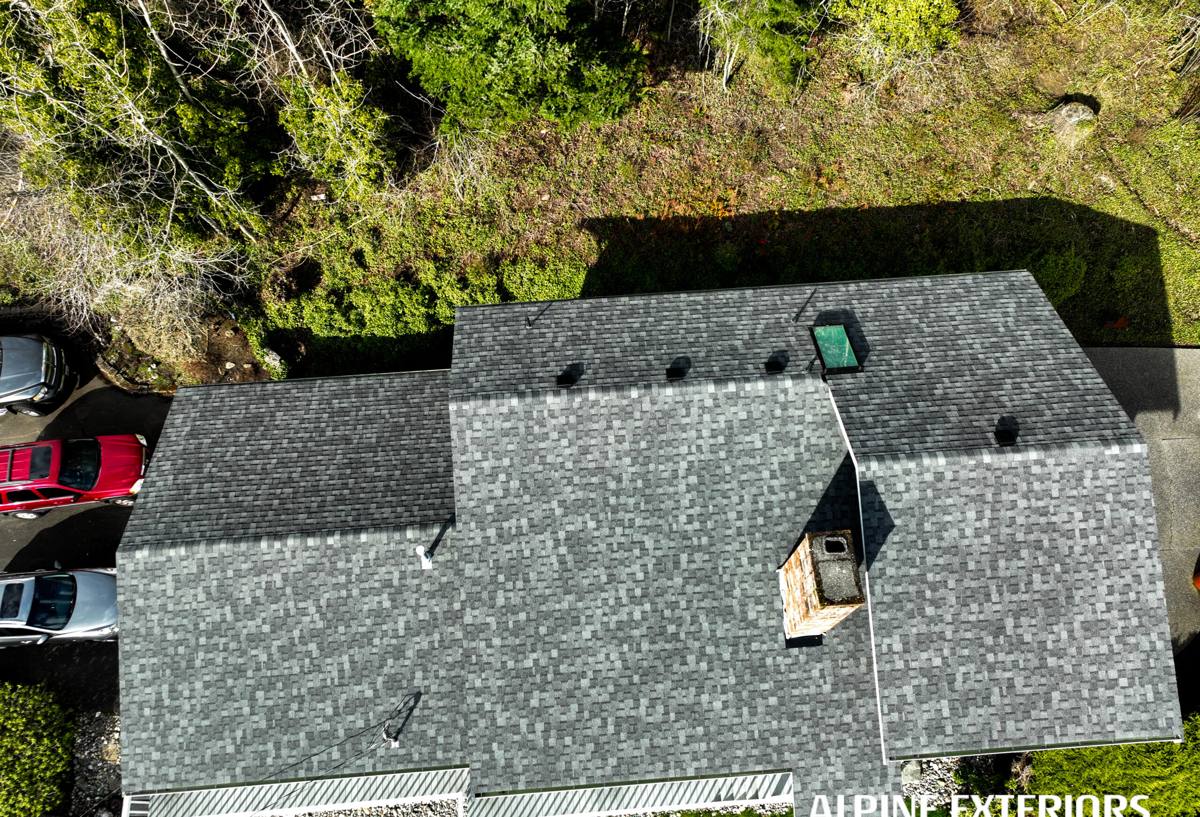
Why Storm Damage Hits Differently in This Area
Whatcom County's climate is defined by moisture — steady rain through the fall and winter, brief but intense wind events, and a marine air influence that keeps humidity high even between storms. That combination creates a few specific problems for roofs in and around Lynden:
Wind-Driven Rain
When wind pushes rain sideways instead of letting it fall straight down, it can find its way under shingles, around flashing, and into any gap that a calmer rain would never reach. A roof that's shed water fine for years can suddenly leak during a wind-driven storm simply because water is being forced uphill under the roofing material.
Moss and Sustained Dampness
Long moss season is a fact of life in this region. Moss holds moisture against the roof surface, and over time it lifts shingle edges, traps debris, and accelerates granule loss. A roof already weakened by moss is far more vulnerable when a storm hits — what would otherwise be minor wind damage becomes a real leak because the shingles were already compromised.
Gusts and Debris
Open farmland and tree-lined properties around Lynden both create their own wind exposure. Fields offer little wind break, while treed lots bring the risk of limbs coming down on a roof during a storm. Either way, the damage tends to be localized but can be serious — cracked decking, torn shingles, or damaged flashing right at the point of impact.
Signs Your Lynden Roof May Have Storm Damage
Not all storm damage is obvious from the ground. Some of it only shows up as a stain on a ceiling weeks later. After any significant wind or rain event, it's worth checking for the following:
- Missing, cracked, or curled shingles, especially on the roof faces that took the brunt of the wind
- Granules collecting in gutters or at the base of downspouts
- Bent, lifted, or missing flashing around chimneys, vents, and roof valleys
- Dented or dislodged gutters and downspouts
- New or worsening moss growth along shingle edges and in shaded valleys
- Water stains, discoloration, or a musty smell in the attic or on interior ceilings
- Visible sagging in any part of the roofline
- Debris, branches, or standing water pooling on the roof surface
If you notice any of these, it's better to get a roof looked at sooner than later. Water that gets under roofing material doesn't stay put — it tracks along decking and framing, often causing damage well beyond the original entry point.
What a Correct Storm Damage Repair Involves
A rushed storm repair is one of the most common ways a small problem turns into a bigger one. A correct repair starts with a full inspection, not just a look at the obvious damage, because storms rarely affect just one spot.
1. Full Roof Assessment
We check the entire roof, not just the area you reported, since wind damage is often scattered. That includes the roof deck underneath, where soft spots or rot can hide beneath shingles that look intact.
2. Underlayment and Decking Check
If water has been getting in for any length of time, the underlayment or even the wood decking underneath may need attention. Replacing shingles over damaged decking just hides the problem — it doesn't fix it.
3. Flashing and Sealant Work
A large share of storm-related leaks actually trace back to flashing — around chimneys, skylights, vent pipes, and valleys — rather than the shingles themselves. Correct repair means resealing or replacing flashing, not just patching shingles nearby and hoping the leak stops.
4. Matching Materials
Where possible, we match existing shingle type, profile, and color so the repair blends in rather than standing out as a patch. On older roofs where an exact match isn't available, we'll walk you through the closest reasonable option before starting work.
Comparing Common Storm Damage Types
Different kinds of storm damage call for different scopes of work. This table breaks down what we typically see and how each is addressed:
| Damage Type | Typical Cause | Repair Scope |
|---|---|---|
| Wind-lifted or torn shingles | Gusts during a passing front | Localized shingle replacement, resealing adjacent tabs |
| Moss-related shingle failure | Sustained dampness and long moss season | Moss removal, damaged shingle replacement, treatment to slow regrowth |
| Flashing leaks | Wind-driven rain forcing water under flashing edges | Flashing resealing or replacement at chimneys, vents, valleys |
| Impact damage from debris or limbs | Falling branches or wind-blown debris | Deck inspection, section replacement, structural check if impact was significant |
| Gutter and downspout damage | Wind and debris load | Reattachment, realignment, or replacement of affected sections |
What Affects the Cost of a Storm Repair
Every roof and every storm is different, so we don't quote sight-unseen. But the factors that generally move a repair estimate up or down are consistent:
| Factor | Why It Matters |
|---|---|
| Extent of the damage | A few shingles versus a full slope changes labor and material needs significantly |
| Roof pitch and access | Steeper roofs and difficult access add time and safety requirements |
| Underlying deck condition | Rotted or soaked decking needs replacement before new roofing goes on |
| Material match | Discontinued or specialty shingles can take longer to source |
| Age of the existing roof | An older roof nearing the end of its life may make full replacement more practical than repeated repairs |
Our Process, Start to Finish
- Initial contact and scheduling — we get basic details about the damage and set up a time to inspect.
- On-site inspection — a full walk of the roof, attic check when accessible, and photo documentation of all damage found.
- Written estimate — a clear scope of work and price range before anything is touched.
- Repair work — completed by a crew that handles this type of work regularly, with attention to matching materials and proper sealing, not just quick patches.
- Final walkthrough — we review the completed repair with you before calling the job done.
Working With Insurance Claims
Many storm repairs in this area involve a homeowner's insurance claim. We can provide photo documentation and a detailed written scope of the damage and repair, which is typically what an adjuster needs to process a claim. We're not a public adjuster and we won't promise a specific claim outcome, but we'll give you an honest, accurate account of what the storm actually did to your roof — which is the foundation of a straightforward claim either way.
Why a Crew That Works Lynden Matters
A roofer who works this part of Whatcom County regularly already understands the local baseline: how moss builds up here, what wind-driven rain does to older flashing details common on area homes, and which shingle types hold up against repeated damp-dry cycles. That local familiarity means less time spent diagnosing the obvious and more time spent getting the repair right the first time. It also means we're not far away if a repair needs a follow-up check after the next storm season.
Preventing Repeat Storm Damage
A repair is a good moment to address the conditions that made the damage worse than it needed to be. A few things worth checking or scheduling:
- Clear moss buildup and consider a moss treatment plan given how long moss season runs here
- Trim back tree limbs that overhang the roofline
- Clean gutters before the next heavy rain so water isn't backing up under roof edges
- Have flashing checked even if it wasn't the source of the current damage — it's often the next weak point
- Ask about the remaining lifespan of the roof if this is the second or third storm repair in recent years
If your Lynden home has storm damage, or you're not sure whether what you're seeing is worth addressing yet, we're happy to take a look. Fill out the form below for a free, no-pressure estimate — we'll tell you honestly what we find.