 Bellingham Exterior
 Building New in Blaine: Why Window Installation Isn't the Same Job as a Replacement
New-construction window installation and window replacement are two different trades wearing the same name. A replacement job works around an existing wall — the framing, the weather barrier, and the siding are already there, and the installer is fitting a new unit into a finished opening. New-construction installation happens during the build, before siding goes on, while the rough opening, the weather-resistive barrier (WRB), and the flashing sequence are all still open and adjustable. Get it right at this stage and the wall assembly works as a system for decades. Get it wrong, and the mistake gets buried behind siding and trim — invisible until it shows up as a stain on drywall two winters later.
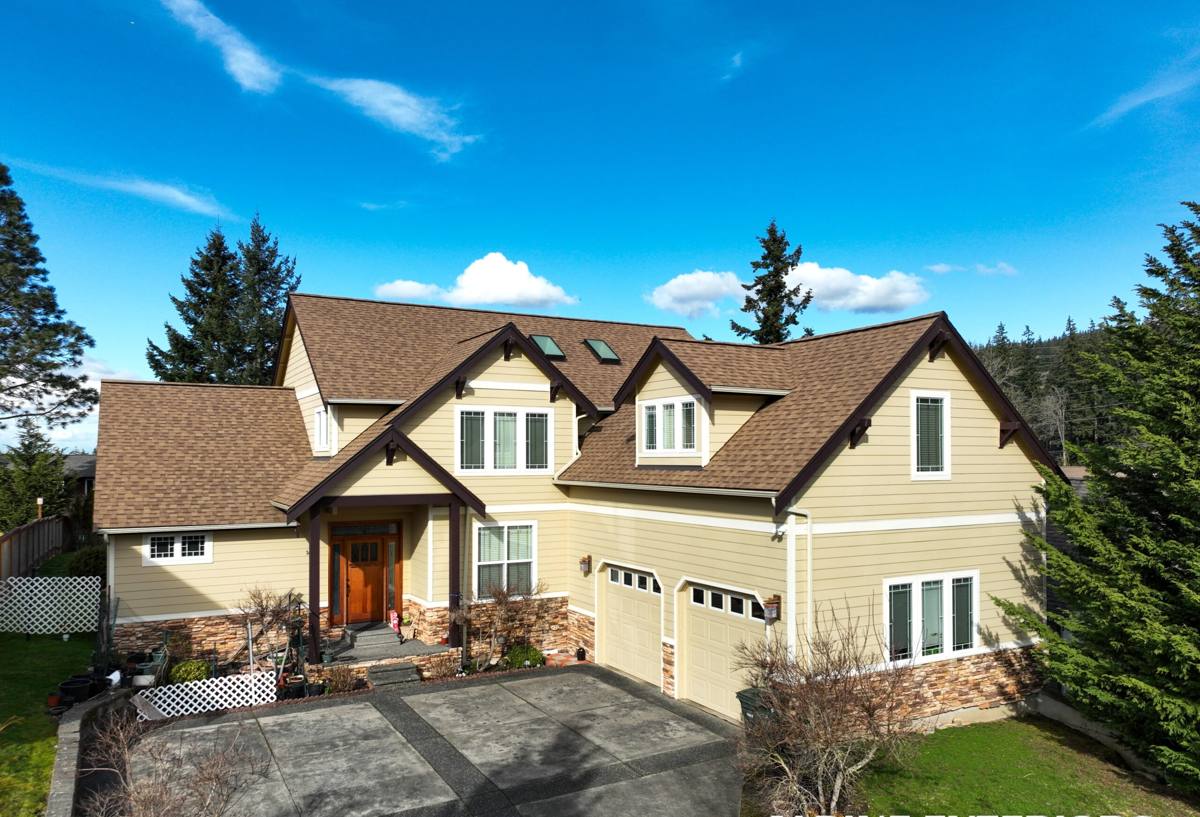
For a new build in Blaine, this stage matters more than in most inland Whatcom County locations. Blaine sits right on the water, with wind-driven rain coming off Semiahmoo Bay and Drayton Harbor and a salt-air environment that accelerates corrosion on anything not rated for it. A window opening that's flashed correctly on day one of framing will shed water for the life of the house. One that's flashed wrong will eventually leak — slowly, quietly, and usually in a spot nobody checks until there's rot or mold behind the wall.
What Blaine's Climate Actually Does to New Construction
Three things define window performance for new builds in this part of Whatcom County:
- Salt air corrosion — coastal moisture carries salt that attacks unprotected steel fasteners, low-grade aluminum cladding, and cheap window hardware over time. This isn't a coastal-Florida level of exposure, but it's real and it's cumulative, and it's a factor Bellingham inland crews don't always think about.
- Driving rain — Blaine gets wind off the water that pushes rain sideways into wall assemblies, not just straight down. That means flashing has to manage water that's moving horizontally and even slightly upward under wind pressure, not just water running down a wall.
- A long moss and mildew season — the extended wet stretch from fall through spring keeps building materials damp longer than drier inland climates. Any water that gets trapped behind a window opening has more time to do damage before things dry out again.
None of this means new construction in Blaine needs exotic materials. It means the flashing details, sealant choices, and fastener specs need to match the exposure the house will actually see — not a generic inland spec.
What a Correct New-Construction Window Installation Involves
Sill Pan Flashing First
Every rough opening should get a sloped sill pan — either a factory pan flashing product or a correctly built and sloped flexible flashing pan — before the window ever goes in. The pan gives any water that gets past the window a way out instead of a place to pool. Skipping this step, or installing a flat sill pan with no slope, is one of the most common causes of hidden rot in new builds.
The Shingle-Lap Sequence
Flashing has to be layered so that each piece overlaps the one below it, like shingles on a roof — sill pan, then window nailing fin, then jamb flashing, then head flashing, then the WRB lapped over the top. Water always drains down and out, never in behind a layer. This sequence is not optional and it's not something that can be corrected once siding is on.
WRB Integration
The weather-resistive barrier (house wrap) has to be cut, lapped, and taped into the window flashing correctly — not just stapled around the opening. A gap or a backwards lap at the window is a direct path for wind-driven rain to get behind the barrier.
Fastening and Sealant
Nailing fin windows need the fastening schedule the manufacturer specifies — skipping fasteners to save time reduces both structural performance and the window's ability to resist wind pressure. Sealant goes at specific points (never as a substitute for proper flashing, and never fully sealing the bottom of the window, which needs to stay able to drain).
Backer Rod and Interior Air Seal
On the interior side, a proper air seal (not just caulk smeared around the frame) keeps conditioned air in and reduces condensation risk at the window perimeter — a real concern during Whatcom County's damp, cool months.
Choosing the Right Window for a Blaine Build
Frame material matters more in a coastal, high-moisture climate than it does inland. Here's how the common options stack up for new construction in this environment:
| Frame Material | Coastal/Salt-Air Performance | Maintenance | Typical Cost Position |
|---|---|---|---|
| Vinyl | Good — won't corrode, but can expand/contract with temperature swings | Low | Lower |
| Fiberglass | Very good — dimensionally stable, resists moisture and corrosion well | Low | Mid to higher |
| Aluminum-clad wood | Good if cladding and hardware are marine-grade rated; standard-grade hardware corrodes faster near salt air | Moderate | Higher |
| Bare wood | Weakest without diligent upkeep — moisture and salt air both attack exposed wood and finish | High | Varies |
We don't push one brand or material on every job. The right call depends on the design, the budget, and how close to the water the lot sits. What we won't do is install hardware or cladding that isn't rated for the exposure just because it's cheaper up front — that's a maintenance headache and a warranty risk we'd rather explain honestly than sell around.
Our Process for New-Construction Window Work in Blaine
- Plan review, before framing is finalized. We look at the window schedule and rough opening sizes against the actual products being installed, so there are no surprise mismatches once framing is up.
- Coordination with the builder or GC. New construction runs on a schedule, and window installation has to land at the right point — after the WRB is on, before siding starts. We work the timeline with the general contractor directly.
- Material selection consult. If the homeowner or builder hasn't locked in a window line yet, we walk through frame material, glazing package, and hardware options suited to a coastal Whatcom County site.
- Installation, per manufacturer spec. Sill pan, shingle-lap flashing, fastening schedule, and WRB integration — done to the window manufacturer's instructions, not a shortcut version.
- Flashing documentation. We photograph flashing details before they're covered by siding, so there's a record of what's behind the wall if it's ever needed later.
- Final walkthrough and punch list. Operation, seals, and trim are checked before we call the job done.
A Practical Checklist for Builders and Homeowners
Whether we're doing the install or you're vetting another crew, these are the things that should never be skipped on a new-construction window job in a coastal Whatcom County location:
- Sloped sill pan flashing installed under every window before the unit goes in
- Shingle-lap flashing sequence — sill, fin, jamb, head, WRB — with no reverse laps
- WRB properly cut, lapped, and taped at each opening, not just stapled around it
- Full manufacturer fastening schedule followed, not a reduced fastener count
- Sealant used only where specified — sill left able to drain, not fully sealed
- Interior air seal detail at the window perimeter, separate from exterior sealant
- Hardware and cladding rated for coastal/salt-air exposure if the lot is near the water
- Flashing photographed before it's covered by siding
Why a Bellingham Crew That Already Works Blaine Makes a Difference
Whatcom County covers a lot of ground climate-wise — the difference between a build in downtown Bellingham and one out toward Blaine's waterfront is real, even though they're only a short drive apart. A crew that's worked both knows to spec flashing and hardware differently depending on how exposed the site is to wind off the water. That's not something you can fully account for from a generic install manual.
There's also the practical side of new construction: permitting through Whatcom County, coordinating around a build schedule that shifts with weather and other trades, and knowing which local suppliers stock the products that actually hold up out here. A crew that's done this before in Blaine isn't learning those logistics on your project.
Get a Straight Answer on Your Build
If you're framing a new home or building out in Blaine and want the window package planned and installed correctly from the start, we're glad to take a look at your plans and talk through options — no pressure, no upsell. Use the form below to request a free estimate, and we'll walk through what your build's exposure actually calls for.