 Bellingham Exterior
 Building New in Edgemoor: Why Window Installation Deserves Extra Attention
Edgemoor sits close to Bellingham Bay, tucked under a heavy tree canopy on a bluff that catches wind and rain straight off the water. If you're framing a new home here, the windows you choose and how they're installed will do more work than in almost any other part of Whatcom County. Salt-laden air corrodes hardware faster than it does inland. Driving rain off the bay tests every flashing detail. And the mature tree cover that gives Edgemoor its character also means shade, dampness, and moss that never really goes away. New-construction windows aren't just a bigger version of a replacement job — they're a different scope of work entirely, done before the siding goes on, while the building envelope is still open and every decision is still correctable.
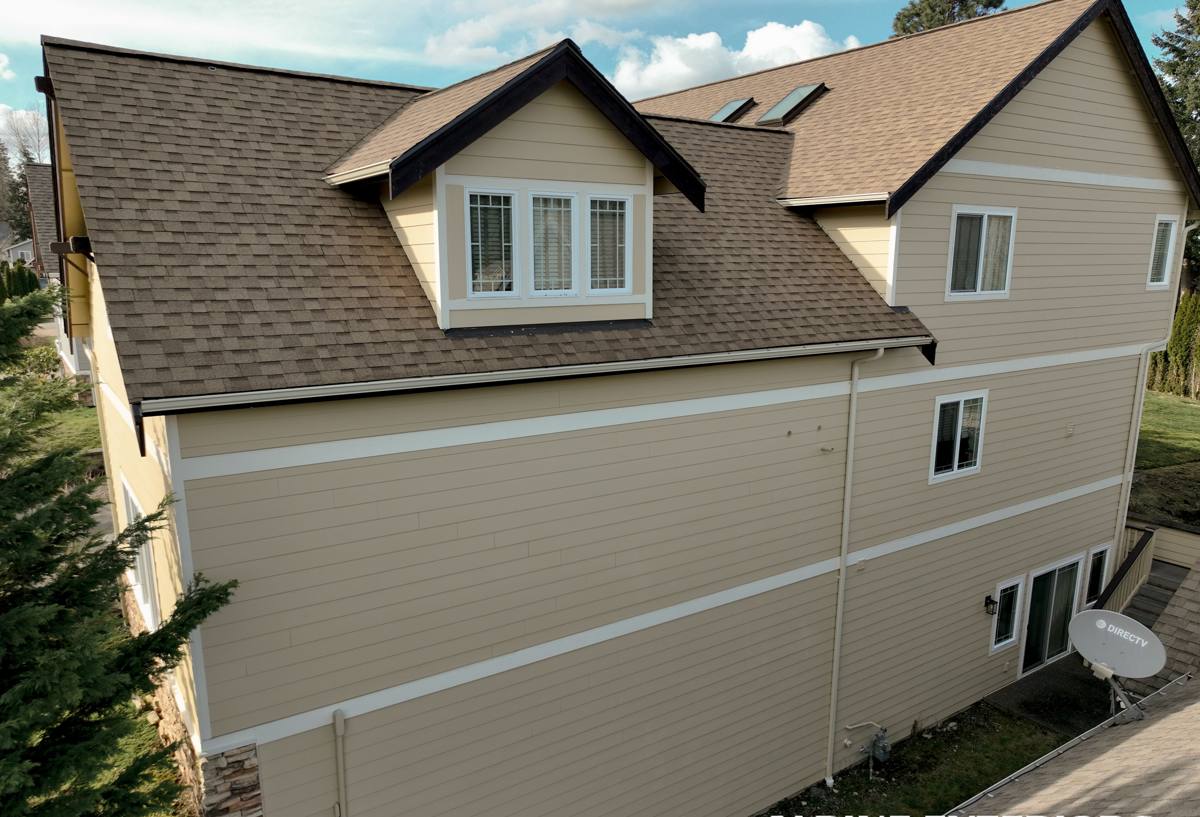
New Construction vs. Replacement: A Different Job
Replacement windows get set into an existing opening, often with a flush-fin or block-frame approach that works around finished siding and trim. New-construction windows are installed with a nailing fin directly to the sheathing, before the weather-resistive barrier (WRB) and siding are in place. That gives us full access to integrate the window into the wall's water management system from the start — something you can never fully achieve after the fact. On a site like Edgemoor, where wind-driven rain is a real and recurring load on the building envelope, that early access is the whole advantage of building new. Get it right now, and you won't be chasing leaks in ten years.
What Edgemoor's Site Conditions Actually Demand
Salt Air and Corrosion
Homes within a mile or two of Bellingham Bay sit in a mild but persistent salt-air environment. It's not the aggressive marine exposure you'd get on the open coast, but over years it corrodes untreated steel fasteners, pits standard aluminum trim, and shortens the life of cheap hardware. On new-construction jobs in this area, we spec corrosion-resistant fasteners and flashing components as a baseline, not an upgrade.
Driving Rain
Storms tracking in off the bay hit bluff-facing walls with wind-driven rain, which pushes water sideways and upward against a window opening — conditions a lazy flashing job will never survive. Sill pan flashing, properly lapped WRB, and correctly sequenced head flashing aren't optional details here; they're the difference between a dry wall cavity and a slow rot problem that won't show up until the drywall is already up.
Shade and Moss
Edgemoor's tree canopy is a defining feature of the neighborhood, and it also means many walls stay damp longer after a storm than they would in full sun. Moss and mildew take hold on north-facing and heavily shaded elevations faster here than almost anywhere else in Bellingham. That affects both the exterior finish around the window and how much drying capacity the wall assembly needs — another reason the flashing and drainage plane behind the window matter as much as the window itself.
Getting the Water Management Right
A window is only as good as the opening it sits in. On every new-construction install, the sequence matters:
- Sill pan flashing installed first, sloped to drain outward, never inward
- WRB integrated so upper layers always lap over lower layers — shingle-style, no exceptions
- Head flashing installed last, over the WRB, to shed water down and away from the opening
- Corner and jamb flashing sealed with compatible tape or sealant rated for the WRB in use
- Rough opening checked for square and level before the window ever goes in
Skip or reorder any one of these steps and you've built a path for water to get behind the siding — one that won't announce itself until there's visible damage, which by then means opening the wall back up.
Choosing Frame Material for Coastal, Wooded Exposure
There's no single "best" window material for every home — it depends on budget, style, and how much upkeep you want to take on. For Edgemoor's mix of salt air and shade, here's how the common options actually perform:
| Frame Material | Corrosion Resistance | Maintenance in Shade/Moisture | Typical Fit |
|---|---|---|---|
| Vinyl | Excellent — won't corrode | Low; occasional cleaning of tracks and weep holes | Budget-conscious builds, strong energy performance |
| Fiberglass | Excellent — very stable, won't pit or rust | Low; holds paint and finish well over time | Higher-end new builds wanting durability plus a painted look |
| Wood-clad | Good on the exterior clad face; interior wood needs protection from condensation | Higher — cladding seams and interior wood need periodic inspection | Custom architectural homes prioritizing interior wood appearance |
| Aluminum (uncoated/standard) | Fair — prone to pitting near salt air over time | Moderate; needs a quality factory finish to hold up | Best reserved for commercial-style or heavily shielded openings |
Our standard recommendation for exposed or shaded Edgemoor elevations is vinyl or fiberglass with a factory-finished, marine-rated hardware package. We're not against wood-clad or aluminum — plenty of good homes use both — but we'll walk you through the maintenance commitment honestly before you commit to either, because a window that looks great on day one and needs babying by year five isn't saving anyone money.
Our New-Construction Window Process
- Plan review: we confirm window sizes, egress requirements, and rough opening dimensions against the architectural plans before framing is finalized.
- Site coordination: on new builds, we work directly with your general contractor or framer to schedule install once sheathing and WRB prep are ready — timing matters, and rushing this step is where corners get cut.
- Flashing and install: sill pan, window set, fin nailed per manufacturer spec, then head flashing and WRB integration completed before siding crews move in.
- Air seal and insulation: the gap between the rough opening and the window frame gets sealed and insulated correctly — too tight or too loose both cause problems.
- Interior and exterior trim coordination: we confirm trim details work with your siding and interior finish plans before we're off site.
- Final walkthrough: every window operates, locks, and seals correctly before we call the job done.
Energy Performance and Code in Bellingham
Washington's energy code sets minimum performance requirements for new-construction windows, and Whatcom County permitting will check U-factor and other ratings against your building plans. Beyond the minimum, Edgemoor's exposure to bay winds means a well-sealed, properly rated window pays off in comfort as much as in the utility bill — drafts and cold spots near glazing are one of the most common complaints in older bay-facing homes. We spec windows with NFRC-rated performance that meets or exceeds code, and we'll show you the label so you know exactly what you're building with, not just what the brochure claims.
What to Verify Before Windows Go In
Whether we're your installer or you're vetting another crew, these are the things worth confirming before the windows are set in a new Edgemoor build:
- Rough openings match window schedule dimensions exactly, with allowance for shimming
- Sill pan flashing is planned and sloped to drain, not just "caulked and hoped for"
- WRB laps correctly around the opening in shingle fashion, top over bottom
- Fastener and flashing materials are rated for coastal/marine-influenced exposure
- Manufacturer installation instructions are being followed, not a generic approach
- Egress windows meet code in every required bedroom
- Someone is checking for square and level before, not after, the window is fastened
Why a Crew That Already Works Edgemoor Matters
Edgemoor isn't a neighborhood you learn from a spec sheet. Knowing which elevations take the worst of the bay wind, how much drying time a shaded wall really gets between storms, and how Whatcom County and City of Bellingham permitting expects flashing details documented — that's knowledge built from doing the work here repeatedly, not from a single job. On a new build, your window installer is coordinating with framers, siding crews, and inspectors on a tight schedule. A crew unfamiliar with the neighborhood's conditions is more likely to default to generic practices that work fine in a dry inland subdivision and fall short here.
We treat every new-construction window opening in Edgemoor the same way: as a permanent part of the building envelope that has to perform in salt air, driving rain, and heavy shade for decades, not just pass inspection on install day.
If you're planning a new build or major addition in Edgemoor and want windows installed right the first time, we're happy to walk your plans with you. Reach out for a free, no-pressure estimate — we'll look at your site, your exposure, and your budget, and give you a straight answer on what makes sense.