 Bellingham Exterior
 Why Columbia Roofs Wear Differently Than You'd Expect
The Columbia neighborhood sits close enough to Bellingham Bay that salt-laden air is part of daily life, and that air is harder on a roof than most homeowners realize. Salt moisture accelerates corrosion on exposed metal fasteners, flashing, and vent components, and it settles into shingle granules and moss colonies faster than it would a few miles inland. Combine that with Whatcom County's long stretch of driving rain each fall and winter, plus a moss season that can run from late fall through spring, and you get a roof that's under near-constant moisture pressure for most of the year.
None of this means a roof in Columbia needs to be exotic or overbuilt. It means the installation details that get skipped on a lot of jobs — proper underlayment coverage, correct flashing laps, real ventilation — are the details that actually matter here. A roof that would hold up fine in a dry inland climate can fail early in this one if those basics are rushed.
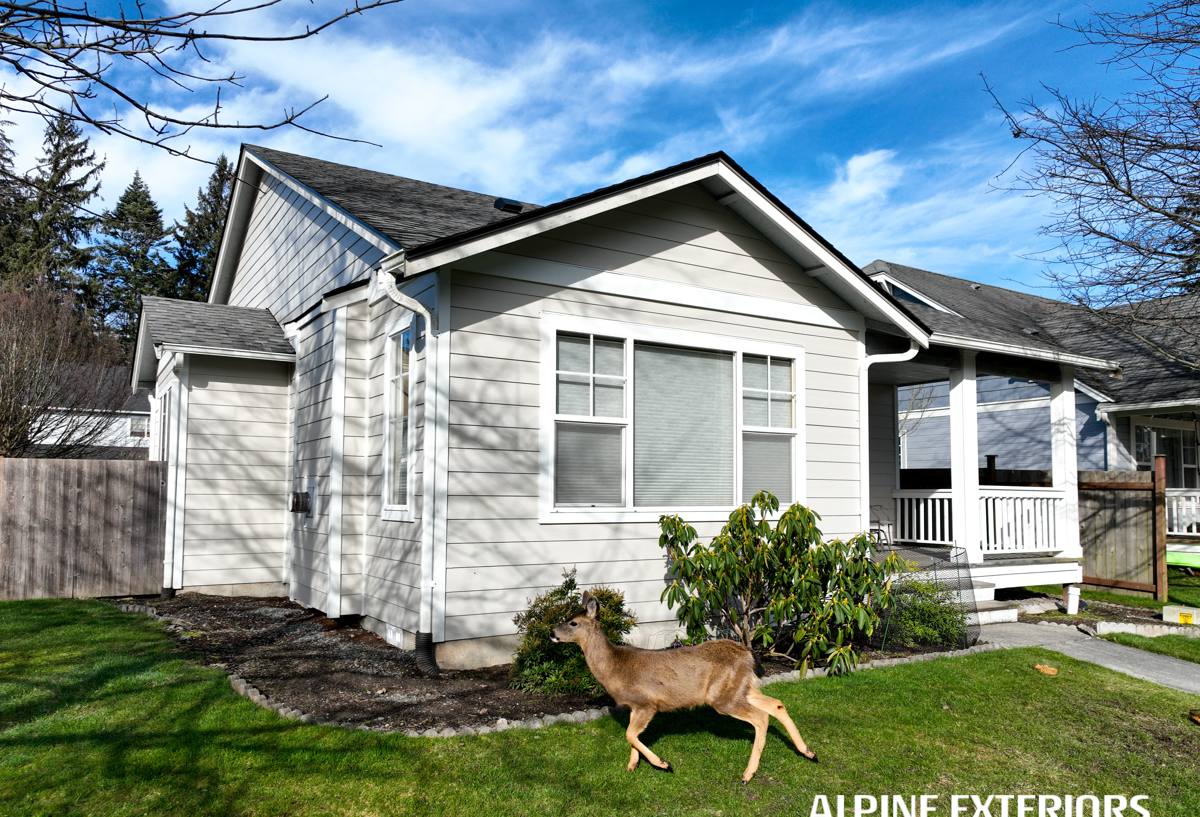
Signs a Columbia Home Needs a New Roof, Not Another Repair
Roof repairs make sense when the problem is isolated — a cracked pipe boot, a few lifted shingles after a windstorm, a flashing leak at a chimney. A full replacement makes sense when the roof system itself is aging out or when damage has spread wide enough that patching just delays the same failure elsewhere. Common signs we look for on Columbia homes include:
- Granule loss heavy enough that you can see bare, shiny patches on multiple slopes, not just one exposed area
- Moss that keeps returning within a season or two of cleaning, especially on north-facing slopes that stay shaded and damp
- Soft or spongy decking felt underfoot during an inspection, which usually means water has already gotten past the shingles
- Daylight visible through the roof deck from inside the attic, or water staining on rafters and sheathing
- A roof that's simply reached the end of its material's realistic service life, especially if it was installed with builder-grade materials and minimal ventilation
If you're only seeing one or two of these, a repair may still be the right call. We'll tell you that honestly during an inspection rather than push a full replacement you don't need yet.
What a Correct New Roof Installation Actually Involves
It's Not Just Shingles
The shingles or metal panels are the visible part of a roof, but they're not what keeps water out on their own. A correctly installed roof is a layered system, and in a climate like this one, every layer earns its place.
The Layers That Matter Most Here
Ice-and-water shield along eaves, valleys, and penetrations gives you a sealed backup where water is most likely to back up under driving rain or ice damming. A high-quality synthetic or felt underlayment covers the rest of the deck as the roof's true first line of defense — the outer material is really the second. Flashing at chimneys, skylights, walls, and valleys has to be lapped correctly with the underlayment, not just caulked, because sealant alone degrades faster than metal-to-underlayment lapping. And every fastener, vent, and piece of exposed metal should be rated for the corrosion pressure that salt air puts on a coastal-adjacent roof.
Ventilation Is Not Optional
A roof deck that can't breathe traps moisture from inside the home against the underside of the sheathing, which rots decking from below no matter how good the shingles above are. Balanced intake at the eaves and exhaust at the ridge is one of the cheapest parts of a roof system to get right during a full replacement, and one of the most expensive things to fix later once decking has already failed.
Choosing Roofing Material for Columbia's Conditions
There's no single "best" roofing material — the right choice depends on your home's style, budget, and how much moss and moisture resistance you want to pay for. Here's how the common options stack up for a coastal Whatcom County home:
| Material | Moss/Moisture Resistance | Typical Lifespan | Notes for This Climate |
|---|---|---|---|
| Standard 3-tab asphalt | Fair | 15–20 years | Budget-friendly but less algae/moss resistant; often the first to show streaking near shaded slopes |
| Architectural (dimensional) asphalt | Good, better with algae-resistant granules | 25–30 years | Most common choice locally; heavier profile sheds water and handles wind better than 3-tab |
| Standing-seam metal | Excellent | 40–50+ years | Sheds moss and moisture fastest; higher upfront cost, minimal maintenance |
| Synthetic/composite shingle | Good to excellent | 30–50 years | Mimics wood or slate look with better moisture performance than natural wood |
Most Columbia homeowners land on algae-resistant architectural asphalt as the practical middle ground, but if a home has heavy tree shading or the owner wants to minimize moss maintenance long-term, metal is worth pricing out even with the higher upfront number.
Our New Roof Installation Process
1. Inspection and Honest Assessment
We start on the roof and in the attic, not just with a drive-by look. We check decking condition, existing ventilation, flashing points, and how much moss or moisture damage is already present, then tell you plainly whether you need a repair or a full replacement.
2. Material and Scope Walkthrough
We go over material options, underlayment and ventilation upgrades, and any decking replacement that's likely needed, so the estimate reflects the actual condition of your roof rather than a generic package.
3. Tear-Off and Deck Inspection
Old roofing comes off down to the deck so we can inspect sheathing directly. Any soft, rotted, or delaminated decking gets replaced before anything new goes down — installing new roofing over compromised decking just hides a problem that will resurface.
4. Underlayment, Flashing, and Ventilation Install
This is where most of the roof's real durability gets built in: ice-and-water shield at vulnerable points, full underlayment coverage, correctly lapped flashing, and balanced intake/exhaust ventilation.
5. Roofing Material Installation
Shingles or panels go on to manufacturer spec, with attention to nailing patterns and exposure — details that affect wind resistance and warranty validity, and that get rushed on lower-quality installs.
6. Final Walkthrough and Cleanup
We walk the finished roof and the property with you, including a magnetic sweep for stray nails, before considering the job done.
What Drives Cost on a Columbia Roof Replacement
Every roof is priced individually after inspection, but the main factors that move the number up or down are consistent:
| Factor | How It Affects Cost |
|---|---|
| Roof size and number of slopes/valleys | More square footage and complexity means more material and labor time |
| Decking condition | Rotted sheathing found during tear-off adds material and labor to replace |
| Material choice | Metal and synthetic materials cost more upfront than asphalt but often need less maintenance |
| Ventilation and flashing upgrades | Adding proper intake/exhaust venting or re-flashing chimneys/skylights adds scope but reduces future risk |
| Roof pitch and access | Steep or hard-to-access roofs take longer and require more safety setup |
We'd rather walk you through these factors on your specific roof than quote a number that doesn't hold up once we're actually up there.
Why a Crew That Already Works in Columbia Matters
A roofing crew that regularly works Bellingham's older, established neighborhoods knows what to expect before the tear-off even starts — tighter lot lines and setbacks, mature tree cover that keeps certain slopes shaded and moss-prone, and older homes where original decking and ventilation may not meet current standards. That familiarity shows up in a more accurate estimate and fewer surprises mid-project, because the crew has already seen the kind of construction and conditions common to this specific area, not just generic regional averages.
It also means we're not learning Whatcom County's permitting and inspection expectations on your job. That's not a small thing when the goal is getting a roof installed correctly the first time.
Keeping a New Roof Healthy Through Moss Season
A correctly installed roof still needs basic upkeep in a climate that grows moss for most of the year. A few habits go a long way toward protecting the investment:
- Keep gutters clear so water isn't backing up under the eaves during heavy rain
- Trim back overhanging branches to reduce shade and debris on north-facing slopes
- Have moss gently treated or removed before it establishes a thick mat, rather than after
- Schedule a quick visual check after major windstorms for lifted or displaced material
- Avoid pressure washing shingles directly — it strips granules and shortens roof life
None of this replaces a professional inspection every few years, but it's the difference between a roof that reaches its full lifespan and one that starts showing problems early.
If your roof in the Columbia neighborhood is showing its age or you're not sure whether you're looking at a repair or a replacement, we're happy to take a look and give you a straight answer. Use the form below to request a free, no-pressure estimate.