 Bellingham Exterior
 New Roof Installation in Puget: Built for Bellingham Bay Weather, Not Just Code Minimum
Puget is a quieter residential neighborhood in the southern part of Bellingham, close enough to Bellingham Bay that the same marine weather pattern shaping the rest of Whatcom County hits it directly. Homes here run the gamut from older mid-century houses that have already had one or two roofs replaced to newer construction still on its original roof, and a lot of that housing stock sits under mature tree cover that keeps roof planes shaded and damp longer than an open, sun-exposed lot would. When it's time for a new roof, that combination of bay exposure, wind-driven rain, and shade matters more than most homeowners expect going in.
We install roofs across Bellingham and the rest of Whatcom County, and Puget is one of the neighborhoods where getting the underlying details right matters as much as the shingle or panel on top. A new roof installed to a generic, drier-climate spec tends to show its age here faster than the homeowner was told to expect. Our approach is the same on every Puget job: build for salt-tinged marine air, sideways rain, and a moss season that runs most of the year, not just for a dry afternoon during the install.
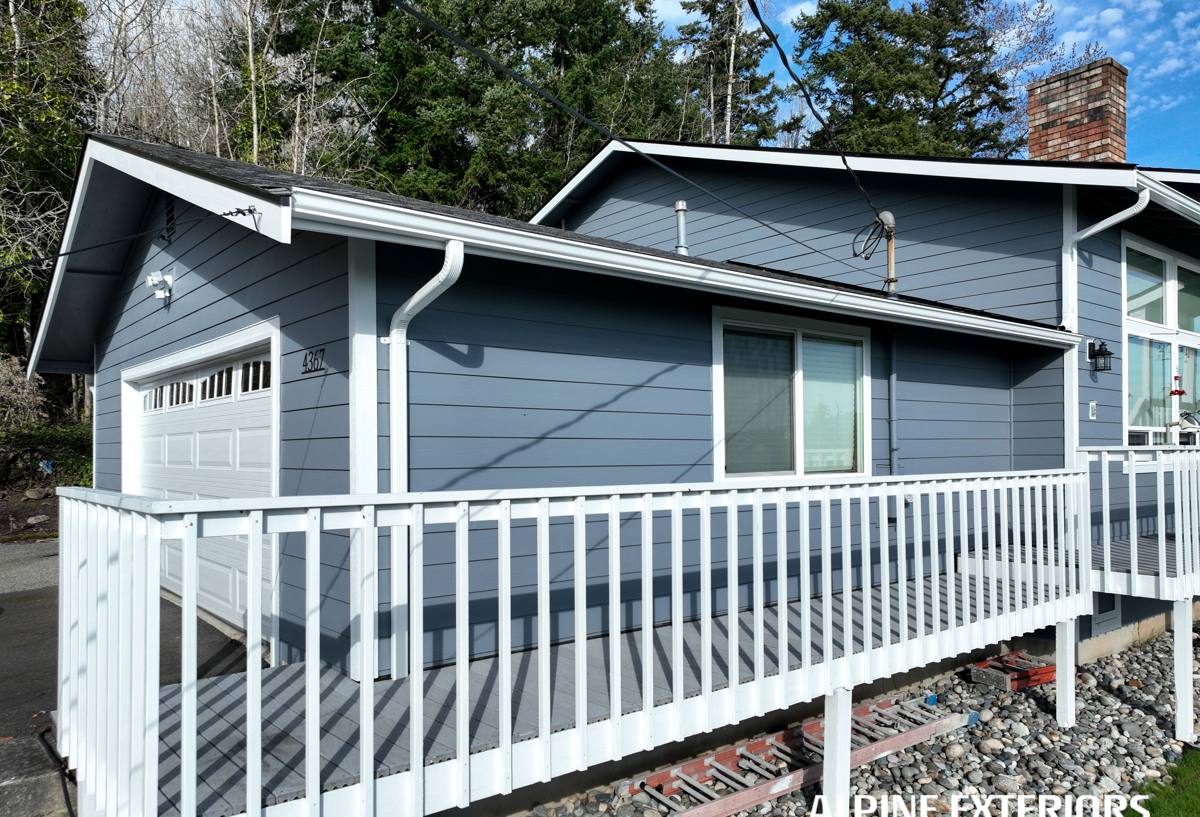
What Puget's Climate Does to a Roof That Isn't Built for It
Salt Air and Marine Corrosion
Bellingham Bay sends a steady flow of salt-tinged, moisture-laden air across the city, and Puget's position close to the water means that exposure is fairly constant rather than occasional. Over years, that kind of air is harder on exposed fasteners, flashing metal, and lower-grade hardware than an inland climate would be. It's a slow, quiet process, not a dramatic one, which is exactly why it's easy to under-spec on a new install and not notice the consequences until well into the roof's life.
Wind-Driven Rain and Roof Penetrations
Rain in this part of Whatcom County doesn't reliably fall straight down. Wind off the bay pushes it sideways, into valleys, around chimneys and vent pipes, and up under flashing and shingle edges that a purely vertical rainfall model wouldn't stress at all. A roof detailed for calm, straight-down rain can still leak in Puget specifically because of that lateral wind load, which is why flashing and underlayment choices matter more here than the shingle brand printed on the invoice.
A Moss Season That Doesn't Really End
Mild year-round temperatures, tree cover, and consistent dampness give moss and algae a long growing window across most of Bellingham, and shaded lots in Puget see that pressure especially on north-facing slopes and low-pitch roof planes. Moss does more than look bad on a roof — it holds water against the surface, works under shingle tabs, and can lift or loosen roofing material if it's left unaddressed for more than a season or two.
What a Correct New Roof Installation Actually Involves
The shingle or metal panel on top is the visible part of a new roof, but it's not what determines whether the roof actually performs for its full rated life in a climate like this. Most early roof failures we get called out for trace back to shortcuts underneath the surface layer, not a bad batch of material.
Tear-Off vs. Overlay
An overlay, installing new shingles directly over an existing layer, can be a reasonable option on some inland, lower-exposure roofs. On a bay-adjacent property like most of Puget, we lean toward a full tear-off far more often, because it's the only way to actually see the roof deck, catch hidden moisture damage from years of marine exposure, and confirm the sheathing underneath is sound before new material goes down. Covering a wet or compromised deck with a new layer just delays the real problem and voids most manufacturer warranties in the process.
Underlayment, Ice-and-Water Shield, and Flashing
Every new roof we install gets underlayment rated for sustained moisture exposure rather than a bare minimum-code product, ice-and-water shield at eaves and valleys where wind-driven rain and debris tend to collect, and flashing that's properly lapped and sealed at every chimney, vent pipe, valley, and roof-to-wall transition. None of this adds much to the overall project cost relative to the shingles or panels themselves, but skipping it is exactly what turns a twenty-five-year roof into a fifteen-year roof in this climate.
Ventilation That Lets the Roof Dry Between Storms
A roof deck that can't breathe stays damp longer after every rain event, which accelerates everything from shingle aging to moss growth to eventual deck rot. We size and place intake and exhaust ventilation to match the actual roof design rather than treating it as an afterthought, since a roof that dries out between storms simply lasts longer than one that doesn't.
Roofing Material Options for a Puget Home
There's no single correct material for every roof in Puget — pitch, sun and shade exposure, budget, and how long you plan to stay in the home all factor in. What matters is understanding the honest trade-offs for a bay-adjacent, moss-prone climate before deciding.
| Material | Moss & Moisture Behavior | Typical Maintenance | Realistic Lifespan Here |
|---|---|---|---|
| Architectural asphalt shingle | Performs well with proper ventilation; algae-resistant granule options help against marine air | Periodic moss removal and gutter checks | 20-30 years |
| Standing seam metal | Sheds water and moss buildup well; smooth surface resists salt-air corrosion when properly coated | Low; occasional fastener and sealant checks | 40-60 years |
| Cedar shake | Absorbs moisture readily; needs strong airflow underneath to dry between rains | Higher; regular treatment and moss control | 20-30 years with consistent upkeep |
| Composite/synthetic shingle | Resists moisture absorption; performance varies meaningfully by product quality | Low to moderate | 30-50 years depending on product |
We'll walk through which option actually fits your roof's pitch, sun and shade exposure, and budget rather than defaulting to whichever product is easiest to sell. A sun-exposed roof facing the bay and a low-slope roof shaded by mature trees on the same street don't call for the same recommendation.
What Drives the Cost of a New Roof in Puget
| Factor | What It Affects | Why It Matters in Puget |
|---|---|---|
| Roof size, pitch, and complexity | Total material and labor | Older Puget homes often have more valleys, dormers, and roof-to-wall transitions where wind-driven rain works its way in |
| Tear-off vs. overlay | Labor scope and deck access | A full tear-off is usually the honest call on bay-exposed homes with years of marine-air exposure underneath |
| Deck condition | Repair cost before new roofing goes on | Trapped moisture behind an aging roof can soften sheathing before it's ever visible from the ground |
| Material selection | Material cost and long-term durability | Salt-tinged air and a long moss season make some materials a better long-term value here than others |
| Site access and tree cover | Labor time and equipment setup | Mature trees common on Puget lots can add staging, debris management, and safety planning time |
Real numbers depend on the specific roof, which is why we walk the property in person before quoting rather than pricing off square footage alone.
A Quick Checklist Before You Commit to a New Roof
- Get a written scope that specifies tear-off vs. overlay, underlayment type, and flashing detail, not just a shingle brand and price
- Ask whether ice-and-water shield is included at eaves and valleys as standard, not an upsell
- Confirm how attic and roof deck ventilation will be handled for your specific roof design
- Ask what happens if the tear-off reveals deck damage, and how that's priced before work starts
- Get the manufacturer warranty terms in writing, including what voids them
Our Process for a New Roof Installation in Puget
We start with an on-site walk of the roof, checking pitch, existing material condition, sun and shade exposure by roof plane, and any visible signs of moss, moisture, or deck movement. From there we put together a clear written scope and price before any work begins, including our recommendation on tear-off versus overlay for that specific roof. Once work starts, correct underlayment, ice-and-water shield, flashing, and ventilation are standard on every job, not optional add-ons quoted separately. We finish with a walkthrough so you know exactly what was installed and what maintenance, if any, it actually needs going forward.
Why a Crew That Already Works Puget Matters
Two roofs a few doors apart in Puget can face genuinely different conditions — one open to direct bay wind and rain, another shaded most of the day by trees on the lot next door. A crew that already works this neighborhood recognizes that variation and adjusts underlayment, flashing detail, and ventilation planning roof by roof instead of applying one generic spec to every job. That judgment, built from actually working this specific stretch of Bellingham over time, is what separates a roof that looks fine for a season from one that's still performing decades later.
Signs an Older Puget Roof Is Ready for a Full Replacement
- Moss buildup on shaded or north-facing slopes that returns quickly after cleaning
- Granules collecting in gutters or at the base of downspouts
- Curling, cupping, or missing shingles, especially after a windstorm off the bay
- Water staining on interior ceilings near exterior walls, chimneys, or vent pipes
- Soft spots or noticeable give when the roof deck is walked
- A roof already past, or close to, its material's realistic lifespan for this climate
Not every one of these means the whole roof needs to come off. A localized issue on an otherwise sound roof can sometimes be repaired. But when several of these show up together, or the deck itself has taken on moisture damage, a full replacement is usually the more honest answer than another round of patchwork, and we'll tell you plainly which situation you're actually in.
If you're weighing a new roof for a Puget property, we're happy to walk it with you and give a straightforward read on what it actually needs. Reach out using the form below for a free, no-pressure estimate.