 Bellingham Exterior
 Deck Repair Built for Puget's Waterfront Climate
Homes in the Puget neighborhood sit close enough to Bellingham Bay that salt-laden air is part of daily life. Add Whatcom County's driving rain and a moss season that can stretch from fall through spring, and you've got one of the toughest environments in the region for an outdoor wood or composite structure. A deck here doesn't fail because the homeowner did anything wrong — it fails because salt air accelerates corrosion in fasteners and connectors, driving rain finds every gap in a ledger board or flashing detail, and moss holds moisture against the wood long after a sunnier neighborhood's deck would already be dry.
We repair decks in Puget on a regular basis, and the damage we see follows a pattern that's different from what you'd find on a deck twenty minutes inland. Understanding that pattern is the difference between a repair that actually holds and one that's patching a symptom while the real problem keeps working underneath.
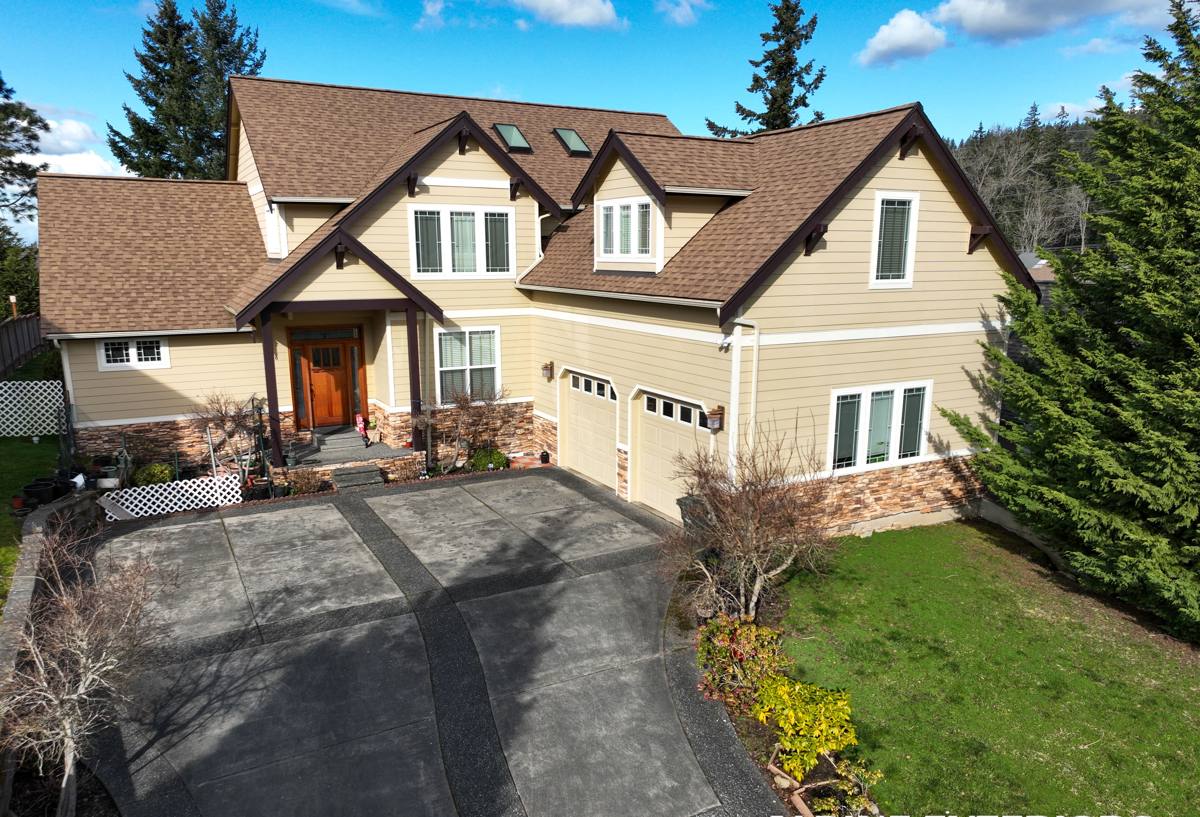
Why Puget Decks Wear Differently Than Decks Elsewhere in Bellingham
Salt Air and Metal Fatigue
Galvanized fasteners, joist hangers, and structural screws are rated for exterior use, but "exterior use" in a lab test doesn't account for years of salt-tinged marine air settling on exposed metal. In Puget, we routinely find corrosion on hardware that would still look serviceable on a deck built the same year further from the water. Corroded fasteners lose holding strength gradually and quietly — there's rarely a visible warning before a ledger connection or a hanger starts to fail.
Driving Rain and Water Intrusion
Storms coming off the Sound don't fall straight down — wind-driven rain gets pushed sideways into vertical surfaces, gaps, and end grain that a calmer rain would never reach. This matters most at the ledger board (where the deck attaches to the house), around post bases, and at any spot where two boards meet without proper flashing. Water that gets behind a ledger or into a post base doesn't just rot wood — it can migrate into the house framing itself.
Moss, Shade, and Trapped Moisture
A long moss season means more months where a deck surface stays damp even between rain events. Moss holds water against the board like a sponge, which keeps the wood's moisture content elevated far longer than an open, sunny deck ever would. Over a few seasons, that constant dampness breaks down the wood fiber and creates the soft, spongy spots that are usually the first thing a homeowner notices.
Signs a Puget Deck Needs Repair
Some of these are obvious. Others hide in plain sight until they've gotten worse than they needed to.
- Soft, spongy, or springy decking boards — especially near the house or in shaded corners
- Rust streaks below screw heads or joist hangers
- Visible gaps or separation where the deck meets the house (ledger board area)
- Wobble or movement in the railing when you lean on it
- Stair stringers that feel loose or uneven underfoot
- Persistent moss or algae growth that keeps coming back after cleaning
- Posts that feel loose at the base, or visible gaps around post footings
- Discoloration or dark staining that spreads rather than washing off
- Nails backing out or fastener heads sitting proud of the board surface
Any single item on that list might be minor. Several at once usually means the deck's structure, not just its surface, needs a closer look.
What a Correct Deck Repair Actually Involves
A lot of deck "repairs" amount to swapping out a bad board and calling it done. That fixes what you can see but not necessarily what caused it. We start every repair by figuring out whether the damage is cosmetic, structural, or both — because the right fix is different for each.
Cosmetic Damage
Surface graying, minor splintering, or moss staining that hasn't compromised the wood underneath. This is addressed with cleaning, sanding, board replacement, and refinishing — but it's worth confirming the wood underneath is actually sound before spending money on finish work.
Structural Damage
Rot in ledger boards, joists, posts, or beams; corroded or failing fasteners and hardware; inadequate flashing at the house connection; undersized or failing footings. This is the damage that determines whether the deck is actually safe to stand on, and it's the part that gets missed when a repair only addresses what's visible from the top.
Where Damage Most Often Hides
In Puget specifically, we check the ledger-to-house connection and flashing first, followed by post bases and any area that stays shaded through the day. These are the spots where the combination of driving rain and slow-drying moss cover does the most damage, and they're often not visible without pulling a board or getting underneath the structure.
Decking Materials: Repair Considerations
What your deck is built from changes both how it fails and how it should be repaired. Here's how the common options behave in this climate.
| Material | Common Failure Pattern Here | Repair Approach |
|---|---|---|
| Pressure-treated wood | Rot at ground contact, fastener corrosion, moss-driven surface breakdown | Sister or replace compromised framing, swap corroded hardware, treat cut ends |
| Cedar | Graying, splintering, softening in shaded/moss-prone areas | Sand and refinish sound wood; replace boards with advanced rot |
| Composite decking | Fastener pull-through, moisture trapped beneath boards, surface mold in shaded spots | Address ventilation/drainage below boards, replace damaged sections to match |
| Structural framing (any species) | Hidden rot at ledger, joist ends, and post bases | Full inspection before cosmetic work; replace or reinforce as needed |
Composite decking often gets marketed as maintenance-free, and the surface material genuinely resists rot. But composite boards still sit on wood framing underneath, and if that framing isn't properly flashed and ventilated, moisture problems develop out of sight while the deck looks fine from above. We treat composite repairs with the same structural scrutiny as a wood deck — the surface material doesn't change what's happening underneath it.
Our Deck Repair Process
- On-site assessment. We walk the full deck — surface, railings, stairs, and underneath where accessible — checking fastener condition, ledger attachment, post bases, and any soft or discolored wood.
- Honest scope. We tell you plainly what's cosmetic, what's structural, and what we'd want to open up further to confirm. No inflating the scope, and no downplaying something that affects safety.
- Repair plan and estimate. A written plan covering what gets replaced, what gets reinforced, and what hardware and materials we're using — matched to this climate, not generic lumberyard defaults.
- Structural work first. Framing, ledger flashing, post bases, and hardware get addressed before any cosmetic work happens. There's no point refinishing a deck that isn't structurally sound underneath.
- Surface and finish work. Board replacement, sanding, and finishing to blend with the existing deck as closely as possible.
- Walkthrough. We show you what was found, what was done, and what to watch going forward.
Repair vs. Replacement: How We Help You Decide
Not every deck with problems needs to be torn out. But sometimes a full or partial rebuild genuinely costs less over time than repeated patch repairs. Here's the general framework we use.
| Factor | Favors Repair | Favors Replacement |
|---|---|---|
| Extent of rot/damage | Isolated to a few boards or one area | Widespread across framing or multiple sections |
| Age of the deck | Structure is relatively young, issue is localized | Deck is old and this is one of several repairs over the years |
| Ledger and flashing condition | Sound, or a straightforward flashing fix | Poor original flashing causing repeat water intrusion |
| Footings and posts | Solid, code-adequate footings | Undersized or failing footings not worth building on |
| Budget goals | Address current issues, extend usable life | Want a longer-term reset rather than recurring repairs |
We'll always give you the repair option first if it's a sound one — we're not in the business of recommending a rebuild when a targeted repair will genuinely hold up. But if a deck has failed the same way more than once, we'll say so, because a repair that's likely to fail again isn't doing you any favors.
Why a Crew That Already Works Puget Makes a Difference
Deck repair isn't one-size-fits-all across Bellingham. A contractor used to drier, more inland conditions may not think to check ledger flashing as a first step, or may not recognize how quickly corrosion sets in on hardware near the water. Working in Puget regularly means we already know where damage tends to concentrate, which materials and fasteners actually hold up here, and how to sequence a repair so it survives the next several wet seasons rather than needing revisiting in a year or two. That local pattern recognition is what separates a repair that lasts from one that just looks finished on the day we leave.
Keeping a Repaired Deck in Good Shape
Once repairs are done, a little seasonal attention goes a long way in this climate:
- Clear leaves, needles, and debris from between boards before they trap moisture
- Treat moss and algae early, before it spreads across the surface
- Check fastener heads and hardware for early rust once a year
- Keep gutters and downspouts clear so runoff isn't draining onto the deck
- Reapply finish on wood decking on the schedule your finish product recommends — sun and salt air both shorten that interval
- Watch the ledger board area after heavy storms for any new gaps or staining
A few minutes of seasonal attention catches small issues while they're still small — which is a lot cheaper than waiting for them to become a repair call.
Get an Honest Look at Your Deck
If your Puget deck has soft spots, rust stains, loose railings, or just doesn't feel as solid as it used to, we're happy to come take an honest look. There's no pressure and no obligation — just a straightforward assessment of what's going on and what it would take to fix it right. Use the form below to request a free estimate.