 Bellingham Exterior
 A roof in Columbia doesn't fail all at once. It's usually a slow process — a flashing lap that starts letting a little water through, a patch of moss that holds moisture against the shingles a few weeks longer each season, a fastener that finally rusts through after years of salt-laced air off the bay. By the time a homeowner sees a stain on the ceiling, the roof has often been losing the fight for a while. Roof repair in Columbia isn't just patching what's visible — it's figuring out why that spot failed first, fixing the actual cause, and making sure the repair holds up against the same conditions that caused the problem in the first place.
What Bellingham's Climate Does to a Repair
Whatcom County's marine climate is hard on roofs in a few specific, compounding ways, and Columbia sees all of them.
Salt Air and Corrosion
Airborne salt carried in off the water accelerates rust on anything metal — nail heads, flashing, vent stacks, gutter hardware. A repair done with standard, non-coastal-rated fasteners can look fine for a season or two and then start failing again as the metal corrodes. It's one of the more common reasons a "repaired" leak comes back within a few years.
Wind-Driven Rain
Rain here rarely falls straight down. Wind pushes it sideways into laps, valleys, and flashing seams that would stay dry in a calmer storm. A repair that looks watertight on a dry day can still leak the first time a real wind-driven storm hits it, if the underlying lap or flashing detail wasn't corrected properly.
A Long Moss Season
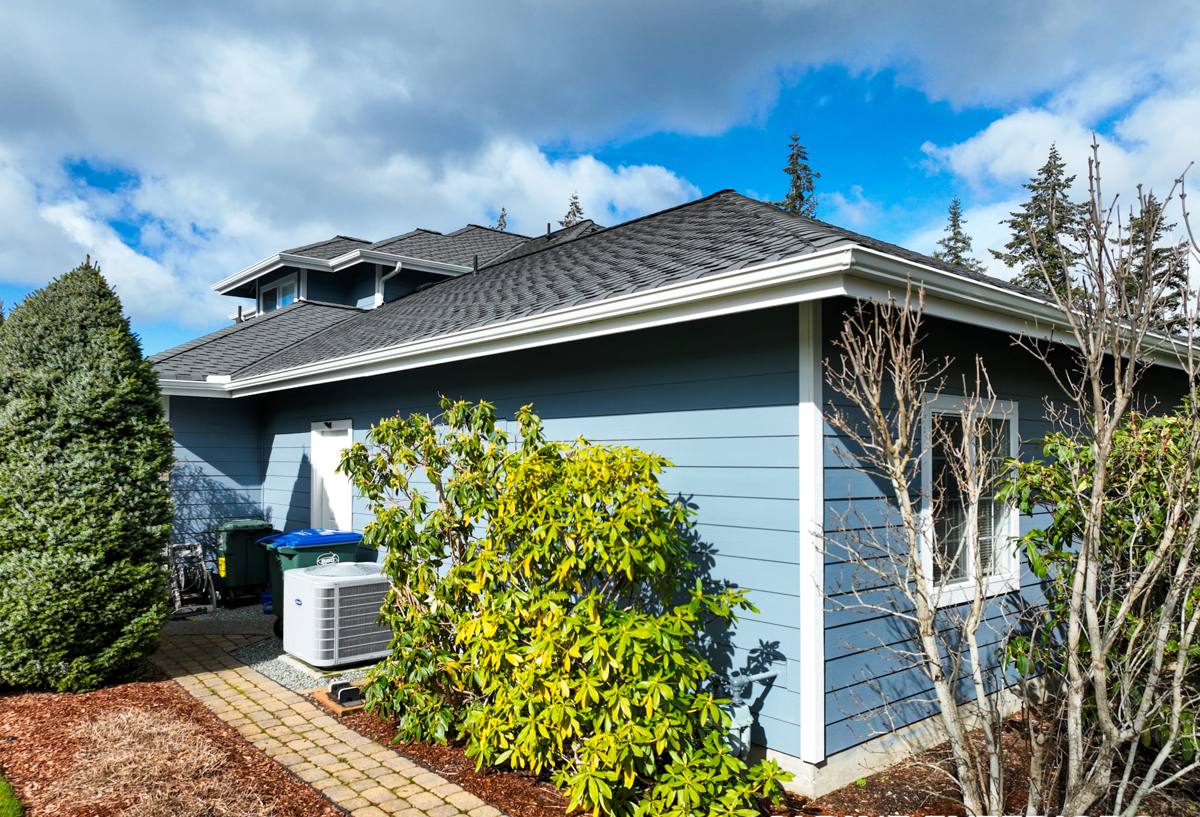
Shaded slopes and tree cover — common on residential lots throughout Columbia — keep parts of a roof damp well after the rest has dried out. Moss that's allowed to sit holds water against the roofing surface, works its way under shingle edges, and can turn a small, localized leak into a much bigger repair if it goes unaddressed for a season or two.
Repair or Replace? Reading the Signs
Not every roof problem calls for a full replacement, and not every leak is fixable with a simple patch. Part of doing this job honestly is telling a homeowner which situation they're actually in, rather than defaulting to the bigger (and more expensive) answer.
- A single leak traced to one damaged section, one bad flashing detail, or a handful of missing shingles usually points to a repair
- Leaks showing up in multiple, unrelated spots at the same time often point to a roof nearing the end of its service life
- Moss buildup limited to a shaded section can often be cleaned and treated without replacing shingles underneath, if they haven't been lifted or damaged
- Widespread granule loss, curling, or cupping across most of the roof is a sign the material itself is wearing out, not a localized issue
- Soft or spongy decking under a leak means the repair has to address the deck, not just the surface layer above it
- A roof already near or past its rated service life may cost more to keep patching over time than to replace outright
We'll give you a straight answer on which category your roof falls into. A repair that's genuinely the right call is a better outcome for everyone than talking a homeowner into a replacement they don't need yet — and a roof that actually needs replacing doesn't get fixed by another round of patching.
Common Repair Issues We See in Columbia
Most of the repair calls we handle in this part of Bellingham trace back to a small set of recurring problems:
| Issue | Typical Cause | What a Correct Repair Involves |
|---|---|---|
| Flashing leaks at chimneys, skylights, or vents | Sealant relied on instead of proper flashing integration; corroded flashing metal | Re-flash with corrosion-resistant material, properly lapped with underlayment |
| Valley leaks | Undersized underlayment, debris buildup, or worn valley material | Clear debris, inspect and replace underlayment, reset valley material to shed water correctly |
| Moss-related shingle lift | Shaded, slow-drying roof sections with moss left untreated | Remove moss without damaging granules, treat the area, replace any lifted or cracked shingles |
| Rusted fasteners or flashing | Standard hardware not rated for salt air exposure | Replace with corrosion-resistant fasteners and flashing suited to a marine climate |
| Wind-lifted or missing shingles | Wind-driven storms catching an edge that wasn't sealed or fastened well | Replace damaged shingles, reset fastening pattern, reseal exposed edges |
What a Correct Repair Actually Involves
A repair that only addresses what's visible from the ground tends to be a repeat visit waiting to happen. We treat every repair call as a chance to find out why that section failed, not just what it looks like from below.
- A close inspection of the deck and underlayment beneath the damaged area, not just the shingle or panel surface
- Matching or compatible materials where possible, so the repaired section performs consistently with the surrounding roof
- Corrosion-resistant fasteners and flashing appropriate for this climate, not whatever's fastest to grab
- Proper lapping and integration of any new flashing or underlayment with what's already on the roof
- A check of nearby areas for related wear — a leak rarely shows up in complete isolation from its surroundings
- An honest note on whether the surrounding roof sections are likely to need attention soon, so you're not surprised by a second call next season
Our Roof Repair Process
- Inspection. We look at the reported problem area along with the rest of the roof, checking for related wear, moss, or flashing issues nearby.
- Diagnosis. We identify the actual cause of the leak or damage — not just the symptom — and explain what we found in plain terms.
- Honest recommendation. If a repair is the right call, we tell you that. If we think the roof is closer to needing full replacement, we tell you that too, along with why.
- Repair work. Damaged material is removed, the deck and underlayment beneath it are checked and corrected if needed, and the repair is completed with materials suited to this climate.
- Final check. We walk the completed repair with you and go over what to expect going forward, including any maintenance that would help it last.
Cost Factors for Roof Repair in Columbia
Repair pricing varies more than replacement pricing, mainly because the scope of the problem isn't always obvious until we're up on the roof. These are the main things that move the number:
| Factor | Why It Matters |
|---|---|
| Extent of the damage | A single flashing repair costs far less than a section with multiple related issues |
| Deck condition underneath | Rot or soft sheathing found during the repair adds material and labor not visible beforehand |
| Roof pitch and access | Steep or hard-to-reach sections take longer and need more safety setup |
| Material availability | Matching an older or discontinued shingle profile can take more time to source than a current product |
| Age and condition of the surrounding roof | A repair on an aging roof sometimes surfaces nearby issues worth addressing in the same visit |
We give real numbers after actually looking at the roof, not a phone estimate based on a general description. Two "small leaks" can have very different repair costs depending on what's happening underneath.
Why Hire a Crew That Already Works Columbia
A roofer who mostly works dry, inland jobs isn't wrong about roofing — they're just working from a different baseline. Fastener and flashing choices that hold up fine in a drier, less exposed area are often undersized for what a Bellingham roof deals with year-round. A crew that's already worked on homes throughout Columbia and the surrounding Bellingham neighborhoods has seen which repair shortcuts come back as second leaks, and which details are worth the extra time the first time around. That local track record shows up in fewer repeat calls, not in anything you'd notice on the invoice.
Keeping a Repair From Becoming a Repeat Visit
A well-done repair still benefits from some basic upkeep in this climate:
- Keep gutters and downspouts clear so water isn't backing up under roof edges during heavy rain
- Have moss addressed while it's still limited to a small area, rather than waiting for it to spread
- Trim back tree cover that keeps a section of roof shaded and slow to dry between storms
- Have flashing points checked periodically, especially after a major wind event
- Call about a small leak or stain right away — the cost of catching it early is almost always lower than the cost of waiting
If you've got a leak, a soft spot, or a patch of moss that's been bothering you in Columbia, we're glad to come take an honest look and tell you what it actually needs. There's a form below — reach out for a free, no-pressure estimate.