 Bellingham Exterior
 Why Birch Bay Siding Takes a Different Kind of Beating
Birch Bay sits close enough to the water that homes here deal with a combination of stresses most inland Whatcom County properties never see. Salt-laden air off the bay accelerates corrosion on fasteners, trim, and any siding material that isn't engineered to resist it. Wind-driven rain comes in sideways during winter storms, pushing moisture into seams and laps that would stay dry on a calmer site. And the long gray stretch between fall and spring gives moss, algae, and mildew months of damp, shaded conditions to take hold on north-facing walls and anything tucked under eaves or tree cover.
None of this means Birch Bay is a bad place to build or maintain a home — it just means siding decisions here have to account for exposure most manufacturers' generic installation guides don't fully address. A product and installation method that works fine in a dry inland climate can fail years early a few miles closer to the water.
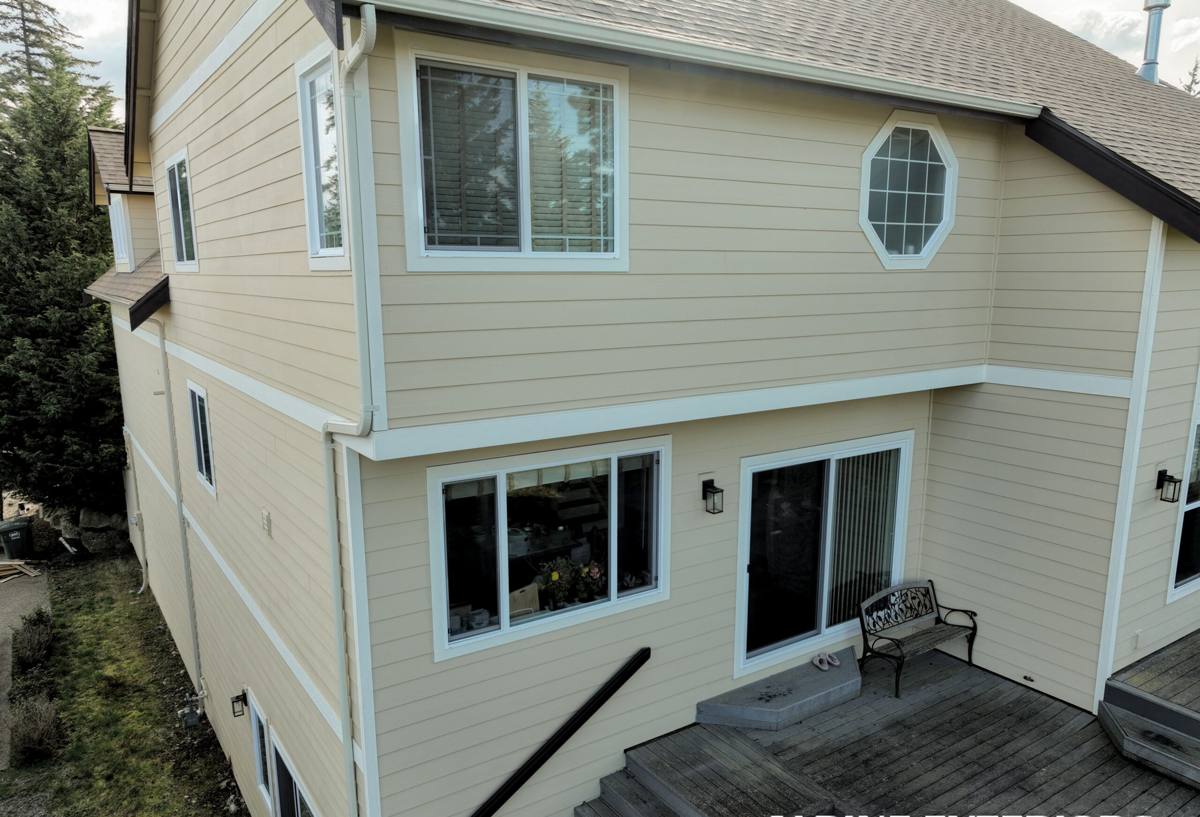
What "Correct" Siding Installation Actually Means
Siding looks simple from the curb, but the parts nobody sees are what determine whether it lasts fifteen years or forty. A correct installation in a coastal Whatcom County setting involves several layers working together, not just panels nailed to the wall.
The Water-Resistive Barrier
Every wall needs a continuous, properly lapped weather-resistive barrier behind the siding. In a driving-rain environment like Birch Bay, laps have to shed water downward with no reverse laps, and every penetration — hose bibs, light fixtures, vents — needs to be flashed and sealed into that barrier, not just caulked over the siding face.
Flashing at Every Transition
Windows, doors, decks, and roof-to-wall intersections are where water finds its way in. Head flashing above openings, kick-out flashing where rooflines meet walls, and proper flashing at horizontal trim joints all matter more here than in a drier climate, because there's simply more water looking for a way in.
An Actual Drainage Plane
Modern best practice calls for a rainscreen gap — a small air space between the back of the siding and the barrier — so any moisture that does get past the surface can drain and dry instead of sitting against the wall sheathing. This is one of the most commonly skipped details on lower-bid jobs because it adds labor and material cost, but it's one of the most important for long-term performance in a wet marine climate.
Fastening and Clearances
Fastener type, spacing, and depth all affect how siding holds up to wind and moisture cycling. Ground clearance and clearance from roof lines, decks, and grade also matter — siding installed too close to soil or hardscape stays wet longer and invites rot and pest issues regardless of what material it's made of.
Why We Only Install James Hardie Fiber Cement
We don't install vinyl, LP SmartSide, Cemplank, Allura, or primed wood siding, and that's a deliberate standard, not an oversight. Vinyl expands and contracts with temperature swings and can warp or crack in high-wind coastal exposure; it also isn't fire-resistant. Engineered wood products like LP SmartSide perform well in many climates but rely on maintaining an intact factory coating — any breach from impact or poor caulk maintenance lets moisture into the wood-based substrate, which is a real risk in a climate with this much sustained dampness. Other fiber cement brands may be reasonable products, but we've standardized our crews, training, and warranty process around one system so every job we do is installed to the same specification.
James Hardie fiber cement is non-combustible, doesn't support moss and mildew growth the way wood-based products can, and holds its factory-applied ColorPlus finish for years without the fading or chalking that plagues field-painted siding. For a home exposed to salt air and near-constant winter moisture, that combination of moisture resistance, dimensional stability, and finish durability is why we put it on homes instead of the alternatives.
Our Birch Bay Installation Process
- On-site assessment. We walk the exterior, check existing siding and sheathing condition, note moisture staining or soft spots, and identify exposure areas facing prevailing wind and rain.
- Tear-off and sheathing inspection. Old siding comes off and we inspect the sheathing underneath for rot or water damage before anything new goes up — this is the point where hidden problems get caught, not after the wall is closed back up.
- Barrier and flashing installation. A continuous water-resistive barrier goes on with correct lap sequencing, followed by flashing at every window, door, and wall penetration.
- Furring or rainscreen application, where specified. Depending on the wall assembly and orientation, we install a drainage gap behind the siding field.
- Hardie panel or lap installation. Panels are fastened to manufacturer specification for fastener type, spacing, and edge clearance, with all factory-cut edges and joints sealed per Hardie's published details.
- Trim, caulking, and final detailing. Corner boards, trim, and touch-up are completed with products compatible with the ColorPlus finish so color and sheen stay consistent.
- Final walkthrough. We review the completed exterior with the homeowner, including a straightforward explanation of what maintenance, if any, the specific product line needs going forward.
Choosing the Right Hardie Product for This Exposure
James Hardie makes climate-engineered HZ5 formulations designed for regions that see more moisture cycling and cooler, wetter winters — a relevant consideration for a bay-adjacent property in Whatcom County. Product selection also comes down to how a home sits relative to prevailing wind and rain direction: a wall that takes the brunt of winter storms off the water benefits from the same attention to flashing and drainage regardless of which Hardie profile is chosen.
Cost Factors to Understand Before You Get Bids
Siding quotes can vary widely, and the difference usually isn't the material line item — it's what is or isn't included in the labor and prep work. Understanding these factors helps you compare bids on equal footing instead of just by the bottom-line number.
| Factor | Why It Affects Cost |
|---|---|
| Tear-off and disposal | Removing and hauling old siding, especially multiple layers or hazardous materials, adds labor and dump fees |
| Sheathing repair | Rot or water damage found underneath old siding has to be repaired before new siding goes on — this is often the biggest variable cost |
| Rainscreen/drainage gap | Adding a true drainage plane is more labor-intensive than a direct-to-barrier install but pays off in longevity in a wet climate |
| Flashing detail work | Proper flashing at every window, door, and penetration takes more time than a minimal-flashing approach |
| Trim and accessory scope | Corner boards, fascia, and trim replacement alongside siding changes total project cost significantly |
| Home height and access | Multi-story walls, steep sites, or limited equipment access increase labor time |
Signs Your Current Siding May Need Replacing
Homes near the water often show wear in specific, recognizable ways before a full failure happens. Catching these early keeps a siding problem from becoming a sheathing or framing problem.
- Persistent moss or dark streaking on north-facing or shaded walls that returns shortly after cleaning
- Soft, spongy, or bubbling areas anywhere on the siding surface
- Visible warping, cupping, or gaps opening up between boards or panels
- Paint that's peeling or chalking faster than expected, especially on walls facing prevailing weather
- Rust staining running down from fasteners or trim pieces
- Rot or discoloration visible at the bottom edge of siding near grade or deck ledgers
- Interior signs — musty smell, peeling interior paint, or damp drywall on an exterior wall
Why Local Experience in Birch Bay Matters
A crew that regularly works this stretch of Whatcom County already knows which wall orientations take the worst of the winter storms, how much moss pressure to expect on shaded elevations, and where salt exposure tends to concentrate corrosion on fasteners and trim. That familiarity shows up in small decisions — flashing details, product selection, fastener choice — that a crew unfamiliar with bay-adjacent conditions might not think to prioritize. It also means a shorter conversation about why certain shortcuts common in drier climates don't hold up here.
Maintenance After Installation
Correctly installed Hardie siding asks very little of a homeowner. Rinsing the exterior once or twice a year to knock off pollen, salt residue, and early moss growth is generally the extent of it. Because the ColorPlus finish is factory-applied and baked on rather than field-painted, there's no repainting cycle to plan around the way there is with wood or field-finished products — which matters in a climate where exterior paint jobs don't hold up as long as they would somewhere drier.
If you're weighing a siding replacement in Birch Bay or want a straight answer on whether your current siding still has useful life left, we're happy to take a look. Reach out for a free, no-pressure estimate using the form below.