 Bellingham Exterior
 Why Birchwood's Climate Is Hard on Siding
Birchwood sits close enough to Bellingham Bay and the Puget Sound shoreline that salt-laden air is a daily fact of life for the homes here, not an occasional nuisance. Add Whatcom County's long, wet fall-through-spring stretch of driving rain, plus the shade from mature trees that keeps many Birchwood lots damp and slow to dry, and you get a combination that's genuinely rough on exterior building materials. Siding in this neighborhood isn't just cosmetic — it's the first line of defense against moisture intrusion, and it has to hold up to conditions that a lot of national siding marketing simply doesn't account for.
We install siding across Bellingham and Whatcom County, and Birchwood's mix of coastal exposure and tree cover is one of the more demanding micro-climates we work in locally. A product and installation approach that's fine in a dry, sunny suburb further inland can fail here in ways that don't show up until years later — usually as soft trim, bubbling paint, or siding that's holding moisture against the wall assembly.
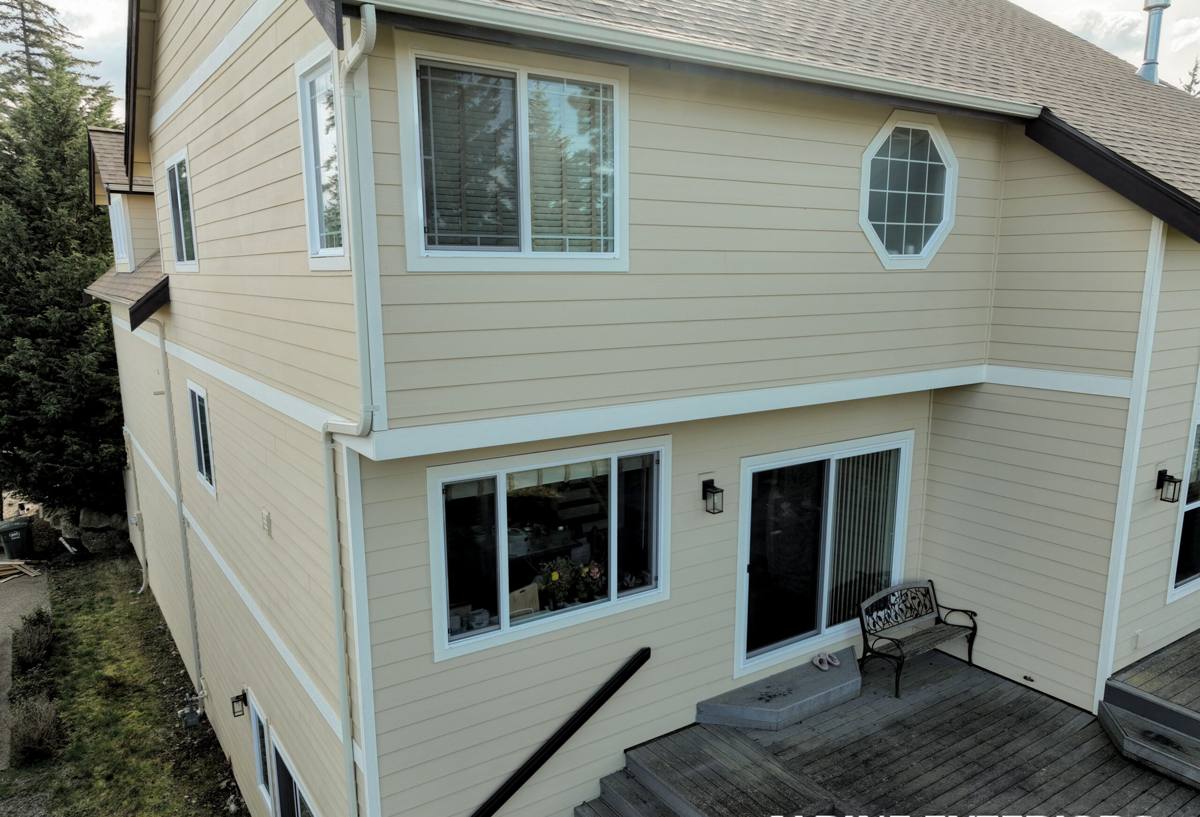
What Birchwood Homes Actually Need From Their Siding
Salt Air and Coastal Exposure
Airborne salt accelerates corrosion on fasteners, flashing, and any metal trim components, and it's hard on paint and coatings that aren't formulated to resist it. Siding material that's dimensionally unstable or prone to swelling reacts faster to salt-driven moisture cycling than a stable, engineered product does.
Driving Rain and Wind-Driven Moisture
Bellingham's rain doesn't always fall straight down. Wind off the water pushes it sideways into wall assemblies, which means the siding's water-shedding details — laps, flashing, joints, and how it integrates with the weather-resistive barrier behind it — matter as much as the siding material itself. A correct installation assumes wind-driven rain will hit the wall and is built to manage it, not just resist it.
Moss, Shade, and Organic Growth
Tree canopy in and around Birchwood keeps parts of many homes shaded and slow to dry after rain, which is exactly the environment moss, algae, and mildew need to take hold. Siding that absorbs moisture or has seams and textures that trap organic debris will show green and black staining faster than a product engineered to shed water and dry quickly.
Why We Install Only James Hardie Fiber Cement
We standardized on James Hardie fiber cement siding for every home we work on, including in Birchwood, and we don't install vinyl, LP SmartSide, Cemplank, Allura, or wood siding. That's not a marketing position — it's a decision based on how these products actually perform over years of real Pacific Northwest weather, and we think homeowners deserve a straight explanation of why.
How Fiber Cement Handles Moisture Differently
James Hardie siding is made from cement, sand, and cellulose fibers, which makes it dimensionally stable — it doesn't swell, warp, or rot the way wood-based products can when they take on moisture. It's also non-combustible, which matters in a region where wildfire smoke and defensible-space concerns have become part of normal homeowner conversations even west of the Cascades. Hardie's HZ5 product line is specifically engineered for the moisture and temperature patterns of climate zones like ours, so the material itself is matched to what Birchwood weather actually does.
ColorPlus Factory Finish vs. Field-Painted Siding
Most Hardie siding we install carries the ColorPlus factory finish — a coating baked on under controlled conditions before the product ever reaches the jobsite, rather than painted in the field where humidity, temperature, and application inconsistencies can shorten the coating's life. In a neighborhood dealing with salt exposure and long damp stretches, a consistent, factory-cured finish holds its color and its protective qualities longer than most field-applied paint jobs, and it comes backed by its own finish warranty.
What a Correct Siding Installation Involves
The siding product is only part of the equation — how it's installed determines whether it actually performs for the next few decades or starts causing problems in year three. On every Birchwood project, correct installation means paying attention to details that aren't visible once the job is done but matter enormously to how the wall assembly manages water.
- A continuous, properly lapped weather-resistive barrier behind the siding, with all penetrations sealed
- Correct flashing at windows, doors, roof-to-wall transitions, and any other intersection where water can find a path in
- Proper clearance between the bottom edge of the siding and grade, decks, patios, and roof lines to prevent wicking
- Fastener placement, type, and spacing that match James Hardie's published installation instructions for our HZ5 climate zone
- Correctly sized and caulked joints — not overdriven nails or gapped seams that let moisture behind the panel
- Ventilation and drainage planes that let any incidental moisture escape instead of getting trapped against the sheathing
Skipping or rushing any one of these items is how a good product ends up performing poorly. James Hardie's own warranty coverage depends on installation following their published specifications, which is one more reason we don't cut corners on the details a homeowner will never see.
Our Process for Birchwood Projects
Assessment and Planning
We start by walking the exterior and assessing what's actually happening behind the current siding where we can — signs of past moisture intrusion, condition of the sheathing, trim, and existing flashing, and how sun and shade patterns on the specific lot affect drying time. That assessment shapes the installation plan, not just the product selection.
Installation
We install to James Hardie's specifications for our climate zone, including the moisture-management details outlined above. We protect landscaping and outdoor living areas during the work and keep the site organized throughout, understanding that a siding project disrupts a household for longer than most other exterior work.
Final Walkthrough
Before we consider the job finished, we walk the completed siding with the homeowner, review caulking and trim details, and make sure everything meets both James Hardie's installation standard and our own.
Comparing Siding Options for a Climate Like Birchwood's
| Factor | James Hardie Fiber Cement | Vinyl Siding | Wood or Engineered Wood (LP-Type) |
|---|---|---|---|
| Moisture response | Dimensionally stable, does not swell or rot | Doesn't rot but can warp, buckle in heat/cold cycling | Absorbs moisture; prone to swelling and rot if compromised |
| Salt air resistance | Engineered coating resists salt exposure well | Can chalk and fade faster near the coast | Finish breaks down faster; more frequent recoating needed |
| Moss and organic growth | Sheds water, resists staining with proper cleaning | Can trap moisture at seams and panel laps | Textured surfaces and edges can hold moss and mildew |
| Fire resistance | Non-combustible | Combustible, can melt or deform in heat | Combustible |
| Finish longevity | Factory-cured ColorPlus finish, long warranty | Color molded in, can fade; not repaintable easily | Field-applied paint/stain needs regular maintenance |
Every product on that table has legitimate uses somewhere. We simply don't think any of the alternatives hold up as well to Birchwood's specific combination of salt air, driving rain, and shade-driven moss as correctly installed fiber cement does, which is why it's the only siding we put on homes.
Cost Factors for a Birchwood Siding Installation
Every home is different, so we don't publish flat prices, but the factors that drive cost on a real Birchwood project are consistent:
| Factor | Why It Affects Cost |
|---|---|
| Home size and wall complexity | More square footage, corners, and roof lines mean more material and labor |
| Existing siding removal | Tear-off and disposal of old material adds time compared to installing over new construction |
| Sheathing and moisture repair | Damaged sheathing or framing found during tear-off needs to be repaired before new siding goes on |
| Trim and detail work | Windows, dormers, and architectural trim add labor beyond flat wall area |
| Product profile and finish | Lap width, texture, and ColorPlus color selection affect material cost |
| Access and site conditions | Tree cover, tight lots, and multi-story walls affect staging and labor time |
We give every Birchwood homeowner a real walk-through and a written estimate based on their actual home, not a generic square-footage formula.
Why Hiring a Crew That Already Works in Birchwood Matters
A contractor who regularly works this neighborhood already understands its particular exposure — how close a given block sits to the water, which lots hold shade and moisture longer, and what the county's building and permitting requirements look like for exterior work. That familiarity shows up in fewer surprises during tear-off, better judgment about flashing and drainage details, and a finished installation that's actually built for the conditions the home will face, not a generic spec pulled from a different climate. It also means someone locally accountable if a question comes up years down the road, rather than a crew that worked one job in the area and moved on.
Caring for James Hardie Siding After Installation
Correctly installed James Hardie siding is low-maintenance, but "low-maintenance" isn't "no-maintenance," especially in a moss-prone, shaded neighborhood like Birchwood. An occasional gentle rinse to keep organic buildup from taking hold, a periodic look at caulking around windows and trim, and prompt attention to any impact damage will keep the siding and its factory finish performing for the long haul. Because the ColorPlus finish is factory-applied and warrantied, homeowners generally aren't looking at repainting the way they would with field-painted wood or engineered wood siding.
If you're planning a siding project for a home in Birchwood, we're happy to walk the exterior with you, talk through what we're seeing, and put together a free, no-pressure estimate — just fill out the form below.