 Bellingham Exterior
 Lynden's Climate and What It Does to Siding
Lynden sits inland from Bellingham Bay, but it's still squarely inside Whatcom County's marine-influenced weather pattern. That means long stretches of damp, overcast weather, driving rain that comes in sideways during winter storms, and shaded, moisture-trapping conditions that keep moss and algae growing for most of the year. Even without direct coastal exposure, humid air moving in off the Salish Sea reaches this far inland, and it settles into every seam, lap joint, and fastener point on a home's exterior.
Siding in this part of Whatcom County isn't fighting one bad storm a year — it's fighting slow, constant moisture exposure that never really lets up between October and May. That's a very different repair problem than, say, a hail-damaged home in a dry climate. Here, the enemy is water that finds a way in and then has nowhere to dry out quickly. Repairs that don't account for that reality tend to fail again within a season or two.
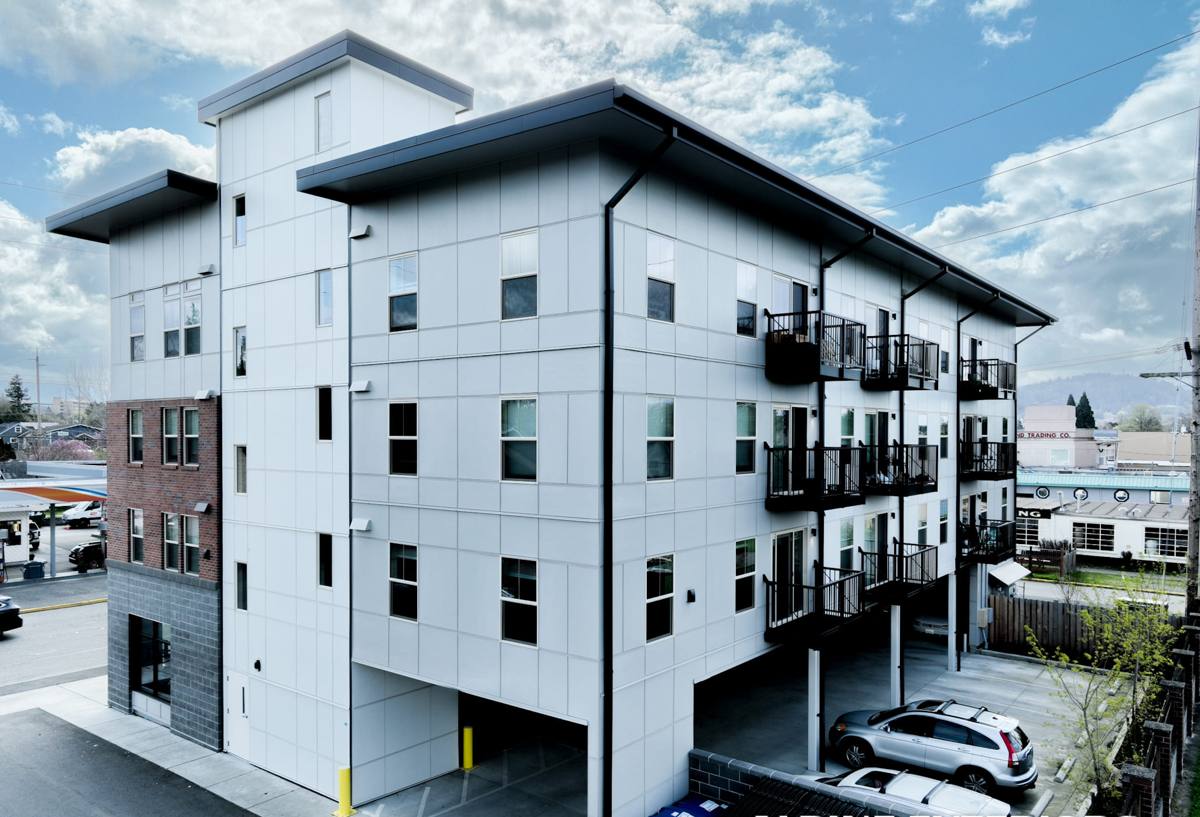
Common Siding Repair Issues We Find on Lynden Homes
Every siding material fails differently, but the patterns we see on Lynden homes are consistent enough to plan around:
- Moisture intrusion at seams and butt joints — the most common failure point on any lap siding, especially where caulking has dried out or shrunk.
- Moss and algae growth on north-facing walls, under eaves, and anywhere shaded from direct sun for most of the day.
- Swelling, delamination, or soft spots on wood-based products (cedar, primed spruce, engineered wood) where water has been absorbed into the material itself.
- Cracked or warped vinyl panels from temperature swings and age, especially on south- and west-facing walls that see the most sun exposure between rain events.
- Nail pops and loose panels from wood movement and settling, which open small gaps that rain then exploits.
- Trim and transition damage around windows, doors, and roof lines — these are the areas where two different materials meet, and they're almost always where a leak actually starts.
Notice that most of these aren't cosmetic. They're moisture problems with a cosmetic symptom. That distinction matters for how a repair should actually be done.
Signs It's Time to Call Someone
- Soft or spongy siding when you press on it
- Visible cracking, buckling, or gaps between panels
- Paint that's bubbling, peeling, or failing faster than it should
- Persistent moss or dark streaking that comes back after cleaning
- Musty smell or discoloration on interior walls near exterior siding
- Missing or loose caulking at trim, corners, and penetrations
- Visible daylight or drafts around window and door trim
What a Correct Siding Repair Actually Involves
A lot of "siding repair" in this region is really just cosmetic patching — caulk over a crack, a fresh coat of paint over a soft spot, a replacement panel nailed over whatever's underneath without checking what caused the damage in the first place. That kind of work looks fine for a season and then fails again, usually worse, because the underlying moisture problem was never addressed.
A repair done correctly starts with figuring out why the siding failed, not just patching where it failed. That means:
- Removing enough surrounding material to inspect the sheathing and weather barrier underneath, not just the visible panel.
- Checking for rot, soft framing, or compromised house wrap before anything new goes back on.
- Confirming proper flashing at windows, doors, and any horizontal trim — these are the spots that cause the majority of repeat failures.
- Matching replacement material correctly, including profile, exposure, and finish, so the repair doesn't stand out or create a new water path.
- Re-sealing and re-caulking with products rated for sustained damp exposure, not just a quick-dry patch caulk.
Skipping the inspection step is the single biggest reason siding repairs fail twice. In a climate like Whatcom County's, hidden moisture doesn't announce itself until the damage has already spread.
Repair or Replace? How We Help You Decide
Not every repair should be a repair, and not every problem justifies full replacement. The right call depends on how much of the wall is affected, what's underneath, and how the existing material has held up so far.
| Factor | Favors Repair | Favors Replacement |
|---|---|---|
| Extent of damage | Isolated to one or two areas | Spread across multiple walls or elevations |
| Sheathing condition | Dry, solid framing underneath | Soft, rotted, or water-stained sheathing |
| Material age | Newer siding with years of service life left | Original siding nearing or past expected lifespan |
| Material type | Fiber cement with a warranty and available match | Discontinued profile, failing wood, or brittle old vinyl |
| Root cause | Isolated flashing or caulk failure | Systemic moisture issue behind multiple sections |
We'll tell you honestly which side of that table your home falls on. If a targeted repair will genuinely hold up through another Whatcom County winter, that's what we'll recommend — there's no reason to sell a full replacement when a section repair does the job.
Our Siding Repair Process
- On-site inspection. We look at the visible damage and check surrounding areas that are prone to the same failure — most homes have more than one weak spot.
- Probe and assess. We check for soft sheathing, moisture behind the siding, and flashing condition before quoting the scope of work.
- Honest scope and estimate. You get a clear explanation of what's failing, why, and what it will take to fix it correctly — not just what it will take to make it look fixed.
- Removal and repair of the source, not just the symptom. Damaged sheathing or house wrap gets addressed before new siding goes back on.
- Proper flashing and sealing. This is the step that determines whether the repair lasts five years or fifteen.
- Matched material installation. Where we install new material, it's fitted and finished to blend with the surrounding siding as closely as possible.
- Final walkthrough. We show you what was found and what was done, so you understand the work rather than just taking our word for it.
Why We Repair With — and Recommend — James Hardie Fiber Cement
When a repair calls for new material, or when a homeowner asks us what to replace failing siding with, we only install James Hardie fiber cement. That's a deliberate standard, not a default. We don't install vinyl, LP SmartSide, Cemplank, Allura, primed spruce, or cedar, and we're upfront about why: those products all come with real trade-offs in a climate like this one — ongoing maintenance, moisture sensitivity, installation tolerances that are easy to get wrong, or warranty structures that don't hold up the way homeowners expect.
James Hardie's fiber cement is non-combustible, engineered specifically for wet, moderate climates through its HZ5 product line, and finished with the factory-applied ColorPlus finish, which holds color and resists the moss, mildew, and UV wear that plague painted wood and fading vinyl in Whatcom County. It also carries a strong, transferable warranty when installed to Hardie's specifications — which matters more here than almost anywhere, since correct installation is what determines whether siding survives twenty rainy seasons or needs attention again in five.
When we do repair work with Hardie product, we're not guessing at compatibility — we know how the panels, joints, and factory finish behave over time in this exact climate, because it's the only system we install.
Why Hiring a Crew That Already Works in Lynden Matters
Siding repair isn't a generic skill you can transplant from a dry climate and expect the same results. A crew that regularly works Whatcom County homes already knows which details fail first in this weather — where flashing tends to get skipped, which trim details trap water, how long moss takes to come back after a cleaning, and how the freeze-thaw swings of a Pacific Northwest winter stress caulk and seams differently than a drier region would.
That local experience shows up in small decisions during a repair: how much material to remove before you can trust what's underneath, which sealants actually hold up to sustained dampness instead of just looking good on install day, and where to add flashing that wasn't part of the original build but should have been. Those are the details that separate a repair that lasts from one you'll be paying for again in two years.
If you're seeing soft spots, recurring moss, cracked panels, or just want a second opinion on siding that's starting to look tired, we're happy to take a look. Estimates are free, there's no pressure to sign anything on the spot, and you'll get a straight answer about whether your home needs a repair, a partial replacement, or nothing at all yet.