 Bellingham Exterior
 Board & Batten in a Neighborhood Like Silver Beach
Silver Beach sits in one of the more heavily wooded, moisture-holding pockets of Bellingham. Mature trees shade roofs and walls for much of the day, hillside lots slow down drainage, and the combination of driving rain, salt-laden coastal air moving in off the Sound, and a moss season that can stretch across most of the year puts real, sustained stress on exterior materials. Board and batten siding — with its vertical lines, deep shadow reveals, and clean cottage-to-craftsman look — is a popular choice out here, and it can perform very well. But "popular" and "correctly installed for this climate" are two different things, and the gap between them is where a lot of siding problems start.
This page is specifically about board and batten siding for Silver Beach homes: what the local conditions demand from the material and the install, how we approach the job, and why we build every board and batten project here out of James Hardie fiber cement rather than the wood or vinyl versions of the same look.
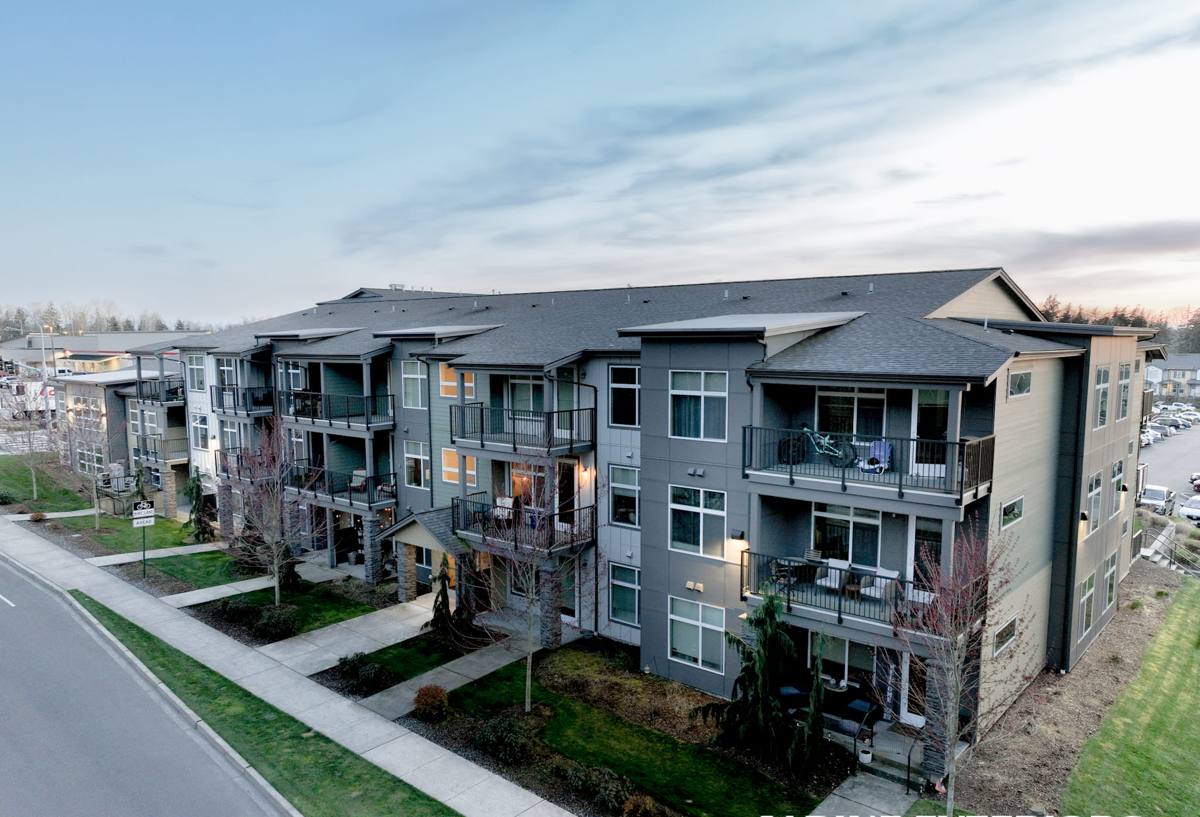
What Silver Beach's Climate Does to Vertical Siding
Shade and Moss
Board and batten relies on vertical battens covering the seams between wider panels or boards. Those battens create narrow channels and shadow lines that, on a shaded, tree-covered lot, stay damp longer than open, sun-exposed wall sections. Moss and algae take hold in exactly those channels first. On a material that can absorb moisture — untreated wood, some engineered wood products — that trapped dampness eventually leads to softening, swelling, or rot at the battens and panel edges. On a material that doesn't absorb water, the moss is a cosmetic and maintenance issue rather than a structural one.
Driving Rain and Wind-Driven Wet
Whatcom County storms don't just fall straight down — wind off the water pushes rain sideways into wall assemblies, and vertical siding profiles have more seam length per square foot than horizontal lap siding, which means more joints for water to find. Every one of those joints needs correct flashing, correct fastening, and the right gap behind the siding — not just careful caulking, which fails long before the siding does.
Salt Air
Like much of coastal Whatcom County, Bellingham deals with a low but constant level of salt-laden air moving in off Bellingham Bay and the Sound. Salt exposure accelerates corrosion on fasteners and trim hardware and speeds up the breakdown of lower-grade paints and coatings. It's a slower process than storm damage, but it's a steady one, and it's part of why fastener choice and factory-applied finishes matter more here than in a dry inland climate.
What a Correct Board & Batten Job Actually Involves
Board and batten looks simple from the street — vertical boards, vertical battens, done. The part that actually determines whether it lasts fifteen years or fifty happens behind the surface.
- A drainage gap (rainscreen) behind the siding so any moisture that does get past the surface has somewhere to go and can dry out instead of sitting against the wall sheathing.
- Correct flashing at every horizontal transition — window and door heads, roof lines, deck ledgers — since these are the spots where wind-driven rain most often finds a way in.
- Fastener pattern and depth matched to the manufacturer's spec, not "close enough." Over- or under-driven fasteners are one of the most common causes of early siding failure, and it's invisible from the ground once the job is done.
- Batten spacing and fastening that accounts for expansion and contraction so boards aren't fighting the material as temperatures and moisture levels shift through the seasons.
- Sealed and back-primed cut edges at every field cut, corner, and penetration — the edges are always more vulnerable than the face of the board.
Skip any one of these and the siding can still look right on installation day. The problems show up two, five, or ten winters later, usually as soft spots, staining, or paint failure right at the battens — which is exactly where they're hardest and most expensive to fix after the fact.
Why We Only Install This in James Hardie Fiber Cement
Board and batten is available in several materials — cedar, primed spruce, engineered wood, vinyl, and fiber cement. We've made a standing decision to install it in James Hardie fiber cement only, and on a lot like a shaded, damp Silver Beach property, the reasoning is straightforward.
Wood and engineered wood board and batten depend on an intact paint or coating layer to keep moisture out. In a climate with a long moss season and near-constant shade in places, that coating is working overtime, and any gap — a hairline crack, a spot where moss holds moisture against the surface — gives water a path into a material that will absorb it. Vinyl board and batten sidesteps the rot question but has its own trade-offs: it can distort in strong wind-driven weather, its seams and channels are a magnet for moss and grime that's hard to fully clean off, and its color is baked in with no realistic way to refresh it as the house ages.
James Hardie fiber cement is non-combustible and doesn't rot, swell, or support the kind of pest damage that wood products can be vulnerable to. It's factory-finished with Hardie's ColorPlus coating, which is baked on under controlled conditions and holds color and adhesion far more consistently than field-applied paint — a real advantage on a house that spends much of the year shaded and damp. It's engineered specifically for Pacific Northwest conditions through Hardie's HZ5 product line, and it carries a strong transferable warranty when installed to spec. None of that is marketing to us — it's the reason we stopped installing anything else.
How the Options Compare on a Property Like This
| Material | Moisture behavior in shade/moss conditions | Finish durability | Long-term maintenance |
|---|---|---|---|
| James Hardie fiber cement | Does not rot or swell; unaffected by trapped moisture | Factory ColorPlus finish, very stable | Occasional wash; repaint not required for many years |
| Cedar / primed wood | Absorbs moisture; vulnerable where coating fails | Field-applied, degrades faster in shade/damp | Regular repainting and inspection for soft spots |
| Engineered wood | Better than raw wood but still moisture-sensitive at cut edges and seams | Factory-coated but edge-sealing is critical | Inspect edges and seams regularly |
| Vinyl | Won't rot, but traps moss/grime in channels | Color molded in; fades and chalks over time | Frequent cleaning; no refinishing option |
Our Process for a Silver Beach Board & Batten Project
1. On-Site Assessment
We walk the property and look specifically at sun exposure, tree cover, existing moisture or moss patterns on the current siding, and how water currently moves off the roof and around the foundation. On a hillside or heavily wooded lot, drainage around the house matters as much as the siding itself.
2. Tear-Off and Sheathing Check
We remove the old siding and inspect the wall sheathing underneath before anything new goes up. Any soft or water-damaged sheathing gets addressed before we cover it — installing new siding over a compromised wall doesn't fix the underlying problem, it hides it.
3. Weather Barrier and Rainscreen
We install a proper weather-resistant barrier and a drainage gap behind the siding, matched to the exposure of the specific wall — a shaded north-facing wall and a more open south-facing wall don't always need to be treated identically.
4. Board & Batten Installation to Manufacturer Spec
Panels and battens go up following James Hardie's fastening, spacing, and flashing requirements, with particular attention to every window, door, and roofline transition — the spots that take the brunt of wind-driven rain.
5. Finish and Final Walkthrough
We check caulking, trim, and paint lines, then walk the property with the homeowner before calling the job done.
What Drives Cost on a Job Like This
| Factor | Why it matters here |
|---|---|
| Existing sheathing condition | Wooded, damp lots see more hidden moisture damage that needs repair before new siding goes on |
| Wall complexity | Board and batten's vertical seams mean more cutting and flashing detail around windows, dormers, and rooflines |
| Access and site conditions | Hillside lots and mature landscaping can affect staging, scaffolding, and material handling |
| Panel and trim selection | Hardie panel width, trim profile, and ColorPlus color affect material cost |
| Removal and disposal | Tear-off of the existing siding and any damaged sheathing adds labor and disposal cost |
We give firm, itemized numbers after the on-site assessment rather than ballpark figures over the phone — every one of these factors looks a little different lot to lot in this neighborhood.
Living With Board & Batten in Silver Beach: A Maintenance Checklist
- Rinse siding and battens once or twice a year, focusing on shaded walls where moss and algae build up fastest.
- Keep tree branches and shrubs trimmed back from wall surfaces to improve airflow and sun exposure.
- Check gutters and downspouts each fall so roof runoff isn't dumping extra water against the siding.
- Inspect caulking at windows, doors, and trim joints annually and have any gaps addressed promptly.
- Watch for soft spots, staining, or paint changes at the battens specifically — it's the first place problems show on any board and batten system.
Why a Crew That Already Works This Neighborhood Matters
Board and batten installed correctly in a dry, open-sun location and board and batten installed correctly on a shaded, hillside Silver Beach lot aren't quite the same job — the drainage detailing, the flashing priorities, and the maintenance conversation with the homeowner all shift based on how much shade and standing moisture a given wall actually deals with. A crew that has worked this specific area knows which walls on a typical Silver Beach lot need the most attention before the first panel goes up, and that translates into fewer callbacks and a longer-lasting result.
If you're weighing board and batten for a home in Silver Beach, we're glad to come take a look, walk the property with you, and put together a straightforward, no-pressure estimate — just fill out the form below.