 Bellingham Exterior
 Silver Beach Sits Where Bellingham's Weather Hits Hardest
Silver Beach homes sit close enough to Bellingham Bay that the weather here isn't quite the same as it is a few miles inland. Salt-laden air moves off the water and settles on everything it touches — siding, trim, gutters, fasteners. Add Whatcom County's long wet season, driving rain that comes in sideways off the water during winter storms, and the shade and dampness that let moss and algae take hold for months at a time, and you've got a set of conditions that will find every weak point in a siding system faster than they would on a home set back from the shoreline.
None of this means Silver Beach is a bad place to own a home — it means the siding on that home has a harder job to do. Paint that would last a decade inland can start chalking and failing in six or seven years here. Wood trim that stays dry most of the year somewhere else can hold moisture against a wall for weeks at a time near the water. A siding product and an installation that aren't matched to this specific exposure will show it early, usually in ways that are expensive to ignore.
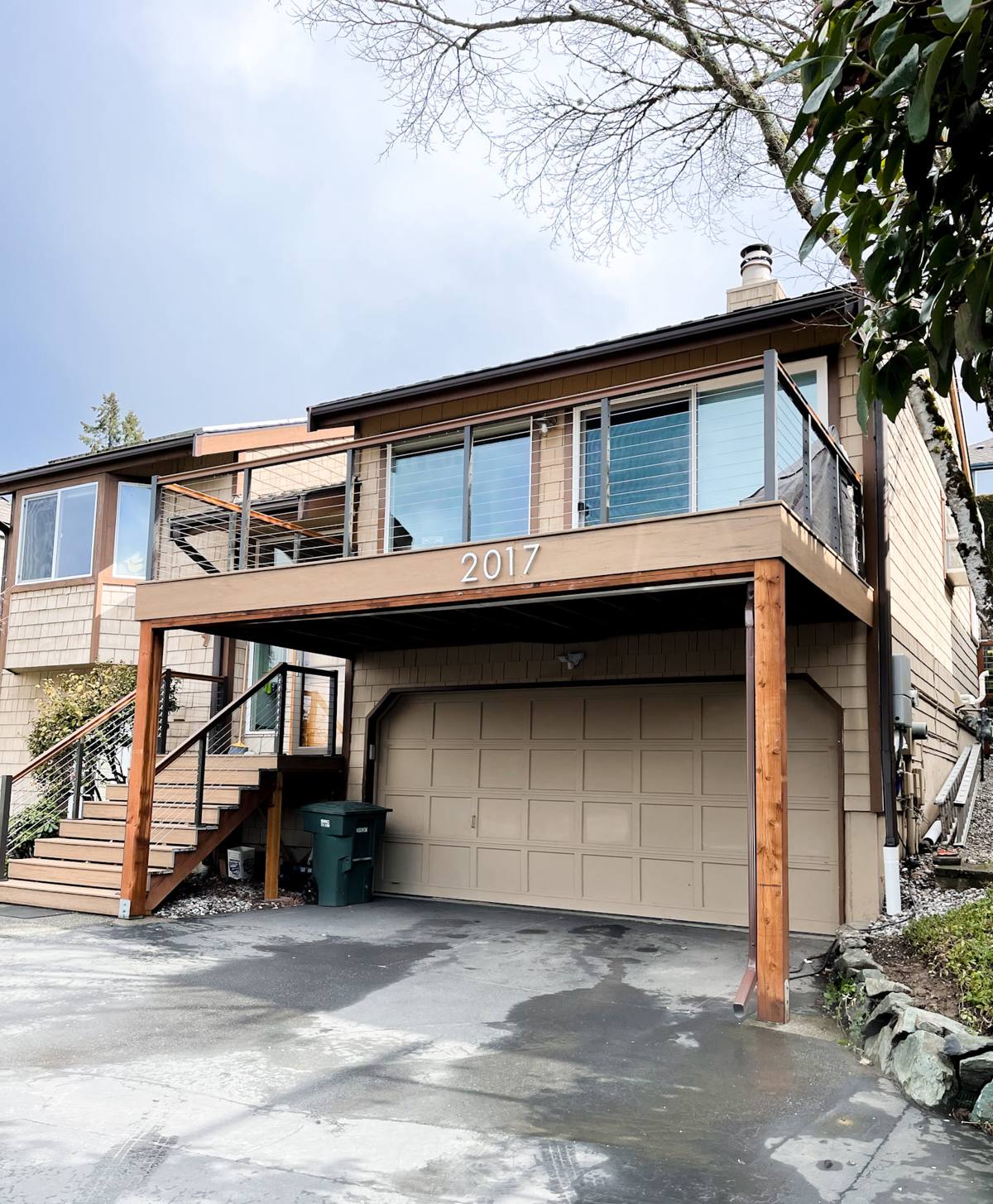
What Siding Actually Needs to Do on a Silver Beach Home
Strip away the marketing and a correct siding job in this neighborhood needs to manage four things at once:
- Moisture rejection — keep driving rain from working behind the cladding, not just off the face of it
- Salt tolerance — resist the corrosion and finish breakdown that comes from airborne salt settling on painted or coated surfaces
- Moss and algae resistance — hold up through months of shaded, damp conditions without the surface itself becoming a growth medium
- Dimensional stability — expand and contract with wet Pacific Northwest winters and drier summers without cupping, buckling, or opening joints
Materials that don't check all four boxes tend to fail in predictable ways near the water. Wood and engineered wood products can perform well when maintained aggressively, but they depend on paint film integrity and moisture management staying perfect year after year — a hard standard to hold in a salt-air, high-rainfall environment. Vinyl doesn't rot, but it doesn't stand up structurally to wind-driven rain intrusion the way a rigid product does, and it has its own limits in coastal exposure. This is the exposure profile fiber cement was engineered for, which is why it's the only material we put on homes in this neighborhood.
Why We Only Install James Hardie in This Climate
We install James Hardie fiber cement siding exclusively — not vinyl, not LP SmartSide, not Cemplank or Allura, not primed spruce or cedar. That's not a brand preference; it's a standard we set after weighing how each category of product actually performs under Whatcom County's coastal weather, not just how it performs in a showroom.
Non-Combustible, Dimensionally Stable
Fiber cement is cement, sand, and cellulose fiber — it doesn't burn, it doesn't rot, and it doesn't expand and contract the way wood-based products do when they cycle between a wet Bellingham winter and a dry summer. That stability matters more here than in drier climates, because the swings between saturated and dry conditions are bigger and more frequent near the water.
HZ5 Engineering for Coastal and Wet Climates
James Hardie makes region-specific product lines, and the HZ5 line is engineered for exactly the kind of wet, coastal weather Silver Beach sees — built to resist moisture damage and hold its finish under sustained damp exposure. That's a meaningfully different product than a generic siding board sold everywhere in the country regardless of climate.
ColorPlus Factory Finish
The factory-applied ColorPlus finish is baked on under controlled conditions, which gives it a more consistent bond and better fade and moisture resistance than most field-applied paint jobs — a real advantage where salt air accelerates coating breakdown. It also means the finish is warranted separately from the substrate, which matters when you're evaluating long-term cost, not just install-day cost.
What a Correct Installation Actually Involves
Fiber cement siding fails early almost exclusively because of installation mistakes, not product defects. A correct install on a Silver Beach home involves:
- Removing the old cladding and inspecting the sheathing — you can't know what's underneath, including any hidden moisture damage from years of coastal exposure, until the old siding is off
- Repairing or replacing damaged sheathing before anything new goes up, rather than covering a problem
- Installing a proper weather-resistive barrier, lapped and sealed to shed water downward and outward, not trap it against the wall
- Correct flashing at every penetration — windows, doors, hose bibs, vents, and anywhere else water can find a path in
- Maintaining Hardie's specified clearances from grade, roof lines, and decks, so splash-back and standing moisture don't sit against the bottom of the siding
- Fastening to Hardie's specifications — the right nails or screws, at the right spacing and depth, into solid framing
- Sealing and painting field-cut edges with the correct products, since a factory finish only protects the surfaces it was applied to
Skip any one of these steps and you can end up with a home that has "Hardie siding" on it but still takes on moisture the way a poorly installed product would. The material is only as good as the install underneath it.
Our Process for Silver Beach Projects
We treat a coastal Bellingham job differently from an inland one, starting with the walk-through. We look specifically for the wear patterns salt air and driving rain cause — moss lines that show where water sits longest, staining or soft spots near grade, gaps at trim where wind-driven rain has been working its way in over the years. That inspection shapes the scope before we ever quote a number.
We also sequence the work around this neighborhood's weather rather than fighting it. Removing old siding exposes bare sheathing, so we plan for weather windows, protect open walls if conditions turn, and don't leave a house exposed longer than necessary. Cleanup includes managing debris carefully around landscaping and drainage, which matters more on lots close to the water table.
| Cost Factor | What Drives It |
|---|---|
| Sheathing condition | Hidden moisture damage found after tear-off adds repair scope before new siding goes on |
| Home size and wall complexity | More corners, dormers, and trim details mean more cutting, flashing, and labor time |
| Siding profile and exposure | Lap width and reveal affect material quantity and installation time |
| Trim and accessory scope | Fascia, soffit, and trim replacement alongside siding changes total project cost |
| Access and site conditions | Slopes, tight setbacks, and staging limitations near the water can affect labor time |
Signs Your Current Siding Is Already Losing the Fight
A lot of Silver Beach homeowners live with early warning signs for years before calling anyone, mostly because the signs look cosmetic at first. Watch for:
- Moss or algae that returns within months of being cleaned or pressure washed
- Paint that's chalking, peeling, or fading noticeably faster on the water-facing side of the house
- Soft or spongy spots when you press on wood-based siding or trim, especially near the bottom courses
- Visible gaps opening up at butt joints, corners, or around window and door trim
- Staining or dark streaks below nail heads or at panel seams
- Warping, cupping, or bowing in individual boards
Any one of these on its own might just need attention. Several at once, especially on the sides of the house that face the water or prevailing weather, usually means the siding system itself is losing the battle with the climate, not just showing its age.
Why Local Experience on This Specific Neighborhood Matters
A crew that's worked in Silver Beach already knows which sides of a house take the worst weather, how close to grade the old siding typically sits on homes here, and what kind of hidden sheathing damage tends to show up once the old cladding comes off in this specific microclimate. That's different knowledge than general fiber cement installation experience — it's familiarity with how Bellingham's coastal exposure actually behaves against a wall over years, not just in theory.
It also means fewer surprises during the project. We're not guessing at how driving rain moves across a lot this close to the bay, or how long moss season really runs in a shaded, damp yard near the water. We've seen it on other homes in this neighborhood, and we build the install and the schedule around it.
If your Silver Beach home's siding is showing its age — or you're just planning ahead for a job done right the first time — we're happy to walk the property, take a real look at what's underneath, and put together a free, no-pressure estimate. There's no obligation, and it's the fastest way to know exactly what your home needs.