 Bellingham Exterior
 South Hill's Climate Is Hard on Decks
South Hill sits above much of Bellingham, and that elevation comes with tradeoffs. Mature tree cover keeps many lots shaded most of the day, which sounds pleasant until you realize shade means slower drying after every rain. Add Whatcom County's long stretch of driving rain each fall and winter, plus the salt-laden air that drifts up from Bellingham Bay, and you have a near-perfect recipe for wood rot, corroded fasteners, and a moss problem that never really goes away. A deck built without those specific pressures in mind will show its age faster here than it would in a drier, more open part of town.
We're not describing a hypothetical. It's the pattern we see on hillside and tree-shaded properties across South Hill: decks that look fine from a distance but have soft framing underneath, ledger connections that have been quietly absorbing moisture for years, and a permanent green film that pressure washing only knocks back for a few months at a time. Replacing a deck here isn't just swapping old boards for new ones — it's an opportunity to fix the underlying issues that caused the failure in the first place.
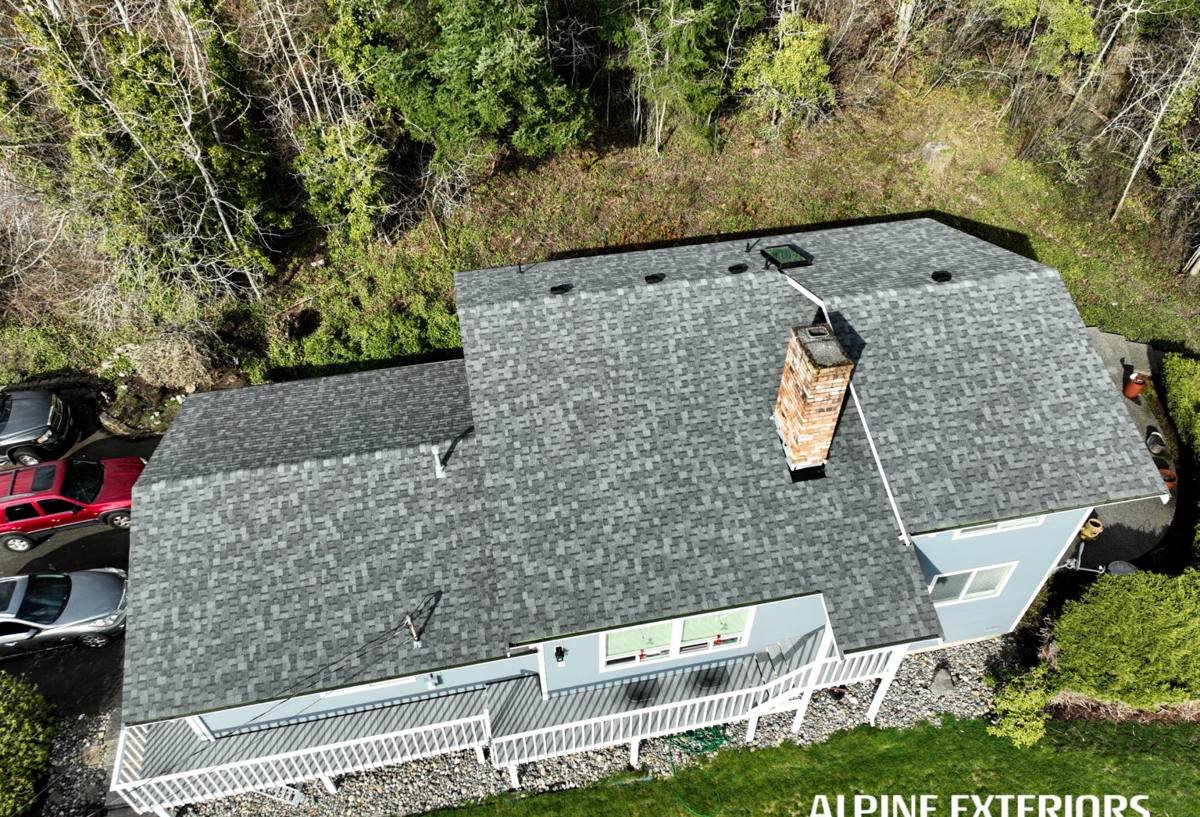
Signs Your Deck Needs Replacing, Not Patching
Not every aging deck needs a full replacement. But there's a point where repairs stop making sense and become a way of delaying the inevitable while spending money twice. Here's what tells us a deck is past the patch-and-repair stage:
- Soft, spongy, or spring-back decking in multiple areas, not just one or two boards
- Rust streaking around fasteners, or fasteners that back out on their own
- Visible gap or separation where the deck meets the house (ledger board)
- Posts or footings that have shifted or settled, common on sloped South Hill lots
- Railings that flex or wobble under hand pressure — a safety issue, not cosmetic
- Moss or algae that regrows within weeks of cleaning, signaling constant trapped moisture
If you're only seeing one of these on a deck that's otherwise structurally sound, repair is often the right call. If you're seeing two or more, or the framing itself is compromised, replacement is usually the more honest recommendation — and the safer one.
What a Correct Deck Replacement Actually Involves
Tear-Off and Real Inspection
A proper replacement starts with full removal of the old decking and railing so the framing, ledger connection, and footings can actually be inspected — not guessed at. This is often where we find the real story: a ledger board that's been rotting behind the decking for years, joists that were undersized for the span, or footings that were never set below frost depth. None of that is visible until the surface comes off.
Decking Material Options for This Climate
Material choice matters more in a climate like ours than in drier regions. Every option has real tradeoffs — there's no single "best" material, only the one that fits your budget, maintenance tolerance, and how much shade and moisture the deck will see.
| Material | Moisture & Moss Behavior | Maintenance | Typical Lifespan |
|---|---|---|---|
| Pressure-treated wood | Absorbs moisture readily; needs sealing to resist moss and swelling | Annual cleaning and resealing recommended | 10–15 years with upkeep |
| Cedar | Naturally rot-resistant but still absorbs surface moisture in shaded areas | Periodic staining/sealing to hold color and resist graying | 15–20 years with upkeep |
| Capped composite | Shrugs off moisture well; moss can still grow on the surface film in deep shade | Periodic washing, no sealing or staining | 25–30 years, manufacturer-warrantied |
| PVC decking | Fully moisture-resistant, best option for consistently damp, shaded lots | Occasional washing only | 25+ years, manufacturer-warrantied |
On heavily shaded South Hill lots, we lean toward steering clients away from uncapped wood as the sole surface material, not because wood is a bad product, but because our professional standard is to match the material to how much sun and airflow a deck will realistically get. A shaded, tree-covered deck asks a lot more of a wood surface than an open, south-facing one does.
Ledger Flashing and Drainage — Where Most Failures Start
If we had to point to one detail that causes more deck failures than anything else in this region, it's the ledger board connection — where the deck attaches to the house. Rain runs down siding, gets behind the ledger, and sits there. Without proper flashing — a metal drip cap and moisture barrier installed correctly between the ledger and the house — that water has nowhere to go and slowly rots the framing from the inside out, invisible until the deck starts to feel soft or the ledger pulls away.
A correct replacement includes properly lapped flashing at the ledger, decking gapped for airflow and drainage, and joist tape over the top of the framing to keep fasteners from sitting in standing water. None of this is visible once the project is finished, which is exactly why it's worth asking a contractor how they handle it before work starts.
Moss, Algae, and a Long Wet Season
Whatcom County's moss season runs longer than most homeowners expect, and shaded, tree-covered lots like many on South Hill see it worse than open ones. Moss and algae aren't just cosmetic — they hold moisture against the decking surface and accelerate rot on untreated wood. A few things reduce the problem at the source rather than fighting it every spring:
- Decking with slight board gaps and airflow underneath, rather than tight, sealed installations
- Keeping overhanging branches trimmed back where practical to let more light and air reach the deck
- Choosing a decking material that doesn't provide moss a porous surface to root into
- Routine cleaning before moss establishes, rather than after it's already discolored the surface
No deck in this climate stays moss-free forever without any maintenance. The goal of good design is to make that maintenance occasional rather than constant.
Permits and Local Code Basics
Most deck replacement projects in Bellingham and unincorporated Whatcom County require a permit, particularly when the structure is being rebuilt rather than surface-refreshed. Permitting typically covers footing depth and placement, joist sizing and span, and guardrail height and baluster spacing on any deck elevated above a certain height. Code exists here for a reason — undersized framing and improperly spaced railings are exactly the failures that show up as safety hazards years later. We handle the permit application and inspection scheduling as part of the project, so you're not left figuring out county requirements on your own.
Our Deck Replacement Process
- On-site assessment — we inspect the existing deck, ledger, and footings, and talk through what you actually use the space for
- Material and design selection — matched to your budget, sun/shade exposure, and how much upkeep you want going forward
- Permit application — filed and tracked so the project isn't delayed waiting on paperwork
- Tear-off and haul-away — full removal of old decking, railing, and any compromised framing
- Framing, ledger, and flashing work — the structural part that determines how long the new deck actually lasts
- Decking and railing installation — built to code, with attention to drainage and airflow underneath
- Final walk-through and inspection — county sign-off where required, plus our own review with you before we call it done
What Affects the Cost of a Deck Replacement
We won't quote a number here that doesn't reflect your specific deck — too many variables change the total. What we can tell you honestly is what drives cost up or down:
- Square footage and shape — multi-level decks, curves, and stairs all add labor
- Material tier — pressure-treated wood costs less upfront than composite or PVC, but composite and PVC cost less over the deck's lifetime
- Framing condition — if footings and joists are sound, we can often rebuild the surface without a full structural rebuild; if not, that adds cost but isn't optional
- Site access — sloped, tree-covered South Hill lots sometimes mean more hand-carrying of material and less room for equipment, which affects labor time
- Railing style and code requirements — cable, glass, and custom railing systems cost more than standard baluster railing
A site visit is the only honest way to price a project like this, which is why we don't quote decks over the phone.
Why Hire a Crew That Already Works South Hill
Every neighborhood in Bellingham has its own quirks, and South Hill's are real: sloped lots that complicate footing placement and material staging, heavier tree cover that changes which materials make sense, and older homes where the original deck framing may not meet current code. A crew that's already worked on the hill isn't guessing at any of that — we know what a South Hill ledger connection tends to look like after twenty years of rain, and we design around it instead of discovering it as an unpleasant surprise mid-project.
That local familiarity also means a more accurate estimate the first time, fewer change orders once tear-off reveals what's underneath, and a finished deck built for the conditions it will actually face — not a generic spec sheet.
Keeping Your New Deck in Good Shape
A well-built deck still benefits from a bit of seasonal attention, especially in a climate like ours. A simple annual routine goes a long way:
- Clear leaves and debris from between boards before the wet season sets in
- Check that gaps between boards remain clear so water and moss don't get trapped
- Inspect the ledger flashing area for any visible gaps or damage
- Look over railings and fasteners for movement or corrosion
- Wash off moss and algae film before it has a chance to establish
- Reseal or restain wood decking on the manufacturer's recommended schedule
If you're weighing whether your South Hill deck needs a repair or a full replacement, we're happy to take a look and give you a straight answer either way. Reach out for a free, no-pressure estimate — use the form below to get started.