 Bellingham Exterior
 Building Decks for Sunnyland's Climate and Character
Sunnyland is one of Bellingham's older, established neighborhoods — tree-lined streets, mature landscaping, and homes spanning several decades of construction. A deck built here has to do two jobs at once: hold up under Whatcom County's wet, mossy weather, and look right on a street where the neighbors have been paying attention to their yards for a long time. That combination shapes almost every decision we make on a Sunnyland deck project, from the wood species to the fastener coating to how far the boards sit off the ground.
We're not describing anything exotic. It's the basics done correctly, with materials and details chosen for this specific climate rather than a one-size-fits-all approach. A deck that's built right in Sunnyland should still be solid, dry underneath, and free of slick moss twenty years from now — not five.
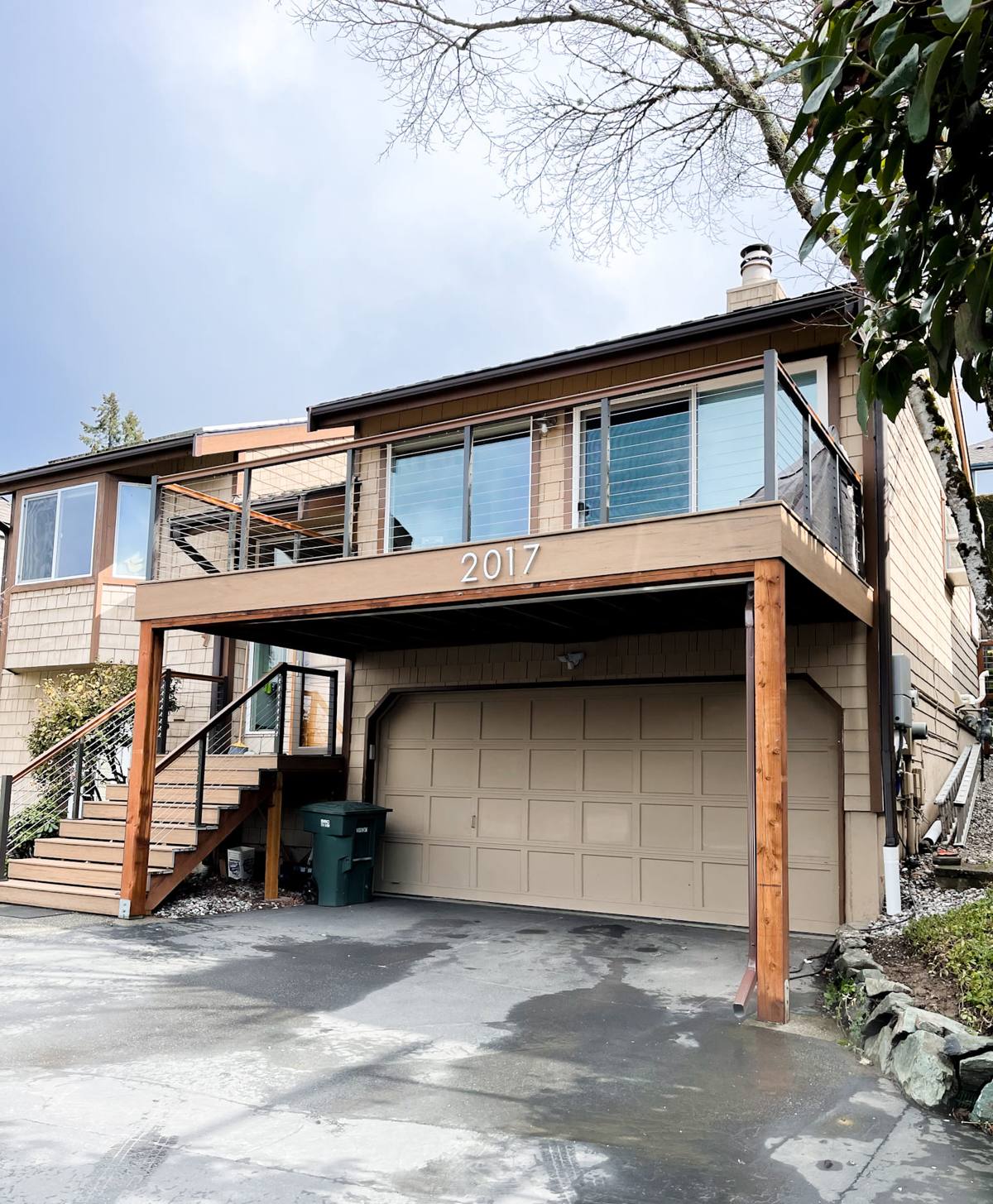
What Bellingham's Weather Actually Does to a Deck
Rain and Standing Moisture
Bellingham gets a long, steady wet season, not just a few heavy storms. That means wood decking, framing, and hardware spend months at a time damp rather than briefly soaked and then dry. Untreated or poorly detailed lumber doesn't rot because of one big rain event — it rots because moisture never fully leaves the wood between one rainy week and the next.
Salt and Marine Air
Sitting near Bellingham Bay means the air carries a fair amount of salt and moisture even away from the immediate waterfront. Over years, that marine air accelerates corrosion on cheap or exposed fasteners, hinges, and metal connectors. It's a slow process, but it's constant, and it's the reason we don't treat fastener selection as an afterthought.
Moss and Extended Shade
Sunnyland's mature tree canopy is part of what makes the neighborhood pleasant, but it also means many yards get long stretches of shade and slower drying after a rain. Combined with our long, mild, wet season, that's ideal moss-growing weather. A deck surface that stays damp and shaded for weeks at a time will grow moss whether it's wood or composite — the difference is how much it affects the material's structure and how hard it is to clean off.
Choosing the Right Decking Material for a Sunnyland Home
There's no single "best" decking material — there's a best material for a given budget, sun exposure, and how much upkeep you actually want to do. Here's how the common options compare for a home in this climate:
| Material | Upfront Cost | Moss & Moisture Behavior | Maintenance | Typical Lifespan |
|---|---|---|---|---|
| Pressure-treated wood | Lowest | Absorbs moisture; needs sealing to resist moss and rot | Annual cleaning and re-sealing | 15-20 years with upkeep |
| Cedar | Mid-range | Naturally moisture- and insect-resistant, but surface still grays and can host moss if shaded and neglected | Periodic cleaning and oil/stain | 20-25 years with upkeep |
| Composite decking | Higher | Doesn't rot, but can still grow surface moss/algae in deep shade — cleans off easily since it doesn't soak in | Occasional washing, no sealing | 25-30+ years |
| PVC/capped polymer | Highest | Fully moisture-sealed surface; best resistance to staining and moss adhesion | Minimal — occasional rinse | 30+ years |
For a shaded Sunnyland lot, we usually steer homeowners away from bare pressure-treated boards as a final surface unless the budget requires it — the maintenance burden in a shaded, wet yard is real, and skipping a year of sealing shows fast. Cedar and composite both do well here; which one makes sense usually comes down to how much hands-on upkeep you want to commit to versus paying more up front to avoid it.
Framing and Substructure: Where Decks Actually Fail
Almost every deck problem we get called out to inspect started below the decking boards, not on top of them. The surface material gets all the attention, but the framing is what determines whether the deck is safe and whether it lasts.
- Ledger flashing: where the deck attaches to the house is the single most common source of hidden rot. Correct flashing keeps water from tracking behind the ledger board and into the house framing — this is not a place to cut corners.
- Fasteners and hardware: given the marine air here, we use hardware rated for coastal or wet-climate exposure rather than standard interior-grade galvanized products, which corrode faster under constant damp conditions.
- Footings below frost depth: footings sized and set to local code requirements so the structure doesn't shift with seasonal ground movement.
- Joist spacing matched to the decking material: composite and PVC boards often require tighter joist spacing than wood to avoid flexing — this is a spec sheet detail that's easy to skip and expensive to fix later.
None of this is visible once the deck is finished, which is exactly why it matters. A deck can look great for the first year or two regardless of what's underneath it. The framing decisions are what separate a deck that's still tight and solid at year fifteen from one that needs structural repair by year eight.
Drainage, Airflow, and Moss Prevention by Design
You can't stop it from raining in Bellingham, and you usually can't remove the shade that makes a Sunnyland yard pleasant to sit in. What you can control is how quickly water leaves the deck and the ground underneath it, which is the real lever for keeping moss and rot in check long-term.
We pay attention to a few things that don't show up in a sales brochure: proper board spacing so water drains through rather than pooling on the surface, enough clearance and airflow underneath the deck so the ground and framing can actually dry between rains, and grading or drainage away from the structure so runoff isn't sitting against the footings. On decks close to grade or over low-airflow crawl spaces, we'll also talk through options like a under-deck drainage system if keeping the space below dry and usable matters to you.
These details cost little to nothing extra at the design stage and are genuinely difficult to retrofit later. They're also the difference between a deck that needs a moss treatment every spring and one that mostly takes care of itself.
Our Deck Building Process
The process is straightforward, and we don't shortcut any of the steps below — each one exists because skipping it has caused problems on other people's decks.
- On-site visit and estimate. We look at your yard's sun and shade pattern, existing drainage, soil, and how the deck will connect to the house, then walk through material options and a real cost range.
- Design and material selection. Sizing, layout, railing style, and decking material get finalized based on your budget and how you'll actually use the space.
- Permitting. We handle the permit application and coordinate required inspections with the City of Bellingham or Whatcom County, depending on where the property sits.
- Framing and construction. Footings, framing, ledger flashing, and hardware go in first and get inspected before the decking surface is installed.
- Decking, railings, and finish work. Surface material, railings, stairs, and any lighting or finishing details are completed.
- Final walkthrough. We go over the finished deck with you, including basic care instructions specific to the material you chose.
Permits and Code Requirements
New decks and most significant deck rebuilds in Bellingham require a building permit, and the requirements — guardrail height, stair geometry, footing depth, attachment to the house — are set by the adopted building code, not by preference. This isn't paperwork for its own sake; it's what protects you if you ever sell the home and a buyer's inspector checks whether the deck was permitted and built to code.
We pull permits as a standard part of every deck project and coordinate the required inspections directly, so you're not left tracking down City of Bellingham or Whatcom County requirements yourself. If a deck on your property was built without a permit at some point in the past, we can talk through what it would take to bring it up to current code, whether that's during a repair or as its own project.
Keeping a Sunnyland Deck Looking Good for Decades
A well-built deck still needs some basic seasonal attention, especially in a shaded, wet climate like this one. None of it is difficult, but skipping it for a few years is usually what leads to an early rebuild.
- Sweep leaves and debris off the surface regularly, especially in fall — trapped organic matter holds moisture against the boards and feeds moss growth.
- Rinse or lightly scrub visible moss or algae before it gets established, rather than waiting for a thick buildup.
- Check that gutters and downspouts near the deck are directing water away from the structure, not onto it.
- Keep the space underneath the deck clear of stored debris, mulch, or vegetation that blocks airflow.
- For wood decking, re-seal or re-stain on the schedule recommended for the specific product — waiting too long lets moisture back into the wood.
- Inspect railings, stair connections, and fasteners once a year for looseness or corrosion, particularly on older or coastal-exposed decks.
- Have the ledger board and flashing checked periodically — it's hidden, and it's the spot most likely to fail quietly.
Why Hire a Crew That Already Works in Sunnyland
A deck built for a dry inland climate and a deck built for this neighborhood shouldn't look identical below the surface, even if they look similar on top. Contractors who don't regularly work in Bellingham's marine, high-moss climate can miss details that don't matter elsewhere but matter a lot here — hardware ratings, drainage under shaded framing, board spacing for a wet climate. We build decks in Whatcom County conditions as a matter of course, not as a special consideration, because it's what every project here actually requires.
We're also familiar with the local permitting process and the kind of lot conditions common in Sunnyland — mature trees, established grading, homes of varying ages — which means fewer surprises once construction starts.
If you're planning a new deck or need to know whether an existing one is holding up the way it should, we're happy to take a look and put together a straightforward, no-pressure estimate. Use the form below to get started.