 Bellingham Exterior
 South Hill's Siding Problem: Elevation, Shade, and Salt Air All at Once
South Hill sits high enough above the rest of Bellingham to catch wind and wind-driven rain that lower neighborhoods don't get, and close enough to Bellingham Bay that salt-laden air is a constant factor on the exterior of every home up here. Add in the mature tree canopy that shades large stretches of the hillside for much of the year, and you get a neighborhood where siding has to handle three separate stresses at once: moisture, salt, and shade-driven moss and algae growth. A siding product or installation detail that works fine in a dry, open subdivision elsewhere in Whatcom County can fail early on South Hill simply because the conditions are more demanding.
We've replaced siding on homes across this neighborhood — from older bungalows near the university area to newer infill builds — and the pattern is consistent. Whatever failed on the old siding usually failed at the same points: butt joints that weren't back-primed or caulked correctly, corner trim that trapped water instead of shedding it, and lower courses that sat too close to grade and wicked moisture straight into the wall assembly. Understanding why those failures happen here specifically is the first step to not repeating them.
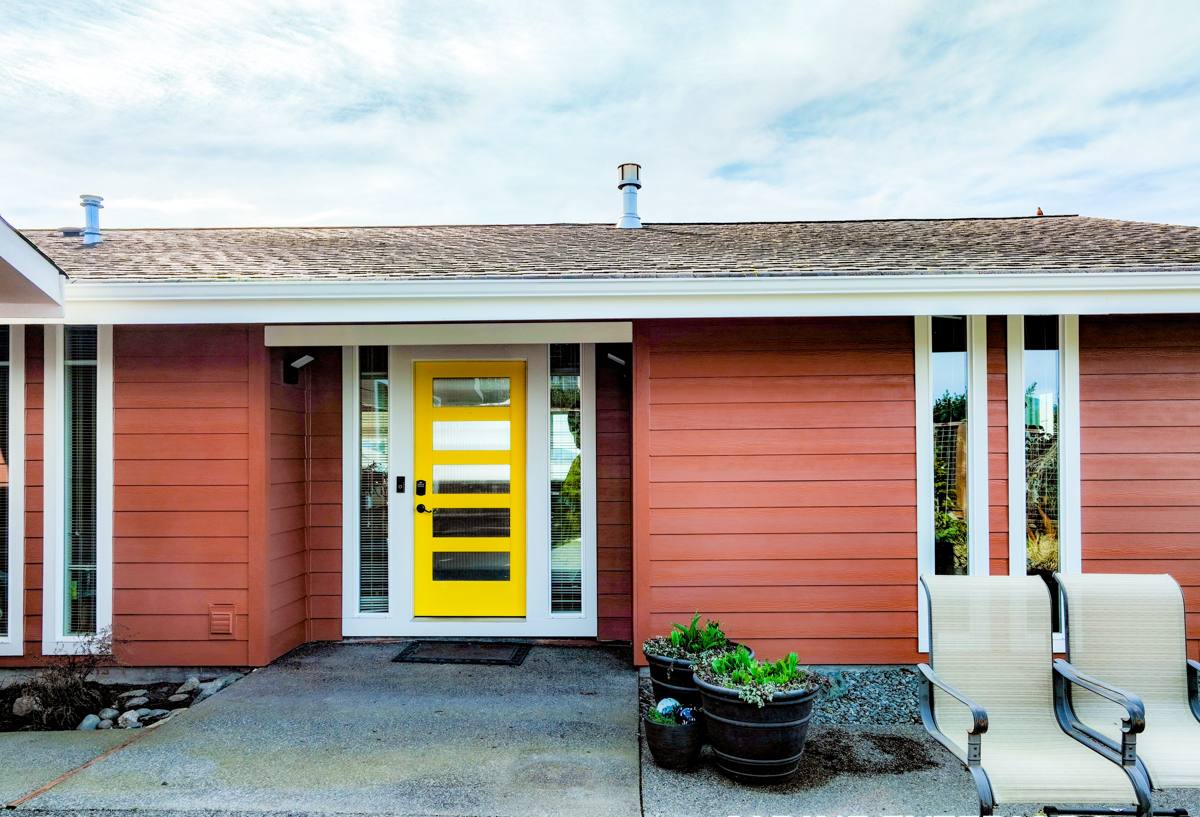
What Driving Rain and a Long Moss Season Do to the Wrong Siding
Bellingham's weather isn't extreme, but it is relentless. Rain here tends to come in sideways on a south or southwest wind, which means walls that face open exposure take direct wetting that a lot of siding products aren't detailed to shed well over decades. On South Hill, that wind-driven rain combines with long stretches of shade to keep siding damp far longer after a storm than it would stay damp on a sunnier lot.
That combination is exactly what fuels moss and algae growth, and it's also what causes real damage over time:
- Wood and wood-composite siding that absorbs moisture at cut edges and butt joints, leading to swelling, soft spots, and eventual rot
- Vinyl siding that can warp or buckle from repeated wet-dry cycling and UV exposure, especially on south- and west-facing walls
- Caulked joints that were never meant to be a primary moisture barrier failing quietly behind the siding, where the damage isn't visible until it's expensive
- Moss and algae staining that isn't just cosmetic — it holds moisture against the siding surface and accelerates whatever degradation is already happening underneath
None of this means a homeowner did anything wrong. It means the siding and the installation details need to be matched to what this specific hillside actually throws at a house, year after year.
Why We Install James Hardie Fiber Cement — and Nothing Else
We are a Hardie-only siding contractor, and South Hill is a good example of why. James Hardie fiber cement is engineered specifically for wet coastal and Pacific Northwest conditions — Hardie even makes an HZ5 product line built around exactly this kind of climate. Fiber cement doesn't absorb and swell the way wood-based products do, and it doesn't soften or distort under sustained moisture and UV the way vinyl can. It's also non-combustible, which matters more every year as regional wildfire smoke and ember exposure becomes a bigger consideration for homes throughout Western Washington.
We've made a deliberate choice not to install LP SmartSide, vinyl, Cemplank, Allura, primed spruce, or raw cedar. Each of those products has legitimate uses and each has honest trade-offs — cedar looks beautiful but demands ongoing refinishing to keep moisture out; vinyl is inexpensive but has a shorter realistic lifespan under coastal wind and UV exposure; engineered wood products need flawless field sealing at every cut edge or they're vulnerable exactly where South Hill's climate attacks hardest. We'd rather stand behind one system we trust completely than install several we'd have to caveat.
James Hardie's ColorPlus factory-applied finish is part of that decision. Because the color is baked on in a controlled factory process rather than field-painted, it resists fading and chipping far better than site-applied paint, and it comes with its own finish warranty on top of Hardie's product warranty. On a shaded, damp hillside where repainting is a hassle homeowners would rather not repeat every several years, that matters.
What Correct Installation Actually Involves
Fiber cement is only as good as the details behind it. A correct South Hill installation includes a continuous weather-resistive barrier, properly lapped and taped house wrap, correctly flashed windows and doors, rain-screen or drainage gap detailing where the wall assembly calls for it, and siding held clear of grade, decks, and roof lines by the clearances Hardie specifies. Fasteners, butt joint treatment, and caulking all follow Hardie's published installation instructions — not shortcuts that might look fine on day one but fail in year three.
What a Full Siding Replacement Involves
A siding replacement isn't just swapping old panels for new ones — it's a chance to fix whatever the old siding was hiding. Our process on South Hill projects includes:
- Full tear-off of the existing siding and trim
- Inspection of the sheathing underneath for rot, soft spots, or prior water intrusion, with repairs made before anything new goes on
- Installation of a new weather-resistive barrier, properly lapped from the bottom up
- Correct flashing at every window, door, and roof-to-wall intersection
- Fiber cement siding and trim installed to Hardie's fastening and clearance specifications
- Caulking and touch-up paint at cut edges and joints per the finish warranty requirements
- Final walkthrough and cleanup
Skipping the inspection step is the most common shortcut in this trade, and it's the one that costs homeowners the most later. On a hillside neighborhood like South Hill, where moisture has often been working behind older siding for years before anyone notices, that inspection is where the real value of a full replacement shows up.
How Our Process Works for South Hill Homeowners
| Stage | What Happens | What You Get |
|---|---|---|
| Estimate | On-site walkthrough of your home's exposure, existing siding condition, and trim details | A written scope and honest, no-pressure pricing |
| Prep | Materials ordered, protection set up for landscaping and walkways | Minimal disruption to your property |
| Tear-off & Inspection | Old siding removed, sheathing checked for hidden damage | Transparency on any repairs found before work continues |
| Installation | Barrier, flashing, and Hardie siding installed to spec | A wall assembly built for driving rain and salt air, not just appearance |
| Final Walkthrough | Joint checks, cleanup, and a review of your warranty coverage | Confidence the job was done right, in writing |
Matching Siding to South Hill's Mix of Older and Newer Homes
South Hill has a real mix of housing stock — older homes with traditional lap siding and trim proportions near the flatter, more established streets, and newer construction with cleaner, more modern lines further up the hill. James Hardie's product lines cover both directions well. HardiePlank lap siding in various exposure widths matches traditional Bellingham home profiles closely, while HardiePanel with battens or a shiplap-style plank can suit more contemporary builds. Trim, soffit, and fascia are all available in the same ColorPlus finish system, so the whole exterior reads as one cohesive package rather than a patchwork of materials aged at different rates.
What Actually Drives Cost on a South Hill Project
| Factor | Why It Matters Here |
|---|---|
| Home size and wall complexity | More corners, dormers, and roof-to-wall intersections mean more flashing detail and labor |
| Condition of existing sheathing | Hidden moisture damage found during tear-off adds repair scope before new siding goes on |
| Access and site slope | Steep South Hill lots can require more scaffolding or staging than a flat-lot job |
| Siding profile and trim detail | Wider trim, shiplap profiles, or accent bands add material and labor over a basic lap siding job |
| Color and finish | ColorPlus factory finishes come in a range of standard colors; custom colors and field-painting add cost |
We give a firm, written number after seeing the house in person — not a phone-quote guess. On a hillside neighborhood where every lot's exposure and access is a little different, an accurate estimate has to start with a walkthrough.
Keeping Your Siding Looking Right After Installation
Fiber cement is low-maintenance compared to wood or vinyl, but "low-maintenance" isn't "no-maintenance," especially with South Hill's shade and moisture. A little upkeep goes a long way toward getting the full lifespan out of the installation:
- Rinse siding annually with a garden hose to clear pollen, dust, and early moss growth before it takes hold
- Keep gutters clean and downspouts directed away from the wall so water isn't sheeting down siding repeatedly
- Trim back tree branches and shrubs that keep siding shaded and damp longer than necessary
- Watch caulked joints and touch-up paint at cut edges over the years, and address any cracking promptly
- Address any moss or algae staining with a gentle wash rather than pressure-washing directly into joints
Why a Crew That Already Works South Hill Matters
Siding contractors who haven't worked this specific hillside often underestimate how much its elevation, shade, and salt exposure change the job. We've done this work throughout Bellingham and Whatcom County, and South Hill's combination of wind-driven rain, tree cover, and proximity to the bay is something we plan for specifically — in the flashing details, the drainage plane, and the siding line we install. That's the difference between a siding job that looks good for a season and one that holds up through years of this neighborhood's weather.
If your South Hill home's siding is showing moss staining, cracked caulk lines, soft spots, or you're just past due for a replacement, we're happy to take a look. Reach out for a free, no-pressure estimate — we'll walk the exterior with you, tell you honestly what we find, and give you a clear, written scope before any work begins.