 Bellingham Exterior
 Storm Damage in Sudden Valley Isn't the Same as Storm Damage Downtown
Sudden Valley sits in a heavily wooded setting on Lake Whatcom, and that setting changes how storms treat a roof. A house in a cleared subdivision closer to downtown Bellingham deals mostly with straight wind and rain. A house tucked among fir and cedar in Sudden Valley deals with all of that plus falling limbs, whole-tree debris after a windstorm, and shade cover so heavy that a roof rarely gets a full day of sun to dry out between storms. That last part matters more than most homeowners realize, because a roof that stays damp longer is a roof where moss, algae, and slow rot get a head start.
Add in the wind funnel effect you get around a lake basin — gusts can accelerate and shift direction as they move across open water and up through the tree line — and you get uplift stress on shingles and ridge caps that a flat, open lot rarely sees. Whatcom County also picks up wind-driven, salt-tinged marine air off Bellingham Bay during winter storm systems, which adds a slow corrosive edge to exposed metal flashing, nail heads, and gutter hardware over the years. None of this means Sudden Valley roofs fail faster across the board. It means the failure points are different, and a repair that doesn't account for tree debris, prolonged moisture, and wind uplift together is a repair that's likely to need a second visit.
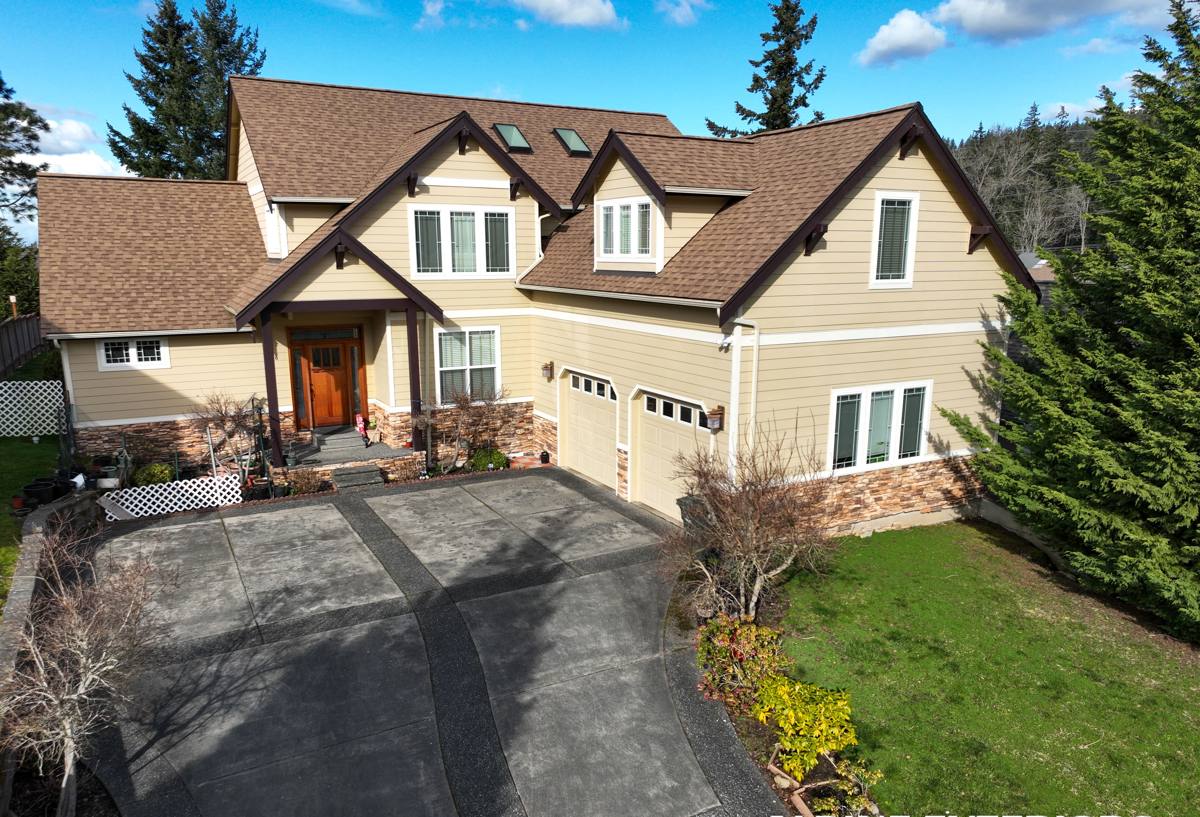
What Storm Damage Actually Looks Like on a Sudden Valley Roof
Storm damage isn't always a hole you can see from the driveway. Most of it starts small and gets worse the longer it sits under a wet, shaded roof.
Signs You Can Check From the Ground
- Shingles or shingle tabs in the yard, gutters, or landscaping after a windstorm
- Fresh branches or debris resting on the roofline, even small ones — they can still crack a shingle on impact
- Sagging or visibly bent gutter sections, which often means something heavier hit the roof edge
- Water stains on exterior fascia boards or soffits
- Granules from asphalt shingles collecting in downspouts or at the base of downspout extensions
Signs That Need a Roof-Level or Attic Inspection
- Lifted, curled, or creased shingles, especially near ridges, valleys, and any point where a branch may have struck
- Cracked or displaced flashing around chimneys, skylights, and roof-to-wall transitions
- Damp insulation, dark staining, or a musty smell in the attic after a storm
- Moss buildup thick enough to hold water against the shingle surface — common on the shaded, north-facing slopes many Sudden Valley homes have
- Soft spots in the decking underneath, usually only found once shingles are pulled back
The honest reality is that wind and impact damage often looks minor from the ground and turns out to be more serious once someone is actually up there. That's the whole reason a proper storm inspection includes getting on the roof, not just looking at it with binoculars from the yard.
What a Correct Storm Damage Repair Actually Involves
A rushed storm repair patches the obvious hole and calls it done. A correct one treats the storm as a chance to check everything that storm exposure affects, not just the spot that failed.
1. Full-Slope Assessment, Not Just the Damaged Spot
Wind and impact damage rarely stays confined to one shingle. We check the full slope the damage occurred on, plus adjoining slopes and valleys, since wind uplift can loosen shingle seals well beyond the visible break point.
2. Decking Check Before Anything Gets Covered Up
If water has been getting in — even slowly — the decking underneath needs to be checked for soft spots or rot before new shingles go down over it. Covering damaged decking with new shingles just hides a problem that gets more expensive later.
3. Underlayment and Flashing, Not Just Shingles
A lot of storm leaks trace back to flashing, not shingles — around chimneys, skylights, and roof valleys. Replacing shingles without addressing damaged or displaced flashing is a repair that looks finished but isn't.
4. Matching Materials as Closely as Possible
On a repair (as opposed to a full replacement), we match shingle type, color, and profile as closely as the existing product allows. Exact matches aren't always possible if the roof is older or the original product line has changed, and we'll tell you honestly if that's the case before starting.
5. Moss and Debris Cleanup as Part of the Job
Given how much of Sudden Valley sits under tree cover, we treat moss and debris removal as part of a storm repair, not an upsell. Moss left in place holds moisture against the repaired area and shortens the life of the work we just did.
Repair or Replace? What Actually Drives That Decision
Not every storm-damaged roof needs full replacement, and not every roof is worth patching indefinitely. The honest answer depends on a few concrete factors, not guesswork.
| Factor | Leans Toward Repair | Leans Toward Replacement |
|---|---|---|
| Age of existing roof | Under 12-15 years, in otherwise good shape | Nearing or past its expected shingle lifespan |
| Extent of damage | Isolated to one slope or a small area | Multiple slopes, or repeated storm hits over time |
| Decking condition | Solid, dry decking under the damaged shingles | Soft, rotted, or repeatedly wet decking found on inspection |
| Material availability | Matching shingles still available | Product discontinued, leaving visible patchwork |
| Moss/moisture history | First significant issue on this roof | Chronic moss and moisture problems across multiple seasons |
We'll walk you through where your roof lands on that table before recommending either option — the goal is an honest read, not the more expensive answer by default.
How We Handle a Storm Damage Call in Sudden Valley
- Initial call and photos. If you can safely get ground-level photos of visible damage, that helps us prioritize response, especially during active storm season when calls come in from across Whatcom County at once.
- On-site inspection. We get on the roof (weather permitting) and in the attic if needed, and document what we find — not just what's visible from the driveway.
- Plain-language write-up. You get a clear explanation of what's damaged, what caused it, and what repair options exist, in terms that don't require a construction background to follow.
- Tarping if needed. If there's active leaking and the full repair can't happen immediately, we'll get the area protected first so the damage doesn't spread while materials are sourced.
- The repair itself. Decking, flashing, underlayment, and shingles addressed in the right order, with moss and debris cleared from the work area.
- Final walkthrough. We show you what was done and why, including anything we found that's worth watching going forward.
Insurance and Storm Documentation
Many storm repairs in this area involve a homeowner's insurance claim, and the paperwork side matters as much as the roofing side. We provide clear documentation — photos, a written description of the damage, and a scope of the repair — that you can hand directly to your adjuster. We're not a public adjuster and won't pretend to be one, but we can point out storm-related damage that's easy to miss during a quick claims inspection, like flashing displacement or decking issues that aren't visible from the ground. Getting this documentation right the first time tends to save homeowners a second round of back-and-forth with their insurer.
Why a Crew That Already Works Sudden Valley Matters
A lot of Sudden Valley is set up differently than a typical Bellingham subdivision — private roads, controlled access points, and lots with steep or wooded driveways that aren't always straightforward for a crew that's never been out there. A contractor who's already familiar with getting equipment and materials onto these properties efficiently isn't wasting your storm-repair timeline figuring out logistics on the first visit. Familiarity with the tree-cover pattern here also matters practically: knowing which slopes on a heavily shaded lot are likely to be holding moss, and which flashing points tend to take the worst of it after a windstorm, means less time spent diagnosing and more time spent fixing. When a roof is actively leaking, that difference is not cosmetic — it affects how fast the problem gets solved.
Reducing Storm Damage Risk Before the Next One Hits
Storm damage repair fixes what already happened. A few habits reduce how often you need that call in the first place, especially on a wooded, lake-adjacent lot like the ones common in Sudden Valley.
- Have overhanging or dead limbs trimmed back from the roofline before winter storm season, not after a branch has already come down
- Keep gutters and downspouts clear so wind-driven rain has somewhere to go instead of backing up under shingle edges
- Address moss buildup on shaded slopes before it thickens enough to hold standing moisture
- Check attic ventilation — poor airflow traps moisture that makes moss and rot worse regardless of what's happening outside
- Have the roof looked at after any windstorm strong enough to bring down branches, even if nothing looks obviously wrong from the ground
None of this eliminates storm risk entirely — that's just the reality of a wooded lot near a large lake basin in Whatcom County — but it narrows the gap between a minor repair and a major one.
Get a Straight Answer on Your Roof
If a recent storm has left you with missing shingles, a leak, or just a nagging feeling that something's not right up there, we're glad to take a look. The estimate is free, there's no pressure to sign anything on the spot, and you'll get an honest read on whether you're looking at a repair or something bigger — use the form below to get started.