 Bellingham Exterior
 Storm Damage in York: What Makes This Neighborhood's Roofs Vulnerable
York is one of Bellingham's older, tree-lined neighborhoods, and that combination — mature trees close to rooflines, homes built across several different eras, and Whatcom County's marine weather — creates a specific pattern of storm damage that's different from what we see on newer, more exposed subdivisions. When a windstorm or heavy rain event moves through, York homes tend to take damage from falling limbs and wind-driven debris as often as from wind alone, and the moisture that follows finds its way into whatever the impact opened up.
Bellingham's proximity to the Salish Sea means storms usually arrive with a mix of salt-laden air and sideways rain rather than dry wind. That combination is harder on roofing than wind alone, because it doesn't just stress fasteners and flashing — it pushes moisture sideways into any gap, lap, or lifted shingle edge before the sun ever gets a chance to dry things back out. Add Whatcom County's long, damp moss season, and a roof that took storm damage in the fall can be hiding a much bigger moisture problem by spring if it isn't inspected and repaired correctly the first time.
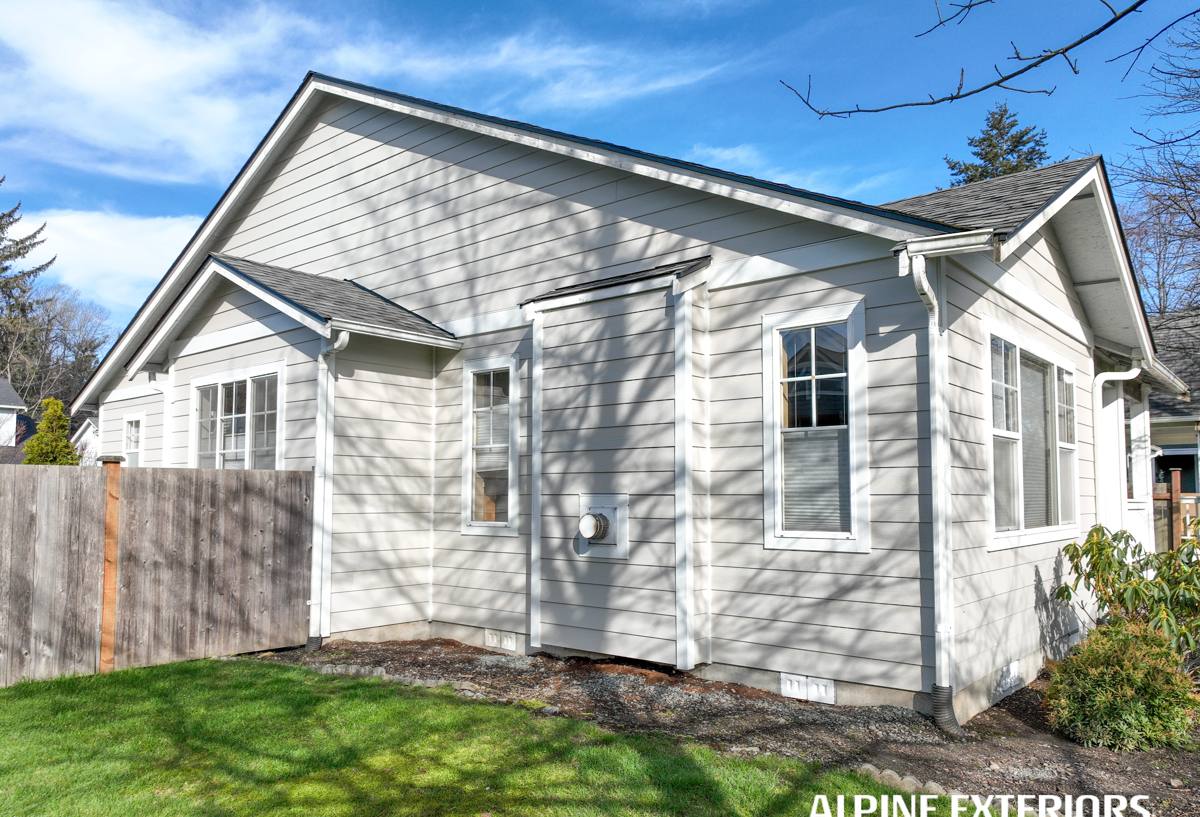
What Actually Counts as Storm Damage
Homeowners often picture storm damage as a missing shingle or a hole from a branch, but a lot of the damage we find in York is less obvious and does more long-term harm if it's ignored.
Wind Damage
Sustained wind and gusts lift shingle edges, break the seal strip that holds shingles flat, and can crease or tear shingles without removing them outright. A roof can look intact from the ground and still have dozens of unsealed tabs that will leak the next time rain comes in sideways.
Wind-Driven Rain Intrusion
This is the damage type most specific to our climate. Rain doesn't need a hole to get in — it just needs a lifted edge, a gap at a flashing joint, or an undersized overhang, and enough horizontal force to push water uphill under the roofing material. This is how storm damage in Bellingham often shows up as an interior ceiling stain weeks after the storm itself has passed.
Impact Damage
Falling branches and debris are a bigger factor in York than in more open parts of Bellingham, simply because of the tree canopy. Impact damage can range from a few cracked or punctured shingles to compromised decking underneath, and it's easy to underestimate from the ground.
Moss and Debris Interaction
Storms often knock loose moss, needles, and small branches into valleys and gutters. That debris dams water right where a roof is already stressed, turning a minor leak point into standing water against the roofing material.
What a Correct Storm Damage Repair Involves
A repair that only addresses the visible damage — replacing a few shingles and calling it done — is the most common shortcut we see homeowners get burned by. A correct repair works from the deck out, not just from the surface in.
- Inspect the roof deck itself where damage occurred, not just the roofing material, since sustained moisture intrusion can soften plywood or OSB sheathing
- Check and replace damaged underlayment, not just shingles — underlayment is the actual water barrier and is often overlooked
- Re-secure or replace flashing at any penetration near the damage, since flashing failure is a frequent hidden cause of "mystery" leaks after a storm
- Match replacement shingles as closely as possible in type, weight, and where reasonable, color, so the repair doesn't stand out or perform differently than the surrounding roof
- Clear valleys and gutters of storm debris before final inspection, so water has a clear path off the repaired area
- Document the damage and the repair with photos, which matters if an insurance claim is involved
Skipping any of these steps doesn't necessarily cause an immediate visible problem — it usually shows up as a soft spot, a stain, or a repeat leak a season or two later, once the moss season or the next storm puts pressure back on the same area.
How We Handle a Storm Damage Call in York
1. Initial Contact and Timeline
After a storm, we prioritize active leaks and anything that could let more water in if left alone. A roof with a tarp already on it, or one with visible interior water intrusion, moves to the front of the queue over cosmetic damage.
2. On-Site Inspection
We inspect from the roof, not just from the ground with binoculars. Storm damage in a tree-covered neighborhood like York often hides under debris or on roof slopes that aren't visible from the street, so a ground-only look tends to miss things.
3. Written Estimate
We explain what's damaged, what we recommend, and why — including whether the issue is isolated or a sign the roof has broader wear that made it more vulnerable to this particular storm.
4. Repair and Cleanup
We complete the repair, clear debris from valleys and gutters as part of the job, and leave the site as clean as we found it. If matching materials aren't available in the exact original product, we'll tell you honestly rather than quietly substituting something different.
5. Documentation
We provide photos and a written description of the damage and repair, which you can use for your own records or to support an insurance claim.
Insurance Considerations for Storm Damage
We're not a public adjuster and don't represent your insurance company or you in a claim, but we can tell you what we find and document it clearly. A few things are worth knowing going in:
- Most homeowner policies distinguish between sudden storm damage and gradual wear — a roof with pre-existing moss buildup or worn shingles may see a claim adjusted differently than a newer roof with the same storm event
- Timing matters — documenting damage soon after a storm, before further weather makes it worse, generally supports a cleaner claim
- An honest inspection helps you either way, whether you're filing a claim or paying out of pocket, because it tells you the real scope of the repair rather than just the part that's easiest to see
What Storm Damage Repair Typically Costs
Cost depends heavily on how much of the roof structure was affected, not just how much roofing material needs replacing. The table below is a general guide to the factors that move price up or down — not a quote.
| Factor | Lower Cost Scenario | Higher Cost Scenario |
|---|---|---|
| Extent of damage | A few shingles, isolated area | Multiple slopes or a larger impact area |
| Decking condition | Deck intact, dry underneath | Deck softened or delaminated, needs replacement |
| Roof age and condition | Newer roof, good surrounding material | Older roof where matching material is harder to source |
| Access and pitch | Straightforward access, moderate pitch | Steep pitch or limited access near mature trees |
| Debris removal needed | Minimal debris on roof | Heavy branch and moss debris to clear first |
The honest answer for most storm damage jobs in York is that the price is set more by what we find once we're up on the roof than by what's visible from the driveway. That's why we inspect before quoting rather than estimating from photos alone.
Why It Matters to Hire a Crew That Already Works in York
Neighborhoods like York have a mix of roof ages and construction styles, and a crew that's worked on several roofs in the area already has a sense of what's common locally — which roof types tend to trap moss, where flashing details were done a certain way in a given era of construction, and how tree cover in this part of Bellingham tends to concentrate debris on certain slopes. That familiarity means less time spent figuring out the roof and more time spent actually fixing it correctly.
There's also a practical response-time advantage. After a widespread storm, roofing crews get busy fast across all of Whatcom County. A contractor already working jobs in and around York can often get to a leaking roof sooner than one dispatching from farther out, which matters when every day of exposure adds to interior damage risk.
Reducing Repeat Storm Damage
A repaired roof is still exposed to the same climate that damaged it in the first place. A few maintenance habits meaningfully reduce the odds of repeat problems in a moss-prone, storm-exposed neighborhood like York:
- Keep gutters and valleys clear of moss and debris, especially heading into fall storm season
- Trim back branches that overhang the roof where it's safe and practical to do so
- Have the roof inspected after any major wind event, even if no leak is visible yet
- Address moss growth before it builds up enough to hold moisture against the roofing material
- Check attic ventilation periodically — poor ventilation traps moisture and accelerates deck and shingle wear from the inside
None of these prevent every storm from causing damage, but they reduce how much a given storm is able to do, and they make it easier to catch a small problem before it becomes a larger one.
Get an Honest Look at Your Roof
If a recent storm has you wondering whether your York roof came through it clean, we're happy to take a look. The estimate is free, there's no pressure to move forward, and you'll get a straight answer about what we find — whether that's good news or a repair that needs attention. Use the form below to get in touch.