 Bellingham Exterior
 Deck Repair Built for Sunnyland's Climate, Not a Generic One
If you own a home in Sunnyland, you already know decks here don't age the way they do in drier parts of the country. Bellingham sits close enough to the water that salt-laden air reaches decks even blocks inland, and Whatcom County's long wet season means a deck can stay damp for days at a stretch during the fall and winter months. Add in the moss and algae that thrive in that shade and moisture, and you have a structure that's constantly under low-grade attack even when nothing looks obviously wrong.
Generic deck repair advice tends to assume a deck that dries out fully between rains and only sees moisture a few months a year. That's not Sunnyland. A repair plan here has to account for a deck that spends a large share of the year at or near saturation point in its wood fibers, with driving rain hitting it sideways during winter storms and pushing water into joints, fastener holes, and end grain that a drier climate would never test as hard.
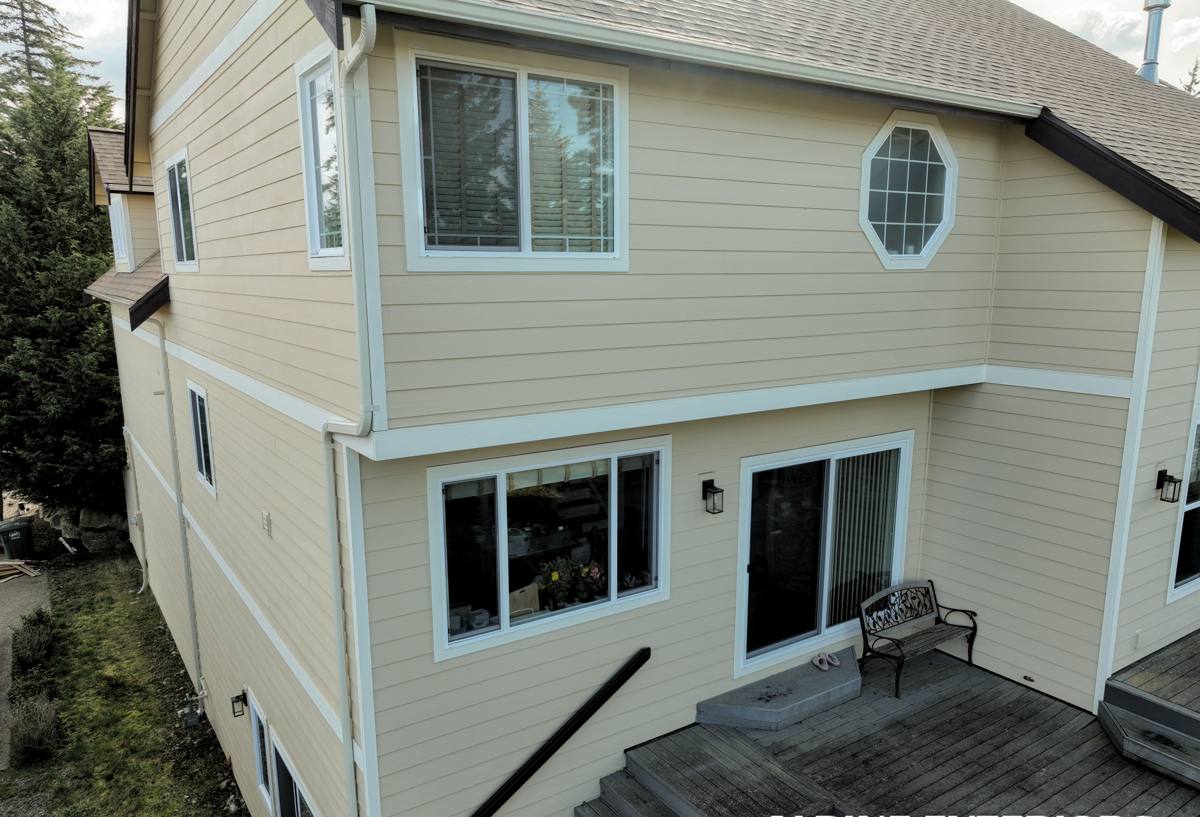
What Salt Air, Driving Rain, and Moss Season Actually Do to a Deck
Each of these factors damages a deck in a different way, and understanding which one is at work helps target the repair correctly instead of just patching the symptom.
Salt Air
Airborne salt accelerates corrosion on any metal fastener, bracket, or connector that isn't rated for it. Once a nail, screw, or joist hanger starts rusting, it loses holding strength long before the rust is visible from the surface. Rust also stains the surrounding wood and can weep out through paint or stain finishes.
Driving Rain
Wind-driven rain doesn't just fall on a deck, it gets pushed sideways and upward, into places a deck was never designed to shed water from easily — under railings, behind fascia boards, and into the top of ledger board connections where the deck meets the house. That's often where the most serious hidden rot starts.
Moss and Algae
Moss holds moisture against the wood surface long after the rest of the deck has dried, and its root structure works into the grain and finish. A moss-covered deck surface is also a slip hazard on stairs and walkways, which is a safety issue as much as a cosmetic one.
Signs a Sunnyland Deck Needs Repair
Most deck problems announce themselves quietly before they become expensive. Homeowners in this area should watch for:
- Soft or spongy spots underfoot, especially near the house or at stair landings
- Boards that have cupped, crowned, or visibly separated at the seams
- Rust streaks below fasteners, joist hangers, or railing posts
- Railings or stair stringers that flex or wobble under weight
- Persistent green or black staining that returns within weeks of cleaning
- Gaps opening up where the deck ledger meets the house siding
- Fasteners backing out or spinning freely instead of gripping
- A musty smell coming from underneath the deck structure
Any one of these on its own might be minor. Several together, especially near the ledger or support posts, usually means it's time to have someone look underneath the deck, not just at the walking surface.
What a Correct Deck Repair Actually Involves
A repair that only addresses what's visible from above tends to fail again within a season or two in this climate. A proper repair works from the structure outward.
Structural Components
This is the framing most homeowners never see: the ledger board bolted to the house, the joists that carry the decking, the posts and footings that carry it all to the ground. Ledger flashing failure is one of the most common causes of hidden rot in our area, because it sits exactly where driving rain and gravity both direct water. Repairing this properly means pulling back decking or fascia to inspect the ledger and flashing directly, not guessing from the outside.
Fasteners and Connectors
In a salt-air environment, the hardware matters as much as the wood. Repairs done with the wrong grade of fastener or hanger will corrode again within a few years, undoing the work. Matching connector type to the moisture and salt exposure of the specific deck is a basic part of doing the job right here.
Surface-Level Repairs
Deck boards, railings, and stair treads are the most visible wear points and the easiest to underestimate. A board that looks fine on top can be rotted from underneath where it sits against a joist and never fully dries. Replacing individual boards without checking what they were resting on just relocates the problem.
Repair or Replace: How We Decide
Not every deck problem calls for a full rebuild, and not every deck is worth patching indefinitely. The honest answer depends on where the damage is and how much of the structure it's reached.
| Factor | Usually Repairable | Usually Needs Replacement |
|---|---|---|
| Decking boards | Isolated soft or damaged boards | Widespread cupping, rot, or board failure across most of the deck |
| Railings and stairs | Loose posts, worn treads, damaged balusters | Structural rot in stringers or posts that no longer meet code |
| Ledger and flashing | Caught early, flashing replaced, minor rot cut out | Extensive rot along the ledger requiring rebuild at the house connection |
| Framing (joists/posts) | One or two compromised members | Rot or undersizing found throughout the joist bay |
| Typical cost range | Often a few hundred to low thousands of dollars | Can run into the several-thousand-dollar range depending on size and access |
We'll always tell you plainly if a repair is a temporary fix versus a lasting one, and we won't recommend rebuilding a deck that a targeted repair can put another decade or more of life into.
Our Deck Repair Process
The process is straightforward, but the order matters:
- Inspection from below and above — we check the ledger, joists, posts, and footings, not just the walking surface, since that's where damage from Sunnyland's rain and salt exposure typically starts.
- Moisture and rot mapping — probing suspect areas to find the actual boundary of damaged wood, so repairs remove all compromised material rather than stopping at what's visually obvious.
- Structural repair first — framing, ledger, and fastener issues are addressed before any cosmetic work, since surface repairs on a compromised structure won't hold.
- Surface repair or replacement — boards, railings, and stairs are repaired or replaced to match the existing deck as closely as possible.
- Cleanup and finish — clearing moss and debris from under-deck areas that trap moisture, and refinishing or sealing repaired sections so they weather evenly with the rest of the deck.
Materials and Hardware Choices for This Climate
We choose repair materials based on how they'll actually perform here, not just how they look on day one.
- Fasteners and connectors: we favor stainless or heavy hot-dip galvanized hardware for anything exposed to driving rain or salt air, since standard coated fasteners corrode faster in this environment and that corrosion is often the real cause of a "failed" repair a few years later.
- Wood selection: for framing repairs we use lumber rated for ground contact or exterior structural use as appropriate to the location, since a repair is only as good as the wood grade behind it.
- Composite and PVC decking: these can be a solid option for surface boards in a wet, mossy climate since they don't absorb water the way wood does, but they still require correctly ventilated framing underneath and hardware matched to the manufacturer's spec — a composite board over rotting joists is still a deck with a structural problem.
- Sealants and flashing: we treat ledger flashing as non-negotiable on any repair that touches the house connection, since that single detail prevents the most common and most expensive type of hidden damage we see.
Maintenance That Protects a Repair
A repair done right can last many years, but a little seasonal upkeep goes a long way toward protecting that investment in a climate like ours.
- Clear leaves and debris from between boards and off ledger areas before fall rains set in
- Rinse or brush off moss and algae growth before it establishes a foothold, rather than after
- Check under-deck areas once a year for standing water, blocked drainage, or new soft spots
- Keep gutters and downspouts near the deck clear so runoff isn't dumping directly onto it
- Re-seal or re-stain exposed wood surfaces on the manufacturer's recommended schedule, not just when it looks faded
- Tighten or replace any fasteners showing rust streaks before they lose their grip entirely
Why Local Experience in Sunnyland Matters
A deck repair crew that regularly works Bellingham neighborhoods like Sunnyland already knows which failure patterns to check first — where ledger rot tends to start, how far moss works into a north-facing deck versus a south-facing one, and which fastener grades actually hold up under this area's mix of rain and salt exposure. That's the difference between a repair that treats what's visible and one that treats what's actually happening to the structure. It also means straightforward, realistic timelines that account for Whatcom County's wet season, instead of a schedule built for a drier climate that keeps getting pushed back by weather.
If your deck in Sunnyland has soft spots, rust stains, stubborn moss, or just feels less solid than it used to, we're happy to take a look and give you a clear, no-pressure assessment of what it actually needs. The estimate is free, and there's no obligation — fill out the form below and we'll get in touch.