 Bellingham Exterior
 Why Windows Wear Out Faster in Sunnyland
Sunnyland is one of Bellingham's older, established neighborhoods, which means a lot of its homes are still running on windows that were installed decades ago — sometimes original to the house, sometimes a mid-life replacement that's now reaching the end of its own service life. Whatcom County's climate doesn't do these windows any favors. We're close enough to Bellingham Bay that salt-laden air reaches inland further than most homeowners realize, and that air is quietly corrosive to aluminum frames, hardware, and exposed fasteners over the years.
Add in driving rain that comes sideways off the water during fall and winter storms, and you've got wind-driven moisture testing every seal, sash, and sill on the house — not just sitting and running off like it would on a calmer day. Then there's the long moss and algae season that stretches from fall through spring here. Moss doesn't just grow on roofs; it takes hold in window sill channels, weep holes, and anywhere else moisture sits and doesn't fully dry. Once it does, it holds water against wood trim and frame material far longer than the material was ever designed to tolerate.
None of this means Sunnyland homes need anything exotic. It means window replacement here has to account for water management and material durability as seriously as it accounts for looks and energy performance — because the climate will find every shortcut.
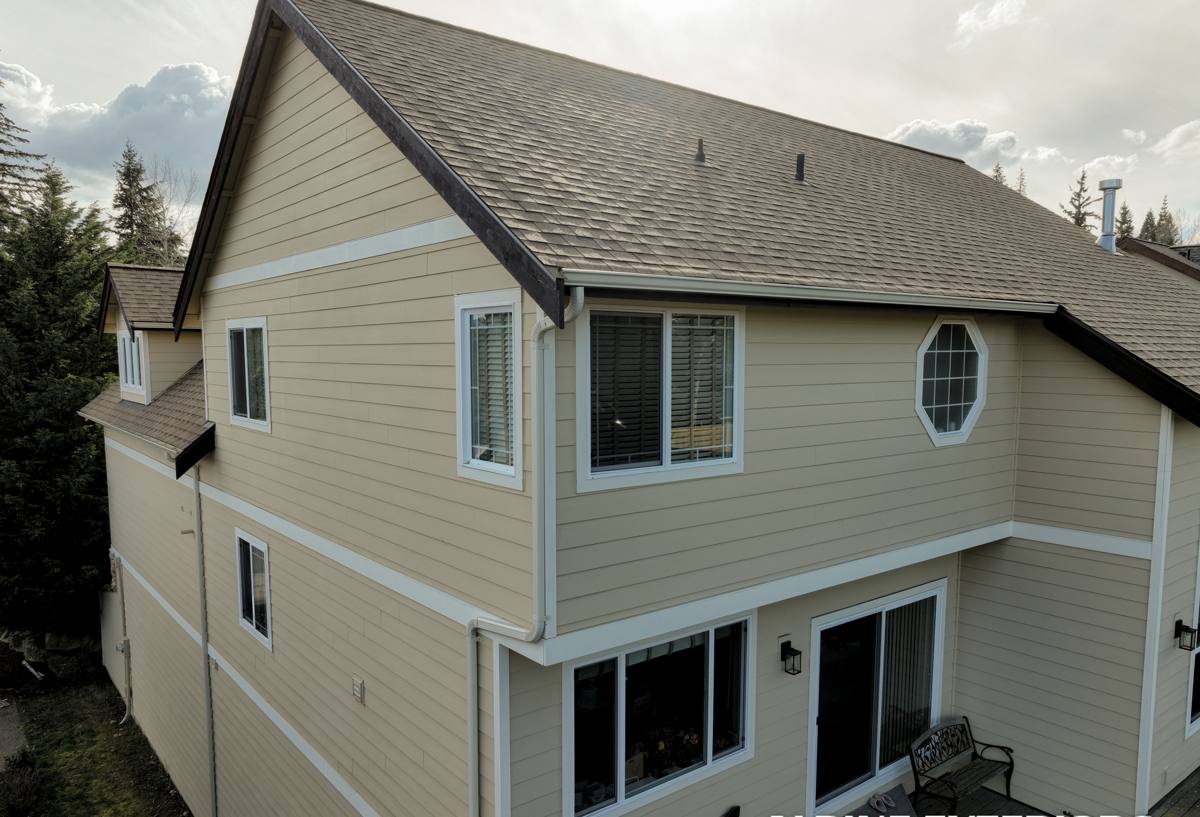
What This Actually Looks Like on the Ground
Older wood-frame windows
A lot of the housing stock in this part of Bellingham includes single-pane or early double-pane wood windows. These can be beautiful and are sometimes worth restoring on a case-by-case basis, but once the wood at the sill or lower rail has started absorbing moisture, painting over it again isn't a fix — it's a delay. Once rot sets in, replacement is almost always the more honest answer than another round of patching.
Aging aluminum-frame windows
Homes updated in past decades often got aluminum-frame replacements, which were a reasonable choice at the time but conduct cold and moisture more than modern frame materials. In a salt-air environment, aluminum hardware and frame seams are also more prone to pitting and corrosion over the long haul, which shows up as stiff operation, failed locks, and visible discoloration.
Foggy or failed double-pane units
If you're seeing condensation or a hazy film between the panes of a newer-looking window, the seal has failed and the argon or air gap that used to insulate it is gone. That window is still "there," but it's no longer doing its job — and in a house that gets driving rain and temperature swings, a failed seal tends to get worse, not better.
Signs It's Time to Replace, Not Repair
- Visible condensation or fogging between panes that doesn't clear
- Soft, spongy, or discolored wood at the sill, corners, or lower frame
- Windows that are hard to open, close, or lock — often a sign of frame movement or swelling
- Noticeable draft or cold spot near the frame even when the window is fully closed
- Moss, algae, or persistent green staining on the sill or exterior trim
- Peeling paint or caulking that keeps failing within a year or two of being redone
- Visible daylight or gaps around the frame from outside
One or two of these on their own might just need attention to trim or caulking. Several at once, especially paired with the age of the window, usually means the unit itself has reached the end of its practical life.
What a Correct Window Replacement Job Involves
The window itself is only part of the job. In this climate, the installation details are what determine whether a window lasts fifteen years or fails again in five.
Removal and opening inspection
Once the old window is out, the rough opening gets inspected for hidden water damage, soft framing, or existing mold — issues that are common in older Sunnyland homes and invisible until the old unit is pulled. This is the point where a problem can be caught and fixed properly instead of sealed behind a new window and left to keep spreading.
Flashing and water management
Proper flashing — at the sill, jambs, and head of the opening — is what actually keeps driving rain from working its way behind the window and into the wall assembly. This is the step that gets rushed or skipped by installers who are moving fast, and it's the one that matters most in a wind-driven-rain climate like ours.
Air sealing and insulation
The gap between the new window frame and the rough opening needs to be sealed and insulated correctly — not overpacked with expanding foam that can bow the frame, and not left with gaps that let air and moisture through.
Exterior trim and caulking
Trim gets resealed with exterior-grade caulking sized for the joint, not just smeared on. This is also the point where we address any sill design or slope issues that have been letting moss and standing water collect in the first place.
Choosing a Frame Material for This Climate
There's no single "best" window material for every home — it depends on the house, the budget, and how much upkeep you want to take on. Here's how the common options actually compare for a coastal Whatcom County home.
| Frame Material | Moisture & Salt-Air Resistance | Maintenance | Typical Fit |
|---|---|---|---|
| Vinyl | Very good — won't corrode or rot | Low; occasional cleaning | Most homes, best value |
| Fiberglass | Excellent — very stable in temperature swings and moisture | Low | Higher-end replacements, larger openings |
| Aluminum | Fair — prone to corrosion and heat/cold transfer near salt air | Moderate; watch hardware and seals | Modern/architectural styles where trade-offs are accepted |
| Wood / wood-clad | Good on the clad exterior, but interior wood needs protection from any moisture intrusion | Higher; periodic finishing | Character homes prioritizing original look |
We'll walk through these trade-offs honestly for your specific house rather than pushing one material for every job — a wood-clad window might be the right call for a Sunnyland home with historic character, while a straightforward vinyl or fiberglass unit is often the smarter long-term choice for a rental or a home where low maintenance matters more than matching original trim.
Our Process for Sunnyland Window Replacement
- On-site assessment. We look at every window being considered, check for hidden moisture or framing issues, and talk through what's actually needed versus what can wait.
- Straightforward estimate. You get a clear breakdown of window options, frame materials, and pricing — no pressure to upgrade beyond what makes sense for your home and budget.
- Scheduling around the weather. Given how much rain this area gets, we plan installation windows carefully and work efficiently so openings aren't left exposed longer than necessary.
- Installation with proper flashing and sealing. This is where the job is actually won or lost, and it's not a step we shortcut.
- Final walkthrough. We check operation, sealing, and cleanup with you before calling the job done.
What Affects the Cost
Every home is different, but a few factors consistently move the price on a Sunnyland window job:
| Factor | Why It Matters |
|---|---|
| Frame material chosen | Vinyl, fiberglass, aluminum, and wood-clad all sit at different price points |
| Number and size of openings | Larger or custom-sized windows cost more to source and install |
| Hidden framing repair | Rot or water damage found once the old window is removed adds labor and material |
| Access and window height | Second-story or hard-to-reach windows take more time and equipment |
| Trim and exterior finish work | Matching existing trim profiles or repainting adds to the scope |
Most straightforward residential window replacement jobs land somewhere in the low-to-mid thousands per window installed, depending on these factors — we won't know your exact number until we've actually seen the openings.
Why Local Experience in This Neighborhood Matters
A crew that has worked windows throughout Bellingham and Whatcom County knows what to expect from an older Sunnyland home before the tape measure ever comes out — how these houses tend to be framed, where moisture problems typically show up first, and how to schedule around a wet-season forecast instead of getting caught mid-installation by a storm rolling in off the water. That familiarity translates into fewer surprises, tighter installs, and windows that are actually built for the rain and salt air they'll be facing for the next couple of decades, not just for a showroom.
If your windows are drafty, fogged, sticking, or just old enough that you're wondering, we're happy to take a look and give you an honest read on what's actually needed. Reach out for a free, no-pressure estimate using the form below.