 Bellingham Exterior
 Siding Built for What York's Weather Actually Does to a House
York is a quieter residential pocket of Bellingham, but it sits under the same weather pattern as the rest of Whatcom County: onshore air off the Salish Sea, long stretches of driving rain from fall through spring, and a moss season that can run eight or nine months out of the year in shaded yards. None of that is unusual for this part of Washington. What is unusual is how much damage it does to siding that wasn't built or installed with those conditions in mind. We install James Hardie fiber cement siding, and only James Hardie fiber cement siding, on homes in this area. This page walks through why, and what a correct installation actually looks like on a York property.
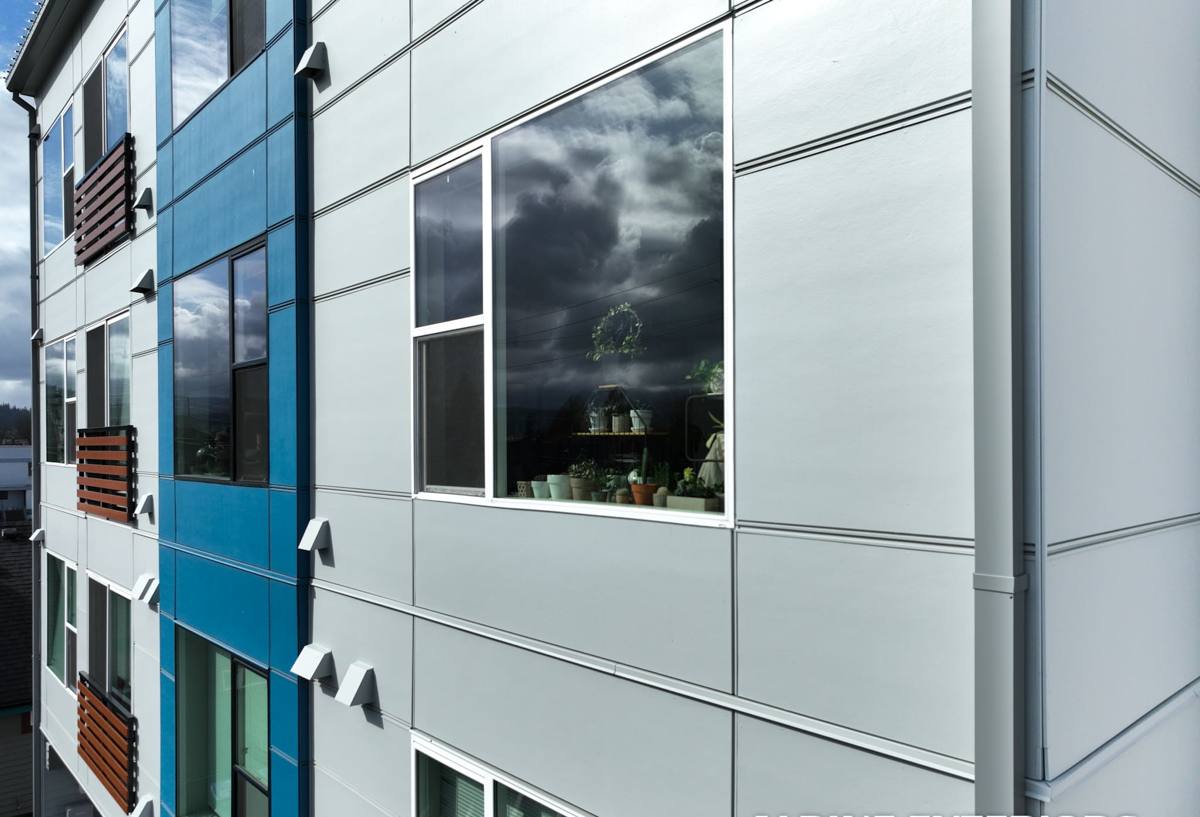
What Driving Rain, Salt Air, and Moss Do to the Wrong Siding
Most siding failures we get called out to inspect in the Bellingham area aren't dramatic. They're slow. Water finds a seam, a nail hole, or a cut end that was never sealed, and it works its way behind the cladding a little at a time. In a climate with this much annual rainfall, "a little at a time" adds up fast.
Moisture That Never Fully Dries
Whatcom County doesn't give exterior materials long dry stretches to shed absorbed moisture the way a drier climate would. Wood-based and wood-fiber sidings that take on water during a wet winter often don't get enough sun and airflow before the next system rolls in. Over repeated cycles, that trapped moisture is what drives swelling, delamination, and rot at the most vulnerable points: butt joints, corner boards, and anywhere siding meets trim.
Salt-Laden Air
Proximity to Bellingham Bay means the air carries a measurable salt load, especially on west and southwest-facing walls that catch weather straight off the water. Salt air accelerates corrosion on exposed fasteners and metal flashing, and it's harder on paint film and caulk than inland air is. Siding and trim on the weather side of a York home simply age faster than the same materials would forty miles inland.
Moss, Algae, and Shade
Mature tree cover and a marine climate are a near-perfect recipe for moss and algae growth on north-facing and shaded walls. Beyond the cosmetic green cast, moss holds moisture directly against the siding surface for weeks at a time, which is exactly the condition that rots wood-based products and stains porous factory finishes that weren't engineered to resist it.
Why We Only Install James Hardie Fiber Cement
We get asked fairly often why we don't offer vinyl, LP SmartSide, or one of the other fiber cement brands on the market. The honest answer is that we standardized on one product because it performs consistently in exactly the conditions York homes deal with every year.
James Hardie siding is fiber cement — sand, cement, and cellulose fiber, not wood. It doesn't absorb water the way engineered wood products do, so the freeze-thaw and wet-dry cycling common here doesn't drive the same swelling and delamination problems. It's also non-combustible, which matters more each wildfire season even on the wet side of the state. Hardie's HZ5 product line is specifically engineered for harsh, wet climates like ours, and the factory-applied ColorPlus finish is baked on under controlled conditions rather than field-applied, which gives it better UV and moisture resistance than a job-site paint job — and a longer, better-backed warranty on the finish itself.
That's not to say every wood-based or vinyl product is junk. LP SmartSide and cedar both have real advantages in the right application, and vinyl is inexpensive and low-maintenance in mild climates. Our position is narrower than "those products are bad" — it's that for this specific climate, with this much rain and salt exposure, fiber cement is the material that holds up with the least long-term risk, and James Hardie is the manufacturer whose product line, finish warranty, and climate-specific engineering we trust enough to put our name behind.
What a Correct Installation Actually Involves
Fiber cement siding is only as good as the installation underneath it. Most of the failures we see on Hardie siding that was installed by an unfamiliar crew trace back to shortcuts in the steps nobody sees once the job is done.
Tear-Off and Substrate Prep
We remove old siding down to the sheathing and inspect for hidden rot, especially around window and door openings and at the base of walls, which is where trapped moisture usually does the most damage. Any compromised sheathing gets replaced before anything new goes up — covering rotten sheathing with new siding just hides the problem for a few more years.
Weather-Resistive Barrier and Flashing
A correctly lapped weather-resistive barrier, properly integrated window and door flashing, and kick-out flashing at roof-wall intersections are what actually keep water out of the wall assembly — the siding itself is the second line of defense, not the first. This is the step that gets rushed most often on lower-bid jobs, and it's the one that causes the expensive failures years later.
Fastening, Gaps, and Clearances
James Hardie publishes specific fastening patterns, joint gap requirements, and minimum clearances from grade, roofing, and decking for a reason: get them wrong and you void the manufacturer's warranty and create entry points for water. We follow Hardie's published installation instructions to the letter, including proper gapping at butt joints and correct clearance above roof lines and hardscape.
Caulking, Touch-Up, and Finish Details
Cut ends get sealed before installation, not after. Caulk joints are tooled properly rather than smeared on as a cover-up. Touch-up paint at field cuts is matched and applied per Hardie's specifications so the factory finish stays consistent across the whole wall.
Our Process for York Installations
- On-site assessment — we walk the exterior, check current siding and trim condition, note moisture-prone areas (shaded walls, low clearances, downspout discharge points), and take measurements.
- Written estimate — a clear scope of work and pricing, with any sheathing repair or additional flashing work called out separately so there are no surprises once tear-off starts.
- Tear-off and inspection — old siding comes off, sheathing gets inspected, and any rot or damage is documented and repaired before moving forward.
- Weather barrier and flashing installation — the moisture management layer goes in first, correctly lapped and integrated at every penetration.
- Hardie siding installation — installed to manufacturer specification for fastening, gapping, and clearance, with attention to the specific exposure of each elevation.
- Trim, caulking, and finish work — corners, trim boards, and joints are finished and sealed, and cut ends are touched up to match the factory finish.
- Final walkthrough — we go over the completed work with the homeowner before calling the job done.
Signs a York Home's Siding Is Already Behind
Because siding failure in this climate tends to happen from the inside out, the visible signs often show up later than the actual damage. Worth checking for:
- Soft or spongy spots when you press on siding near the bottom of walls or below windows
- Persistent green or black staining on shaded or north-facing walls that pressure washing doesn't fully remove
- Paint that's peeling, bubbling, or chalking heavily, especially on the weather-exposed side of the house
- Visible gaps, warping, or buckling at siding joints and corners
- Rusting or discolored nail heads and fasteners
- A musty smell in an adjacent interior room, which can indicate moisture behind the wall
- Siding that flexes or feels hollow compared to surrounding sections
Any one of these on its own isn't necessarily an emergency, but a combination is usually a sign the water management behind the siding has already been compromised.
What Affects the Cost of a Siding Installation
Every home is different, and we don't quote pricing without seeing the house, but the factors below are what typically move the number up or down on a York project.
| Factor | Why It Matters |
|---|---|
| Sheathing condition | Rot found during tear-off requires repair or replacement before new siding can go on |
| Home size and wall complexity | More corners, dormers, and cutouts mean more labor and material waste |
| Current siding type | Tear-off and disposal costs vary depending on what's coming off |
| Trim and detail work | Custom trim, board-and-batten accents, or extensive window trim add time |
| Access and site conditions | Steep grades, tight setbacks, or limited staging space affect labor efficiency |
| Hardie product line and profile | Lap width, texture, and ColorPlus color selection all factor into material cost |
Why a Crew That Already Works in York Matters
Siding installation isn't a one-size-fits-all trade, and a crew that regularly works this part of Bellingham brings a few practical advantages. They already understand how sun exposure, tree cover, and prevailing wind direction affect which walls take the worst of the weather on a given lot, so flashing and clearance details get extra attention where they're actually needed rather than applied uniformly. They know what county permitting and inspection expectations look like for exterior work in this jurisdiction. And because they're not driving in from out of the area, scheduling, follow-up, and warranty service are straightforward rather than a logistics problem months down the road.
None of that replaces a careful, code-correct installation — but it means fewer surprises during the job and a faster response if something needs attention after it's done.
Caring for New Siding After Installation
James Hardie siding is low-maintenance compared to wood, but "low-maintenance" doesn't mean "no maintenance," especially in a climate this wet. A yearly rinse-down removes the pollen, dust, and early moss growth that accumulate on any exterior surface here, and it's worth doing before moss gets a foothold rather than after. Keep an eye on caulk joints around windows and trim over time — caulk is the one component that ages faster than the siding itself and is easy to touch up before it becomes a leak path. Trim back vegetation and tree limbs that keep a wall shaded and damp, since airflow is one of the simplest ways to slow moss and algae growth. And if you ever notice a soft spot, a new stain, or a section that looks different from the rest of the wall, it's worth a quick look before the next wet season rather than after.
If you're weighing a siding replacement for a York-area home, we're happy to take a look and give you a straightforward, no-pressure estimate — no obligation, just an honest read on your home's condition and what it would take to do the job right. Use the form below to get started.