 Bellingham Exterior
 Edgemoor's Roofs Work Harder Than People Realize
Edgemoor sits close to Bellingham Bay, tucked under a heavy tree canopy, and that combination is exactly what makes asphalt shingle roofing in this neighborhood a different job than roofing a few miles inland. Homes here take on salt-laden air coming off the water, get pounded by driving rain that blows in sideways during winter storms, and sit under shade cover for much of the year that keeps roof surfaces damp far longer than roofs in open, sunny lots. None of that is dramatic on its own, but stacked together over years, it's what separates a roof that makes it to 25-plus years from one that starts failing at 12.
We're not describing a crisis — asphalt shingles are a proven, cost-effective roofing material and they perform well in Whatcom County when they're installed correctly for local conditions. But "correctly for local conditions" is the part that gets skipped when a roof is installed using generic specs instead of ones suited to a shaded, salt-exposed, high-rainfall neighborhood like Edgemoor.
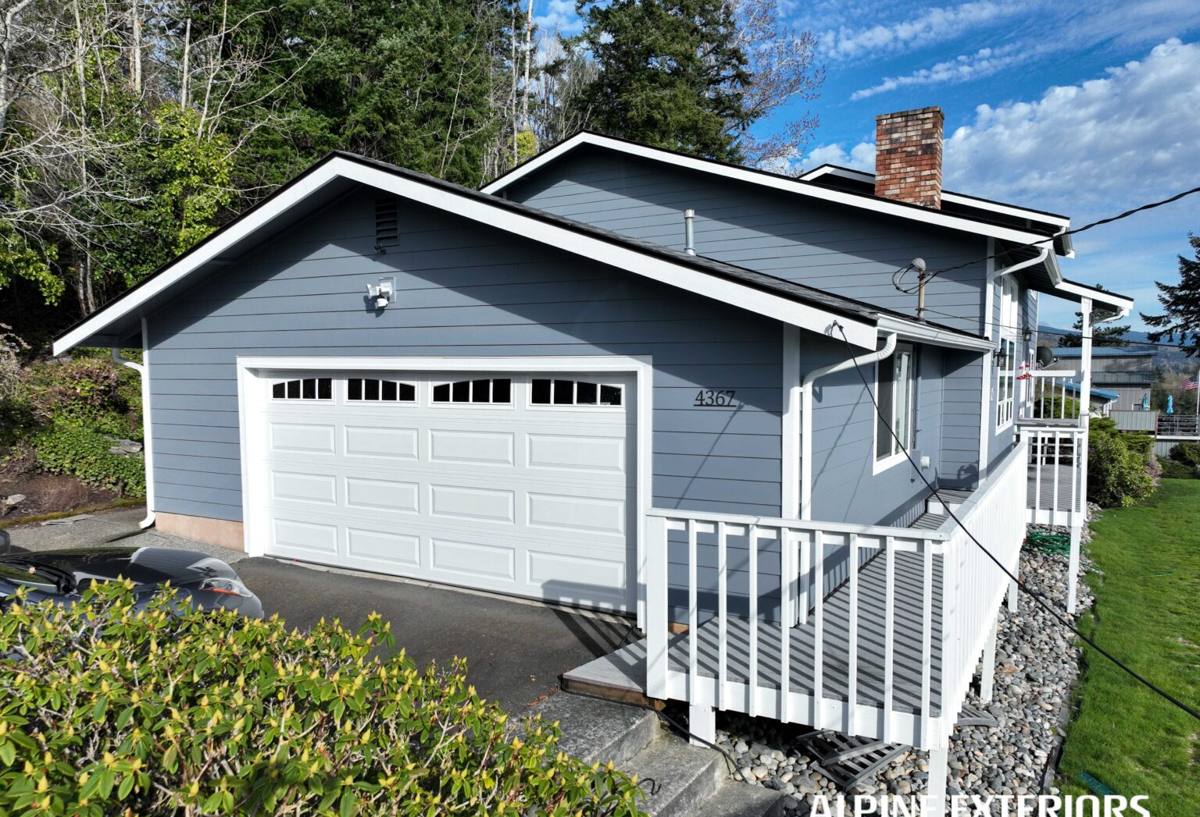
What the Climate Actually Does to a Shingle Roof Here
Salt Air
Proximity to Bellingham Bay means airborne salt settles on roofing metal — flashing, vents, fasteners — and accelerates corrosion over time. It's slow, but it's constant, and it's one of the reasons flashing material and fastener quality matter more here than they would on a roof twenty miles inland.
Driving Rain
Bellingham gets a lot of rain, but it's the wind-driven rain off the water that causes the real damage. It doesn't just fall straight down — it gets pushed up under shingle edges, into valleys, and around penetrations like vent pipes and chimneys. A roof that would shed water fine in a calm rain can leak in a sideways one if the underlayment and flashing details weren't built for it.
Long Moss Season
Tree cover keeps parts of an Edgemoor roof shaded and damp for much of the year, which is prime moss and algae territory. Moss isn't just cosmetic — it holds moisture against the shingle surface, works its way under shingle edges as it grows, and can lift and separate shingle tabs over time, opening the door to leaks.
Signs an Edgemoor Roof Needs a Closer Look
- Moss growth along the north-facing or shaded slopes, especially near ridge lines and valleys
- Granules collecting in gutters or downspouts — a sign shingles are wearing down
- Curling, cupping, or lifted shingle edges, particularly on slopes exposed to prevailing wind
- Rust streaking or corrosion around flashing, vents, or metal edges
- Dark streaking (algae) on shingle surfaces, most common on shaded roof faces
- Soft spots, sagging, or staining on interior ceilings near exterior walls
- Daylight visible through the attic roof deck at seams or nail holes
Any one of these alone might not mean much. Several together, especially on a roof past the 15-year mark, are worth a professional look before the next wet season.
What a Correct Asphalt Shingle Job Involves
A shingle roof is only as good as what's underneath it. For a coastal, tree-shaded property, we pay particular attention to a few details that matter more here than in drier, more open parts of Whatcom County:
- Ice-and-water shield at eaves and valleys — a self-adhering membrane that seals around fasteners and resists wind-driven rain intrusion where it's most likely to happen
- Synthetic underlayment across the full deck — a secondary water barrier that outperforms old-style felt in wet, humid conditions
- Corrosion-resistant flashing and fasteners — accounting for salt air exposure so close to the bay
- Balanced attic ventilation — intake and exhaust that keeps the roof deck dry from underneath, which matters even more when the roof surface itself stays damp longer due to shade
- Proper valley and penetration detailing — the highest-risk leak points on any shingle roof, and the first place a rushed installation shows problems
None of this is exotic. It's standard best practice — but it's also the first thing that gets shortcut on a rushed or underpriced job, and the shortcuts don't show up until a few winters later.
Our Process
1. Inspection and Honest Assessment
We start on the roof and in the attic, not just with a look from the ground. We check the shingle field, flashing, valleys, ventilation, and roof deck condition, and we tell you plainly whether you're looking at a repair, a partial re-roof, or a full replacement — including if the honest answer is "this can wait."
2. Tear-Off and Deck Inspection
Old shingles come off down to the deck so we can see what's actually there. Damp or damaged decking gets replaced before anything new goes down — covering over a compromised deck is exactly how a new roof fails early.
3. Underlayment and Flashing
Ice-and-water membrane at eaves, valleys, and penetrations, synthetic underlayment across the field, and new flashing at chimneys, walls, and vents. This layer does more of the actual waterproofing work than most homeowners realize.
4. Shingle Installation
Shingles go down to manufacturer specification for nailing pattern, exposure, and fastener count — details that directly affect wind resistance, which matters on a property exposed to bay winds.
5. Ventilation Check and Cleanup
We confirm intake and exhaust ventilation is balanced for the attic space, then do a full site cleanup, including a magnetic sweep for stray nails.
Choosing a Shingle for a Coastal, Shaded Property
| Shingle Type | Typical Lifespan | Best Fit For |
|---|---|---|
| 3-Tab Asphalt | 15–20 years | Budget-conscious projects; lower wind and impact resistance |
| Architectural (Dimensional) | 25–30 years | Most Edgemoor homes — better wind rating, thicker profile, more moss-resistant options available |
| Algae-Resistant (Copper/Zinc granules) | 25–30 years | Shaded, tree-covered lots where moss and algae are a recurring problem |
| Impact-Rated (Class 4) | 30+ years | Homes prioritizing storm durability, sometimes with insurance premium benefits |
For most Edgemoor properties, we recommend algae-resistant architectural shingles as the practical default — the upgrade cost over standard architectural shingles is modest, and it directly addresses the moss problem that's specific to shaded, coastal lots rather than a generic upsell.
What Affects the Cost
| Factor | Why It Matters |
|---|---|
| Roof size and pitch | Steeper roofs take longer and require more safety setup |
| Number of existing layers | Tear-off of multiple old layers adds labor and disposal cost |
| Deck condition | Rot or damage found at tear-off means plywood replacement before shingles go on |
| Access and tree cover | Tight lots and overhanging branches near the water can slow staging and material handling |
| Valleys, dormers, penetrations | More flashing detail work means more labor time |
| Shingle grade chosen | 3-tab, architectural, algae-resistant, and impact-rated shingles are priced differently |
We won't quote a number without seeing the roof — anyone who does is guessing. What we can promise is a written estimate that breaks down materials and labor so you know exactly what you're paying for.
Ongoing Care Between Roof Jobs
A well-installed shingle roof in Edgemoor still needs some seasonal attention given the tree cover and moisture here. A little maintenance goes a long way toward hitting the full lifespan of the shingle:
- Keep gutters and valleys clear of needles and leaf debris, especially heading into fall storms
- Have moss treated before it spreads, rather than after it's established and lifting shingle edges
- Trim back overhanging branches to reduce shade, debris buildup, and physical abrasion on the roof surface
- Schedule a roof check after major windstorms off the bay to catch lifted or displaced shingles early
- Watch attic ventilation — blocked soffit vents are a common, easy-to-miss cause of premature deck rot
Why a Crew That Already Works Edgemoor Matters
Edgemoor's mix of mature trees, waterfront exposure, and narrower access on some lots isn't something every roofing crew is set up to handle well. A crew that regularly works this part of Bellingham knows how to stage material and equipment around tight driveways and tree canopy, understands which flashing and fastener specs actually hold up to bay-side salt exposure, and isn't guessing at how local wind and rain patterns affect valley and eave detailing. That familiarity shows up in fewer surprises during the job and a roof that's actually built for where it sits — not just built to a generic spec sheet.
We also pull permits and follow inspection requirements through the City of Bellingham and Whatcom County as required, so the job is done right on paper as well as on the roof.
Get a Straightforward Estimate
If your Edgemoor roof is showing moss, wear, or you're just not sure how much life is left in it, we're happy to take a look and give you an honest read — no pressure, no upsell. Fill out the form below to schedule a free estimate.