 Bellingham Exterior
 Custom Decks for Barkley Homes
Barkley sits close enough to Bellingham Bay and the surrounding hillsides that outdoor living spaces take a real beating over the course of a year. A deck built here isn't just a place to put a grill and a couple of chairs — it's a structure that has to shed water fast, resist the slow creep of moss and mildew, and hold up to salt-tinged air rolling in off the water. When we build a custom deck for a Barkley homeowner, we're not just following a generic set of blueprints. We're building for this specific stretch of Whatcom County, where the weather doesn't give a deck much of a break between October and May.
This page is about one service in one area: custom deck construction for homes in and around Barkley. If you're weighing a new deck, a full rebuild, or replacing an aging structure that's started to sag or gray unevenly, this is what we think a Barkley homeowner should know before signing a contract with anyone.
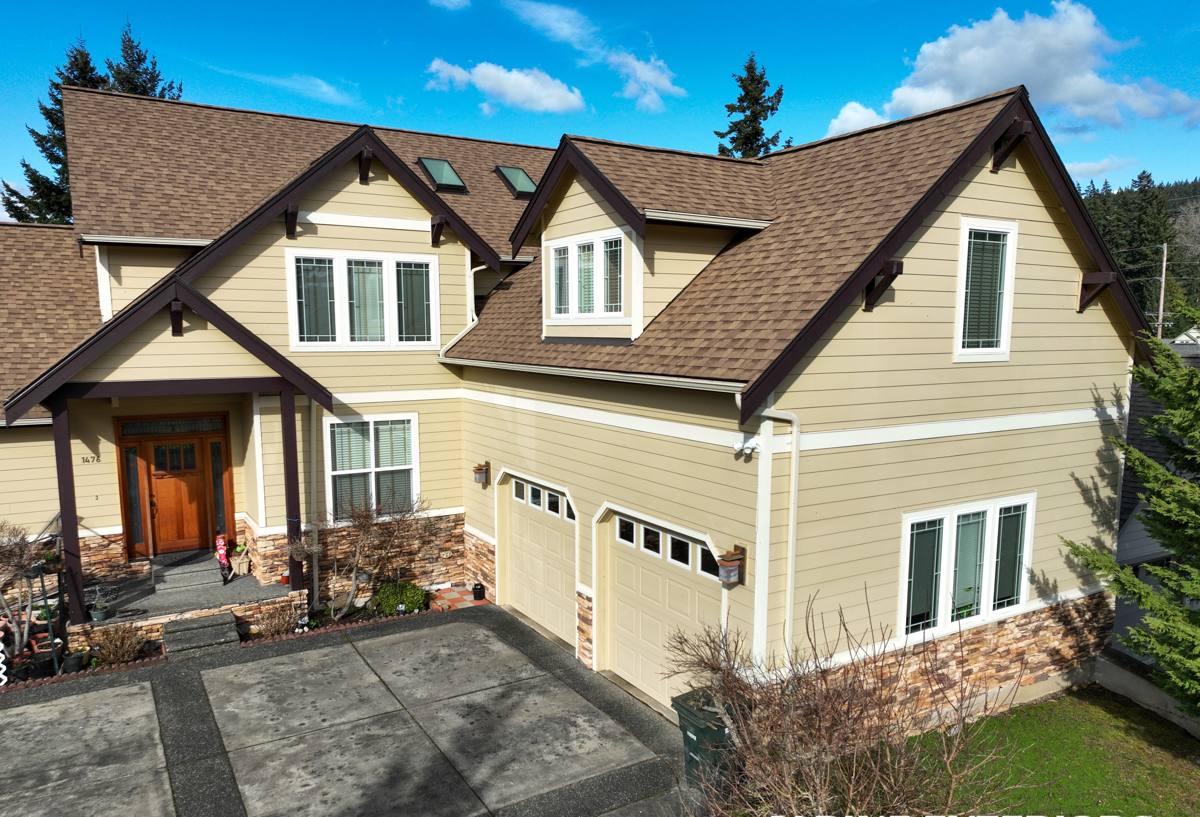
What Bellingham's Weather Actually Does to a Deck
A deck in a dry climate mostly fails from UV exposure and general wear. A deck in Bellingham fails from water — water that sits, water that wicks, and water that never fully dries out between storms. A few specific ways this shows up on decks we've inspected around Barkley:
- Moss and algae buildup on horizontal surfaces that don't get much direct sun, especially decks tucked under mature trees or on the shaded side of a house.
- Ledger board rot where the deck attaches to the house, if the original flashing was skipped or installed wrong — this is one of the most common structural failures we find on older decks.
- Fastener corrosion from a combination of near-constant moisture and salt-laden air, which accelerates rust on lower-grade screws and hardware faster than most homeowners expect.
- Joist and beam softening in areas with poor airflow underneath the deck, where trapped moisture never gets a chance to evaporate.
- Slippery surfaces during the long stretch of fall and winter when moss and algae take hold, which is as much a safety issue as a maintenance one.
None of this means a deck can't last for decades in this climate — it means the details that get overlooked in a rushed build are exactly the details that matter most here.
Material Options and How They Hold Up Locally
There's no single "best" decking material for every Barkley home — it depends on your budget, how much upkeep you want to do, and how much direct sun and shade your yard gets. Here's how the common options actually perform under Whatcom County conditions:
| Material | Moisture Performance | Maintenance | Typical Lifespan Here |
|---|---|---|---|
| Pressure-treated pine | Good if properly sealed and maintained; prone to checking and cupping if neglected | Annual cleaning, re-sealing every 2-3 years | 15-20 years with upkeep |
| Cedar | Naturally rot- and insect-resistant; still needs sealing against constant rain | Cleaning plus periodic oil or sealant | 20-25 years with upkeep |
| Composite decking | Excellent — doesn't absorb water, won't rot or splinter | Occasional washing to keep moss and algae from gripping the surface texture | 25-30+ years |
| PVC decking | Best moisture resistance of the group; fully synthetic | Lowest maintenance; simple washing | 30+ years |
Composite and PVC products cost more up front, but in a climate where a deck sits wet for weeks at a stretch, the reduced maintenance and moisture resistance often pay for themselves over the life of the deck. That said, plenty of Barkley homeowners still prefer the look and feel of real wood — if that's you, we'll be honest with you about what kind of maintenance schedule keeps it looking good instead of just letting it gray and go slick.
What a Correctly Built Deck Involves
A deck that holds up in this climate is won or lost in details most homeowners never see once the boards go down. This is what we consider non-negotiable on any custom deck build:
Footings and Framing
Footings need to go below frost depth and bear on solid, undisturbed soil — not fill dirt or loose material, which is common on sloped or graded lots. Joist spacing and beam sizing should be calculated for your specific span and load, not just copied from a standard plan, especially if you're planning a hot tub, built-in seating, or a second-story deck.
Ledger Flashing
Where the deck meets the house is the single most common failure point we see on rebuilds. Proper flashing — installed in the right order relative to the house's weather-resistive barrier — keeps water from working its way behind the siding and into the structure. This is a step that's easy to shortcut and expensive to fix later.
Fasteners and Hardware
We use corrosion-resistant, code-rated fasteners and structural connectors rated for exterior and coastal-adjacent exposure. Cheaper, uncoated hardware might save a few dollars on the front end, but it's often the first thing to fail visibly — rust streaks on decking boards are almost always a hardware problem, not a wood problem.
Drainage and Airflow
Decking boards need consistent gapping for water to shed through rather than pool on the surface. Underneath, the structure needs enough clearance and airflow to let moisture evaporate instead of sitting against joists and beams. On grade-level decks, this sometimes means adjusting the substructure height or adding drainage away from the foundation.
Our Process for a Barkley Deck Build
- On-site consultation — we walk your property, look at drainage, sun exposure, tree cover, and existing structure (if there's a deck to replace), and talk through what you actually want to use the space for.
- Design and material selection — we lay out size, layout, and material options against your budget, being straightforward about trade-offs rather than upselling.
- Permitting — we handle the permit application and coordinate any required inspections through the City of Bellingham.
- Site prep and footings — excavation, footing placement, and inspection sign-off before framing begins.
- Framing and flashing — structural build-out with proper ledger flashing and hardware.
- Decking, railing, and finish work — installation of your chosen decking material, railing system, stairs, and any built-ins.
- Final walkthrough — we go over the finished deck with you, including a basic maintenance rundown specific to the material you chose.
Permits and Local Requirements
Most new decks and significant deck rebuilds in Bellingham require a building permit, and requirements can shift depending on deck height, proximity to property lines, and whether it's attached to the house. Barkley's mix of newer planned lots and varied grading means setback and drainage requirements aren't always identical from one property to the next. We handle the permit process as part of the job rather than treating it as the homeowner's problem — it's part of building something that's actually legal and insurable, not just something that looks finished.
Maintenance That Actually Matters Here
Whatever material you choose, a little seasonal attention goes a long way in this climate. Here's the checklist we give Barkley homeowners after a build:
- Sweep debris and standing leaves off the deck regularly during fall, especially under tree cover — trapped organic matter is what feeds moss growth.
- Rinse or wash the surface at least twice a year to knock back algae and moss before it gets established and slick.
- Check railing and stair connections annually for looseness — hardware can shift slightly with seasonal moisture and temperature swings.
- Inspect ledger flashing and the house connection point once a year for any signs of gaps, staining, or soft wood.
- For wood decks, re-seal or re-stain on the schedule appropriate to the product — skipping a cycle in a wet year does more damage than skipping one in a dry year.
- Keep gutters and downspouts near the deck clear so runoff isn't dumping directly onto or under the structure.
Why a Crew That Already Works in Barkley Matters
Deck-building isn't the same job in every climate, and it isn't even quite the same job in every part of Whatcom County. A crew that's built and repaired decks around Barkley already knows how the local drainage patterns, tree cover, and salt-tinged air factor into material choice and construction detail. That's the difference between a deck that needs a full ledger repair in year six and one that's still solid twenty years out. We're not guessing at how a product will hold up here — we've seen what works and what doesn't on homes near yours.
If you're thinking about a new deck or replacing one that's past its prime, we're happy to come take a look and give you a straightforward, no-pressure estimate. There's a form below to get that conversation started.