 Bellingham Exterior
 Sehome's Siding Problem Isn't Hypothetical
Sehome sits close enough to the water and low enough in elevation that homes here take on the full mix of what Whatcom County weather delivers: salt-laden air drifting off Bellingham Bay, long stretches of driving rain that comes in sideways during winter storms, and a moss season that can run most of the year on shaded, north-facing walls. None of that is unusual for Bellingham. What matters is that siding in this specific setting has to handle constant moisture cycling, not just occasional rain. Wood-frame homes in older, tree-covered neighborhoods like Sehome are especially prone to trapping dampness against exterior walls where sunlight and airflow are limited.
Over time, that combination — salt air, sustained rain, shade, and moss — is what breaks down siding that isn't built for it. It's also why we install one product on every job: James Hardie fiber cement. This page walks through what Sehome homes specifically need from their siding, what a correct installation looks like, and why the crew doing the work matters as much as the material itself.
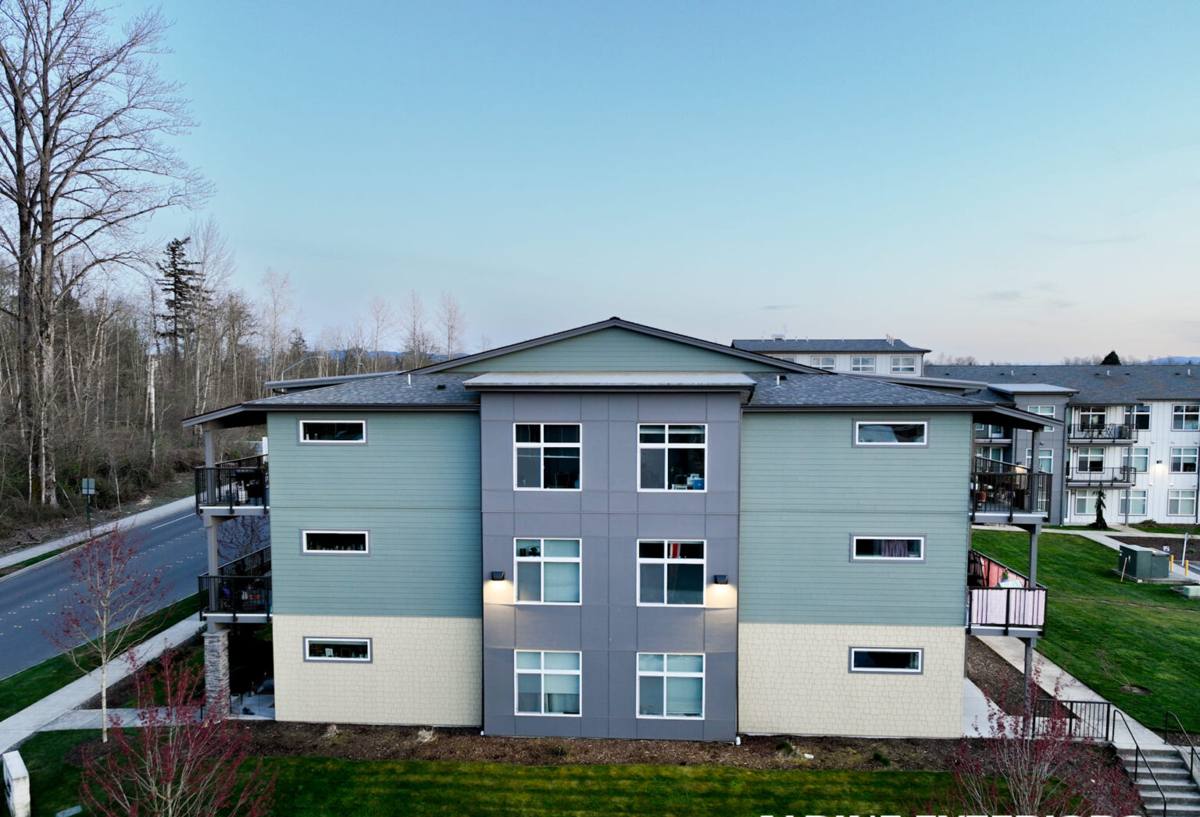
What Salt Air, Rain, and Moss Actually Do to Siding
Salt Air
Airborne salt from the bay accelerates corrosion on fasteners, flashing, and any exposed metal components. It also degrades certain paints and coatings faster than inland exposure would, leading to premature fading, chalking, or peeling on siding that isn't engineered with a marine-grade finish in mind.
Driving Rain
Wind-driven rain doesn't just wet the surface of a wall — it pushes moisture up and under laps, into seams, and behind trim if those details weren't installed correctly. Once water gets behind the siding, the problem shifts from a surface issue to a structural one: sheathing rot, insulation damage, and mold growth that isn't visible until it's serious.
Moss and Sustained Dampness
Shaded walls, especially those facing north or tucked under mature tree canopy, stay damp longer after every rain event. That constant moisture is exactly what moss, algae, and mildew need to take hold. On siding materials that absorb water or swell with moisture, that dampness also speeds up rot and paint failure from the inside out.
Why James Hardie Fiber Cement Fits This Climate
James Hardie siding is fiber cement — a mix of cellulose fiber, sand, and cement that doesn't absorb and swell with moisture the way wood-based products do, and doesn't rely on paint film integrity the way vinyl does for its color. For a neighborhood like Sehome, that translates into a few concrete advantages:
- Dimensional stability: Fiber cement doesn't expand, contract, warp, or cup with repeated wet-dry cycling the way wood and wood-composite sidings can.
- Non-combustible core: Fiber cement doesn't feed a fire, which matters for insurance considerations and general home safety, independent of siding's day-to-day weather performance.
- Engineered moisture resistance: Hardie's HZ5 product line is specifically formulated for wetter, harsher climates like the Pacific Northwest, with performance testing built around freeze-thaw and moisture exposure rather than a one-size-fits-all national spec.
- ColorPlus factory finish: A baked-on, multi-coat finish applied under controlled conditions holds color and resists fading, chalking, and peeling far longer than field-applied paint exposed to salt air and UV.
That doesn't mean fiber cement is maintenance-free or immune to moss — nothing sitting outside in Bellingham's climate is. It means the material itself isn't the weak link, so long as the installation detailing is done correctly.
What a Correct Installation Actually Involves
Most siding failures we see in this climate trace back to installation shortcuts, not the product itself. A correct James Hardie job in a wet, shaded neighborhood like Sehome includes:
Water Management Behind the Siding
Proper weather-resistive barrier, correctly lapped and taped seams, and rainscreen or drainage plane detailing where called for — so any water that does get past the siding surface has somewhere to go instead of sitting against the sheathing.
Flashing at Every Penetration
Windows, doors, hose bibs, vents, and any other wall penetration need proper head flashing and kick-out flashing where rooflines meet walls. This is where driving rain finds its way in if it's skipped or done poorly.
Correct Clearances
James Hardie specifies minimum clearances between the siding's bottom edge and grade, roofing, decks, and patios. Those clearances exist specifically to keep splash-back moisture and standing water away from the bottom courses — a common failure point on homes with limited clearance to walkways or landscaping beds.
Fastening to Spec
Fastener type, spacing, and depth all affect how the siding performs over time. Overdriven or incorrectly placed fasteners can crack panels or create entry points for moisture.
Caulking Only Where It Belongs
Manufacturer detailing calls for caulking at specific joints, not as a blanket fix for gaps. Over-caulking can trap moisture against the material instead of letting it drain and dry.
Why We Only Install James Hardie
We don't install vinyl, LP SmartSide, Cemplank, Allura, primed spruce, or cedar. That's a deliberate standard, not a lack of options. Each of those products has legitimate uses and, in some cases, a lower upfront cost — but each also carries trade-offs we've decided aren't worth putting on homes in this climate: vinyl can warp and fade under sustained sun and temperature swings and offers limited fire resistance; engineered wood products are more sensitive to moisture intrusion at cut edges and seams; and cedar or primed spruce demand an ongoing maintenance and refinishing schedule that most homeowners underestimate when they're comparing sticker prices. James Hardie's fiber cement system, backed by a strong transferable warranty and a factory finish designed for exactly this kind of exposure, is what we're willing to stand behind long-term.
Our Process, Start to Finish
- Free on-site assessment: We look at your home's specific exposure — sun, shade, prevailing wind, drainage around the foundation — not just square footage.
- Tear-off and sheathing inspection: Old siding comes off and we check the sheathing underneath for hidden moisture damage before anything new goes up.
- Weather barrier and flashing installation: This is the step that determines how the wall performs for the next 30-plus years, done to manufacturer spec.
- James Hardie installation: Panels, planks, or shingles installed with correct fastening, clearances, and joint treatment.
- Trim, caulking, and final detailing: Finished with attention to the same penetration points that cause most long-term failures.
- Final walkthrough: We go over the finished work with you before calling the job done.
What Drives the Cost of a Siding Job in Sehome
| Cost Factor | Why It Matters Here |
|---|---|
| Home size and wall area | More square footage means more material and labor, straightforward but often underestimated on multi-story homes |
| Existing siding removal and disposal | Older homes may have layered siding or hidden moisture damage that adds tear-off time |
| Sheathing repair | Damp, shaded walls in tree-covered neighborhoods sometimes reveal rot that needs fixing before new siding goes on |
| Trim and flashing detail | Homes with more windows, dormers, or roof-wall intersections need more flashing work, which takes time to do right |
| Access and site conditions | Hillside lots, mature landscaping, and tight setbacks common in older neighborhoods can slow staging and scaffolding |
| ColorPlus vs. field-applied finish | Factory-finished ColorPlus costs more upfront but removes the need for repainting for years |
Keeping Hardie Siding Performing Long-Term
- Rinse siding periodically, especially on shaded or north-facing walls, to keep moss and algae from establishing
- Trim back vegetation and tree limbs that keep walls shaded and slow to dry after rain
- Check caulking at trim joints and penetrations every few years and have any cracked or missing sections redone
- Keep gutters clear so overflow doesn't run down the face of the siding repeatedly
- Watch for any staining or soft spots near the bottom courses, which can signal a clearance or drainage issue worth checking
Why a Crew That Already Works Sehome Matters
Bellingham's terrain and weather aren't uniform block to block. A crew that regularly works in Sehome and similar Bellingham neighborhoods has already seen how shade patterns, hillside drainage, and salt-air exposure play out on real homes nearby — not just in a manufacturer's install manual. That familiarity shows up in small decisions on the job: where to add extra flashing attention, which walls need a closer look at existing moisture damage, and how to sequence work around the region's rain patterns so the weather barrier isn't left exposed longer than it should be. It also means a crew that's building a reputation in this specific community, which is a stronger accountability check than a company passing through.
If you're planning a siding project in Sehome, we're happy to take a look at your home and walk you through what it actually needs — no pressure, no obligation. Reach out using the form below to schedule a free estimate.