 Bellingham Exterior
 Why Windows in Barkley Take a Different Kind of Beating
Barkley sits close enough to Bellingham Bay and the surrounding waterways that salt-laden air is a constant factor, not an occasional nuisance. Add Whatcom County's marine-layer humidity, months of driving rain off the Sound, and a moss season that can stretch from fall through spring, and you get a climate that is genuinely hard on window frames, seals, and finishes. Windows here don't fail because they were installed badly on day one, necessarily — they fail because whoever installed them didn't build in enough tolerance for what this specific neighborhood throws at a house year after year.
We work on homes throughout the Barkley area regularly, which means we're not guessing at how local windows age. We see which frame materials hold up, which sealant details actually shed water instead of trapping it, and which corners get skipped by installers who don't know the difference between a coastal Bellingham install and a dry-climate one.
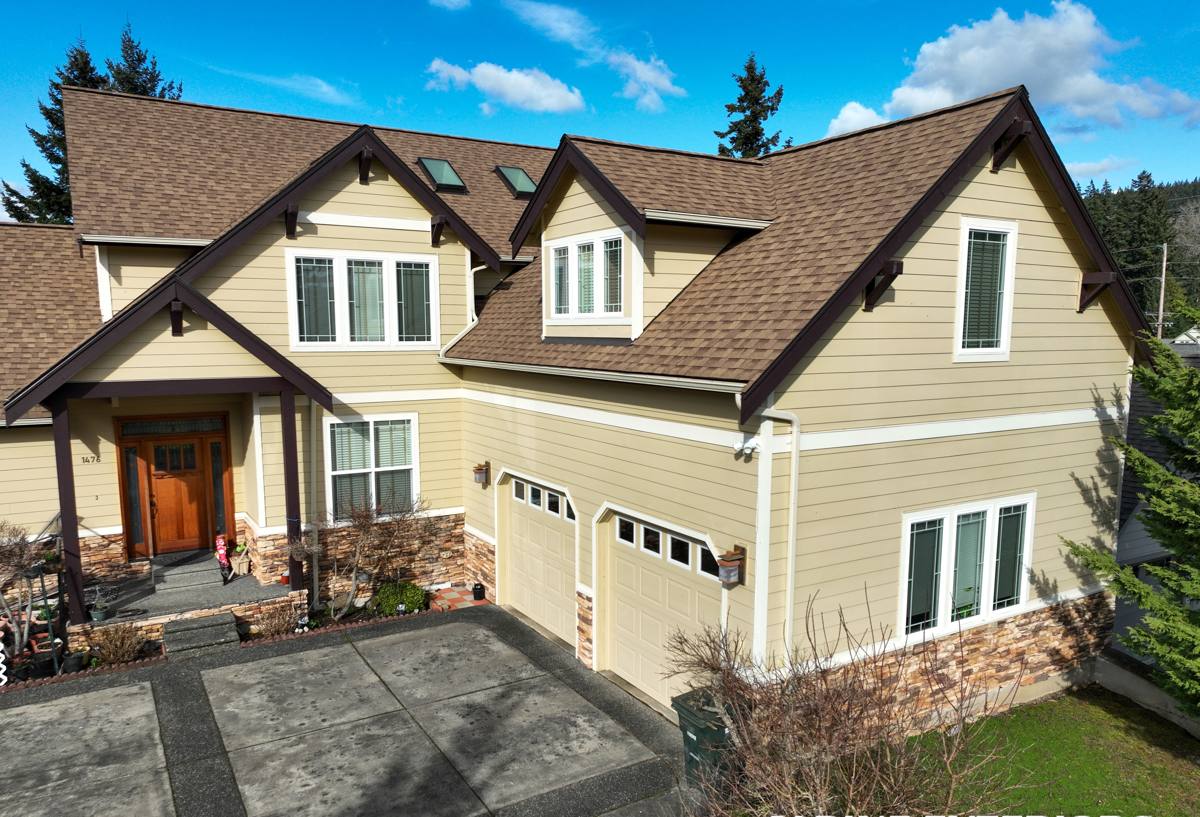
What Correct Window Work Looks Like Here
A correct window installation in Barkley isn't just "put the new window in the old hole." It's a system: the frame, the flashing, the sill pan, the interior and exterior sealant, and the trim all have to work together to keep wind-driven rain out and let any moisture that does get in find its way back out. Skip one layer of that system and you haven't saved money — you've just delayed a rot problem by a few years and made it more expensive to fix.
The Non-Negotiables
- A sloped sill pan under every window opening, so any water that gets past the frame drains out instead of pooling against the sheathing
- Properly lapped flashing tape at the head, jambs, and sill — installed in the correct shingle-style order, not just slapped on
- Backer rod and quality exterior sealant at the frame perimeter, sized and installed for actual movement, not just cosmetics
- Frame materials and finishes rated for coastal, high-humidity exposure — not a builder-grade product spec'd for a drier region
Signs a Barkley Home's Windows Need Attention
Most homeowners don't think about their windows until something goes visibly wrong, but by then there's often been moisture intrusion happening quietly for a while. Given the driving rain and long wet stretches typical of this part of Whatcom County, we recommend a closer look if you notice any of the following:
- Condensation forming between the panes (a sign the seal has failed and the insulating gas is gone)
- Soft or discolored wood trim around the window frame, inside or outside
- Windows that are hard to open, close, or latch — often a sign the frame has shifted or swelled
- Visible moss or persistent green staining building up on sills and lower trim
- A noticeable draft or cold spot near the window even when it's fully closed
- Peeling paint or bubbling on interior sills, which usually points to moisture getting past the exterior seal
Any one of these on its own might just mean routine maintenance. Several at once, especially on the same wall or exposure, usually means water has been finding a way in for a while and it's worth having someone look at the whole opening, not just the sash.
Choosing the Right Window Material and Style
There's no single "best" window for every Barkley home — it depends on the home's age, exposure, and what you're trying to solve. Here's how the common options stack up for a climate like ours:
| Material | How It Handles Salt Air & Rain | Maintenance | Typical Lifespan |
|---|---|---|---|
| Vinyl | Good — won't rot or corrode, handles humidity well | Low; occasional cleaning | 20-30 years |
| Fiberglass | Excellent — very stable in temperature swings and moisture | Low | 30-40+ years |
| Aluminum | Fair — durable but prone to condensation and corrosion near salt air unless well-finished | Moderate | 20-30 years |
| Wood (unclad) | Poor without diligent upkeep — most vulnerable to moss, rot, and moisture in this climate | High; regular refinishing | Varies widely with maintenance |
| Wood-clad (vinyl or fiberglass exterior) | Good — exterior shell protects the wood core from the elements | Low to moderate | 25-35 years |
As a matter of professional standard, we steer most Barkley homeowners away from bare exterior wood and lower-grade aluminum unless there's a specific architectural reason to use them, simply because the maintenance burden in a wet, salt-exposed climate is significant and unforgiving of gaps in upkeep. Vinyl, fiberglass, and wood-clad units with a protected exterior face give homeowners a much wider margin for error over the decades.
Glass Packages Worth Considering
Double-pane windows with a low-E coating and argon fill are the practical baseline for this region — they cut heat loss and reduce condensation risk on the interior glass. Triple-pane adds another layer of insulation and can help with both energy bills and comfort near larger window walls, though it comes at a higher cost and added weight that not every frame or opening needs. We'll walk through whether the upgrade makes sense for your specific windows rather than upselling it across the board.
Our Custom Window Installation Process
Every home in Barkley is a little different — some are original construction with settling and out-of-square openings, others are newer builds where the priority is matching existing trim details. Our process adjusts to the home, but the sequence stays consistent:
- On-site assessment. We inspect the existing openings, check for hidden moisture or rot in the surrounding framing, and measure precisely rather than working from assumptions.
- Product selection. We go over material, glass package, and style options based on your home's exposure, your budget, and how the window needs to perform.
- Removal and inspection. Old windows come out carefully, and we check the framing underneath before anything new goes in — this is where hidden rot or past water damage typically shows up.
- Repair as needed. Any compromised framing or sheathing gets addressed before a new window ever goes into the opening. Installing a new window into a wet or rotted frame just resets the clock on the same problem.
- Sill pan and flashing installation. This is the step that determines whether the window stays dry for the next 20-30 years, and it's not one we shortcut.
- Window installation and leveling. Set square, shimmed correctly, and fastened per manufacturer specification.
- Interior and exterior sealing and trim. Weatherproofing completed on both sides, with trim matched to the home where possible.
- Final walkthrough. We test operation, check the seal, and make sure everything closes and locks the way it should before we consider the job done.
Flashing and Moisture Management Deserve Special Attention Here
This section gets its own space because it's the single biggest factor separating a window installation that lasts from one that causes problems five or ten years down the road — and it's the part homeowners can't easily inspect themselves once the trim is back on. In a climate with as much driving rain as Bellingham sees, wind can push water sideways and even slightly upward against a wall, which means flashing details that would be adequate in a calmer climate aren't enough here.
What We Do Differently
We install flashing in proper shingle fashion — each layer overlapping the one below it — so water is always directed outward and down, never trapped behind the cladding. We use a sloped sill pan under every opening so incidental water has somewhere to go besides into your wall cavity. And we pay close attention to the transition points where the window meets siding, trim, and any adjacent building elements, since those junctions are where most leaks actually originate.
Energy Efficiency for Whatcom County Homes
Bellingham doesn't have brutal winters compared to inland climates, but the persistent damp and the number of overcast, cool days mean drafty or poorly insulated windows show up directly in comfort and heating costs over the course of a year. Old single-pane or failed double-pane windows are a common source of that "why is this room always cold" feeling in Barkley homes, especially on north- and west-facing walls that catch more wind and rain.
Modern low-E, argon-filled units with tight, correctly installed frames make a real difference here — not just in the utility bill, but in reducing condensation on interior glass and cutting down on the cold drafts that make rooms near windows uncomfortable in the wetter months. The gain comes as much from correct installation as from the product itself; a good window installed with gaps in the air sealing will still underperform.
Why a Bellingham-Based Crew Matters for Barkley Homes
A crew that works this specific area regularly already knows how local homes are built, what exposures cause the most trouble, and which details actually hold up against the salt air and rain this region gets. That's different from a crew working from a generalized playbook written for a drier or more inland climate. We've seen firsthand which flashing shortcuts show up as rot a few years later, and we build our process around avoiding those failure points from the start rather than fixing them after the fact.
Working locally also means we're accountable locally — we're not driving in from out of the area for one job and gone. If a question comes up after the work is done, we're reachable and familiar with the house.
Keeping New Windows Performing Long-Term
New windows installed correctly should need very little from you, but a small amount of seasonal upkeep goes a long way in this climate:
- Rinse sills and tracks periodically to clear salt residue, debris, and early moss growth before it takes hold
- Check exterior caulking annually, especially after a harsh winter, and have any cracked or separated sealant redone promptly
- Keep gutters and downspouts clear so roof runoff isn't dumping extra water directly onto window heads
- Trim back vegetation that's holding moisture against exterior walls or shading windows enough to encourage moss
- Operate each window through its full range a few times a year so hardware doesn't seize up from disuse
What Affects the Cost of a Window Project
Every Barkley home is different, so exact pricing depends on the specifics, but these are the main factors that move the number up or down:
| Factor | How It Affects Cost |
|---|---|
| Number of windows | Larger projects typically bring a better per-window rate |
| Frame material | Vinyl is generally the most budget-friendly; fiberglass and wood-clad cost more upfront |
| Glass package | Triple-pane and specialty coatings add cost over standard double-pane low-E |
| Existing condition | Hidden rot or framing repair adds labor and material beyond the window itself |
| Size and configuration | Custom shapes, larger spans, and non-standard openings cost more than stock sizes |
| Access and site conditions | Upper-story or hard-to-access windows can add labor time |
We'll always give you a clear, itemized picture of what's driving the price on your specific home rather than a vague lump sum, so you can see exactly where the money is going.
If your Barkley home's windows are showing their age, letting in drafts, or just due for an honest evaluation, we're happy to take a look. Reach out for a free, no-pressure estimate using the form below — we'll walk the property, answer your questions straight, and give you a clear picture of what your home actually needs.