 Bellingham Exterior
 Why Window Replacement in Happy Valley Is Its Own Job
Happy Valley sits close enough to Bellingham Bay that salt-laden air is a daily fact of life for the homes here, and it's on enough of a slope and tree cover that moss, moisture, and shade are constant companions too. Add in the driving, wind-blown rain that Whatcom County sees for a good chunk of the year, and you've got a neighborhood where windows work harder than they do in drier inland climates. A window that's rated fine for a showroom in Arizona is not automatically the right call for a home three blocks from the water in Bellingham.
This isn't a page about windows in general. It's about what actually holds up on Happy Valley homes specifically — the mix of older craftsman-era houses and newer infill construction, the hillside lots with limited overhang protection, and the year-round moisture load that either gets managed correctly at install or comes back to bite the homeowner in two or three years.
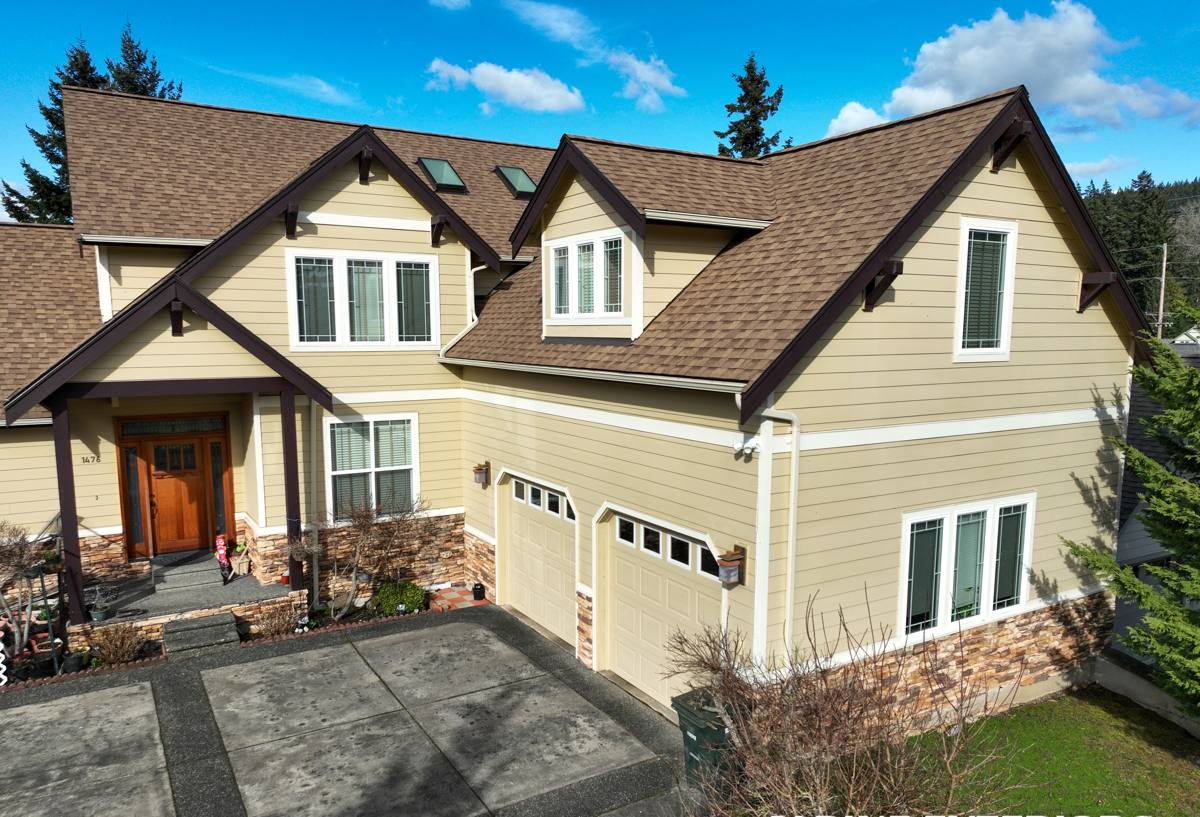
Signs Your Windows Are Overdue for Replacement
Not every window problem means full replacement — sometimes it's a failed seal or bad weatherstripping. But in a climate like ours, certain signs mean the window itself, or its installation, has reached the end of its useful life.
- Fogging or a permanent haze between the panes — the seal is gone and the gas fill has escaped
- Soft or spongy wood at the sill or lower corners of the frame
- Visible moss, black streaking, or mildew building up on or around the frame year after year
- Windows that are hard to open, don't latch tight, or let in a draft you can feel standing nearby
- Condensation forming on the inside of the glass regularly through fall and winter
- Paint that keeps failing on the frame no matter how often it's touched up
- Visible daylight or gaps around the frame where it meets the siding or trim
If you're seeing two or more of these on a window, it's usually cheaper long-term to replace than to keep patching. Rot behind a failing frame doesn't stay contained to the window — it spreads into the surrounding wall.
What a Correct Window Replacement Actually Involves
The window unit itself is maybe half the job. The other half — the part that actually determines whether it lasts — is how it's flashed, sealed, and tied into the wall assembly behind the siding. This is where a lot of replacement jobs go wrong, and it's the difference between a window that's dry in ten years and one that's rotting the framing behind it.
Full-Frame vs. Pocket (Retrofit) Replacement
A pocket, or retrofit, install drops a new window into the existing frame and leaves the old frame in place. It's faster and less disruptive, and it's a reasonable option when the existing frame is solid and dry. A full-frame replacement removes everything down to the rough opening, which lets us inspect and fix the sheathing, flashing, and framing underneath before anything new goes in. On older Happy Valley homes where we can't be sure what's behind the trim, we don't guess — we recommend whichever approach the actual condition of the wall calls for, and we'll show you what we find.
Flashing and Water Management
In a climate that gets sustained, wind-driven rain, the flashing detail around a window matters as much as the window itself. Water has to be directed out and down, never trapped behind the siding. That means proper head flashing above the window, correctly lapped weather-resistant barrier at the sides and sill, and sealant used only where it belongs — not as a substitute for correct flashing order. A window installed with the flashing sequence out of order, or with caulk used to cover a gap instead of fixing it, will leak eventually. It's just a matter of when.
Picking the Right Window for This Climate
There's no single "best" window — there's the right window for the exposure, the budget, and how the home is used. Here's how the common frame materials hold up under salt air, sustained damp, and moss-prone shade.
| Frame Material | How It Handles Our Climate | Maintenance |
|---|---|---|
| Vinyl | Won't rot or corrode from salt air; good moisture resistance | Low — occasional cleaning |
| Fiberglass | Very stable in temperature swings and damp, holds paint well if colored finish wanted | Low |
| Wood | Best look for older/craftsman homes but needs protection from driving rain and salt exposure | Higher — periodic painting/sealing |
| Wood-clad (wood interior, metal/vinyl exterior) | Good compromise — protected exterior face, traditional interior look | Moderate |
| Aluminum | Durable but conducts cold and can corrode faster near salt air without proper coating | Moderate |
For homes close to the bay, we lean toward vinyl or fiberglass for the exterior-facing material, or a wood-clad unit if you want a real-wood interior look without maintaining exposed wood outside. All-exposed wood is not off the table, but we're honest with clients about what upkeep it demands in this exposure before they commit to it.
Glass Package
Double-pane, low-E glass is the standard baseline for this region and meets current energy code. Triple-pane adds meaningful comfort on north- or west-facing walls that take the brunt of wind and cold, but it's a real cost jump — it's worth it on the rooms you use most, not necessarily every window in the house.
Our Window Replacement Process
- On-site assessment — we look at the existing windows, frames, and any visible water or rot damage, and talk through what you actually need versus what's optional
- Honest recommendation — full-frame or retrofit, which materials fit the exposure and the budget, and what we'd do differently if this were our own house
- Written estimate — clear pricing, no vague allowances
- Removal and inspection — old windows come out, and we check the framing and sheathing underneath before anything goes back in
- Correct flashing and installation — water management done in the right order, not covered up with sealant
- Sealing, trim, and cleanup — interior and exterior finish work matched to your home, site cleaned up daily
- Final walkthrough — we test operation on every window with you before we call it done
What Affects the Cost
Window replacement pricing varies more than people expect, and most of the variation comes down to a handful of factors rather than the brand name on the window.
| Factor | Why It Matters |
|---|---|
| Full-frame vs. retrofit | Full-frame takes more labor but is necessary if the existing frame is damaged |
| Frame material | Vinyl is generally the most budget-friendly; wood-clad and premium fiberglass cost more |
| Number and size of openings | Larger or custom-sized windows cost more per unit than standard sizes |
| Hidden damage | Rot or moisture damage found once old windows come out adds repair scope |
| Access and site conditions | Second-story or hard-to-reach windows on hillside lots take longer to stage and install |
| Glass package | Triple-pane and specialty coatings cost more than standard double-pane low-E |
We give a firm, written estimate after we've actually looked at the windows — not a phone-quote guess. If we find hidden rot once we open things up, we tell you before we proceed, not after.
Permits, Codes, and Energy Requirements
Window replacement in the City of Bellingham and unincorporated Whatcom County typically requires a permit, particularly when the rough opening size changes or it's a full-frame replacement rather than a simple like-for-like swap. Washington's energy code also sets minimum performance requirements for replacement windows, which affects what glass packages are acceptable. We handle the permit process as part of the job rather than leaving it for the homeowner to sort out — it's part of doing the work correctly, not an upsell.
Why It Matters to Hire a Crew That Already Works Happy Valley
A contractor who already understands the exposure in this part of Bellingham — the salt air, the moss, the driving rain angle off the water — isn't guessing at flashing details or frame material recommendations. They've seen what fails here and what doesn't. That matters more in a neighborhood with this kind of mixed housing stock, older framing on some lots, hillside drainage patterns on others, than it does in a subdivision where every house is built the same way on flat ground.
It also matters for accountability. A crew that works this neighborhood regularly has a reputation here worth protecting — that's a different incentive than a contractor who's just passing through Whatcom County for one job.
Ready for a Straight Answer on Your Windows?
If your windows are fogging, drafty, or just past their working life, we're happy to take a look and give you an honest read on what's actually needed — full-frame or retrofit, what material makes sense for your home's exposure, and a real number to work with. Use the form below to request a free, no-pressure estimate.