 Bellingham Exterior
 Why Barkley Homes Need Siding Built for This Climate
Barkley sits close enough to the water and surrounded by enough tree cover that its homes take on a specific combination of punishment: salt-laden air drifting in off Bellingham Bay, wind-driven rain that gets pushed sideways into wall assemblies, and long stretches of gray, damp weather that keep exterior surfaces wet for days at a time. Add in the shade from mature landscaping common in this part of Bellingham, and you get a textbook environment for moss, algae, and slow moisture intrusion. Siding here isn't just a cosmetic decision — it's the first line of defense for the wall assembly behind it.
We install James Hardie fiber cement siding exclusively, and Barkley is a good example of why. This is a neighborhood where the wrong siding choice, or the right siding installed poorly, shows its problems within a few winters rather than a decade.
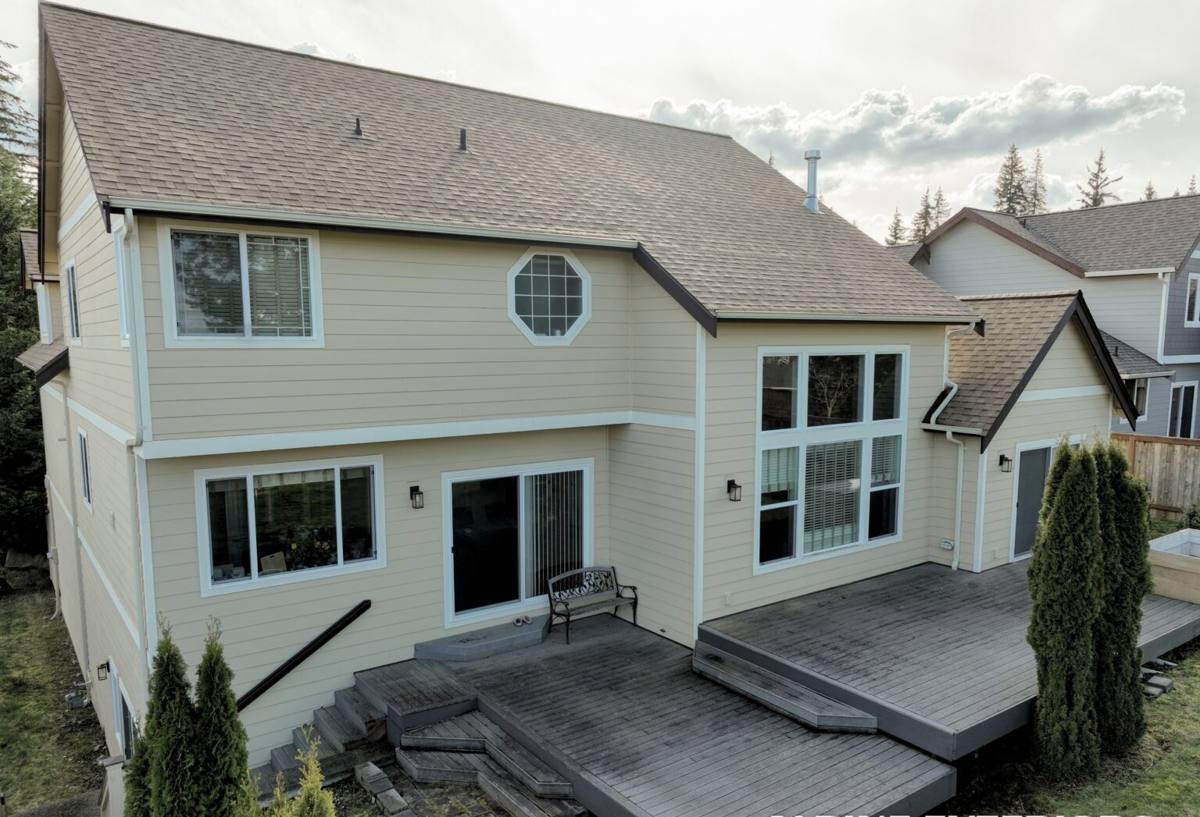
What the Local Climate Actually Does to Siding
Salt Air
Proximity to Bellingham Bay means airborne salt settles on exterior surfaces and accelerates corrosion of exposed metal fasteners, flashing, and trim. Siding materials and finishes that aren't built to resist this will chalk, fade, or degrade faster than they would further inland.
Driving Rain
Whatcom County storms frequently come with wind, which pushes rain horizontally into wall surfaces instead of letting it run straight down. That means laps, joints, and butt seams take on water pressure they wouldn't see in a calmer climate — every seam and penetration has to be detailed correctly, not just caulked and hoped for.
Moss and Sustained Moisture
Bellingham's long wet season keeps north-facing and shaded walls damp for extended periods. Wood-based and wood-look products absorb that moisture over time; fiber cement does not swell, rot, or feed organic growth the way wood fiber products can, though surface-level moss and algae can still grow on any siding material if it stays wet and shaded long enough.
What a Correct Fiber Cement Installation Involves
Fiber cement performs the way it's supposed to only when it's installed to the manufacturer's specification. A large share of the siding problems we get called out to inspect in this area trace back to installation shortcuts, not the material itself.
- Proper drainage plane and weather-resistive barrier behind the siding, not just siding nailed directly over sheathing
- Correct fastener type, spacing, and embedment depth — Hardie specifies this precisely, and it's commonly ignored
- Minimum clearances between siding and grade, decks, roof lines, and other hard surfaces so water has somewhere to go
- Factory-cut and factory-primed edges kept intact; field cuts sealed per manufacturer instructions
- Proper flashing at every window, door, and penetration — the single most common source of hidden water damage
- Correct caulking at butt joints and trim, using products compatible with ColorPlus finishes
Skip any one of these steps and you can end up with a wall that looks fine for a year or two and then starts showing staining, buckling, or soft trim — problems that are far more expensive to fix after the fact than to install correctly the first time.
Why We Install Only James Hardie
We standardized on James Hardie fiber cement because it's engineered specifically for climates like this one. Hardie's HZ5 product line is formulated for regions with wetter, harsher weather patterns, which fits Whatcom County far better than a one-size-fits-all product. Fiber cement itself is non-combustible, doesn't rot, and doesn't attract insects — three things that matter more in a wet, wooded neighborhood than in a dry one.
The factory-applied ColorPlus finish is also part of why we trust this product here. It's baked on under controlled conditions and backed by a substantial finish warranty, which matters in an area where UV exposure is lower but moisture exposure is higher — a finish that's going to hold color and resist cracking under those conditions needs to be factory-cured, not field-painted.
We don't install vinyl, LP SmartSide, or other fiber cement alternatives, and that's a deliberate standard, not an oversight. Each of those products has real strengths, but none of them combine the moisture performance, fire resistance, and long-term finish durability that this climate calls for as consistently as Hardie does when installed correctly.
Comparing Siding Options for a Coastal, Wet Climate
| Factor | James Hardie Fiber Cement | Vinyl | Wood / Cedar |
|---|---|---|---|
| Moisture resistance | Does not rot or swell; engineered HZ5 line for wet climates | Water-resistant but can warp and gap over time | Absorbs moisture; prone to rot without diligent upkeep |
| Salt air durability | Stable finish, resists chalking | Can fade and become brittle over time | Finish breaks down faster; needs frequent refinishing |
| Fire resistance | Non-combustible | Combustible, can melt or deform | Combustible |
| Maintenance | Occasional wash; factory finish holds color | Low maintenance but limited repairability | Regular painting/staining, moss and rot inspection |
| Typical lifespan (installed to spec) | Multiple decades with proper installation | Variable; UV and impact sensitive | Shorter without consistent maintenance |
Our Process for Barkley Projects
1. On-Site Assessment
We walk the exterior, check the condition of the existing siding and sheathing, look for signs of past moisture intrusion, and identify problem areas specific to the lot — shade patterns, drainage, and exposure to wind-driven rain.
2. Tear-Off and Sheathing Check
We remove the old siding and inspect the sheathing underneath. Any soft, water-damaged, or compromised sheathing gets addressed before anything new goes up — covering a bad substrate with new siding just hides the problem.
3. Weather Barrier Installation
A properly lapped and sealed weather-resistive barrier goes on before siding, giving the wall a drainage plane that channels incidental moisture out and away from the structure.
4. Hardie Installation to Spec
Panels or lap siding are installed following James Hardie's fastening, clearance, and flashing requirements, with special attention to seams and penetrations given how much wind-driven rain this area sees.
5. Trim, Caulk, and Final Detailing
Compatible trim and caulking are applied at joints and transitions, and every penetration — hose bibs, vents, light fixtures — is checked for proper sealing before we call the job done.
6. Final Walkthrough
We walk the completed exterior with the homeowner, review the work, and go over basic care so the siding performs the way it's designed to for years to come.
Why Local Experience Matters in Barkley
A crew that's worked Barkley and similar Bellingham neighborhoods knows which walls take the worst of the wind-driven rain, which lots hold shade and moisture longer, and where salt air does the most damage to fasteners and trim over time. That local knowledge changes real decisions on a job — where extra flashing attention goes, which clearances need to be more generous, and which details can't be shortcut. A contractor unfamiliar with this specific coastal, wet, moss-prone environment is more likely to install siding correctly for a drier climate and incorrectly for this one.
Signs Your Current Siding May Be Failing
- Soft or spongy spots when pressed, especially near the bottom courses or around windows
- Visible staining or discoloration running down from seams or trim
- Bubbling, peeling, or chalking paint or finish
- Persistent moss or algae growth that returns quickly after cleaning
- Gaps opening up at butt joints or around trim boards
- Warping, buckling, or panels that no longer sit flat against the wall
Any of these can indicate the siding, the installation behind it, or both are no longer doing their job — and in a climate like Whatcom County's, problems tend to accelerate once moisture finds a way in.
What Homeowners Should Know Before Starting a Project
Siding replacement is a good opportunity to address issues beyond the surface material — sheathing condition, window flashing, and drainage details all matter more than the siding brand itself. A quality installer will want to inspect what's underneath before quoting a job, not just measure the exterior and order material. Be cautious of any bid that skips a substrate inspection, doesn't mention a weather-resistive barrier, or can't explain how they'll handle flashing at windows and penetrations — these are the details that determine whether the siding lasts one winter or several decades in a climate like this one.
If you're weighing a full re-side against a repair, the honest answer often depends on what's happening behind the existing siding rather than how it looks from the street. A proper assessment before any work begins will tell you which situation you're actually in.
If your Barkley home is showing signs of wear from salt air, driving rain, or persistent moss, we're happy to take a look and give you a straightforward, no-pressure assessment. Reach out below for a free estimate.