 Bellingham Exterior
 Siding in Barkley: A Different Climate Test Than Most Neighborhoods Realize
Barkley sits in a part of Bellingham where the weather does something most siding products were never designed to handle well over the long haul. You get salt-laden air drifting in off the Salish Sea, driving rain that comes in sideways during fall and winter storms, and a moss season that can stretch from October through April in shaded, north-facing yards. None of these on their own is unusual for Whatcom County. Together, and applied to a wall system for twenty or thirty years straight, they separate siding that holds up from siding that quietly fails from the back side out.
Homeowners in Barkley often first notice something's wrong at the trim, not the field of the siding — soft corner boards, dark streaking below butt joints, or a musty smell in a closet on an exterior wall. By the time those symptoms show up, moisture has usually been working on the wall assembly for a while. Siding installation here isn't just about matching a color and nailing up boards; it's about building a system that manages water and humidity correctly from day one.
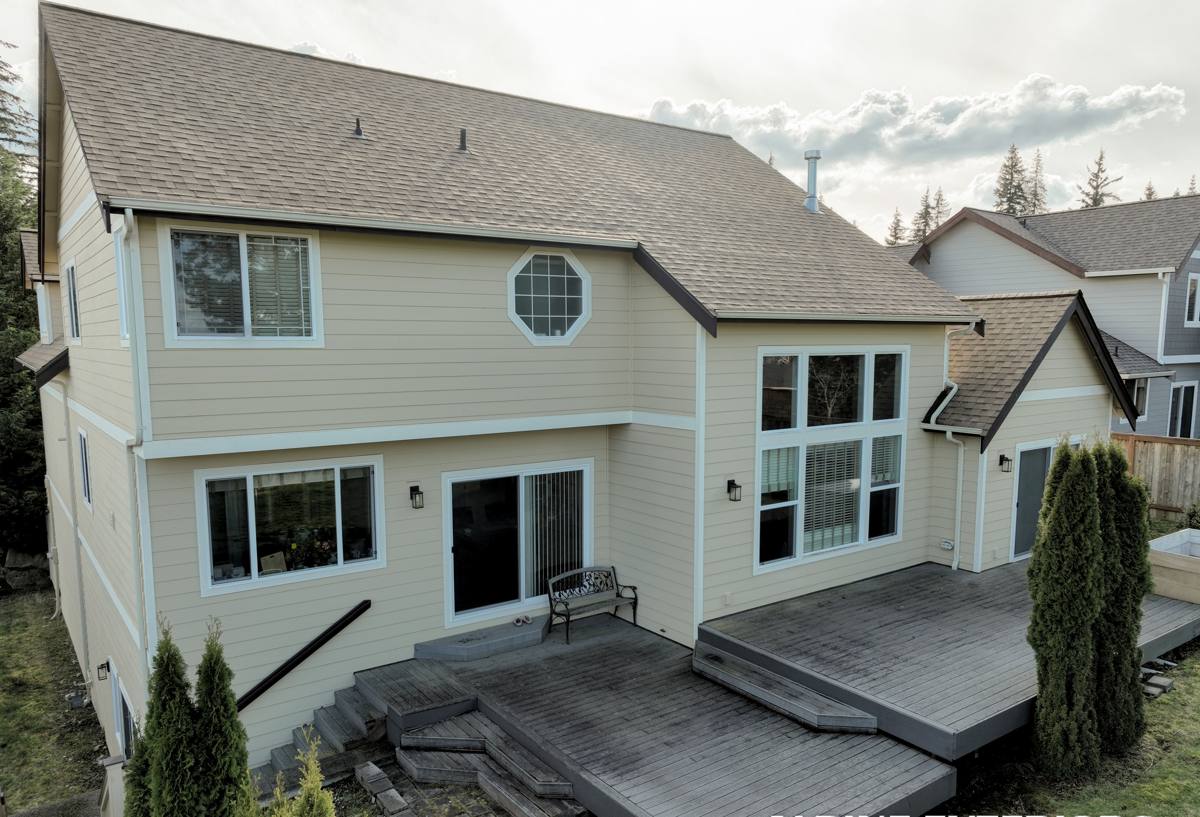
What Barkley Homes Specifically Need From Their Siding
Salt Air and Coastal Moisture
Bellingham's proximity to the water means airborne salt and moisture reach further inland than most people expect, especially on exposed elevations. Salt-laden moisture accelerates corrosion of fasteners and metal flashing, and it keeps wood-based products damp longer than they'd stay in a drier inland climate. Siding and fastener choices that ignore this reality tend to show their weaknesses first at the fasteners and trim, not the panels themselves.
Driving, Wind-Driven Rain
Rain that falls straight down is easy for almost any siding to shed. Rain that's pushed sideways by wind gets forced up under laps, into butt joints, and behind trim if those details aren't installed correctly. Barkley's more open, elevated pockets can catch wind-driven rain harder than more sheltered, tree-lined streets nearby — which means installation detailing matters more here, not less.
A Long Moss and Algae Season
Extended damp, shaded conditions grow moss and algae readily on any exterior surface that stays wet. Siding that absorbs moisture into its surface gives moss something to root into over time; siding with a factory-applied, moisture-resistant finish gives it much less to hold onto. In a climate where six or more months of the year offer ideal moss-growing conditions, this is a real factor in how a home looks five years after installation, not just how it performs structurally.
Why We Only Install James Hardie Fiber Cement Siding
We don't install LP SmartSide, vinyl, Cemplank, Allura, primed spruce, or cedar. That's a deliberate standard, not an oversight, and it's worth explaining honestly rather than just asserting it.
Each of those alternatives has legitimate strengths — vinyl is inexpensive and low-maintenance in mild climates, engineered wood products can look and install similarly to real wood at a lower cost, cedar has genuine natural beauty. But in a climate like Bellingham's, with sustained moisture exposure and a long moss season, the trade-offs matter: wood-based products can be more sensitive to sustained moisture if installation or maintenance falls short; vinyl can become brittle and can show waviness or gapping over time, especially with temperature swings; cedar requires ongoing refinishing to keep its moisture resistance intact.
James Hardie fiber cement is non-combustible, engineered specifically for different climate zones (Hardie's HZ5 product line is built for exactly the freeze-thaw and moisture conditions the Pacific Northwest sees), and finished at the factory with ColorPlus Technology — a baked-on finish that resists fading and holds up to moisture better than field-applied paint. It carries a strong transferable warranty when installed to Hardie's specifications, which matters if a Barkley home changes hands down the road. We install it because, in this specific climate, it's the product we're willing to stand behind for decades, not just for the first few years after installation.
What a Correct Siding Installation Actually Involves
The siding itself is only part of the job. Most siding failures we get called out to inspect in Whatcom County trace back to installation details, not the product. A correct install includes:
- A properly installed weather-resistant barrier (housewrap) behind the siding, lapped correctly to shed water downward
- Rainscreen or furring strips where conditions call for it, creating an air gap that lets any moisture that gets behind the siding drain and dry
- Correct flashing at every window, door, and horizontal trim transition — the single most common failure point we see on older homes
- Hardie-specified fastener patterns, types, and clearances (fiber cement has specific nailing requirements that differ from wood siding)
- Proper clearance between the bottom of the siding and grade, decks, and roof lines to prevent wicking
- Caulking and sealant only where Hardie's install instructions call for it — over-caulking can trap moisture instead of shedding it
Any of these done wrong can undermine an otherwise good product. This is why we treat installation quality, not just brand selection, as the actual deliverable.
Our Process for a Barkley Siding Installation
1. On-Site Assessment
We walk the exterior with you, checking existing siding condition, trim, flashing, and any moisture signs at corners, penetrations, and grade lines. This tells us what we're actually dealing with before we talk product or price.
2. Removal and Sheathing Inspection
Once old siding comes off, we inspect the sheathing underneath for rot or moisture damage — something you can't see or estimate accurately from outside. Any compromised sheathing gets repaired before anything new goes up; installing new siding over damaged sheathing just hides a problem that will resurface.
3. Weather Barrier and Drainage Plane
We install housewrap and, where appropriate for the wall's exposure and orientation, a rainscreen gap. This is the step that most directly addresses Bellingham's driving rain and long damp season.
4. Flashing and Trim Detail
Every window, door, and horizontal transition gets flashed before siding closes it in. This is slow, detail-heavy work, and it's where most of the long-term performance of the job is actually decided.
5. Hardie Panel or Lap Installation
Installed to Hardie's published specifications for fastener spacing, clearances, and joint treatment, using the HZ5 product line suited to this climate zone.
6. Final Walkthrough
We review the finished work with you, including care and maintenance basics specific to your home's exposure — some elevations in Barkley will need occasional gentle cleaning to stay ahead of moss more than others, depending on shade and sun exposure.
Cost Factors for a Barkley Siding Job
Every home is different, but the factors that move price are consistent. A written estimate after an on-site look is the only way to get real numbers, but this gives you a sense of what drives cost up or down.
| Factor | Why It Matters |
|---|---|
| Home size and number of stories | More surface area and height affect material, labor, and access/scaffolding needs |
| Existing sheathing condition | Rot or moisture damage found during tear-off adds repair scope before new siding can go on |
| Siding profile (lap vs. panel vs. shingle-style) | Different Hardie profiles have different material and labor costs |
| Trim and architectural detail | More corners, windows, and trim transitions mean more flashing and cut work |
| Rainscreen/furring strip installation | Adds labor and material but improves long-term moisture performance on exposed elevations |
| Color and finish selection | ColorPlus factory finishes vs. field-painted options affect material pricing |
Signs a Barkley Home Might Need New Siding Soon
- Soft, spongy, or crumbling spots when you press on siding or trim boards
- Persistent moss or algae growth that returns quickly after cleaning
- Dark streaking or staining below joints, seams, or trim edges
- Visible warping, cupping, or gaps opening up between boards or panels
- Peeling or bubbling paint that keeps recurring in the same spots
- A musty smell or noticeably higher humidity in a room along an exterior wall
- Siding that's original to a home built more than 20-25 years ago and hasn't been inspected recently
Any one of these is worth a closer look. Several together usually mean the wall assembly, not just the surface, needs attention.
Why Hiring a Crew That Already Works in Barkley Matters
Siding performance in this climate comes down to details that are easy to get wrong and expensive to fix later — flashing laps, rainscreen decisions, fastener specs, clearance heights. A crew that regularly works Bellingham and Whatcom County homes has already seen how local exposure plays out over years, not just how a job looks on installation day. That's the difference between siding that still looks and performs well after a decade of Bellingham winters and siding that needs early rework.
If you're weighing a siding replacement or repair for a Barkley home, we're happy to take a look, walk you through what we find, and put together a straightforward, no-pressure estimate — no obligation, just an honest read on where things stand.