 Bellingham Exterior
 Why Birchwood Decks Take a Different Kind of Beating
Bellingham sits right on Bellingham Bay, and that proximity to salt water matters more than most homeowners realize when it comes to an outdoor structure like a deck. Salt-laden air moves inland with the wind and settles on exposed wood, fasteners, and hardware, quietly speeding up corrosion in ways that are easy to miss until a screw head snaps or a bracket rusts through. Add in the driving rain that Whatcom County sees through fall and winter — rain that comes in sideways during a windstorm instead of falling straight down — and water finds its way into end grain, ledger connections, and gaps that a calmer rain would never reach.
Then there's moss. Bellingham's long stretch of cool, damp weather from fall through spring gives moss and algae plenty of time to take hold on shaded or north-facing decking. Once established, moss holds moisture directly against the wood surface for weeks at a time, which is a very different (and worse) situation than a deck that gets to dry out between rain events. In neighborhoods like Birchwood, where many homes have some tree cover and shaded exposures, this combination of salt air, wind-driven rain, and moss can wear down a deck faster than homeowners moving here from drier climates expect. Understanding that is the first step in repairing a deck correctly instead of just patching what's visible.
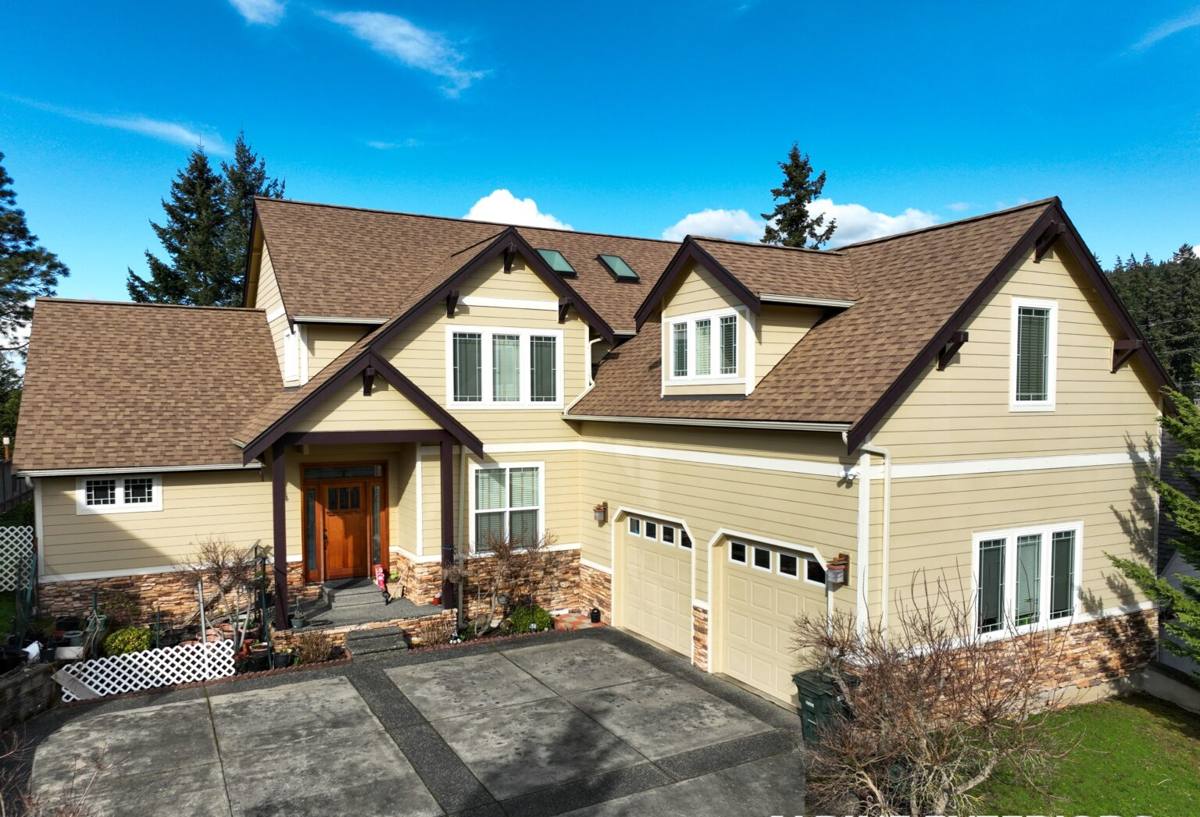
The Warning Signs We Look For in Birchwood Decks
Ledger Board and Structural Connections
The ledger board is the piece that bolts your deck directly to the house, and it's usually hidden behind siding, flashing, or trim — which means problems here often go unnoticed the longest. Driving rain that gets behind poorly sealed flashing, or flashing that was never properly installed in the first place, can rot the ledger and the rim joist behind it for years before a soft spot or sagging deck surface finally gives it away. Because this connection carries the structural load of the whole deck, it's the single most important thing we check on any repair call.
Decking Boards and Fasteners
Cupped or splintering boards, soft spots underfoot, and dark staining are the most visible signs of trouble, but the fasteners deserve just as much attention. Nails and standard screws exposed to salt air and constant moisture corrode faster than in drier inland areas, and a popped or rusted-through fastener is often the reason a board that looks fine is actually loose or lifting.
Posts, Footings, and Framing
Post bases that sit in or near standing water, and footings in soil that stays saturated for long stretches of the wet season, are prone to rot at ground contact and to settling or shifting over time. Joists underneath the decking — especially where debris collects between boards or where two boards butt together — are another common rot location that's invisible until you get underneath the deck and look.
Railings and Guard Systems
Loose or wobbly railing posts are both a moisture problem and a safety problem. Many older decks in the area were built to codes that have since been updated, so a railing repair is also a good time to confirm the guard system actually meets current safety requirements, not just cosmetic condition.
What a Correct Deck Repair Actually Involves
A repair done right starts before any tools come out. We use a moisture meter and a probe to test wood at the ledger, posts, and framing — not just the decking surface — because wood that looks sound on top can be badly compromised underneath. We check how the ledger flashing was installed and whether water has been getting behind it, since that's the difference between a cosmetic fix and a structural one. And we're honest about which is which: replacing a few decking boards is a very different job, and a very different price, than rebuilding a section of framing or reflashing a ledger connection.
On older decks, a repair is also the right moment to check railing height, baluster spacing, and guard strength against current code requirements. We'd rather flag that during the estimate than have a homeowner assume "repaired" automatically means "brought up to code" when it doesn't.
Repair vs. Replacement: How We Make the Call
Not every deck problem calls for a full rebuild, and not every deck can be reasonably patched. Here's how we generally think through it:
| Factor | Repair Usually Makes Sense | Replacement Usually Makes Sense |
|---|---|---|
| Framing & ledger condition | Solid, with isolated soft spots | Widespread rot at ledger, joists, or multiple posts |
| Age of structure | Newer or mid-life deck, single problem area | Older deck already near the end of its service life |
| Extent of the damage | Contained to a few boards, one post, or one connection | Rot or corrosion spread across the structure |
| Code compliance | Railings and structure already meet current guard requirements | Structure or railings are significantly out of code and need rebuilding anyway |
| Cost over time | Repair cost is well below replacement cost | Repeated repairs are starting to approach the cost of a new deck |
We'll walk you through where your deck falls on that spectrum and give you the honest answer, even when the honest answer is "this can be repaired and doesn't need to be replaced."
Materials and Fasteners We Use, and Why
Given how much salt air and moisture this area sees, fastener choice matters as much as the decking material itself. We use stainless steel or heavy hot-dip galvanized fasteners and hardware rated for exterior and coastal-adjacent exposure, because standard fasteners are exactly the kind of thing that corrodes and fails early in this climate. At ledger connections, we use self-adhering flashing membrane designed to keep wind-driven rain from tracking behind the siding and into the structural wood.
On decking material itself, we lay out the honest trade-offs rather than pushing one product. Pressure-treated lumber is affordable and easy to repair in sections but needs regular sealing to perform well through our wet season. Cedar has a natural look many homeowners want but is softer and needs consistent maintenance to resist moisture and moss. Composite decking resists moisture and moss better with less upkeep, but it's a different repair process than wood, comes at a higher upfront cost, and has its own installation sensitivities around spacing and fastening that need to be respected. There's no single right answer for every home — it depends on your budget, how much upkeep you want to do, and what the existing structure can support.
Our Deck Repair Process
- On-site assessment — we inspect the decking, framing, posts, footings, and ledger connection, probing and moisture-testing anywhere rot is suspected, not just where it's visible.
- Written scope of work — a clear breakdown of what's cosmetic, what's structural, and what we recommend, so you're deciding with full information.
- Permitting check — if the repair involves structural framing, footings, or railing changes, we confirm what the City of Bellingham or Whatcom County requires before work starts.
- The repair itself — matching materials and fastening methods to the rest of the structure, and upgrading hardware to corrosion-resistant fasteners where the originals weren't adequate.
- Final walk-through — we check the finished work with you and point out anything worth watching going forward.
Keeping a Repaired Deck in Good Shape
A correct repair buys you years, but a little seasonal attention buys you more. Here's what we tell homeowners to keep on top of:
- Sweep moss, needles, and debris out of the gaps between decking boards each fall before the wet season sets in — trapped debris holds moisture against the wood.
- Make sure gutters and downspouts near the deck are directing water away from posts and footings, not onto them.
- Check the ledger flashing area for staining or peeling paint on the siding above it once a year — that's often the earliest sign of a hidden leak.
- Reseal or refinish wood decking on the schedule the product calls for; skipping a cycle in this climate shows up faster than it would somewhere drier.
- Look over exposed fasteners and hardware periodically for rust streaking, and replace anything that's corroding before it fails.
- Keep an eye on post bases and footings after extended heavy rain for standing water that isn't draining away.
Why Local Experience in Birchwood Matters
A deck repair crew that already works in and around Birchwood knows what this specific stretch of Whatcom County throws at outdoor structures — the salt air off Bellingham Bay, the pattern of wind-driven storms in the wet months, and how quickly moss establishes itself on shaded decking here compared to drier parts of the state. That local familiarity means we're not guessing at flashing details or fastener specs, and we're not learning the region's climate on your project. It also means we can respond quickly when a homeowner notices a soft spot or a loose railing before the next round of fall rain turns a small repair into a bigger one.
If you're noticing soft boards, a wobbly railing, rust stains, or persistent moss on your Birchwood deck, we're happy to come take a look. We'll give you a straight assessment of what's actually going on, what it will take to fix it correctly, and a free, no-pressure estimate — just fill out the form below to get started.