 Bellingham Exterior
 Metal Roofing Built for Columbia's Conditions
Columbia's older, tree-lined streets sit close enough to Bellingham Bay that salt-tinged marine air is a constant factor in how a roof ages, not an occasional one. Add in driving rain that gets pushed sideways off the water during the wetter months and a moss season that can stretch from fall through spring on shaded lots, and it's easy to see why so many Columbia homeowners start asking about metal roofing once their asphalt shingles are due for replacement. Metal isn't the right fit for every home or every budget, but for a lot of Columbia properties — especially ones with mature tree cover, north-facing roof planes, or owners planning to stay long-term — it solves problems that asphalt shingles keep running into year after year.
This page covers what a correct metal roof installation actually looks like on a Columbia home, the details that matter given this specific stretch of Whatcom County's climate, and how we run the job from first inspection to final walkthrough.
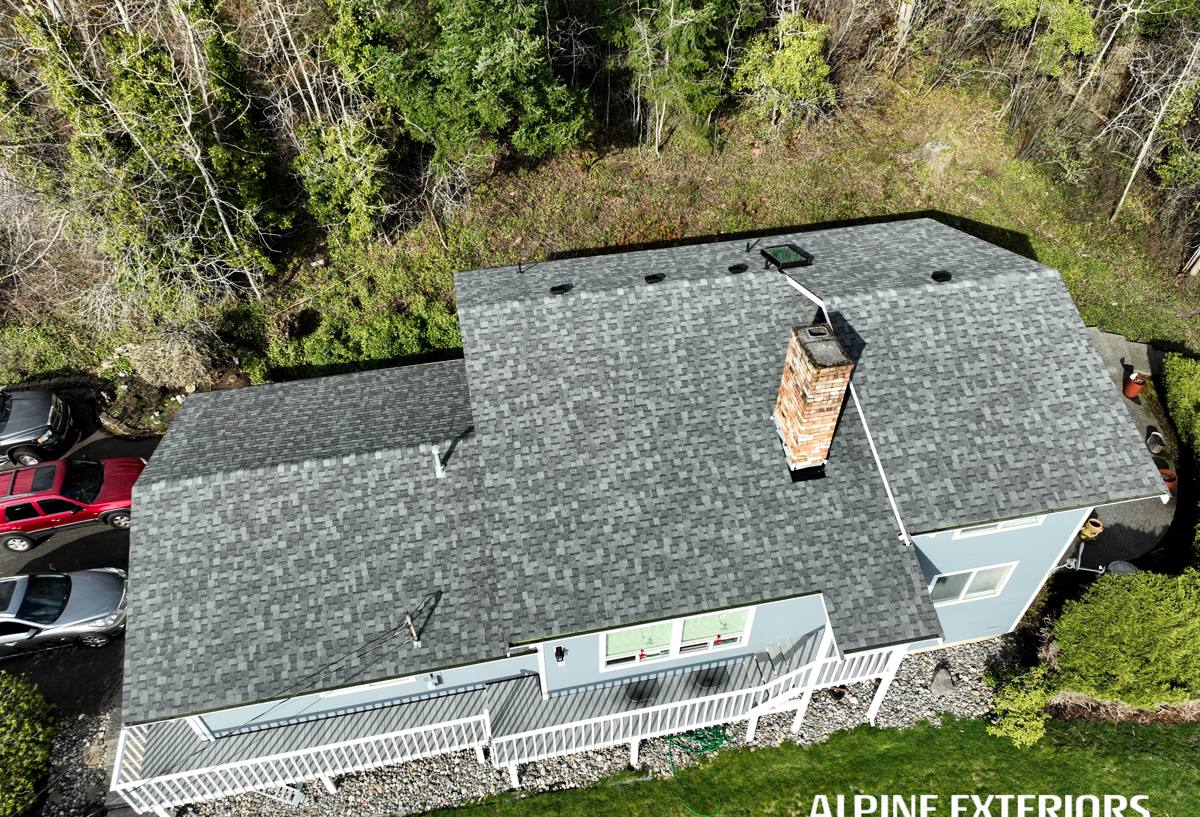
Why Metal Roofing Fits So Many Columbia Homes
Columbia is one of Bellingham's older established neighborhoods, with a mix of home ages and roof pitches and a fair amount of tree canopy on many lots. That combination — mature trees plus proximity to the water — creates exactly the conditions where asphalt shingles tend to struggle: persistent shade that keeps roof planes damp, and salt-laden air that accelerates corrosion on fasteners and flashing. A metal roof's smooth, non-porous surface sheds water fast and gives moss spores far less to hold onto than the textured surface of a shingle, which matters directly on the kind of shaded, moisture-holding roof planes common throughout the neighborhood.
Metal also handles wind-driven rain differently than shingles. Standing seam panels in particular use raised, interlocking seams rather than overlapping tabs, which removes one of the more common entry points for water being forced sideways and upward during a hard blow off the bay. None of this means metal is automatically the better choice for every home — it costs more upfront than asphalt, and the decision usually comes down to how long you plan to own the home, how shaded the roof is, and what look you want. But for a Columbia property fighting chronic moss or facing repeated shingle repairs, it's worth serious consideration.
What Columbia's Climate Specifically Demands
- Corrosion-resistant panel coatings and fasteners: Salt-tinged air close to the bay accelerates corrosion on lower-grade steel and unprotected fasteners, so panel coating quality and fastener spec matter more here than on an inland roof.
- Proper underlayment beneath the panels: Metal panels need a synthetic or self-adhered underlayment underneath them just as much as a shingle roof does, since the panels themselves aren't the only thing standing between the house and wind-driven rain.
- Concealed, correctly torqued fastening: Whether the system is standing seam or exposed-fastener panels, fastener spacing and torque have to follow manufacturer spec so panels stay locked down under wind load without over-compressing the washers that seal each screw.
- Attention to dissimilar-metal contact: Galvanic corrosion can develop where incompatible metals touch — copper flashing against steel panels, for example — so matching metal types at every transition point is a detail that gets overlooked on rushed jobs.
What a Correct Metal Roof Installation Involves
A metal roof is a system, not just a set of panels laid over the old roof. Each layer underneath the visible surface is doing a specific job, and skipping or shortcutting any one of them is usually where problems start.
Tear-Off and Deck Inspection
We remove the existing roofing down to the deck rather than installing over it. That's the only way to find soft spots, rot, or moisture damage that's been developing quietly under old shingles — issues that are common on older Columbia homes where a roof may have been re-covered more than once over the decades. Installing new panels over hidden deck damage just seals the problem under a roof that looks new.
Underlayment and Moisture Barrier
A synthetic or self-adhered underlayment goes down across the full deck, with additional ice-and-water shield membrane at eaves, valleys, and other high-risk transitions. This layer is what actually keeps the house dry if wind-driven rain ever works its way past a seam or fastener — the panels are the first line of defense, not the only one.
Panel System Selection
Standing seam and exposed-fastener (screw-down) panels are both legitimate options, but they perform differently over time. Standing seam uses concealed clips and interlocking seams with no exposed fasteners for water to eventually work loose around, which generally makes it the stronger long-term choice for a shaded, moisture-heavy lot. Exposed-fastener panels cost less upfront and install faster, but the exposed screws and washers are wear items that need periodic inspection and eventual replacement as their rubber seals age.
Flashing at Valleys, Chimneys, and Walls
Just as with shingle roofs, most leaks on a metal roof don't start in the open panel field — they start at transitions. Valleys, chimney and vent penetrations, and roof-to-wall intersections all need flashing that's custom-fit to the panel profile, properly integrated with the underlayment, and matched in metal type to avoid galvanic corrosion between dissimilar metals.
Ventilation
Metal roofing performs best with balanced attic intake and exhaust ventilation underneath it, same as a shingle roof does. Poor airflow traps moisture against the underside of the deck, which can lead to condensation issues on a metal roof specifically, since the panel's thermal behavior is different from a shingle's. A ventilation review is part of any metal roof estimate we put together, not an afterthought.
Comparing Metal Roofing Options for a Columbia Home
| Panel Type | Typical Lifespan | Fit for Columbia Conditions |
|---|---|---|
| Exposed-Fastener (Screw-Down) Panels | 30-40 years | Lower upfront cost; needs periodic fastener inspection as rubber washer seals age, especially in salt-tinged air |
| Standing Seam Panels | 40-60 years | Concealed fasteners and interlocking seams handle wind-driven rain and long-term moisture exposure with less maintenance |
| Stone-Coated Steel Panels | 40-50 years | Mimics shingle or shake appearance while keeping metal's moss resistance; a middle option for owners who want a traditional look |
For most Columbia homes dealing with shade and proximity to the bay, standing seam tends to be the stronger long-term fit because it minimizes the exposed hardware that salt air works on hardest. Exposed-fastener panels remain a reasonable option for homeowners prioritizing upfront cost, provided the maintenance expectations are understood from the start.
Metal Roofing vs. Asphalt Shingles: The Honest Trade-Offs
We install both products and don't push metal on every homeowner who calls. Here's how the two actually compare for a Columbia property, without the sales pitch.
| Factor | Asphalt Shingles | Metal Roofing |
|---|---|---|
| Upfront cost | Lower | Higher, often by a significant margin |
| Typical lifespan | 20-30 years | 30-60 years depending on system |
| Moss resistance | Requires algae-resistant granules and still needs periodic cleaning | Smooth surface gives moss far less to grip, less frequent cleaning needed |
| Repairability | Individual shingles can be replaced without full re-roof | Panel repair is possible but color-matching older panels can be difficult |
| Noise in heavy rain | Minimal, deck and underlayment absorb sound | Noticeable unless solid decking and proper underlayment are used, which we install as standard |
The honest summary: asphalt is the lower-cost, well-proven choice that works fine on most roofs when installed correctly. Metal costs more but goes longer between replacements and handles moss and wind-driven rain with less ongoing maintenance — which matters more on a shaded Columbia lot than it would on an open, sunny one.
Cost Factors Worth Understanding
Metal roofing bids can vary widely, and the spread is almost always tied to real differences in scope rather than one contractor padding a number. Knowing what drives the cost makes it much easier to compare estimates that look nothing alike on paper.
- Panel system type: Standing seam runs higher than exposed-fastener panels due to the labor and clip hardware involved in a concealed-fastener install.
- Tear-off vs. overlay: A full tear-off with deck inspection costs more upfront than installing over existing roofing, but it's the only way to catch hidden deck damage before it's sealed under new panels.
- Roof complexity: Valleys, dormers, skylights, and multiple roof planes all add custom flashing work, which is where labor time adds up fastest on a metal roof.
- Underlayment grade: Synthetic and self-adhered underlayment cost more than basic felt but do more to protect against wind-driven rain finding its way under a panel edge or seam.
- Roof pitch and access: Steep pitches and limited access add staging time and safety requirements that show up in the labor line of a bid.
A written estimate that itemizes these components separately tells you far more than a single lump-sum number. It's reasonable to ask any contractor to walk through exactly what's included, line by line, before comparing two bids side by side.
How Our Process Works
A metal roof is a bigger investment than a shingle re-roof, so we keep communication clear at every stage rather than leaving you to guess what's happening next.
- In-person inspection: We walk the roof and attic ourselves, not from a photo, and document the deck condition, ventilation, and any existing moss or moisture damage.
- Written estimate: You get an itemized bid covering tear-off, underlayment, panel system, flashing scope, ventilation, and cleanup, broken out separately rather than bundled into one figure.
- Panel and finish selection: We go over panel profile, gauge, and finish color options so the roof fits the look of the home, not just its performance needs.
- Scheduling around weather: We build reasonable flexibility into the timeline, since wet-season delays are a normal part of working in this region rather than something we treat as a surprise.
- Tear-off and deck repair: Old roofing comes off completely, and any deck damage we find gets repaired before underlayment or panels go down.
- Underlayment, flashing, and panel installation: Each layer goes on to manufacturer spec, with extra care at valleys, penetrations, and wall transitions where leaks are most likely to start.
- Final walkthrough and cleanup: We review the finished roof with you in person and do a full site and debris sweep before calling the job done.
Why Hiring a Crew That Already Works in Columbia Matters
A crew that regularly works roofs in and around Columbia has already seen how salt-tinged bay air corrodes underspecified fasteners over time, how the neighborhood's mature tree canopy keeps certain roof planes damp long after a storm has passed, and which panel systems actually hold up under those specific conditions versus which ones just look good on a spec sheet. That's practical, earned knowledge that shows up in small decisions throughout a job — decisions a crew unfamiliar with this particular part of Bellingham might not think to make.
It also matters after the job is finished. A workmanship warranty is only as good as the company standing behind it years down the road, and a contractor with an established, ongoing presence in Whatcom County is one you can actually reach if a question comes up, rather than a name that's moved on to another region entirely.
A Practical Checklist Before You Choose a Metal Roofing Contractor
- Do they perform a full tear-off with deck inspection, not just an overlay?
- Does the estimate specify panel type, gauge, and underlayment, not just "metal roof"?
- Is flashing work at valleys, chimneys, and walls explicitly written into the bid?
- Do they address dissimilar-metal contact at flashing and trim transitions?
- Do they carry current WA contractor licensing, liability insurance, and workers' compensation?
- Can they point to recent, real metal roofing work in or near Bellingham?
- Does the bid clearly separate the manufacturer's material warranty from the contractor's own workmanship warranty?
Signs Your Columbia Roof May Be Ready for a Change
Homeowners often reach out about metal roofing after dealing with the same shingle problems repeatedly. Recognizing the pattern early can save money over waiting for a full failure.
- Repeated moss removal on the same shaded roof planes every year or two, with buildup returning faster each time
- Granules collecting heavily in gutters, signaling shingles wearing thin ahead of schedule
- Multiple past repairs to the same valley or flashing area without the leak fully resolving
- Visible curling, cracking, or lifted shingle edges on wind-exposed sections of the roof
- An upcoming long-term ownership horizon where a longer-lasting roof would pay for itself over time
If several of these sound familiar, it's worth having a conversation about whether metal roofing makes sense for your specific roof, rather than defaulting to another asphalt replacement out of habit.
Maintenance: What Metal Roofing Actually Requires
Metal roofing is lower-maintenance than asphalt, but "lower" isn't "none." A brief annual walk-around, or having us take a look during another visit to the property, is enough to catch most issues early. Keep gutters and valleys clear of fir needles and leaf debris, since Columbia's tree cover means organic buildup collects fast and can trap moisture against panel seams if it's left for a full season. On exposed-fastener systems, it's worth having the rubber washer seals checked periodically as they age, since a worn seal is a simple fix if caught early and a bigger one if it's left to leak into the deck. Standing seam systems have no exposed fasteners to worry about, which is a large part of why they need less hands-on attention over the life of the roof.
If you'd like an honest, no-pressure look at your Columbia roof and a written estimate you can compare against anything else you've received, we're glad to come take a look. Use the form below to request a free estimate.