 Bellingham Exterior
 Why Birchwood Homes Need Windows Built for This Climate
Birchwood sits close enough to the water and open enough to weather that its windows take a different kind of beating than a house twenty miles inland. If you've owned a home here for more than a few winters, you already know the pattern: damp air that never quite clears, wind that drives rain sideways into anything with a gap, and a long stretch of the year when moss and algae have the moisture and shade they need to take hold on anything that stays wet. Windows are one of the first places that shows up as failed seals, foggy glass, soft trim, or a draft you can feel from across the room.
Salt Air and Coastal Exposure
Homes closer to Bellingham Bay and the surrounding shoreline deal with airborne salt that speeds up corrosion on hardware, hinges, and lesser-grade metal components. It's not dramatic, it's slow — a latch that used to move smoothly starts to bind, a screen frame starts to pit. Over a decade or two that adds up.
Driving Rain and Wind-Driven Moisture
Whatcom County storms rarely fall straight down. Wind pushes rain at an angle, and that means water finds any weak point in a window's flashing, sealant, or frame joint — not just the bottom sill. A window that would be fine in a calmer climate can leak here simply because it wasn't installed with wind-driven rain in mind.
Moss Season and Prolonged Dampness
Bellingham's long wet season means anything organic — wood trim, old caulk, worn weatherstripping — stays damp for extended stretches instead of drying out between rains. That's exactly the environment moss, mildew, and slow wood rot need. It's also why a window that's marginal in July can be genuinely failing by February.
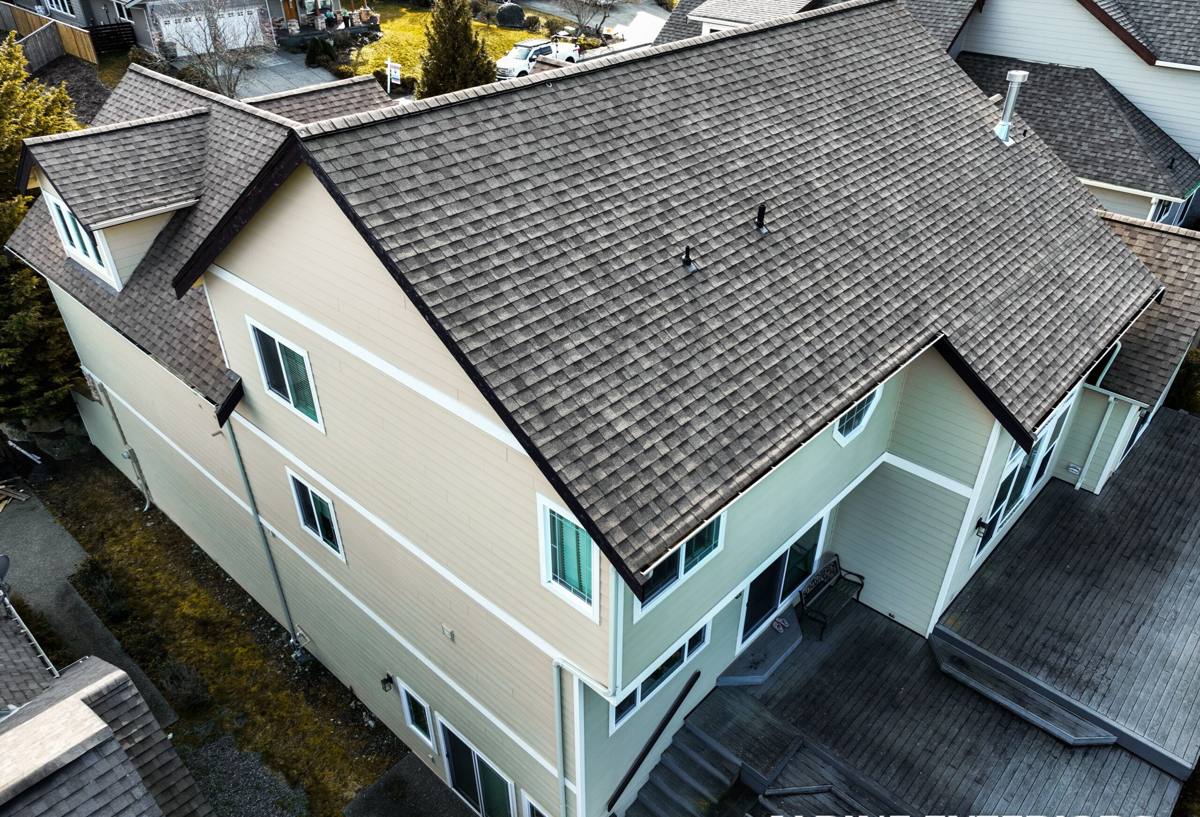
What "Energy-Efficient" Actually Means for a Bellingham Home
"Energy-efficient" gets used loosely in this industry. For a Whatcom County home, it comes down to a few specific numbers and choices, not a marketing label.
- U-factor — how well the window resists heat transfer. Lower is better for our heating-dominated climate.
- SHGC (Solar Heat Gain Coefficient) — how much solar heat passes through the glass. Bellingham doesn't get intense summer sun, so this matters less here than in hotter regions, but it still affects west-facing rooms.
- Glass package — double-pane with a low-E coating and argon gas fill is the practical standard for this climate; triple-pane can make sense on exposed or noise-sensitive elevations but adds cost and weight.
- Frame material and construction — the frame is often where efficiency is won or lost, since a well-rated glass unit in a poorly sealed or warping frame still performs badly.
None of this matters if the installation is sloppy. A high-end window installed with gaps in the flashing or a weak seal will underperform a mid-range window installed correctly — this is the single most common gap we see between what a homeowner paid for and what they actually got.
Signs Your Birchwood Home's Windows Are Underperforming
Most homeowners don't notice window failure until it's obvious. Here's what to look for before it gets there:
- Fogging or a hazy film between the panes — the seal has failed and the gas fill or insulating air gap is gone.
- Visible condensation on the inside of the glass during cold, damp weeks.
- A draft you can feel with your hand near the frame, especially during wind-driven rain.
- Soft, spongy, or discolored trim and sill wood — often a sign moisture has been getting behind the frame.
- Moss, algae, or black staining building up on the sill or lower frame that keeps coming back after cleaning.
- Windows that are hard to open, close, or lock — frames can swell or warp from repeated moisture exposure.
- A noticeable jump in heating costs without another clear cause.
Choosing the Right Window for This Neighborhood
There's no single "best" window material — the right choice depends on your home's exposure, your budget, and how much upkeep you want to take on. Here's how the common options compare for a coastal Whatcom County property:
| Frame Material | Moisture Resistance | Maintenance | Typical Lifespan | Notes for This Climate |
|---|---|---|---|---|
| Vinyl | Good | Low | 20–30 years | Solid all-around choice; won't rot, handles damp exposure well, no repainting |
| Fiberglass | Very good | Low | 30+ years | Excellent dimensional stability in temperature and moisture swings; higher upfront cost |
| Wood-clad | Moderate (depends on cladding integrity) | Moderate to high | 20–30 years with upkeep | Attractive option for period homes, but the wood core means any cladding or seal failure lets moisture in — we recommend these only where upkeep is a real commitment |
| Aluminum | Fair (prone to condensation without thermal break) | Low | 20–30 years | Conducts cold easily; only worth considering with a proper thermal break, otherwise a poor fit for our winters |
For most Birchwood homes we steer people toward vinyl or fiberglass, simply because they hold up against sustained dampness with the least ongoing maintenance. Wood-clad windows can still be the right call on a home where matching original character matters — we'll just be upfront that it comes with more maintenance responsibility, not less.
What a Correct Installation Actually Involves
The window unit itself is maybe half the job. The other half — and the part that determines whether it actually keeps water and drafts out for the next twenty years — is the installation detail work:
- Removing and inspecting the old opening for hidden rot or water damage before anything new goes in — this is where problems from years of moss and moisture exposure often turn up.
- Correct flashing sequencing so water is directed out and down, never trapped behind the frame — critical given how much wind-driven rain this area sees.
- Proper sealant and backer rod use at the frame perimeter, sized and placed for long-term flexibility rather than just filling the gap.
- Insulating the gap between the window frame and rough opening without over-packing it, which can bow the frame and cause operational problems.
- Interior and exterior trim work that seals cleanly and matches the home instead of just covering the seam.
Skipping or rushing any of these steps is how a good window ends up leaking, fogging early, or letting in drafts within a few years — regardless of the brand on the label.
Our Process
- On-site assessment. We look at each window's exposure, current condition, and any signs of existing moisture or rot before recommending anything.
- Honest product recommendation. We'll tell you where a mid-range vinyl window makes more sense than a premium option, and where it's worth spending more — based on your home, not a sales quota.
- Clear scope and timeline. You'll know what's being replaced, what the install involves, and roughly how long it will take before work starts.
- Removal and opening inspection. Any hidden damage gets flagged and discussed with you before we proceed, not discovered after the fact.
- Installation with full flashing and sealing detail. This is the step we don't shortcut, because it's the difference between a window that performs for decades and one that fails in five years.
- Final walkthrough. We check operation, seals, and finish work with you before calling the job done.
Why a Crew That Already Works in Birchwood Matters
A contractor who works this neighborhood regularly already understands what the local exposure does to a building over time — which elevations take the worst of the wind-driven rain, how fast moss reestablishes on north-facing trim, and what kind of rot patterns show up in homes of a certain age around here. That's knowledge you don't get from a general contractor passing through Whatcom County once. It also means we're realistic about scheduling around our wet season rather than promising a timeline that weather won't allow.
Permits, Code, and Whatcom County Considerations
Window replacement in Bellingham can involve permitting depending on the scope of the work, whether it's a like-for-like swap or a structural change to the opening, and current energy code requirements for U-factor and SHGC on replacement windows. We handle the permitting conversation as part of the process so you're not left guessing whether your project needs a permit or figuring out code compliance on your own.
Get a Straight Answer, No Pressure
If your windows are fogging, drafty, or just old enough that you're wondering whether it's time, we're happy to take a look and give you an honest read on what's going on and what it would take to fix it. Request a free estimate using the form below — no pressure, no obligation, just a straight assessment for your Birchwood home.