 Bellingham Exterior
 Decks in Blaine Take a Different Kind of Beating
Blaine sits right on the water, and that changes how a deck ages. Homes near Semiahmoo Bay and Drayton Harbor deal with salt-laden air on top of everything else Whatcom County throws at an exterior structure — long stretches of driving rain, short winter daylight, and a moss season that can run from October well into spring. A deck built for a drier, inland climate simply doesn't hold up the same way out here.
Salt air accelerates corrosion on fasteners, joist hangers, and any exposed metal hardware. Combine that with near-constant moisture and you get a slow, often invisible breakdown of the structural components underneath a deck long before the surface boards look bad. By the time a homeowner notices soft decking or a spongy step, the framing underneath has usually been compromised for a while.
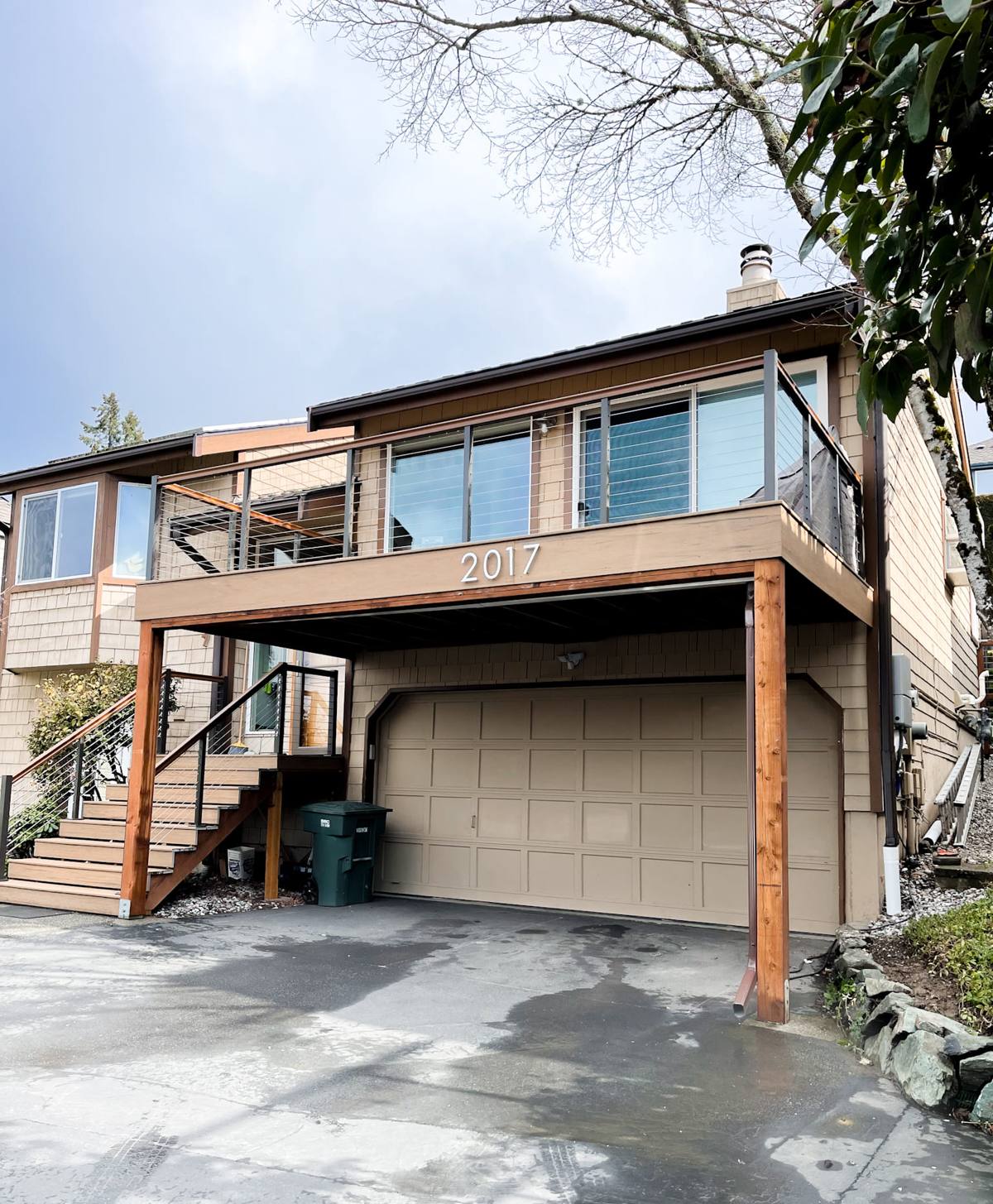
Signs a Blaine Deck Needs Replacement, Not Just Repair
Not every deck problem calls for a full tear-off. But in this climate, a few warning signs almost always mean the structure itself has been affected, not just the surface:
- Soft, spongy, or bouncy decking boards, especially near the house or in shaded corners
- Rust streaking around joist hangers, bolts, or ledger board connections
- Persistent moss or algae growth that returns within weeks of cleaning
- Gaps opening up between boards, or fasteners backing out and popping above the surface
- Visible daylight or moisture staining where the deck ledger meets the house siding
- Posts or footings that feel loose, or a deck that sways slightly under normal foot traffic
Any one of these on its own might be a repair. Two or more together, especially combined with a deck that's already 15-20 years old, usually means replacement is the more honest recommendation — patching around failing framing just delays the same conversation a year or two later.
What a Correct Deck Replacement Actually Involves
Structural Framing and Footings
The framing is where most deck failures actually start, even though it's the part nobody sees. In our climate, footings need to be sized and set below frost depth and on stable, well-drained soil — not just poured into whatever the original builder left behind. Joists, beams, and posts should be rated for exterior ground-contact use where they're close to grade, and every structural connection should use fasteners and hardware rated for the moisture exposure Blaine sees, not standard interior-grade hardware that will corrode within a few seasons.
Ledger Board and Flashing
The ledger board — where the deck attaches to the house — is the single most common point of failure we find on older decks in this area. Without proper flashing, water works its way behind the ledger and into the rim joist and wall framing, often for years before it becomes visible. A correct replacement means new flashing, correct fastening patterns, and a clean water path away from the house, not water toward it.
Decking Material and Fastening
Whatever surface material gets chosen, the fastening approach matters as much as the product itself. Hidden fastener systems, properly spaced boards for drainage, and corrosion-resistant screws all affect how long the surface holds up against Blaine's rain and salt exposure. Gaps that are too tight trap moisture and debris; gaps that are too wide catch heels and shed dirt into the framing below.
Choosing the Right Decking Material for This Climate
There's no single "best" decking material — it depends on budget, maintenance tolerance, and how close the home sits to the water. Here's an honest comparison of the main options we work with:
| Material | Salt Air Performance | Maintenance | Typical Lifespan |
|---|---|---|---|
| Pressure-treated wood | Fair — needs sealing regularly near water | Annual cleaning and re-sealing | 10-15 years |
| Cedar | Good natural resistance, but surface grays quickly in coastal air | Periodic cleaning, optional staining | 15-20 years |
| Composite decking | Very good — won't rot or corrode from salt exposure | Low — occasional washing | 25-30 years |
| PVC/cellular decking | Excellent — fully moisture and salt resistant | Very low | 25-30+ years |
We don't push one product on every job. A budget-conscious wood deck done correctly, with proper flashing and hardware, will outlast a composite deck installed poorly. The material matters less than the framing, flashing, and fastening underneath it — that's where we focus our attention regardless of what surface a homeowner chooses.
Our Deck Replacement Process
1. On-Site Inspection and Assessment
We start by getting under the existing deck, not just walking on top of it. That means checking footings, ledger flashing, joist condition, and hardware corrosion before we quote anything. This is where most of the honest scope decisions get made — repair versus full replacement.
2. Design and Material Selection
We talk through decking material, railing style, and layout based on how the deck actually gets used, the home's exposure to weather, and budget. We're straightforward about trade-offs — a lower-maintenance material costs more up front but saves money in sealing and staining over the years.
3. Permitting and Engineering
Deck replacements in Whatcom County typically require a building permit, and any structural changes to footings, beam sizing, or attachment to the house need to meet current code, not the code that applied when the original deck went in decades ago. We handle the permit process rather than leaving it to the homeowner.
4. Demolition and Structural Rebuild
Old decking, framing, and any compromised ledger material get removed down to sound structure. New footings, framing, flashing, and ledger attachment go in to current code, sized for the deck's actual use — not the minimum that will pass inspection.
5. Decking Installation and Finish Work
Surface boards, railing, stairs, and any trim go on last, with attention to fastening patterns and drainage gaps appropriate for the material chosen. We walk the finished deck with the homeowner before calling the job done.
Permits, Codes, and Inspections in Whatcom County
Deck permitting exists for a reason out here — undersized footings or missing ledger flashing are exactly the kind of shortcuts that cause deck failures years later, sometimes with people standing on the deck when it happens. Depending on the deck's height, size, and attachment to the home, the permitting jurisdiction may require inspections at the footing stage and again at final completion. We build to pass those inspections the first time, because rework on a deck is expensive and avoidable.
Cost Factors Homeowners Should Understand
Deck replacement pricing varies a lot based on size, material, and site conditions, but a few factors consistently move the number more than homeowners expect:
| Factor | Why It Matters |
|---|---|
| Decking material | Composite and PVC cost more up front than wood but reduce long-term maintenance spend |
| Deck height and stairs | Taller decks and multi-flight stairs add framing, railing, and code complexity |
| Ledger and flashing condition | Water damage found behind the ledger during demo can add repair scope |
| Footing access and soil conditions | Difficult access or poor drainage can affect footing work and cost |
| Railing style and material | Cable, glass, and composite railing systems cost more than standard wood balusters |
We give a broad estimate range up front based on the inspection, and we're upfront if we find something during demo that changes the scope — no surprise change orders sprung at the end of the job.
Maintaining a New Deck in Blaine's Climate
Even a well-built deck needs some ongoing attention in this environment. A short annual routine keeps moss, rot, and hardware corrosion from getting a foothold:
- Sweep debris out from between boards before it traps moisture, especially heading into fall
- Clean moss and algae early in the season rather than letting it establish and spread
- Check railing connections and stair fasteners once a year for movement or corrosion
- Reseal wood decking on the manufacturer's recommended schedule — don't wait until it looks gray and dry
- Keep gutters and downspouts near the deck clear so runoff isn't draining directly onto it
- Look underneath once a year for standing water, soft framing, or rust at hardware connections
Why a Crew That Already Works Blaine Matters
Blaine's exposure to salt air and coastal weather isn't the same as a deck built a few miles inland in Bellingham proper. A crew that regularly works this specific stretch of Whatcom County already knows which hardware grades hold up near the water, how local permitting offices review deck plans, and where older homes in the area are prone to hidden ledger damage from decades of moisture exposure. That familiarity shows up in fewer surprises during demo and a deck that's built for the conditions it will actually face, not generic conditions.
If you're dealing with a soft, aging, or failing deck in Blaine, we're happy to take a look and give you a straight assessment of what it needs. Reach out for a free, no-pressure estimate using the form below.