 Bellingham Exterior
 Storm Damage Roof Repair for Barkley Homes
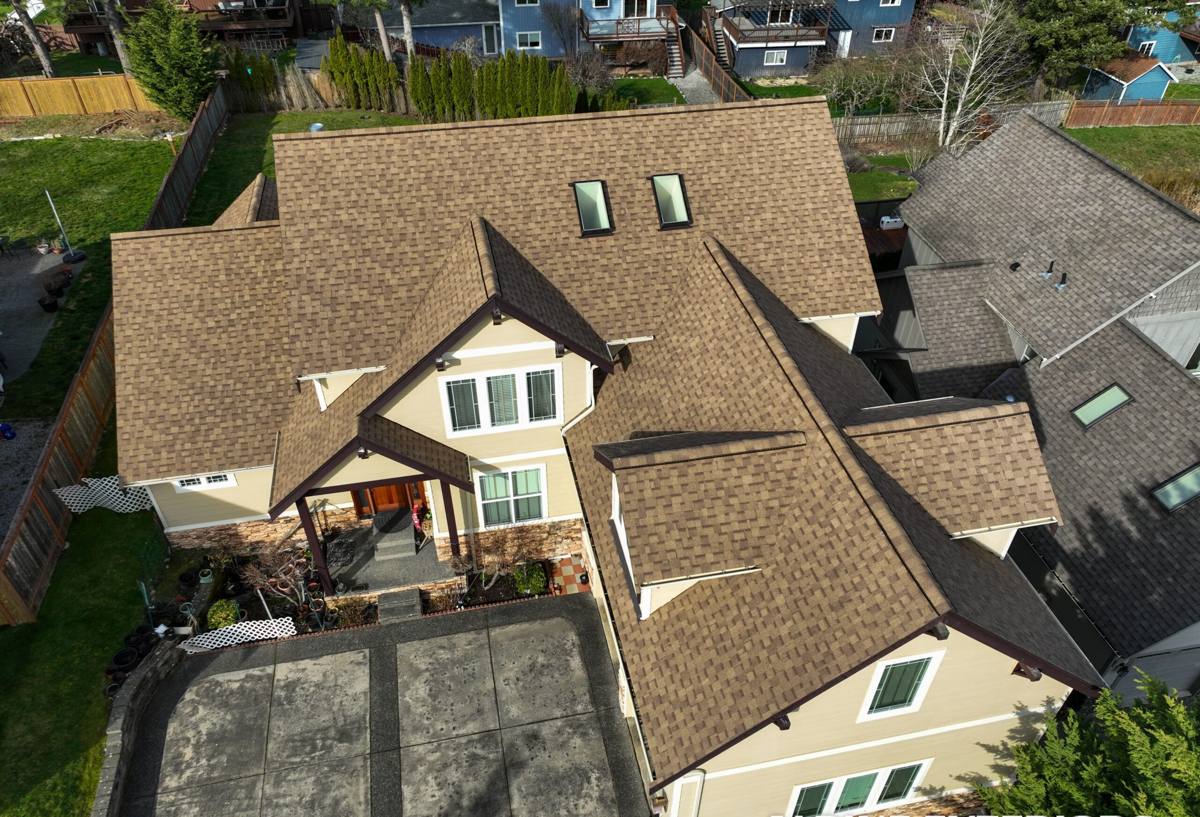
Barkley sits on the east side of Bellingham, a mix of newer construction, town homes, and single-family lots built out over the last two-plus decades. That newer building stock is a mixed blessing when a windstorm or heavy rain event comes through Whatcom County. Roofs here are generally younger and better installed than what you'd find in some of Bellingham's older neighborhoods, but "newer" doesn't mean "storm-proof." Wind gusts off the Salish Sea, driving rain that finds every weak seam, and the moss growth that comes with our long wet season all put real stress on even a well-built roof. When a storm does damage, the goal is simple: find every place water got in or is about to, fix it correctly, and stop the problem before it becomes a ceiling stain or a rot repair.
This page covers what storm damage roof repair actually involves for homes in the Barkley area — not a generic overview, but the specific things we look for and fix on this side of Bellingham.
Why Barkley Roofs Take a Different Kind of Beating
Wind and Rain Off the Sound
Bellingham storms tend to bring wind and rain together, not one or the other. That combination is harder on a roof than either alone. Wind lifts shingle edges and flashing just enough to open a gap, and then the driving rain that follows finds that gap and pushes water sideways and upward instead of just falling straight down. A roof that would shed a normal rain shower fine can leak during a wind-driven storm because water is being forced into laps and seams it was never meant to enter under normal conditions.
Salt Air and Metal Components
Barkley isn't right on the water, but Whatcom County's proximity to Bellingham Bay and the Salish Sea means salt-laden air reaches inland neighborhoods more than most homeowners realize. Salt air accelerates corrosion on exposed metal — flashing, fasteners, gutter hardware, and vent caps. Corroded metal fails quietly; a fastener that's lost its grip or a flashing edge that's thinned out doesn't announce itself until a storm puts pressure on it.
Moss and the Long Wet Season
Whatcom County's wet season runs long, and Barkley's tree cover and shaded roof slopes give moss plenty of time to establish. Moss holds moisture against the roof surface far longer than bare shingle would, and it works its way under shingle tabs as it grows, physically lifting them. A roof with moss buildup going into storm season is already compromised before the wind even shows up — the moss has been prying at the shingles for months.
What Counts as Storm Damage — and What Doesn't
Not every problem after a storm is storm damage, and it matters for both the repair plan and, if you're filing a claim, for the insurance conversation. Here's how we sort it out on an inspection:
| Likely Storm Damage | Likely Pre-Existing / Wear |
|---|---|
| Shingles blown off or lifted with visible fresh tear lines | Shingles curling or granule loss spread evenly across the roof |
| Flashing bent or pulled away after a specific wind event | Flashing rusted through gradually over years |
| A branch or debris strike with a clear impact point | Soft or sagging decking from long-term moss and moisture |
| New leak that started during or right after a named storm | A leak that's been "slow but there" for a season or more |
This distinction is also why we document damage with photos and notes at the time of inspection — it's the same information an insurance adjuster will want, and it's useful even if you're paying out of pocket, so you know exactly what you're fixing and why.
Our Storm Damage Repair Process
1. Inspection, Ground Up and Roof Down
We start at the gutters and downspouts, then move up. Displaced granules pooling in a gutter, debris that shouldn't be there, and staining on soffits or fascia all tell us where to look closer on the roof itself. We then walk the roof (weather and roof pitch permitting) or use a ladder-and-camera approach on steeper or wet sections, checking shingles, flashing at valleys and penetrations, and any moss lines that suggest lifted tabs.
2. Interior Check
Storm damage often shows up inside before it's obvious outside. We check the attic if accessible for water staining, wet insulation, or daylight coming through where it shouldn't, and we ask you about any ceiling spots, musty smells, or drafts you've noticed since the storm.
3. A Written Scope Before Any Work Starts
You get a clear description of what's damaged, what needs repair versus what's just cosmetic, and a price range before we touch anything. If it's a small repair, we'll say so — we're not going to talk you into a full re-roof for a lifted ridge cap.
4. The Repair
Depending on what the inspection turns up, that might mean:
- Replacing individual shingles or a section, matching the existing color and profile as closely as the current product line allows
- Re-securing or replacing flashing at chimneys, vents, skylights, and valleys
- Sealing and re-fastening ridge caps that wind has worked loose
- Addressing any decking that's gone soft from prolonged moisture before it gets covered back up
- Clearing moss and treating the area to slow regrowth where it contributed to the damage
5. Follow-Up Documentation
After the repair, you get photos of the completed work and a summary of what was done — useful for your own records and for insurance if you're filing a claim.
What a Correct Repair Actually Involves
A storm repair that only patches the visible symptom tends to fail again in the next storm. A few things we insist on regardless of the size of the job:
- Matching shingle or flashing material and installation method to the existing roof system, not just whatever's on the truck
- Checking the decking underneath any removed shingles for softness or rot before closing it back up — covering wet decking just hides the problem
- Re-flashing properly rather than caulking over a flashing failure — sealant is a short-term patch, not a fix
- Checking adjacent areas, not just the obvious damage point — wind damage often has a secondary spot nearby that hasn't failed yet but is close
Cost Factors for Storm Damage Repair
Every roof and every storm event is different, so we won't quote a number without seeing it, but these are the factors that move the price up or down:
| Factor | Effect on Cost |
|---|---|
| Number and location of damaged spots | Isolated damage is cheaper than damage spread across multiple roof planes |
| Roof pitch and access | Steep or high roofs take longer and require more safety setup |
| Underlying decking condition | Soft or rotted decking found during repair adds material and labor |
| Shingle age and availability of a matching product | Older or discontinued shingle lines may need a wider color-blend approach |
| Whether moss removal is needed alongside the repair | Adds cleaning time but reduces the chance of repeat damage |
Insurance and Storm Claims
If you're planning to file a homeowner's insurance claim for wind or storm damage, a few things help the process go smoother:
- Get an inspection and documentation as soon as reasonably possible after the storm — delays can raise questions about when the damage actually occurred
- Ask for a written, itemized scope of damage and repair, not just a verbal estimate
- Avoid quick "just caulk it" fixes before the adjuster sees it, if the leak isn't actively causing interior damage — you want the actual damage visible, not covered
- Keep photos of any interior water intrusion (ceiling stains, drips) as it happens, with dates
We're happy to provide documentation for your claim, but we work for you, not the insurance company — our scope reflects what the roof actually needs, and we'll explain our reasoning if it differs from an adjuster's initial assessment.
Preventing the Next Storm's Damage
Once a storm repair is done, a little maintenance goes a long way in a climate like ours:
- Clear moss at least once a year, more often on shaded north-facing slopes common in tree-lined parts of Barkley
- Keep gutters and downspouts clear so wind-driven rain has somewhere to go instead of backing up under shingle edges
- Trim back branches that overhang the roof — both for direct impact risk and because they hold moisture against the surface
- Have flashing and fasteners checked every year or two, since salt-air corrosion is gradual and easy to miss until it fails
Why a Bellingham-Based Crew Matters for This
Storm damage repair isn't a specialty product line — it's a judgment call made on your specific roof, in your specific conditions. A crew that works Whatcom County roofs regularly knows what a Bellingham-area wind event actually does to a roof versus what a generic inspection checklist assumes. We know the moss patterns typical of this area's shaded lots, we've seen how salt air ages flashing here specifically, and we're not guessing at what "normal wear" looks like on a Bellingham roof versus storm damage — we see both all the time. That local pattern recognition is what keeps a repair from missing something that shows up as a leak three storms later.
If your Barkley home has visible or suspected storm damage — missing shingles, a new leak, debris on the ground, or just a storm rolling through that had you wondering — we're glad to take a look. Reach out for a free, no-pressure estimate using the form below, and we'll give you a straight answer on what's damaged and what it'll take to fix it right.