 Bellingham Exterior
 Why Windows in Columbia Take a Different Kind of Beating
The Columbia neighborhood sits close enough to Bellingham Bay that salt-laden air is a fact of life, not an occasional inconvenience. Add in the driving, wind-pushed rain that comes off the water during fall and winter storms, plus a moss season that can stretch for months under our overcast skies, and you've got three separate stressors working on a window at the same time: corrosion, water intrusion, and organic growth that traps moisture against the frame. A window built for a drier inland climate doesn't hold up the same way here.
Older homes in this part of Bellingham often still have original single-pane or early double-pane aluminum windows from decades past. Aluminum conducts cold straight through the frame, which means condensation, fogging, and a house that never quite feels warm near the glass no matter how high the thermostat runs. By the time a homeowner calls us, it's usually because they've noticed drafts, sticking sashes, or visible water staining on the sill — all signs the window's seals and flashing have already started to fail.
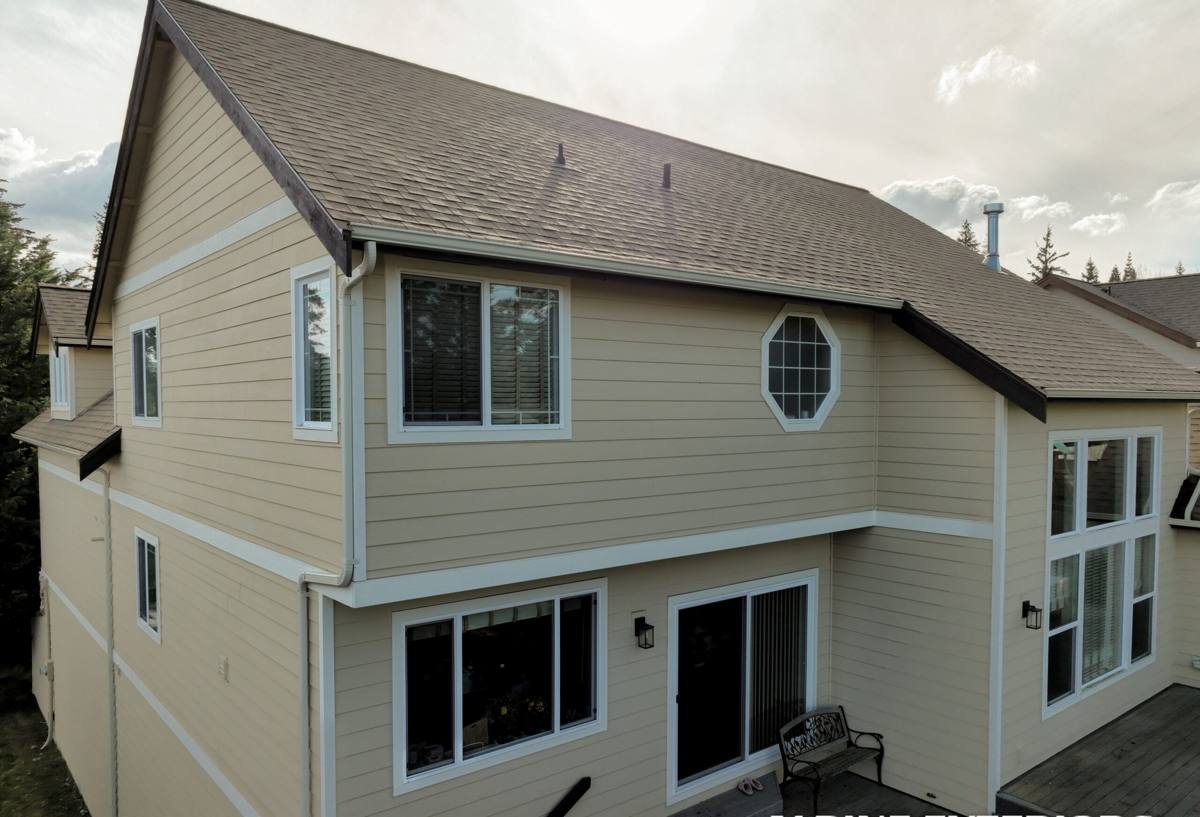
What "Energy-Efficient" Actually Means Here
Energy efficiency isn't one number — it's a combination of how a window handles heat loss, how it handles solar heat, and how well it's sealed and installed. In Whatcom County's mild, wet, low-sun climate, the priorities are a little different than they'd be in a hot, dry region.
U-Factor Matters More Than Solar Heat Gain Here
U-factor measures how much heat escapes through the window — lower is better. Because our winters are long and our summers are mild, keeping heat inside the house matters more, day to day, than blocking solar gain. We look for U-factors in the range that qualifies for ENERGY STAR's Northern Climate Zone, and we'll walk you through the actual numbers on any window we quote rather than just saying "energy efficient" and moving on.
Air Sealing and Installation Quality Are Just as Important as the Glass
A window with excellent lab-rated performance numbers will still leak heat and water if it's installed with gaps in the flashing or sloppy sealant work. We've replaced plenty of "good" windows that failed early simply because they were never properly integrated into the wall's water management system. The product matters, but the install is what determines whether that product performs for fifteen years or fails in five.
Frame Material Trade-Offs in a Salt-Air Climate
Frame material is one of the biggest decisions in a window replacement, and it plays out differently near the bay than it does further inland.
| Frame Material | How It Handles This Climate | Trade-Offs |
|---|---|---|
| Vinyl | Won't corrode from salt air, low maintenance, good insulating value | Can expand/contract with temperature swings; quality varies a lot by manufacturer |
| Fiberglass | Very stable in wet, salty air; strong, minimal expansion/contraction | Higher upfront cost than vinyl |
| Wood / Wood-Clad | Classic look, good insulator | Exposed wood needs consistent upkeep in our rain and moss season; cladding helps but seams still need attention |
| Aluminum | Durable frame structurally | Poor insulator, prone to condensation, and least forgiving of salt-air corrosion over time |
We don't push one material on every homeowner. A lot of Columbia homes do well with a quality vinyl or fiberglass window; homes with a specific architectural style sometimes call for wood-clad. What we won't do is put in a frame material that's a poor match for a house's exposure just because it's cheaper up front — that trade-off tends to show up as a maintenance headache within a few years.
Signs Your Windows Are Already Costing You Money
Most homeowners don't wake up one day and decide to replace windows — the house tells them first. Here's what we look for during an assessment, and what you can check yourself:
- Condensation or fogging between the panes (a sign the seal has failed and the insulating gas or air gap is gone)
- Visible daylight or a noticeable draft around the frame when it's windy
- Soft, discolored, or spongy wood on the sill or surrounding trim
- Moss or dark streaking on the frame or nearby siding that stays damp longer than the rest of the wall
- Windows that are hard to open, close, or lock — a sign the frame has shifted or swollen
- A noticeable temperature difference standing near the window versus the middle of the room
- Rising heating bills without a clear explanation
Any one of these on its own isn't necessarily an emergency. Several of them together, especially on the side of the house that takes the worst weather, usually means the windows are past the point where caulking and weatherstripping will fix the problem.
Our Process, Start to Finish
1. On-Site Assessment
We look at every window being considered — not just the glass, but the flashing, the sill condition, the framing behind the trim, and any signs of past water intrusion. This is also when we talk through frame material, glass package, and budget honestly, including where corners can be cut safely and where they can't.
2. Product Selection
We'll show you real U-factor and performance numbers for the options that fit your home and budget, not just marketing language. If a lower-cost option is genuinely a good fit for a particular window's exposure, we'll say so.
3. Removal and Moisture Check
When the old window comes out, we check the rough opening for hidden rot or past water damage before anything new goes in. This is often where a DIY or lowest-bid install goes wrong — covering up a problem instead of fixing it.
4. Flashing, Sealing, and Installation
Proper flashing integration with the existing water-resistive barrier is non-negotiable on a home that takes driving rain off the bay. We use sealants and flashing tapes rated for our climate and install to shed water down and out, not trap it behind the trim.
5. Interior and Exterior Finish Work
Trim, caulking, and touch-up are done to match the existing house, and we walk the job with you before calling it finished.
6. Cleanup
Old windows, packaging, and job-site debris leave with us the same day.
Why Flashing Matters More Here Than Almost Anywhere
In a climate where rain regularly comes in sideways off Bellingham Bay, water doesn't just sit against a window — it's driven into any gap that exists. That's why flashing detail is where most window failures actually start, not with the glass or the frame itself. A window can carry a great efficiency rating and still let water behind the wall if the flashing wasn't lapped correctly or the sill pan wasn't sloped to drain. We treat flashing and drainage as the most important part of the job, because it's the part that determines whether the wall behind the window stays dry for the next twenty years.
What Affects the Cost
Every home and every window opening is different, so we don't quote a flat per-window price without seeing the job. In general, cost is driven by a handful of factors:
| Factor | Why It Matters |
|---|---|
| Frame material | Vinyl is typically the most affordable; fiberglass and wood-clad cost more upfront |
| Window size and configuration | Larger openings, bays, and custom shapes take more material and labor |
| Condition of the rough opening | Hidden rot or past water damage adds repair work before the new window goes in |
| Glass package | Upgraded low-E coatings or gas fills add cost but improve performance |
| Number of windows | Whole-house replacement typically has a better per-unit cost than one-off replacements |
As a rough range across the projects we typically see, individual window replacement can run anywhere from a modest per-window cost for straightforward vinyl units up to a considerably higher figure for larger or custom fiberglass and wood-clad windows. The only way to get a real number is a site visit — we'll give you a written estimate with no pressure to sign that day.
Why a Crew That Already Works Columbia Homes Is Worth Choosing
A contractor who works this specific neighborhood regularly has already seen how the local exposure — bay-driven rain, salt air, and long stretches of shade and moss growth — plays out on real houses here. That familiarity shows up in small decisions: which flashing details hold up best against wind-driven rain from a particular direction, which frame materials age well versus poorly in salt air, and how to spot rot that's still hidden behind trim. It also means we're not learning on your house — we're applying what's already worked, and been proven, on homes with the same weather exposure as yours.
Living With the Climate After Installation
New windows reduce maintenance, but they don't eliminate it. In a moss-prone, salt-air environment, a little seasonal attention goes a long way:
- Rinse frames periodically to clear salt residue, especially on homes with more direct bay exposure
- Keep gutters and nearby roof areas clear of moss so runoff doesn't sit against upper windows
- Check exterior caulking lines once a year, particularly after a hard winter storm season
- Wipe down interior sills if condensation appears, and address the cause rather than just the symptom
None of this is heavy work, but skipping it is how even a quality window ages faster than it should in this climate.
If your Columbia home has windows that are drafty, foggy, hard to operate, or just old enough that you're wondering, we're glad to take a look. The estimate is free, there's no pressure, and you'll get a straight answer about what your windows actually need — whether that's full replacement or something less. Fill out the form below to get started.