 Bellingham Exterior
 Why Columbia Homes Need a Different Approach to Siding
Columbia sits close enough to Bellingham Bay that homes here deal with a combination most siding products were never engineered to handle: salt-laden air moving in off the water, long stretches of driving rain through fall and winter, and a moss season that can stretch from October well into spring. Any one of these on its own is manageable. Together, they're exactly the combination that finds every weak point in a siding system — the seams, the fasteners, the cut edges, the places where water is supposed to shed but doesn't.
We install James Hardie fiber cement exclusively, on every job, in every neighborhood we work — and Columbia is a good example of why. This page covers what a correct Hardie installation looks like specifically for homes in this part of Bellingham, not a generic overview of the product.
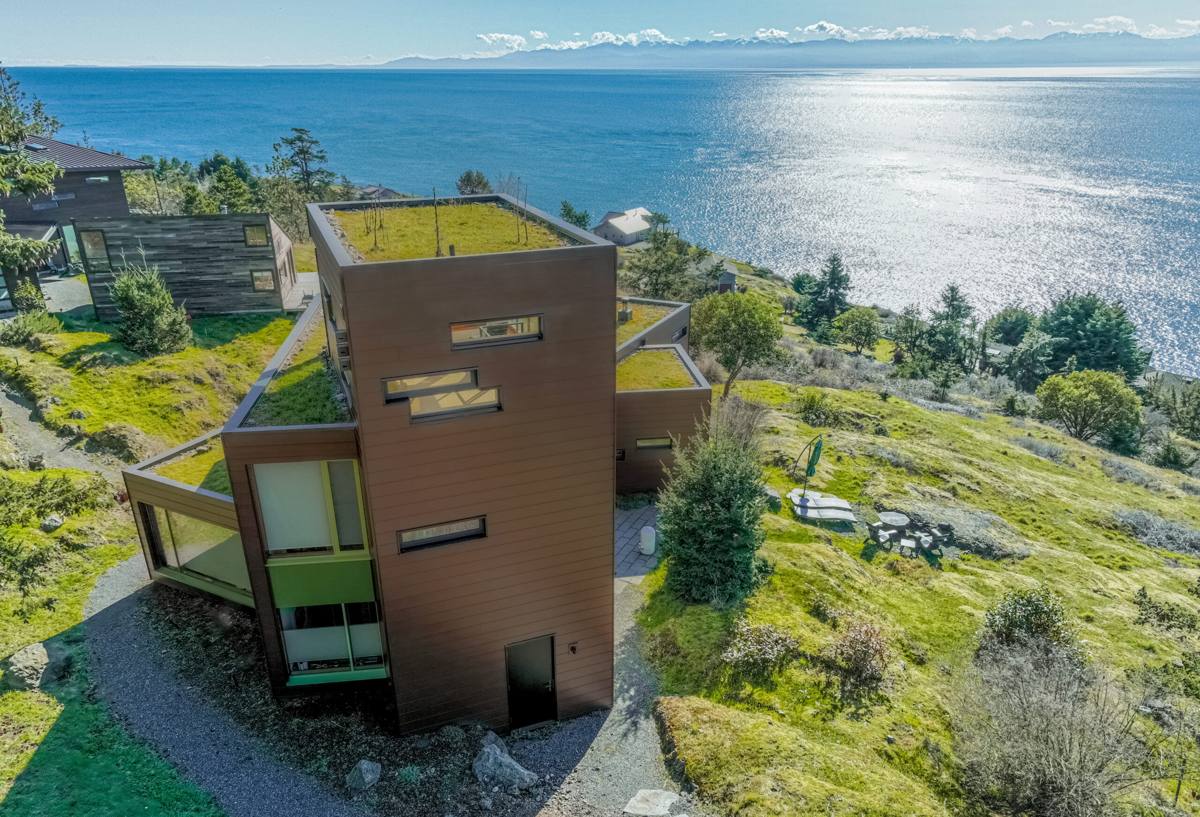
What Salt Air, Rain, and Moss Actually Do to a Home's Exterior
Salt air
Airborne salt is corrosive to metal fasteners, flashing, and trim, and it accelerates the breakdown of paint film on porous or wood-based siding. It doesn't take a beachfront lot to be affected — proximity to the bay and prevailing winds off the water carry salt further inland than most homeowners assume.
Driving rain
Whatcom County's wind-driven rain doesn't just fall straight down onto a wall — it gets pushed sideways and upward under laps, around window trim, and into any gap that isn't properly flashed or caulked. Siding that relies on face-sealing (caulk alone, with no drainage plane behind it) tends to fail here faster than in drier climates, because there's simply more water looking for a way in.
Moss and sustained moisture
Moss doesn't just grow on roofs. On north-facing walls, under eaves, and anywhere shade and moisture linger, it establishes on siding surfaces too — especially wood-based products where the surface itself can absorb moisture and support growth. Moss and algae hold water against the substrate for extended periods, which is a serious problem for any siding material that isn't dimensionally stable and moisture-resistant at its core.
Why We Only Install James Hardie in This Climate
James Hardie fiber cement is engineered from cement, sand, and cellulose fibers — it doesn't absorb and swell with moisture the way wood-based or wood-derived products can, and it isn't vulnerable to rot. That matters directly for Columbia's conditions:
- It won't swell, cup, or delaminate from repeated wetting and drying cycles common in a marine climate.
- It's non-combustible, which matters for peace of mind independent of the moisture question.
- Hardie's ColorPlus factory finish is baked on and warranted separately from the substrate, so it holds up against UV and salt exposure far better than a field-applied paint job on a porous material.
- Hardie manufactures climate-specific "HZ" formulations — HZ5 is engineered for regions like ours with more moisture cycling, and it's what we spec for Columbia homes.
We won't install LP SmartSide, vinyl, Cemplank, Allura, primed spruce, or cedar. Each of those has legitimate uses in the right climate and budget, but none of them hold up to this specific combination of salt, rain, and moss the way correctly installed Hardie does — and we'd rather turn down work than install something we don't believe in for this address.
What a Correct James Hardie Installation Involves
The product is only half the equation. Most siding failures we get called out to inspect — regardless of brand — trace back to installation shortcuts, not the material itself. In a climate like Columbia's, the details matter more, not less.
Behind the siding
- Weather-resistant barrier (WRB): A continuous, properly lapped moisture barrier behind the siding, with all penetrations sealed — this is the drainage plane that does the real work when wind-driven rain gets past the face of the siding.
- Rainscreen or drainage gap: Furring strips or a drainage mat create a gap behind the siding so any moisture that gets behind it can drain and dry rather than sitting against the WRB and sheathing.
- Flashing at every penetration: Windows, doors, hose bibs, vents, and any other wall penetration get properly integrated flashing — not just a bead of caulk.
The siding itself
- Fastener spacing and type: Hardie specifies fastener size, type, and spacing for a reason — under- or over-driven fasteners and the wrong fastener type are among the most common Hardie installation defects we see.
- Clearances: Minimum gaps at grade, roofline, decks, and abutting surfaces so the bottom edge of the siding never sits in standing water or constant dampness.
- Caulking at joints, not as a substitute for flashing: Caulk seals a joint; it doesn't replace proper flashing and drainage behind it. Using caulk as the primary defense is a shortcut that fails first in high-rain climates.
- Field-cut edge sealing: Any cut edge of Hardie board should be sealed per manufacturer instruction — an unsealed cut edge is a weak point for moisture intrusion over time.
Our Process for a Columbia Siding Project
- On-site assessment: We look at the existing siding and substrate, check for hidden moisture or rot (common where old siding has been failing quietly for years), and evaluate sun/shade exposure and prevailing wind direction on your specific lot.
- Tear-off and substrate repair: We remove existing siding down to the sheathing, repair or replace any damaged sheathing or framing before anything new goes up, and address any moss or mildew staining at the source rather than just covering it.
- WRB and drainage plane installation: New weather barrier, properly lapped and taped, plus a rainscreen gap appropriate to the wall assembly.
- Window, door, and penetration flashing: Integrated flashing at every opening before the siding goes on around it.
- Hardie installation to spec: Correct fastener schedule, clearances, and joint treatment, following manufacturer instructions rather than shortcuts.
- Final detailing and walkthrough: Caulking, touch-up, trim, and a walkthrough so you understand what was done and why.
Choosing the Right Hardie Product Line for This Area
| Product | Best use on Columbia homes | Why it fits |
|---|---|---|
| HardiePlank lap siding, HZ5 | Most walls, especially weather-exposed elevations | Climate-engineered for wetter, moisture-cycling regions like Whatcom County |
| HardiePanel vertical siding | Accent walls, gables, modern facades | Fewer horizontal laps means fewer potential water traps on vertical surfaces |
| HardieTrim boards | Corners, window/door trim, fascia | Matches the fiber cement's moisture and rot resistance at the most vulnerable transition points |
| ColorPlus factory finish | All exposed siding and trim | Factory-baked finish resists fading and cracking from UV and salt exposure better than field paint |
Cost Factors Specific to This Kind of Job
Every home and scope is different, so we won't quote a number without seeing the house — but the main variables that affect cost on a Columbia project are generally the same handful of factors:
- Condition of the substrate: Hidden rot or moisture damage found during tear-off adds repair scope that's hard to estimate until the old siding is off.
- Wall complexity: Dormers, multiple roof planes, and lots of trim/corner detail take more labor per square foot than a simple rectangular wall.
- Product line and finish: Panel vs. lap, factory ColorPlus vs. field-painted primed product, and trim selections all affect material cost.
- Access: Two-story sections, tight side yards, or landscaping that limits staging space affect labor time.
Maintenance: What Ongoing Care Looks Like Here
Correctly installed Hardie siding is low-maintenance compared to wood-based alternatives, but "low-maintenance" isn't "no-maintenance" — especially with Columbia's moss season and salt exposure.
- Rinse siding periodically, particularly on north-facing and shaded walls where moss and algae are most likely to establish.
- Keep gutters clear so overflow doesn't run down the face of the siding and hold moisture against one section.
- Trim back vegetation and tree cover that keeps a wall section shaded and damp longer than the rest of the house.
- Have caulked joints and trim inspected every few years — caulk is a maintenance item on any siding system, and catching a failed joint early is far cheaper than dealing with what it lets in.
Why Hiring a Crew That Already Works in Columbia Matters
Siding installation is site-specific. A crew that already works this part of Bellingham knows which elevations on a given lot take the worst wind-driven rain, where moss tends to establish first, and how far salt exposure actually reaches inland from the bay — none of which shows up in a manufacturer's install manual. That local pattern recognition shapes decisions during the job: where to add extra flashing attention, which walls warrant closer fastener inspection, and where drainage detailing deserves extra care. It's the difference between a technically compliant install and one that's actually built for this address.
Warranty and Long-Term Value
James Hardie backs its products with a substantial, transferable limited warranty — a real factor in home resale value, since a new buyer inherits the coverage rather than starting from zero. But a warranty is only as good as the installation underneath it; manufacturer warranties typically require installation per their specifications, which is part of why we follow those specs closely rather than treating them as optional guidance.
If you're weighing a siding replacement for a home in Columbia, we're happy to take a look and walk you through what we'd recommend and why. Request a free, no-pressure estimate using the form below — there's no obligation, and you'll get a straight answer about what your home actually needs.