 Bellingham Exterior
 Birch Bay Decks Live in a Tougher Climate Than Most of Whatcom County
Birch Bay sits right on the water, and that changes what a deck has to survive. Homes a few miles inland in Bellingham deal with plenty of rain, but Birch Bay properties also get salt-laden air blowing off the bay, wind-driven rain that finds its way into every gap and joint, and a moss season that runs longer than most homeowners expect. A deck built to a generic spec, without accounting for that combination, tends to show problems within a few seasons: fading, staining, soft spots, and boards that stay damp long after the rain has stopped.
Composite decking was designed to handle exactly this kind of exposure better than wood. But "composite" is not one product, and not every installation approach accounts for a marine environment. This page covers what Birch Bay homes actually need from a composite deck, what separates a correct installation from a mediocre one, and how our process works for this specific area.
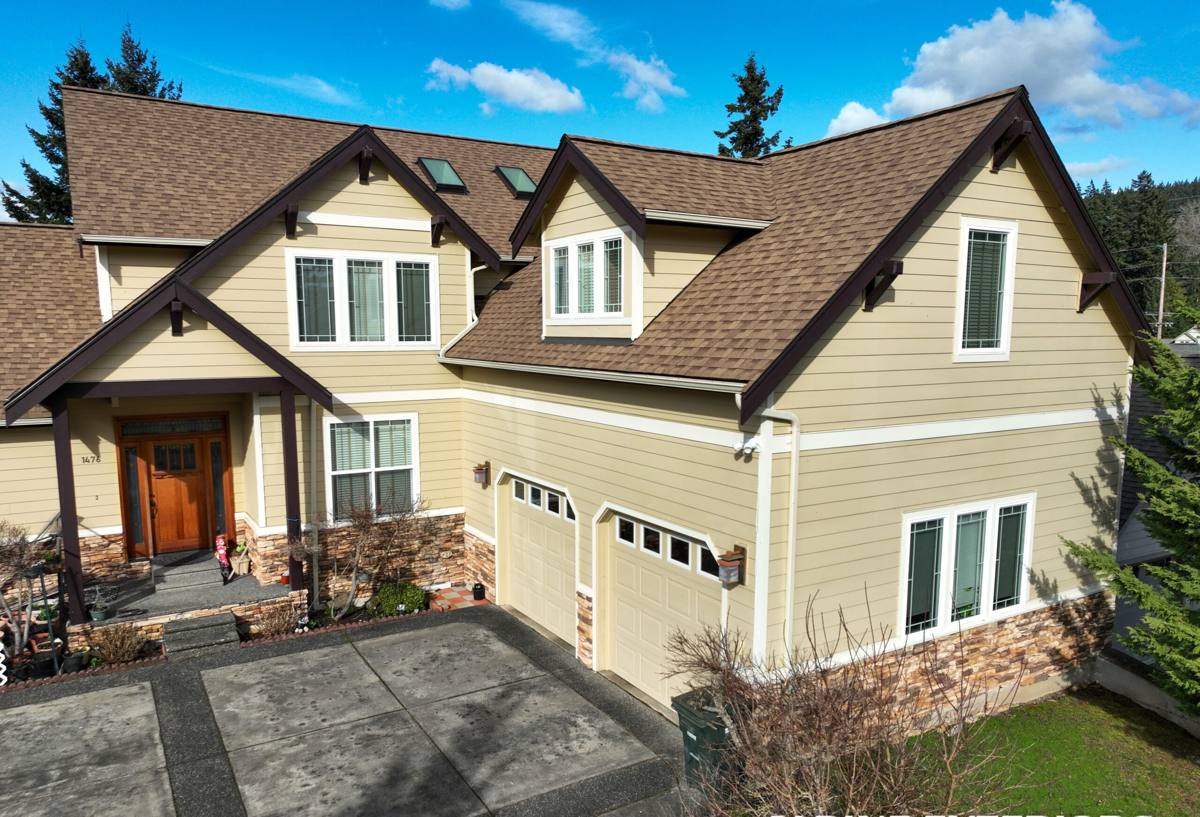
What Salt Air, Rain, and Moss Do to a Deck Over Time
Salt Air
Airborne salt settles on every exterior surface near the water, including deck boards, fasteners, and any exposed metal hardware. Over years, it can accelerate corrosion in lower-grade fasteners and brackets, and it leaves a fine residue that holds moisture against the surface of the decking longer than it would inland. This matters most at connection points — screws, joist hangers, and any steel framing components — which is why hardware selection is not a place to cut corners on a Birch Bay build.
Driving Rain
Storms off the water don't just fall straight down — wind pushes rain sideways and up under railings, fascia boards, and stair stringers. Any gap in flashing or any board installed too tight to the house will trap water instead of shedding it. This is a framing and detailing issue as much as a decking material issue.
Moss and Extended Damp Season
Whatcom County's moss season runs long, and shaded or north-facing decks near the water stay damp even longer because of the marine air. Moss and algae feed on that persistent moisture and organic debris trapped in surface texture. On wood, that growth becomes slick and eventually degrades the fibers. On composite, the concern is different — growth mostly stays on the surface, but it still needs to be kept in check so it doesn't stain the board or make stairs slippery.
Why Composite Makes Sense for This Environment
Composite decking doesn't absorb water the way wood does, doesn't need annual staining or sealing, and resists the rot and splintering that salt-air moisture accelerates in untreated or even pressure-treated lumber. For a property exposed to Birch Bay's combination of salt, rain, and shade, that translates into fewer maintenance headaches and a more consistent appearance year over year.
That said, composite is not maintenance-free, and it is not immune to poor installation. A composite deck built without proper drainage, ventilation, and gapping will still trap moisture underneath, and boards installed too close together or against the house without clearance can still develop mold or mildew at the joints. The material helps — it doesn't replace correct building practice.
Composite vs. Wood for a Birch Bay Deck
| Factor | Wood Decking | Composite Decking |
|---|---|---|
| Salt air resistance | Fasteners and surface finish degrade faster near the water | Board material is unaffected by salt; use marine-rated hardware regardless |
| Moisture absorption | Absorbs and swells, especially at end cuts | Minimal to none, depending on capped vs. uncapped construction |
| Moss and algae | Grows into the wood fiber, degrades the surface over time | Grows on the surface only, removable with routine cleaning |
| Annual upkeep | Staining or sealing, typically every 1-2 years | Periodic washing, no staining or sealing required |
| Upfront cost | Lower material cost | Higher material cost, offset by lower long-term maintenance |
Not All Composite Boards Are Built the Same
The composite decking market has a wide range of quality, and for a marine-exposed property like Birch Bay, that range matters more than it would for a dry inland lot.
Capped vs. Uncapped Composite
Capped composite boards have a protective polymer shell around the core, which resists moisture intrusion, staining, and fading far better than uncapped composite. In a salt-air, high-rain environment, we treat a fully capped board (cap on all four sides, not just the top) as the standard, not an upgrade. Uncapped or partially capped boards can still absorb moisture at cut ends and edges, which shows up as swelling or discoloration years down the road.
Fastening System
Hidden fastener clip systems, paired with stainless or coated marine-grade screws, hold up better here than surface-screwed boards using standard exterior fasteners. Surface screws also create small penetration points where water and salt residue can sit.
Color and Surface Texture
Darker composite boards absorb more heat, which can affect comfort underfoot in direct summer sun, though that's a smaller concern on shaded or waterfront lots. Textured surfaces resist slip better when damp, which is worth prioritizing on a property that stays wet longer into the season.
What a Correct Installation Involves
The composite boards themselves get most of the attention, but the substructure underneath is where a lot of long-term problems either get prevented or built in.
- Joist spacing and blocking sized for the specific composite product's span rating — not a generic wood-deck spacing
- Proper ventilation underneath the deck so airflow can dry out moisture instead of trapping it against joists
- Flashing installed correctly where the deck meets the house, so wind-driven rain sheds away from the structure
- Board gapping set to manufacturer spec, accounting for seasonal expansion and contraction
- Marine-grade or coated fasteners and hardware at every connection point exposed to salt air
- Stair and railing connections detailed to shed water rather than pocket it
- Clearance maintained between decking and adjacent siding or trim to prevent trapped moisture at the house line
Skipping any one of these doesn't usually show up on day one. It shows up two or three years later as a soft joist, a stained fascia board, or a railing post that's started to loosen.
How Our Process Works
1. On-Site Assessment
We look at sun exposure, wind direction relative to the water, existing drainage, and the condition of any structure the new deck ties into. Birch Bay lots vary — some are more sheltered, some take the full brunt of weather off the bay — and that shapes material and detailing decisions.
2. Material Selection Walkthrough
We go over board tier, color, and hardware options honestly, including the trade-offs between upfront cost and long-term maintenance, so the decision fits the budget and the exposure level of the specific property.
3. Framing and Substructure
This is where we spend the effort that doesn't show in the finished photos: correct joist sizing, ventilation, flashing, and fastener selection suited to a marine environment.
4. Decking Installation
Boards go down to manufacturer spec for gapping and fastening, with attention to cut-end sealing wherever a board is trimmed on site, since a factory-capped edge protects better than a fresh cut.
5. Final Walkthrough
We review the finished deck with the homeowner, including a straightforward rundown of what routine maintenance actually looks like for that specific board and location.
Maintenance Specific to a Birch Bay Deck
Composite cuts down on maintenance significantly compared to wood, but a deck sitting in salt air and extended dampness still needs some routine attention.
- Rinse or wash the deck surface periodically to clear salt residue and organic debris before it builds up
- Clean moss or algae growth with a soft-bristle brush and a manufacturer-approved cleaner rather than a pressure washer on high setting, which can damage the cap layer
- Keep gutters and downspouts near the deck clear so runoff isn't dumping extra water onto the surface or substructure
- Check railing and stair fasteners annually for any early signs of corrosion, especially on hardware closest to the water
- Keep planters, furniture, and rugs from sitting in one spot too long, since trapped moisture underneath can encourage surface growth even on composite
Why It Matters That We Already Work in Birch Bay
A crew that mainly builds decks in drier, inland parts of Whatcom County can still do competent work, but they're often applying a general spec to a site that needs marine-specific decisions — hardware grade, flashing detail, board tier. Working in Birch Bay regularly means we've already seen how different lots handle wind off the water, where moisture tends to collect on north-facing builds, and which details actually hold up after a few winters here rather than just on paper. That's the difference between a deck that looks right at handoff and one that still looks right five years in.
Get a Straightforward Estimate
If you're planning a new composite deck or replacing one that hasn't held up to Birch Bay's weather, we're happy to take a look and give you an honest assessment of what your property needs. Use the form below to request a free, no-pressure estimate — no obligation, just a clear look at the options and costs for your specific site.