 Bellingham Exterior
 Deck Building in Cordata, Built for the Weather That's Actually Here
Cordata is one of Bellingham's newer growth areas, a mix of newer-construction homes, townhomes, and family properties in the north end of the city, in Whatcom County. A lot of decks going up in neighborhoods like this get built to a generic plan — the kind of deck that would work fine in a dry inland climate but wasn't really designed for what Bellingham weather does to an exterior wood structure year after year. Salt-tinged marine air, rain that comes in sideways as much as straight down, and a moss and algae season that can run nearly year-round on shaded surfaces all put real, ongoing stress on a deck's structure, fasteners, and decking surface.
None of that means a deck can't hold up well here — it means the design, materials, and installation details have to account for it from the start. This page focuses specifically on deck building for Cordata homes: what the local climate does to a deck, where deck failures actually begin, what a correctly built deck involves, and how our process works from first estimate to final walk-through.
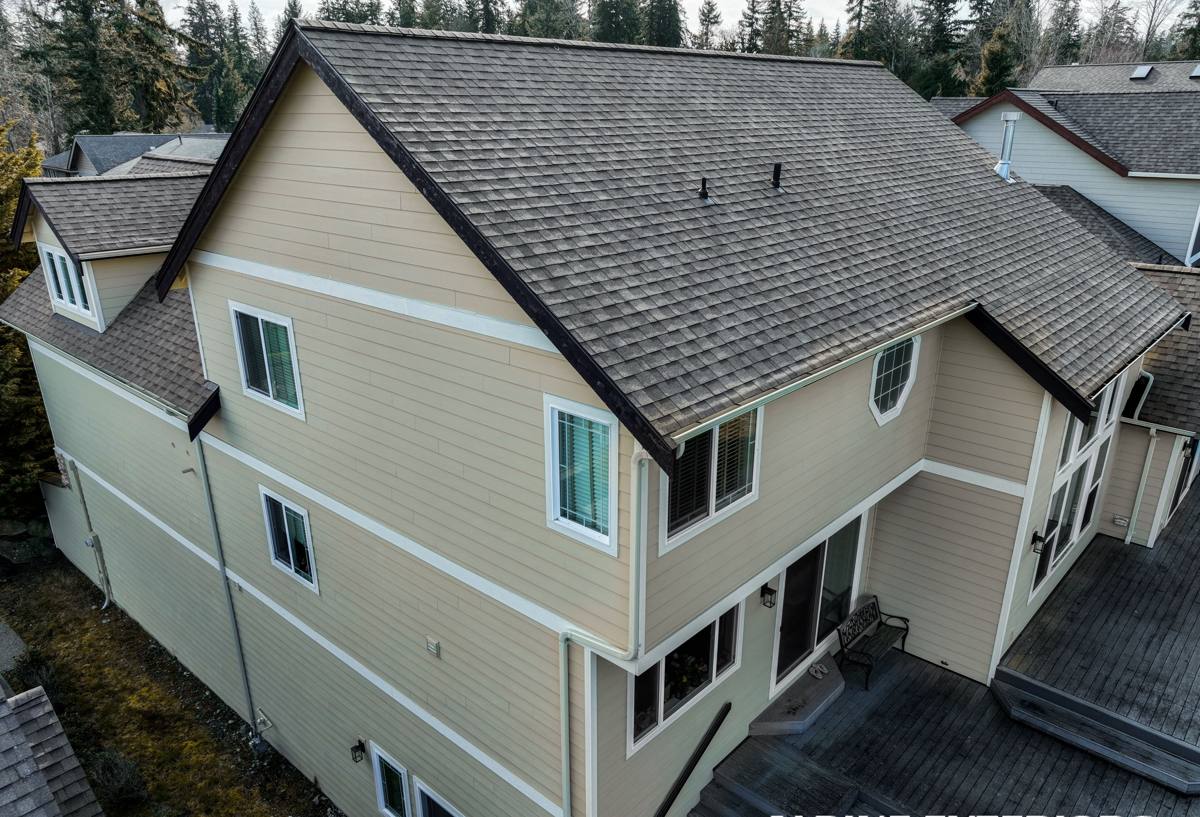
What Whatcom County Weather Does to a Deck
Salt Air
Cordata sits inland of Bellingham Bay, but the marine air that moves through this part of Whatcom County still carries salt content that accelerates corrosion on fasteners, joist hangers, and any lower-grade metal hardware. On a deck, this shows up first at the connections you can't easily see once the decking is down — the exact spots where corrosion matters most, because a rusted-through hanger or fastener is a structural problem, not a cosmetic one.
Driving Rain
Storms in this part of the Pacific Northwest tend to arrive with wind, which pushes rain at an angle rather than straight down. On a deck, that means water gets driven under railings, into end-grain cuts, and behind ledger boards where the deck attaches to the house — areas a dry-climate deck design often doesn't account for. Where that water goes once it's there, and how quickly it can drain and dry, matters more here than almost anywhere else in the country.
A Long Moss and Algae Season
Cool temperatures, high humidity, and heavy tree cover across Bellingham give moss and algae an extended growing window on shaded deck surfaces, especially under overhangs or on the north side of a house. On a wood deck, moss holds moisture against the board surface long after the air around it has dried, which is what leads to soft, rotting boards over time rather than the moss itself being the real problem. On composite decking, moss and algae growth is mostly a cleaning issue, but it's still more frequent here than in drier climates and worth planning for.
Where Deck Failures Actually Start
Most of the deck problems we get called out to inspect in this area don't start with the decking boards themselves — they start with the connections and structure underneath, where water damage builds quietly for years before anyone notices a soft board or a wobble in the railing.
The Ledger Board Connection
The ledger board is the piece that bolts the deck directly to the house, and it's the single most common point of hidden rot on a deck in this climate. If it's not properly flashed to shed water away from the house's wall assembly, water works its way behind the ledger and into the rim joist and sheathing over time — damage that's completely invisible until the deck starts to feel loose or the siding above it shows staining.
Footings and Post Bases
Whatcom County's wet ground conditions mean footings need to be set below frost depth and post bases need to keep wood posts up off standing water and soil contact, not just resting on a footing. A post base that traps moisture against the end grain of a post is a slow-motion rot problem, even if the post itself is treated lumber.
Joist Hangers and Fasteners
Every hanger, bolt, and screw on a deck needs to be rated for the type of treated lumber it's fastened to and for sustained outdoor moisture exposure. Mismatched or under-rated hardware corrodes faster here than it would in a drier climate, and a corroded hanger loses load capacity long before it looks obviously bad from the outside.
Decking Material Options for a Cordata Home
The decking surface is the most visible choice on the project, and each option carries real trade-offs in a climate this consistently wet. We walk through these honestly during the estimate rather than steering every homeowner toward the same product.
| Material | How it holds up in this climate |
|---|---|
| Pressure-treated wood | Lowest upfront cost; needs annual cleaning and re-sealing or staining to resist moisture and moss buildup, and end grain at cuts is a common rot starting point if not sealed |
| Cedar | Naturally moisture-resistant compared to other softwoods and a good look, but still needs regular sealing and cleaning to prevent graying, splintering, and moss in shaded areas |
| Composite decking | Resists rot and doesn't need staining, but surface can develop mold or algae film in shaded, low-airflow areas and needs periodic washing; quality varies significantly by brand |
| PVC / capped polymer decking | Fully moisture-resistant core, generally the lowest ongoing maintenance, but higher upfront material cost than wood or standard composite |
Whichever surface material a homeowner chooses, the framing underneath and the ledger connection to the house matter just as much — a good decking material on top of a poorly detailed structure still leads to problems, just hidden ones instead of visible ones.
How We Build a Deck in Cordata
Site Visit and Design
We start by looking at the actual lot — grade, drainage, sun and shade exposure across the day, and how the deck will attach to the house — before talking through layout, size, and material options. A deck design that ignores where water naturally wants to go on a given property tends to create drainage problems later that are expensive to fix after the fact.
Permitting
Most deck construction in the City of Bellingham requires a building permit, particularly for decks attached to the house or built above a certain height off grade. We handle that process as part of the project rather than leaving it for the homeowner to sort out, since permit requirements and inspection timing can add real lead time to a project schedule.
Footings and Framing
Footings are set to the required depth for this area's frost line, and framing uses lumber and hardware rated for ground contact or sustained wet exposure as appropriate to each part of the structure. This is the stage where corner-cutting is invisible for years and then very expensive to fix, so it's where we spend the most care.
Ledger Flashing
Where the deck attaches to the house, we install proper flashing to direct water away from the wall assembly rather than letting it pool against the ledger board. This single detail is responsible for more prevented rot than almost any other step in the build.
Decking Installation
Boards are installed with the gapping the material manufacturer specifies, which allows for drainage and seasonal movement without the boards cupping or binding against each other. On wood decking, cut ends are sealed before installation, since an unsealed cut end is one of the fastest ways moisture gets into a board.
Railings and Final Detailing
Railing height and baluster spacing follow current building code, and we finish with attention to the same fastener and hardware quality used throughout the structure — a good-looking railing built with the wrong hardware is still a maintenance problem waiting to happen.
Signs an Existing Deck in Cordata Needs Attention
- Soft, spongy, or spring-feeling boards, especially near the house or at board ends
- Visible gaps, rust staining, or loose connections where the deck meets the house
- Wobble or movement in railings or posts when pushed
- Moss or dark staining that keeps returning to the same shaded area no matter how often it's cleaned
- Nails or screws backing out, or hardware showing rust
- Standing water that doesn't drain within a reasonable time after rain
What Affects Deck Cost on a Cordata Property
| Factor | Why it matters |
|---|---|
| Deck size and height off grade | Larger decks and those built higher off the ground require more framing, footings, and railing |
| Decking material | Pressure-treated wood, cedar, composite, and PVC each carry different material costs and labor requirements |
| Attachment to the house | Ledger flashing and structural tie-in work adds labor that a free-standing deck doesn't require |
| Site access and slope | Sloped lots or limited equipment access can add time for footings and material staging |
| Permitting and inspections | Scope and location can affect permit requirements and the number of required inspections |
We walk through these during the estimate based on the actual property, rather than quoting a flat per-square-foot number without seeing the site.
Why a Local Crew Matters for a Cordata Deck
A crew that builds decks in this specific climate regularly — not once or twice a year — knows where water tends to collect on a given lot type, which hardware actually holds up under Whatcom County's marine air, and how ledger flashing details need to change depending on the siding and wall assembly behind them. We also handle roofing, siding, and window work, which matters on a deck project because ledger and flashing problems often connect directly to how the house's exterior wall is built above the deck line. A local crew is also easier to reach years down the line if a warranty question or a minor repair comes up.
Maintenance Checklist for a Cordata Deck
- Sweep debris off the deck regularly so leaves and needles don't trap moisture against the boards
- Clean and re-seal wood decking on a regular schedule, since a worn sealer stops protecting the wood well before it looks obviously bad
- Wash composite or PVC decking periodically to prevent algae film buildup in shaded areas
- Check the ledger board area for staining or softness once a year, since this is the most common hidden failure point
- Keep gutters and downspouts near the deck clear so overflow doesn't dump directly onto the structure
- Address loose fasteners, soft boards, or railing wobble promptly rather than waiting for a full season
If you're planning a new deck in Cordata or you're not sure whether an existing one is still sound, we're happy to take a look and put together a straightforward, no-pressure estimate. Use the form below to request a free estimate.