 Bellingham Exterior
 Siding That Has to Work in Cordata's Climate, Not Just Look Good on Day One
Cordata sits in north Bellingham, close enough to the water and the weather patterns of Bellingham Bay that homes here take a steady beating most siding products were never engineered for. Salt-laden air off the Sound accelerates corrosion and finish breakdown. Driving rain, pushed sideways by wind off the water, finds every gap in a siding system that wasn't installed with real flashing and drainage. And the long, overcast wet season that defines a Whatcom County winter keeps north- and shade-facing walls damp for weeks at a stretch, which is exactly the environment moss and mildew need to take hold. Any siding product will survive a few years of that. Not every siding product will still look and perform the way it did on installation day a decade later.
We install James Hardie fiber cement siding exclusively, on every job we take in Cordata and across Bellingham. This page walks through what that actually means for a Cordata home specifically — the climate factors, what a correct installation involves, and how our process works from first estimate to final walkthrough.
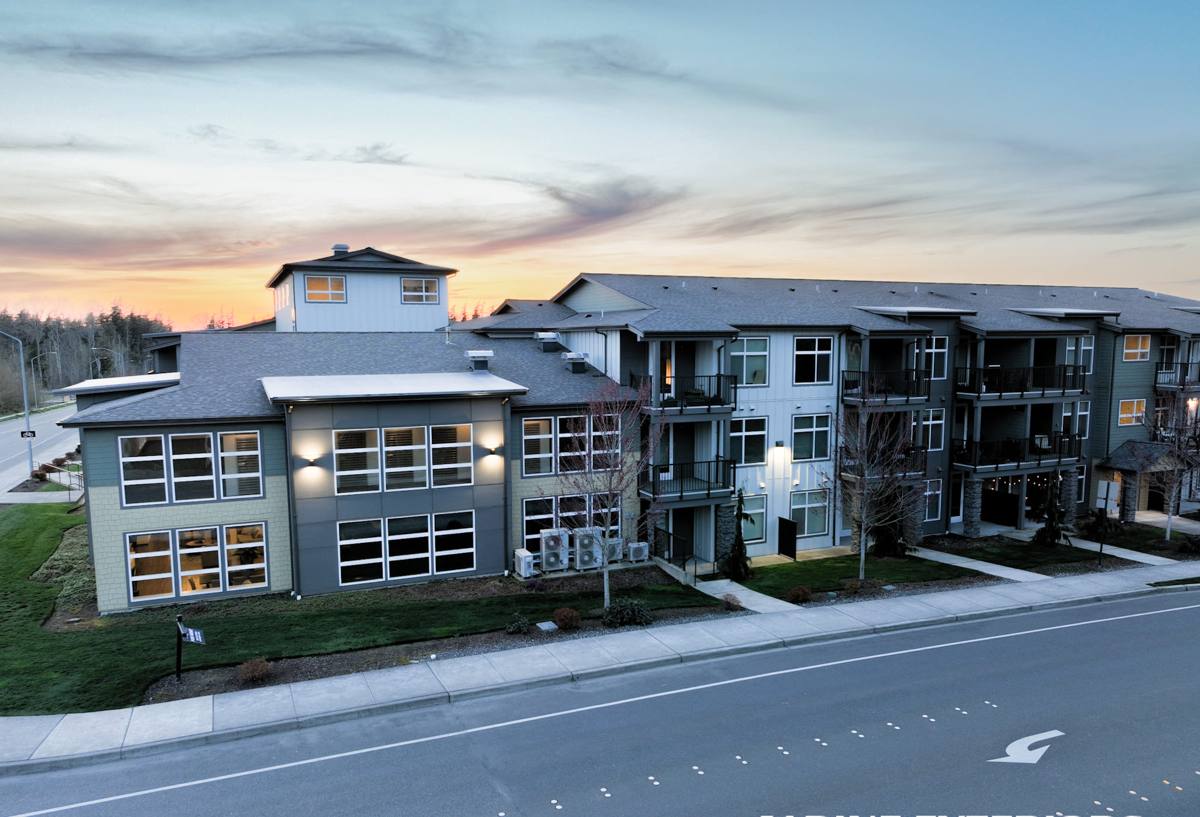
What Cordata's Weather Does to a Home's Exterior
Salt Air and Moisture
Homes closer to Bellingham Bay deal with airborne salt that settles on exterior surfaces and speeds up the breakdown of paint films, caulking, and untreated wood. It doesn't corrode fiber cement the way it does metal fasteners and trim, but it does mean whatever finish is on your siding needs to hold up to more than plain rainwater. A factory finish engineered to resist that kind of exposure matters more here than it would fifty miles inland.
Driving Rain
Bellingham doesn't just get a lot of rain — it gets a lot of wind-driven rain, which behaves differently than a straight-down downpour. Wind-driven rain gets pushed up and under laps, around window and door trim, and into any seam that isn't properly flashed and caulked. A siding product that performs fine in a dry climate under vertical rain can fail here simply because the installation detailing wasn't built for horizontal water.
Moss and Mildew Season
Cordata has enough tree cover and enough shaded, north-facing wall exposure on many lots that siding stays damp longer than it would in full sun. Combined with Western Washington's gray-sky stretch from fall through spring, that's a long window for moss, algae, and mildew to establish themselves on a wall surface — especially one with a porous or absorbent finish.
Why We Standardized on James Hardie
We used to get asked why we don't offer vinyl, LP SmartSide, or a cheaper fiber cement alternative like Cemplank or Allura. The honest answer is that we tried all of them over the years and kept ending up back at Hardie for one reason: it's the product that holds up the longest, with the least maintenance, in exactly the conditions Whatcom County throws at a house.
- Non-combustible core. Fiber cement doesn't feed a fire the way wood-based products can, which matters for insurance and peace of mind alike.
- ColorPlus factory finish. Baked-on in a controlled environment rather than field-applied, it resists fading, chipping, and the kind of moisture intrusion that breaks down site-painted finishes faster in a wet climate.
- HZ5/HZ10 climate engineering. Hardie makes region-specific formulations built for moisture and freeze-thaw exposure, not a one-size-fits-all product sold the same way in Arizona and Washington.
- Warranty that transfers. A non-prorated, transferable warranty is worth more to a homeowner who might sell in ten years than a warranty that's technically longer but loses most of its value the day you list the house.
- Proven long-term performance in wet Pacific Northwest climates, when installed to manufacturer spec — which is the part most siding failures actually trace back to, not the product itself.
We don't say this to knock every other product on the market — vinyl, engineered wood, and other fiber cement brands all have legitimate uses. We just stopped being willing to put our name on a job where we weren't confident it would still look right in fifteen years of Bellingham weather.
What a Correct James Hardie Installation Actually Involves
The material is only part of the equation. Most siding problems we get called out to inspect — on any brand — trace back to installation shortcuts, not the product itself. In a climate like Cordata's, the details matter more than usual.
Water Management Comes First
Before a single piece of siding goes up, the wall needs a correctly lapped weather-resistant barrier, properly integrated flashing at every window, door, and penetration, and a drainage plane that lets any water that does get behind the siding find its way back out instead of sitting against the sheathing. This is the step that gets rushed on cut-rate jobs, and it's the step that determines whether a house has a moisture problem in year three.
Fastening and Clearances
Hardie specifies fastener type, spacing, and placement for a reason — get it wrong and you get cracking, popped nails, or reduced wind resistance. Ground clearance and clearance from roof lines, decks, and other horizontal surfaces also has to follow spec, since those are the spots where splash-back moisture concentrates over a Bellingham winter.
Caulking and Trim Details
Every seam, joint, and trim intersection is a potential entry point for driving rain. Correct sealant selection and application at these details is what keeps wind-driven rain out of the wall assembly rather than behind it.
Finish and Touch-Up
Factory-primed cut edges need field touch-up with the correct product to maintain the moisture resistance of the finish system. Skipping this step is a small shortcut that shows up later as localized paint failure and moisture staining at every cut edge on the house.
Comparing Common Siding Options in a Wet, Salt-Air Climate
| Factor | James Hardie Fiber Cement | Vinyl | LP SmartSide / Engineered Wood |
|---|---|---|---|
| Moisture resistance | Engineered for wet climates (HZ lines); non-combustible core | Doesn't absorb water, but seams and expansion gaps can let water behind panels | Wood-based core is vulnerable if the factory seal is compromised at cuts or damage |
| Finish durability | Factory-baked ColorPlus finish resists fading and chalking | Color molded through material, but can fade and become brittle over decades | Factory finish, but touch-up and edge sealing are critical maintenance points |
| Moss/algae resistance | Dense, low-porosity surface sheds growth more easily with normal cleaning | Smooth surface resists growth but can trap moisture at panel overlaps | More porous substrate can be more hospitable to moss in shaded, damp areas |
| Fire performance | Non-combustible | Combustible, can melt or deform under heat | Combustible wood-based core |
| Long-term maintenance | Low — occasional wash, no repainting needed for the life of the finish warranty | Low, but cracking and fading increase with age and sun/weather exposure | Moderate — edge and seam maintenance is more important to long-term performance |
Our Process for a Cordata Siding Project
- Free on-site assessment. We walk the house, look at current siding condition, moisture exposure points, and any problem areas — particularly shaded walls and spots exposed to wind-driven rain.
- Product and color selection. We go through Hardie's plank, shingle, and panel options and ColorPlus color range so you land on something that fits the home and the neighborhood.
- Written estimate. Clear scope, materials, and timeline — no surprise change orders for work that should have been scoped up front.
- Prep and water management. Removal of old siding, sheathing inspection and repair as needed, and correct installation of the weather barrier and flashing system before any new siding goes up.
- Installation to manufacturer spec. Fastening, clearances, caulking, and trim work done to Hardie's published installation guidelines — not shortcuts that happen to look fine until the first hard winter.
- Final walkthrough. We go over the finished work with you before calling the job done.
What to Check Before Hiring Anyone for Siding Work in This Area
- Do they install to manufacturer flashing and water-management specifications, or just nail up panels?
- Are they familiar with wind-driven rain detailing, or do they mostly work in drier climates?
- Do they carry proper licensing and insurance for exterior work in Washington?
- Will they put the scope of work, materials, and warranty terms in writing before starting?
- Do they have experience specifically with fiber cement, which installs differently than vinyl or wood siding?
Why Local Experience in Cordata and Bellingham Matters
A crew that works this area regularly already knows how Bellingham's wind and rain patterns behave against different wall orientations, which lots tend to hold moisture longer, and where moss tends to establish first. That's not something you can fully substitute with a generic installation manual — it shapes small decisions on every job, from where extra flashing attention goes to which walls need the most aggressive prep before siding goes up. Whatcom County's climate is specific enough that experience here translates directly into a longer-lasting result.
Ready to Talk About Your Siding?
If you're weighing a siding replacement or repair in Cordata, we're happy to come take a look and give you a straight, no-pressure assessment of what your home actually needs. Fill out the form below for a free estimate.