 Bellingham Exterior
 Siding Repair in Cordata: A Different Set of Problems Than Inland Homes
Cordata sits close enough to the water and open enough to the weather moving in off Bellingham Bay that siding here ages differently than it does twenty minutes inland. Homes in this part of Whatcom County deal with a combination that's hard on any exterior cladding: salt-tinged air, driving rain that hits siding sideways during winter storms, and a moss season that can stretch for most of the year in shaded, north-facing yards. None of that is unique to Cordata, but it's a heavier dose of it than a lot of homeowners expect when they first notice a soft spot near the bottom of a wall or a seam that's started to gap.
Siding repair in this environment isn't just about matching paint or swapping a damaged board. It's about understanding why that board failed in the first place, because if the underlying cause isn't addressed, the repair fails again — often faster than the original damage took to show up.
What Actually Damages Siding in This Part of Bellingham
Moisture That Doesn't Get a Chance to Dry
Whatcom County's rain isn't just frequent, it's prolonged. Siding that gets wet in a quick afternoon shower and dries out by evening ages very differently from siding that stays damp for days at a stretch during a string of grey winter weeks. Materials that absorb water and don't release it well — untreated wood, some engineered wood products, and siding with failed or aging paint — stay saturated longer, and that's when rot, delamination, and paint failure set in.
Moss and Organic Growth
Moss doesn't just look bad. On siding, it holds moisture directly against the surface, and where it establishes itself at seams, laps, or fastener heads, it accelerates whatever moisture damage is already starting underneath. Shaded exposures — north and west-facing walls, areas under mature trees or eaves that block sun and airflow — are where we see it worst.
Salt Air and Wind-Driven Rain
Proximity to the bay means a steady low-level exposure to salt-laden air, which is harder on fasteners, flashing, and painted finishes than dry inland air. Combine that with wind-driven rain during winter storms — rain that gets pushed sideways and up under laps and trim instead of just running straight down — and you get water intrusion points that wouldn't exist in a calmer climate.
Signs a Cordata Home Needs Siding Repair
- Soft, spongy, or crumbling siding when pressed near the bottom edge of a wall, around window trim, or near ground level
- Visible gaps, cupping, or warping at board seams and laps
- Peeling or bubbling paint that keeps coming back in the same spots after repainting
- Dark staining or streaking that isn't just surface dirt and doesn't wash off
- Persistent moss or algae growth that returns quickly after cleaning
- Nail heads popping out or fastener staining bleeding through the paint
- Any soft spots discovered around hose bibs, dryer vents, deck ledgers, or other wall penetrations
Any one of these can be minor. Several showing up together, especially in the same section of wall, usually means water has been getting behind the siding for a while.
What a Correct Siding Repair Actually Involves
A lot of "repairs" in this climate are really just cosmetic — cut out the visibly rotten piece, patch it, caulk the edges, repaint. That approach buys time, but it rarely solves the underlying problem, and on a home exposed to Cordata's rain and salt air, it tends to fail again within a few years.
A repair worth paying for starts with finding out why that section failed. That means pulling back enough of the siding to check the water-resistive barrier and flashing underneath, not just the visible board. Common findings include missing or improperly lapped flashing at windows and trim, house wrap that was cut too tight or taped incorrectly around openings, and fastener patterns that don't leave siding room to expand and contract without cracking its finish.
What a Thorough Repair Includes
- Removing damaged material back to sound substrate, not just the visibly rotten piece
- Inspecting and correcting flashing and house wrap at the repair area
- Confirming proper drainage gap and clearance from grade, decks, and hard surfaces
- Replacing fasteners and correcting fastening patterns where they contributed to the failure
- Matching replacement material's profile, reveal, and finish so the repair doesn't stand out
- Sealing and finishing to the same standard as new installation, not a quick caulk-and-paint patch
Repair or Replace? How We Help Homeowners Decide
Not every damaged section calls for a full re-side, and not every "repair" is actually the right call. The honest answer depends on how much of the wall is affected, what caused the damage, and how old the existing siding is relative to its expected service life.
| Situation | Usually Points Toward | Why |
|---|---|---|
| Isolated damage, one or two boards, clear single cause (e.g., a leaking hose bib) | Targeted repair | Root cause is identifiable and containable; rest of the wall is sound |
| Damage repeating in multiple spots across the same elevation | Broader repair or partial replacement of that wall | Suggests a systemic issue with that wall's flashing, wrap, or drainage, not a one-off |
| Siding material is near or past its realistic service life | Full replacement | Repairing aging material often costs nearly as much as replacing it, without resetting the clock |
| Damage tied to old wood or composite siding with a history of moisture issues | Replacement with a moisture-stable material | Patching a material that's structurally prone to water absorption tends to be a short-term fix |
| Cosmetic wear only, no soft spots or moisture behind the surface | Cleaning, repainting, or minor trim work | No structural issue to repair — this isn't a siding repair situation at all |
We'll tell you honestly which category your home falls into. If a section can be repaired properly and will hold up, we say so. If the smarter long-term move is replacing a wall or the whole exterior, we say that instead — even if it's the less profitable answer for that particular job.
Why the Replacement Material Matters When You Repair
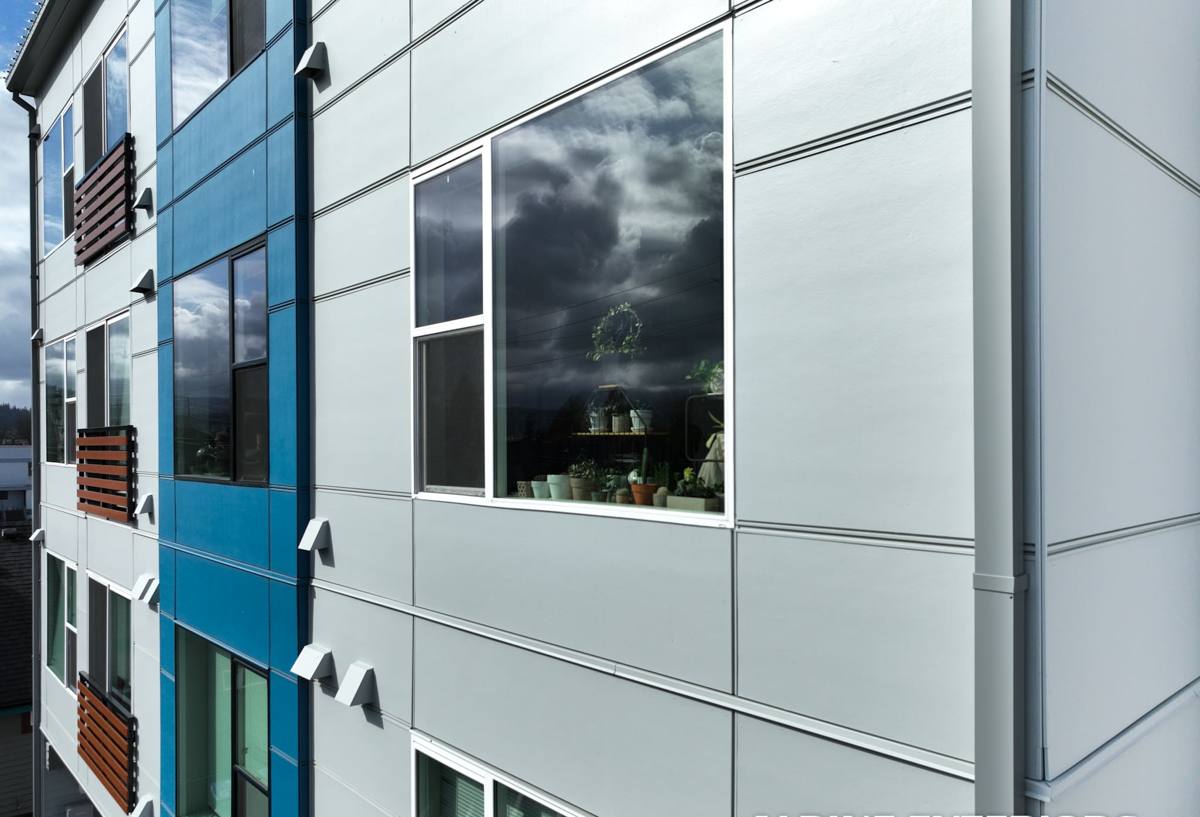
When a repair does call for replacing sections of siding, the material you use for that patch matters as much as the workmanship. This is where our position as a James Hardie-only installer comes into play, even on repair work. We install James Hardie fiber cement exclusively — we don't stock or install vinyl, LP SmartSide, Cemplank, Allura, primed spruce, or cedar, because each of those comes with trade-offs we're not willing to put our name behind, especially in a climate like this one.
Wood and wood-composite products are the most vulnerable to the moisture and moss conditions common in Cordata — they're organic materials in a climate that stays damp for long stretches, which is exactly the combination that shortens their lifespan. Vinyl handles moisture fine but expands and contracts significantly with temperature swings and can crack or warp under UV exposure and impact over time. Other fiber cement brands vary in their manufacturing consistency, factory finish quality, and warranty structure. James Hardie's HZ5 product line is engineered specifically for climates like Western Washington's — it's non-combustible, dimensionally stable, and finished with a factory-applied ColorPlus coating that resists the fading and peeling that repainted siding in this climate tends to suffer from.
If your existing siding is a material we don't install and a repair section needs full replacement, we'll walk you through what a matched patch looks like versus what a broader transition to Hardie in that area would cost and how it would perform going forward. We won't pressure a full re-side when a proper repair will do — but we also won't quietly patch a wall with a product we don't believe holds up here.
Our Siding Repair Process
- Inspection. We look at the damaged area and the surrounding wall, checking for flashing, drainage, and moisture issues beyond what's visible on the surface.
- Diagnosis and honest options. We explain what caused the damage, whether it's isolated or systemic, and lay out repair versus replacement options with real trade-offs — not just the most expensive one.
- Written scope and estimate. You know exactly what's being done, what material is being used, and what it costs before work starts.
- Correct removal and prep. Damaged material comes out back to sound substrate; underlying flashing and water-resistive barrier get inspected and corrected as needed.
- Repair or replacement, done to installation spec. Fastening, clearances, and flashing details are handled the same way they would be on a new installation — not shortcut because it's "just a repair."
- Final walkthrough. We show you what was done and why, so you understand the fix, not just see a patched wall.
What to Look for in a Siding Repair Contractor in Cordata
Siding repair is easy to do poorly and hard to verify after the fact, since a bad repair often looks fine for a season or two before the same damage resurfaces. A few things worth checking before you hire anyone for repair work in this area:
- Do they explain what caused the damage, or just quote a price to patch what's visible?
- Will they check flashing and the water-resistive barrier behind damaged sections, not just replace the surface board?
- Are they familiar with how this specific climate — moss, driving rain, salt air — behaves against siding, versus a generic national playbook?
- Do they give you a straight answer on repair versus replacement, even when replacement is the more expensive recommendation?
- Are they licensed, insured, and willing to put the scope of work in writing?
A crew that regularly works Cordata and the surrounding Bellingham neighborhoods has already seen how local exposure — shaded lots, salt air, prevailing storm direction — shows up differently on different sides of the same house, and that experience shows in where they look first and what they flag before it becomes a bigger problem.
Keeping Repaired Siding in Good Shape Afterward
- Rinse off moss and algae buildup before it re-establishes, especially on shaded north and west walls
- Keep gutters clear so water isn't overflowing directly onto siding below
- Maintain clearance between siding and grade, mulch beds, or hardscaping so splash-back and standing moisture stay away from the bottom edge
- Reseal or repaint promptly if you notice finish failure starting, rather than waiting for it to spread
- Have any new soft spots checked early — small repairs now are almost always cheaper than the wall-section repairs they turn into if ignored
If you're seeing soft spots, gapping, or persistent moss on your Cordata home's siding, we're happy to take a look and give you a straight assessment — what's actually wrong, what it'll take to fix it right, and what it would cost. The estimate is free, and there's no pressure either way.