 Bellingham Exterior
 Building Decks That Hold Up in Blaine
Blaine sits right on the water at the northern edge of Whatcom County, and that location shapes what a deck actually needs to survive here. Homes along Semiahmoo Bay and Drayton Harbor deal with salt-laden air moving off the water, wind-driven rain that gets up under railings and ledger boards, and a wet season that stretches long enough to grow moss on almost any horizontal surface that isn't actively shedding water. A deck built to a generic spec sheet will show its age fast in this environment. A deck built for Blaine's conditions won't.
We install custom decks throughout the Bellingham and Whatcom County area, and Blaine's coastal exposure is one of the more demanding micro-climates we build for. This page walks through what that means in practice — the materials, the fasteners, the framing details, and the maintenance realities specific to a deck going up near the water in this part of the county.
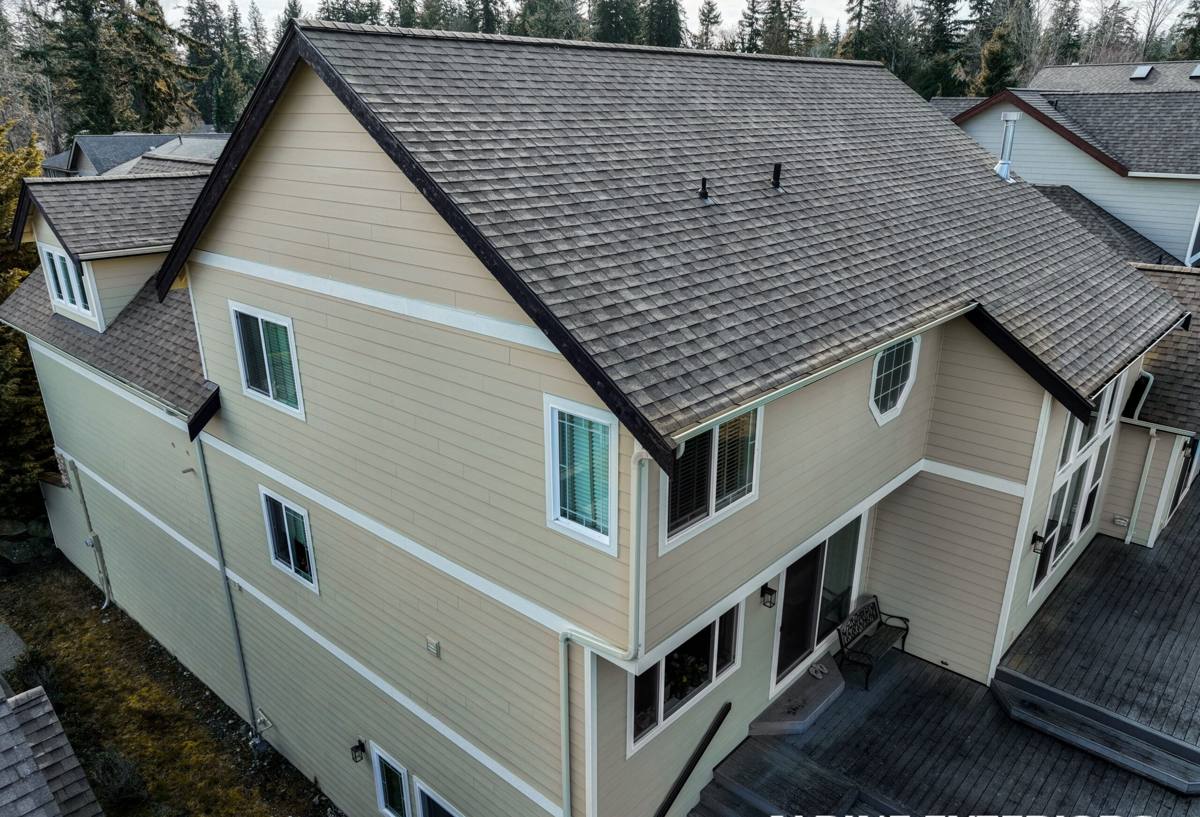
What Salt Air and Driving Rain Actually Do to a Deck
Two separate problems show up on coastal decks, and homeowners often lump them together when they're really different repair headaches.
Salt Air and Corrosion
Airborne salt accelerates corrosion on anything metal — fasteners, joist hangers, railing brackets, post bases. A standard galvanized screw that's fine fifteen miles inland can start showing rust streaks within a couple seasons this close to the water. Once a fastener corrodes, it loses holding strength long before it looks obviously bad, which is why hardware selection matters more here than almost anywhere else in the build.
Driving Rain and Trapped Moisture
Wind off the bay doesn't just fall straight down — it pushes rain sideways, up under rail caps, into the gap where decking meets the house, and into any joint that isn't properly flashed or sloped. Moisture that gets trapped instead of shedding is what causes rot in framing, delamination in composite decking, and the black-green film of moss and algae that spreads across shaded boards during the long wet stretch from fall through spring.
Choosing the Right Decking Material for This Site
There's no single "best" decking material for every Blaine property — it depends on sun exposure, how close you are to the water, and how much upkeep you want to do. Here's how the common options actually perform in this climate.
| Material | Moisture Behavior | Moss/Algae Resistance | Maintenance |
|---|---|---|---|
| Pressure-treated wood | Absorbs and releases moisture; needs sealing to control cupping | Low — moss takes hold in shaded, damp spots without regular cleaning | Annual cleaning and re-sealing recommended |
| Cedar | Naturally moisture-resistant but still needs finish maintained | Moderate — some natural resistance, still needs cleaning in shade | Periodic cleaning and refinishing |
| Capped composite | Doesn't absorb water into the core; won't rot | Moderate to good depending on board texture — still needs periodic washing | Occasional washing; no sealing or staining |
| PVC decking | Fully moisture-proof, won't swell or rot | Good, though surface film can build up in shaded areas over time | Occasional washing |
For decks with heavy shade or close proximity to the water, we lean toward capped composite or PVC because the core material simply can't absorb the moisture that drives rot and cupping in wood. For sunnier, more exposed sites where the owner doesn't mind an annual maintenance routine, wood remains a solid, less expensive option — as long as it's finished and re-sealed on schedule.
Framing and Substructure: The Part You Don't See
Decking gets all the attention, but the framing underneath is what determines whether a deck lasts ten years or thirty, and it's where coastal conditions do the most damage if it's overlooked.
- Ledger boards attached to the house need proper flashing so rain can't work its way behind the board and into the rim joist — this is one of the most common failure points on older decks we're asked to repair or replace.
- Joist tops should be protected with a self-adhering flashing tape, not left as bare cut lumber, so standing water doesn't sit directly on exposed end grain.
- Post bases need to sit above grade and off standing water, with a base connector rated for exterior, corrosion-prone environments.
- Airflow underneath the deck matters — a structure built too close to grade or boxed in without ventilation traps humidity and speeds up both rot and moss growth.
Fasteners and Hardware: Where Corner-Cutting Shows Up First
This is the detail that separates a deck that ages gracefully from one that needs hardware replaced within a few years. In a salt-air environment, we treat fastener and connector selection as a structural decision, not a cosmetic one. Stainless steel fasteners cost more up front than standard coated screws, but on a property this close to the water, the price difference is minor compared to the labor cost of chasing corroded hardware later. Joist hangers, post bases, and structural screws all get the same consideration — it doesn't help to build a solid frame and then attach it with hardware that's the weak link.
Design Choices That Fight Moss and Standing Water
Beyond materials and hardware, the way a deck is designed and sloped has a direct effect on how much moss and algae you'll fight over time.
Slope and Drainage
Every deck surface should have a slight slope away from the house so water sheds instead of pooling. Flat or reverse-sloped decking holds water in place, and standing water is exactly what moss and algae need to establish.
Board Spacing and Gapping
Correct gapping between boards lets water drain through rather than sitting on top. Boards installed too tight — a common shortcut — trap moisture between them and accelerate both wood rot and the buildup that leads to slippery, moss-covered surfaces.
Rail and Post Detailing
Rail caps and post tops are common spots for water to sit if they aren't sloped or capped correctly. We detail these connections so rain sheds off rather than pooling at the joints, which is exactly where driving rain off the water tends to concentrate.
How We Approach a Blaine Deck Project
Our process is the same disciplined approach on every deck, adjusted for what a specific site needs:
- Site visit and assessment — we look at sun exposure, wind direction relative to the water, existing drainage, and any signs of moss or moisture damage on the current structure if there is one.
- Material and layout discussion — we walk through decking options, framing plan, and railing style based on your budget and how much maintenance you want to take on long-term.
- Permitting — deck projects in Whatcom County and the City of Blaine typically require a permit depending on size and height; we handle that process as part of the job.
- Build — framing first, with flashing and hardware detailed for coastal exposure, then decking, then railings and any finishing details.
- Final walkthrough — we go over the finished deck with you, including what maintenance it needs and on what schedule.
Maintaining a Deck Once It's Built
Even the right materials and detailing don't eliminate maintenance — they reduce it and make it manageable. A simple seasonal routine goes a long way in this climate:
- Sweep debris off the deck regularly, especially in fall when leaves and needles trap moisture against the surface.
- Wash down the deck at least once or twice a year to remove the algae and moss film that builds up during the wet months, focusing on shaded areas.
- Check fastener heads and railing connections annually for early signs of corrosion or loosening.
- For wood decking, plan on re-sealing on the schedule recommended for the product — skipping this is the single biggest cause of premature wood deck failure we see.
- Keep gutters and downspouts near the deck clear so runoff isn't directed onto or under the structure.
Why Hiring a Crew That Already Works Blaine Matters
A deck built by a crew that only works inland doesn't always account for what a property this close to the water actually experiences — the salt exposure, the wind-driven rain patterns, the longer moss season. We work throughout Whatcom County, including Blaine and the surrounding coastal areas, and we build with those conditions in mind by default, not as an upsell. That means the right fastener spec, the right flashing detail, and a material recommendation based on your specific site rather than a one-size-fits-all package.
If you're planning a new deck or replacing one that's showing its age, we're happy to take a look and put together a straightforward, no-pressure estimate. There's a form below — tell us a bit about your project and we'll go from there.