 Bellingham Exterior
 Windows Built for Fairhaven's Waterfront Conditions
Fairhaven sits close to Bellingham Bay, and that proximity to the water shapes everything about how a window performs here. Salt-laden air moves through the neighborhood on a regular basis, wind-driven rain hits window assemblies at angles that flat-out don't happen further inland, and the long, damp stretch of fall through spring keeps moss and algae active on anything that stays wet. A window that would hold up fine in a drier part of Whatcom County can start showing problems in Fairhaven years earlier if it wasn't specified and installed with those conditions in mind.
We work on homes throughout Bellingham, but Fairhaven's mix of older housing stock — many with original wood windows or aging replacements from decades past — means the work here often involves as much diagnosis as it does installation. Before we talk about products, we look at how the existing openings are performing, where water has been getting in, and what the framing underneath actually looks like.
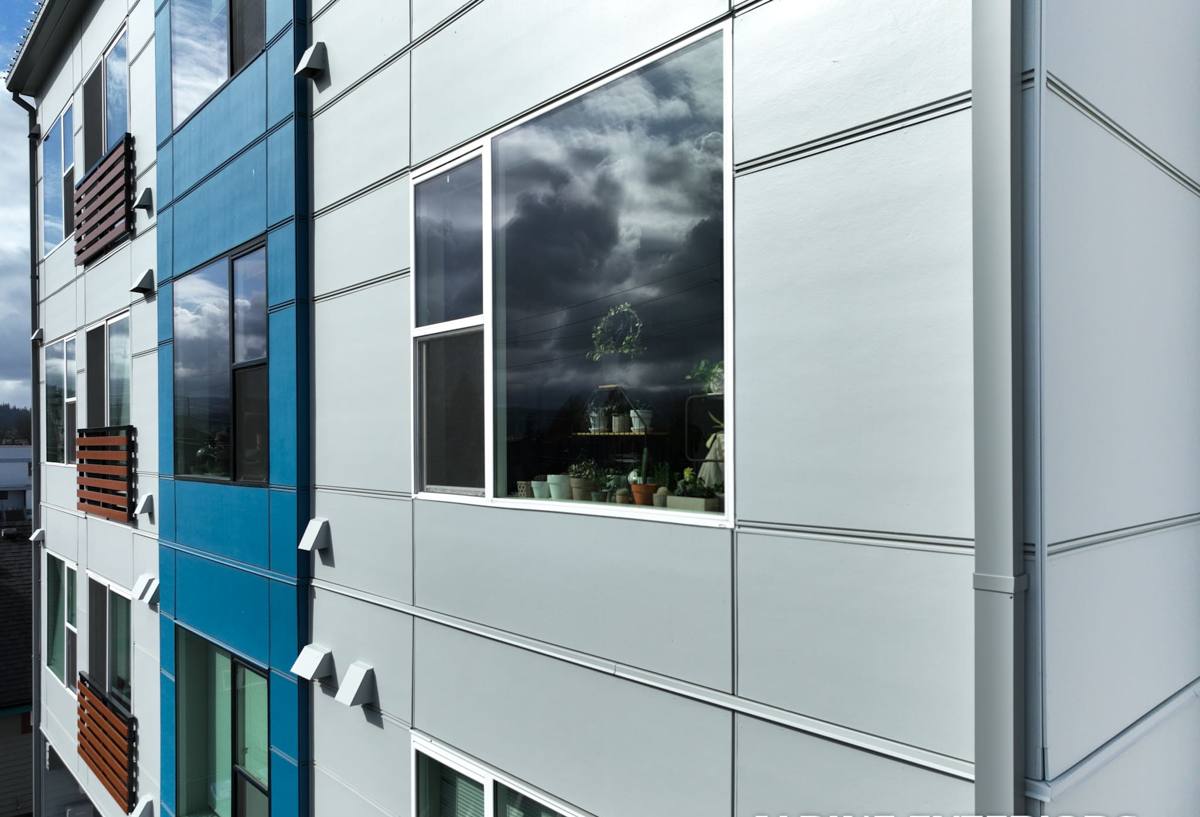
What Fairhaven's Climate Actually Does to a Window
Salt Air and Metal Hardware
Salt in the air accelerates corrosion on exposed metal — hinges, cranks, screws, and lesser-grade cladding fasteners. On homes closer to the water, we see pitting and stiff hardware on windows that are otherwise structurally sound. It's one reason hardware quality and finish matter as much as the glass package when we're speccing a replacement for this area.
Driving Rain and Air-Sealing
Wind off the bay doesn't just fall — it pushes rain sideways into wall assemblies. That means flashing details and the seal between the window frame and the rough opening carry more of the performance burden here than they would on a sheltered inland lot. A window that's a good product but poorly flashed will leak in Fairhaven weather even if it never would have in a calmer location.
Moss, Algae, and Sustained Moisture
Bellingham's long wet season keeps north- and shade-facing surfaces damp for extended stretches. Moss and algae growth on sills, cladding, and trim isn't just cosmetic — sustained moisture against wood trim or a compromised sill is what eventually leads to rot. Materials and details that shed water quickly and dry out between rain events hold up better over time than ones that trap moisture.
What a Correct Custom Window Job Involves
"Custom" in Fairhaven usually means one of two things: matching an unusual or historic opening size, or matching the look of an older home's original window profile while upgrading the performance underneath. Both require more attention than a standard same-size swap.
- Accurate measurement of the existing opening, including checking for square and level — older openings often aren't either
- Inspection of the rough opening and sill for hidden rot or water damage before any new unit goes in
- Selecting a frame material and finish suited to the exposure of that specific wall (south/west-facing walls near the water take more weather than sheltered ones)
- Proper flashing integration with the existing siding and weather-resistive barrier, not just caulk around the edges
- Correct shimming and fastening so the window operates smoothly and doesn't rack over time
- Interior and exterior trim work that matches the home's existing style, especially important on Fairhaven's older and historic-character homes
- A final air- and water-seal check before we consider the job done
Skipping any one of these steps is usually where problems start. A window can be a premium product and still fail early if the flashing or sealing around it was rushed.
Matching Fairhaven's Older Home Character
A lot of Fairhaven housing predates modern window standards — narrower sightlines, taller proportions, divided-lite patterns, or trim details that don't match anything off the shelf. When a homeowner wants to preserve that look while gaining modern performance, we treat it as a matching exercise: replicate the sightlines and proportions the original window had, choose a grille pattern that reads correctly from the street, and pick exterior colors and trim profiles that don't clash with the rest of the house. This is where "custom" earns its name — it's not about upselling extra features, it's about getting the size, shape, and appearance right for a house that wasn't built to modern standard dimensions.
Frame Material Trade-Offs for This Location
There's no single "best" frame material for every Fairhaven home — the right choice depends on exposure, budget, and how much maintenance a homeowner wants to take on.
| Material | Salt Air / Coastal Behavior | Maintenance | Best Fit |
|---|---|---|---|
| Vinyl | Doesn't corrode; some color and finish grades handle UV and salt exposure better than others | Low — occasional cleaning | Budget-conscious replacements, rear or side elevations |
| Fiberglass | Very stable dimensionally; holds up well to temperature swings and coastal exposure | Low | Higher-exposure walls, homeowners wanting long-term durability |
| Wood (clad exterior) | Interior wood look with an exterior shell that resists the weather; exposed wood sills need upkeep | Moderate — sills and any exposed wood need periodic attention | Historic-character homes where interior wood look matters |
| Aluminum | Prone to corrosion pitting in salt air unless properly finished; thermally less efficient | Moderate to high | Limited use; we're selective about where we recommend it here |
We'll walk through this with you against your specific elevation and budget rather than defaulting to one material for every job — the same house can reasonably use a different frame material on its water-facing side than on a sheltered one.
Glass and Weatherproofing Details That Matter Here
Beyond the frame, a few details make a real difference in a neighborhood with Fairhaven's exposure:
- Dual or triple-pane glazing for insulation value against Bellingham's damp, cool winters
- Low-E coatings to manage solar heat gain on south- and west-facing openings without sacrificing natural light
- Warm-edge spacers to reduce condensation risk at the glass edge during cold, humid stretches
- Corrosion-resistant hardware — stainless or coated components hold up better against salt air than standard-grade hardware
- Sill pan flashing to direct any water that does get past the exterior seal back out, rather than into the wall
Our Process, Start to Finish
1. On-Site Assessment
We walk the exterior with you, look at each opening, and check for signs of past water intrusion, rot, or settling. For older homes we'll also note anything about the original trim or sightlines worth preserving.
2. Honest Recommendation
We'll tell you where a standard product fits and where a true custom size or profile is actually needed — custom costs more, so we don't recommend it where it isn't warranted.
3. Measurement and Ordering
Precise measurements go out to the manufacturer, with lead times communicated up front so there are no surprises.
4. Removal and Opening Prep
We remove the old unit carefully, inspect the framing and sill underneath, and address any rot or damage before the new window goes in — not after.
5. Installation and Flashing
The new window is set, shimmed, flashed, and sealed to shed water correctly given that wall's exposure to wind and rain off the bay.
6. Trim, Cleanup, and Walkthrough
Interior and exterior trim is finished to match the home, the site is cleaned up, and we walk the completed work with you before calling the job done.
Why Local Experience in Fairhaven Matters
A crew that hasn't worked this specific area can miss things that aren't obvious from a spec sheet: which elevations in Fairhaven actually take the worst of the wind-driven rain, how quickly moss establishes on north-facing trim here versus elsewhere in Whatcom County, or how a given manufacturer's finish has actually held up on homes a few blocks away over several wet seasons. That kind of pattern recognition only comes from doing the work in this neighborhood, not from a general product catalog. It also means we're not guessing about permitting or working around the tighter lots and older construction that show up throughout Fairhaven.
Signs Your Fairhaven Home's Windows Need Attention
- Fogging or moisture between panes (a sign the seal has failed)
- Drafts you can feel even with the window fully latched
- Wood trim or sills that feel soft, or show paint that keeps failing in the same spot
- Visible moss or persistent green staining on sills or exterior trim
- Windows that are hard to open, close, or lock — often a sign of frame movement or swelling
- Higher heating bills without another clear explanation
If you're seeing one or more of these, it's worth having the openings looked at before the underlying framing takes on more damage — catching it early is almost always less costly than repairing rot later.
If you're in Fairhaven and dealing with drafty, foggy, or aging windows — or planning a custom match for an older home — we're happy to take a look and give you a straightforward, no-pressure estimate. Use the form below to get started.