 Bellingham Exterior
 Windows Built for the Puget Neighborhood's Weather
Puget sits close enough to the water that homes here take a different kind of beating than houses further inland in Whatcom County. Salt-laden air corrodes hardware and dulls finishes faster than it does even a few miles away. Wind-driven rain off the bay doesn't just fall straight down — it gets pushed sideways into window assemblies, testing every seal and flashing detail. And the long gray stretch of fall and winter that settles over Bellingham keeps trim, sills, and frame edges damp for weeks at a time, which is exactly the kind of environment moss and mildew need to take hold.
None of that means windows in Puget need to be exotic or overbuilt. It means they need to be specified and installed with this specific exposure in mind — correct materials, correct flashing sequence, and hardware that won't seize up or streak with corrosion after a few wet seasons. That's the difference between a window that looks good for two years and one that performs for twenty.
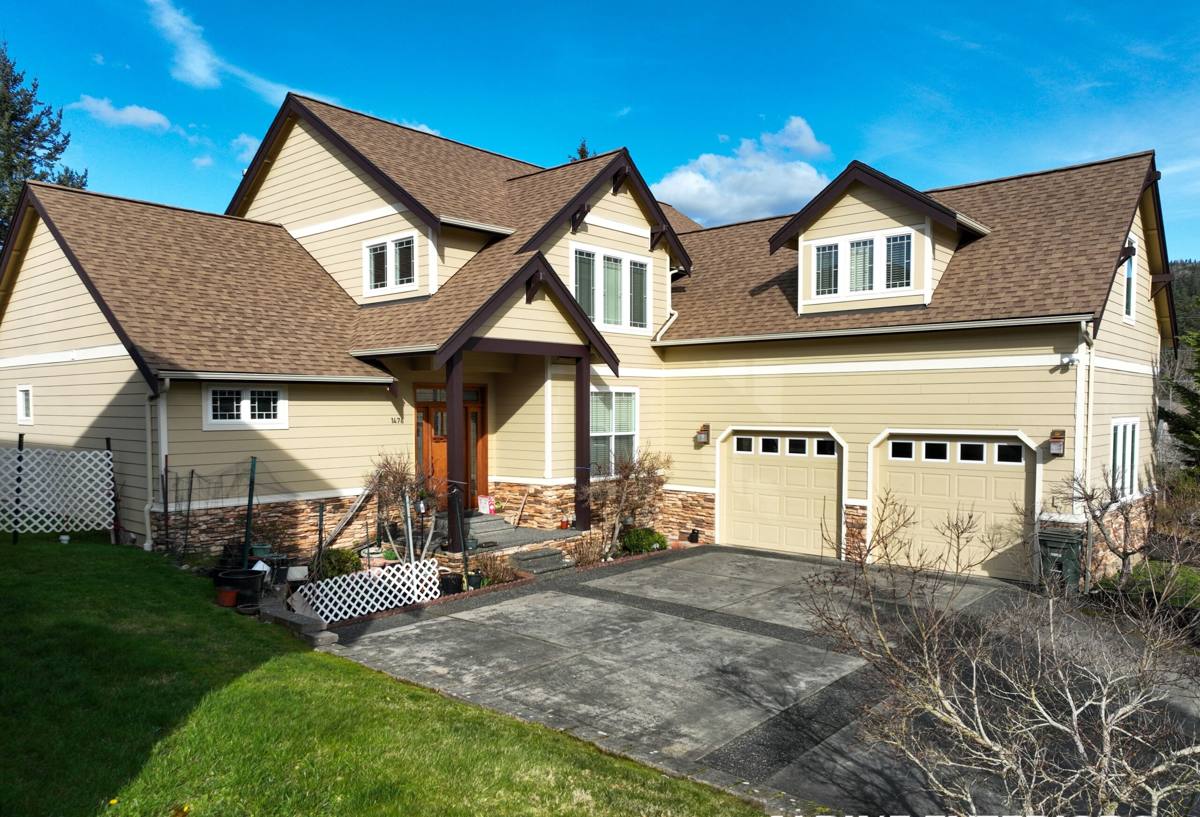
What Salt Air and Driving Rain Actually Do to a Window
It helps to understand the failure modes before talking about the fix.
Salt Air
Airborne salt is corrosive to unprotected or lower-grade metal components — screws, hinges, balance systems, and cheaper cladding finishes. Over time it can pit metal, discolor finishes, and make moving hardware (locks, cranks, tilt-latches) stiff or gritty. Homes on the windward side of Puget, with a more open exposure toward the water, tend to see this show up faster than homes tucked behind other structures or tree cover.
Wind-Driven Rain
A window doesn't have to be defective to leak — it just has to be installed without accounting for rain that's moving horizontally instead of falling straight. That means the flashing has to shed water forward and down at every layer, not just rely on caulk at the trim. Caulk is a backup, not a strategy. Most water intrusion problems we find at replacement time trace back to house-wrap and flashing details that were never lapped correctly in the first place, not to the window unit itself.
Moss and Prolonged Moisture
Bellingham's moss season is long because the conditions for it — cool temperatures, low sun angle, and moisture that doesn't fully dry out between rain events — stick around for months. Wood sills, exterior trim, and any horizontal ledge on a window assembly are where moss and algae get a foothold first. Once established, moss holds moisture against the material underneath it, which accelerates rot in wood components and can stain vinyl or fiber-cement trim.
What a Correct Installation Looks Like Here
The window unit matters, but installation quality is what determines whether a Puget-area home stays dry. A correct job includes:
- Removing the old unit and inspecting the rough opening and sheathing for hidden rot or prior water damage before anything new goes in
- Installing or repairing house-wrap so it laps correctly with the window's flashing — water always moving down and out, never trapped behind a seam
- Sill pan flashing at the base of every opening, so any water that does get past the primary seal has somewhere to drain instead of sitting on the sill
- Corrosion-resistant fasteners and hardware appropriate for a near-coastal exposure, not generic inland-grade hardware
- Proper shimming and squaring so the sash operates smoothly and the weatherstripping seals evenly on all four sides
- Sealed and back-caulked exterior trim, with attention to horizontal surfaces where moss and standing water tend to collect
- A final operational check — every window opens, closes, and locks the way it should before we call the job done
Choosing Materials That Hold Up in This Exposure
There isn't one "right" window material for every home — it depends on the home's style, budget, and how exposed the specific elevation is to wind and salt air. Here's how the common options generally compare for a Puget-area installation:
| Material | Coastal/Salt-Air Performance | Maintenance | Typical Fit |
|---|---|---|---|
| Vinyl | Good — won't corrode or rust, holds up well to salt exposure | Low — occasional cleaning | Most homes, strong value |
| Fiberglass | Very good — dimensionally stable, resists warping in wet/dry cycles | Low | Homes wanting a slimmer profile or paintable finish |
| Wood (clad exterior) | Depends heavily on cladding and installation quality; exposed wood needs more upkeep here | Higher — sills and trim need monitoring for moss and rot | Historic or traditional-style homes where the look matters |
| Aluminum | Fair — needs a quality finish to resist pitting from salt air over time | Moderate | Modern designs, larger openings |
Hardware finish matters as much as frame material. On a home with real water exposure, we steer clients toward hardware and cladding finishes rated for coastal or marine-grade conditions rather than standard inland hardware — it costs a bit more up front and saves the sticky-lock, corroded-hinge problem down the road.
Cost Factors for Puget-Area Window Projects
Every project is different, and we'll always give you a firm number after seeing the home, but the main things that move the price are:
| Factor | Why It Matters |
|---|---|
| Number and size of openings | More or larger windows means more material and labor |
| Existing water damage | Rot found in the rough opening or sheathing during removal adds repair scope |
| Material and glass package | Vinyl vs. fiberglass vs. clad wood, plus glass options for sound and heat performance |
| Exposure level | A wide-open, wind-facing elevation may call for upgraded flashing and hardware over a sheltered wall |
| Trim and finish work | Matching existing exterior trim profiles adds time versus a simple flush replacement |
Broadly, straightforward vinyl replacement windows sit at the lower end of the range, with fiberglass and clad-wood options running higher, and any hidden repair work adding to the total once we open the wall.
Our Process for a Puget Window Job
We keep the process the same regardless of how many windows are involved, because skipping steps is where leaks come from.
- Walkthrough and assessment. We look at each opening, note the home's specific exposure to wind and water, and check for any visible signs of past moisture problems.
- Recommendation and quote. We talk through material and glass options that fit the home and the budget, and give you a clear, itemized number — no pressure, no upsell for its own sake.
- Removal and inspection. Old units come out, and we check the rough opening and sheathing before anything new goes in. If we find hidden damage, we tell you before proceeding, not after.
- Flashing and installation. Sill pans, house-wrap integration, and the window unit go in following a sequence built for wind-driven rain, not just a straight-down-the-checklist install.
- Trim, finish, and cleanup. Exterior trim is sealed and finished, hardware is checked, and the site is cleaned up before we leave.
- Final walkthrough. We test every window with you present and answer any questions about care going forward.
A Quick Homeowner Checklist
If you're trying to decide whether it's time to replace windows on a Puget-area home, look for:
- Visible corrosion, pitting, or stiff hardware on locks, cranks, or hinges
- Moss or dark staining building up on sills or horizontal trim
- Drafts or water staining on the interior wall or sill during storms
- Fogging or condensation between panes on double- or triple-pane units, which signals a failed seal
- Wood sills or trim that feel soft, spongy, or show visible rot
- Windows that are difficult to open, close, or lock properly
Why Local Experience in Puget Matters
A crew that mostly works inland jobs doesn't necessarily think about salt exposure or wind-driven rain the same way a crew that regularly works near-water Bellingham properties does. It's not a difference in skill — it's a difference in habit. Flashing details that would be fine on a sheltered inland home aren't always enough on a more exposed Puget elevation, and hardware that's fine 10 miles from the water can start corroding within a couple of seasons closer to it. Working this area regularly means we've seen what actually fails here over time, not just what the manufacturer's spec sheet assumes.
We also know how Whatcom County's weather patterns move through the year, which affects scheduling — there are better and worse windows of time to have openings exposed during a replacement, and we plan around that rather than around a generic install calendar.
Ready to Talk About Your Windows?
If you're noticing drafts, sticking hardware, moss on the sills, or windows that are simply past their service life, we're happy to take a look and give you an honest assessment — no pressure, no obligation. Use the form below to request a free estimate, and we'll talk through what actually makes sense for your home.