 Bellingham Exterior
 Decks Built for Ferndale's Weather, Not Just Ferndale's Yards
Ferndale sits close enough to the water that salt-laden air is a real factor in how a deck ages, not just a talking point. Add in the driving rain that rolls through Whatcom County most of the year and the long stretch of gray, damp months when moss and algae get a head start on any exposed wood surface, and you've got a climate that's genuinely harder on outdoor structures than most of the country deals with. A deck built the same way you'd build one in a dry inland climate will show its age here faster — soft spots, rust streaks at the fasteners, slick green boards by late winter, and a finish that needs recoating far more often than the can label suggests.
That's not a reason to avoid building a deck in Ferndale. It's a reason to build it correctly the first time, with materials, hardware, and drainage details chosen specifically for this climate. We work throughout the Bellingham area and know what holds up here versus what looks fine on the showroom floor and struggles by year three.
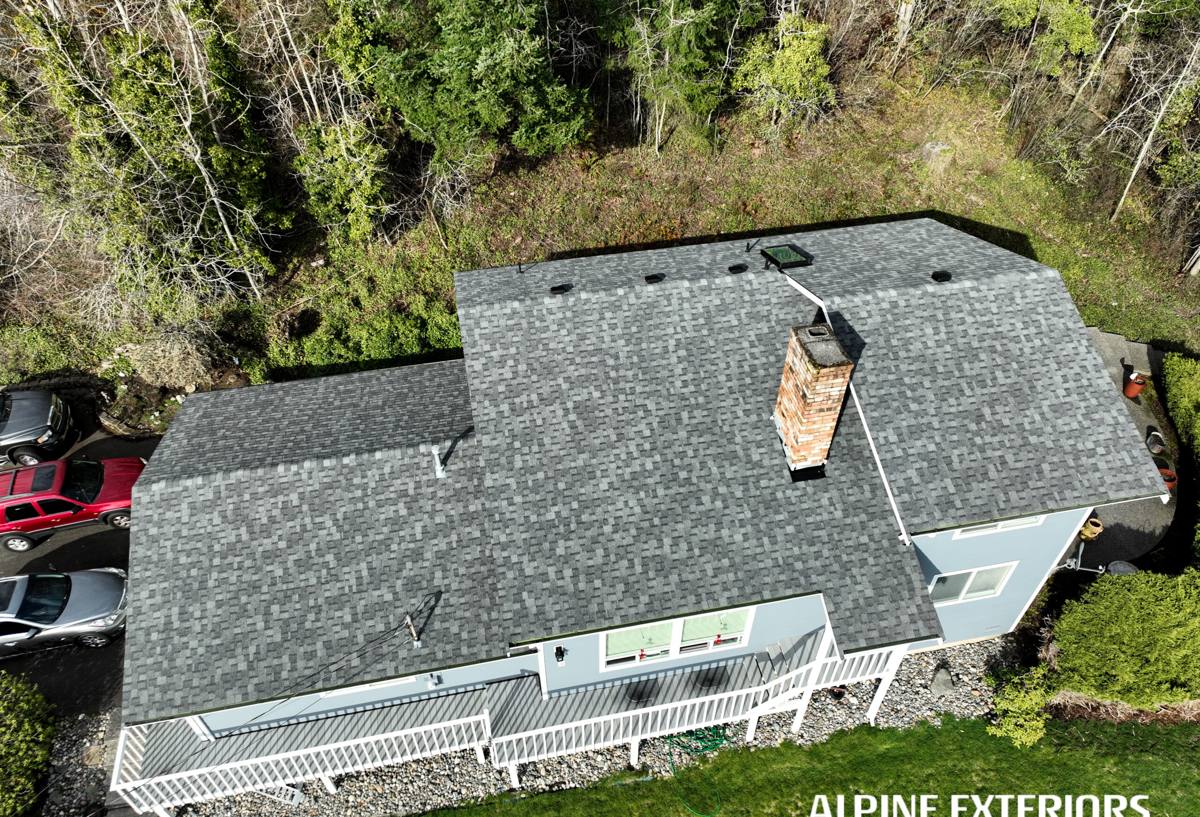
What Ferndale's Climate Actually Does to a Deck
Salt Air and Metal Hardware
Ferndale's proximity to the Salish Sea means airborne salt reaches structures even a few miles inland, especially on breezy days. Salt air accelerates corrosion in anything but the right grade of fastener or connector. Standard electro-galvanized screws and joist hangers can start showing rust bleed into the wood within a couple of seasons in a coastal-influenced climate — not because the product is defective, but because it was never rated for this kind of exposure.
Driving Rain and Water Intrusion
Whatcom County doesn't just get rain — it gets rain that comes in sideways during winter storms, which pushes moisture into places a calmer, straight-down rain never would: behind ledger boards, under poorly lapped flashing, into end grain that isn't sealed. A deck's worst enemy usually isn't the water that lands on top of it; it's the water that gets trapped underneath or inside a joint and never fully dries out between storms.
The Long Moss Season
Because this region stays cool and damp for so much of the year, moss and algae get a long uninterrupted run on any horizontal wood surface that doesn't drain and dry quickly. Beyond looking bad, a mossy deck surface is a genuine slip hazard, and moss that's allowed to sit holds moisture directly against the wood, which speeds up rot in exactly the boards that take the most foot traffic.
What a Correctly Built Ferndale Deck Requires
None of this means a deck in Ferndale needs to be over-engineered — it means a handful of details have to be right that don't matter nearly as much in a drier climate.
- Ledger flashing that actually sheds water away from the house band board, not just a bead of caulk behind the ledger
- Fasteners and structural hardware rated for coastal or high-moisture exposure, not the cheapest galvanized option at the hardware store
- Board spacing and substructure slope that lets water drain fast instead of pooling between boards
- Ground-contact-rated framing lumber wherever a post, beam, or joist sits close to grade or a damp crawlspace
- A decking surface — whether wood or composite — chosen with this area's moss and algae exposure in mind, not just its appearance
Decking Material Options for a Ferndale Climate
There isn't one "correct" decking material for this area — there's a set of honest trade-offs depending on how much maintenance you want to take on and what you're trying to get out of the deck. Here's how the common options actually perform in Whatcom County's conditions, not just on paper.
| Material | How It Handles Moss/Algae | Maintenance Needed | Relative Upfront Cost |
|---|---|---|---|
| Pressure-treated lumber | Prone to moss buildup if not cleaned; needs sealing to resist it | Annual cleaning, periodic sealing/staining | Lowest |
| Cedar | Naturally more rot-resistant but still grows moss if left damp | Regular cleaning, periodic oil or stain to hold color and resist moisture | Moderate |
| Composite decking | Doesn't rot, but algae and moss can still grow on the surface film if it stays wet and shaded | Occasional washing; no sealing or staining ever needed | Higher |
Composite is popular here largely because it removes the sealing/staining cycle from the maintenance list — but it still needs to be washed off periodically in shaded, damp spots, and it's worth knowing that some composite products are more prone to surface algae than others depending on their finish. Cedar and pressure-treated lumber both perform well if you're willing to stay on top of cleaning and refinishing on a schedule; skip that schedule in this climate and either will show it within a season or two.
Our Standard on Hardware, Regardless of Decking Material
Whatever decking material a homeowner chooses, we don't cut corners on the structural side. Stainless steel or coated fasteners rated for coastal exposure, properly lapped flashing, and hot-dip galvanized structural connectors are our standard for anything we build in the Ferndale area — the decking surface is what you see, but the framing underneath is what determines whether the deck is still solid in fifteen years.
Substructure and Framing: What's Underneath Matters Most
A deck can have beautiful decking boards and still be a problem if the framing underneath wasn't built for this climate. Posts set in or near damp soil, joists without adequate airflow beneath them, and beams that were never rated for ground contact are the most common issues we find when we're called out to look at an aging or failing deck in this area. Good framing means posts on proper footings above grade, joists with enough clearance to dry out between rain events, and ground-contact-rated lumber anywhere moisture exposure is a given rather than an exception.
Drainage matters just as much below the deck as on top of it. If water collects and sits under a low deck instead of draining away from the house, that dampness works against the framing around the clock, not just during storms.
Moss, Algae, and Realistic Maintenance for This Area
We'd rather set honest expectations than sell a "maintenance-free" deck that isn't. Every deck in a Whatcom County climate needs some level of ongoing care — the difference is how much and how often.
- Sweep debris off the deck regularly, especially in fall, so leaves and needles don't trap moisture against the boards
- Clean visible moss and algae before it spreads — a stiff brush and a deck-safe cleaner is usually enough if you stay ahead of it
- Check and clear gaps between boards so water keeps draining instead of pooling
- Reseal or restain wood decking on the schedule the product actually requires in a wet climate, not the manufacturer's best-case interval
- Inspect fasteners and hardware yearly for rust bleed or loosening, especially near the ledger and stair connections
A deck that gets this level of basic upkeep in Ferndale's climate will consistently outlast one that doesn't, regardless of which material it's built from.
Our Process for a Ferndale Deck Build
Site Assessment
We start by looking at the actual site conditions — sun and shade exposure, how close the deck will sit to grade, drainage patterns around the house, and how much wind and rain exposure the location realistically gets. That assessment drives material and hardware decisions, not the other way around.
Permitting
Deck construction in Whatcom County and the City of Ferndale is generally subject to local permitting requirements, particularly for decks above a certain height or attached to the home. Requirements can vary by exact location and project scope, so we handle the permit process as part of the build rather than leaving it for the homeowner to sort out.
Build and Walkthrough
We build the framing to hold up to the conditions described above, install the decking material chosen for the project, and walk the finished deck with the homeowner before calling the job done — covering how it drains, what maintenance it'll need, and what to watch for over the first year.
Signs an Existing Ferndale Deck Needs Attention
If you already have a deck and are wondering whether it needs repair or full replacement, a few signs point toward one or the other.
- Soft or spongy decking boards — usually a sign of trapped moisture and early rot, often repairable if caught early
- Rust streaking around fasteners — points to hardware that wasn't rated for this climate; may be a hardware swap or a bigger issue depending on how long it's been happening
- Persistent moss that comes right back after cleaning — often a drainage or sun-exposure issue, not just a cleaning problem
- Wobble or movement at the ledger connection — a structural issue that should be looked at promptly, not cosmetic
- Gaps or separation at the flashing behind the ledger — a common entry point for water intrusion into the house band board
Some of these are straightforward repairs; others mean the deck was never flashed or fastened correctly for this climate and a rebuild is the more honest recommendation. We'll tell you which is which rather than defaulting to the more expensive answer.
Why a Local Bellingham Crew Makes a Difference in Ferndale
A contractor who mostly builds decks in a drier, inland climate is going to make different default choices than one who works Ferndale and the rest of Whatcom County regularly — not out of carelessness, but because they haven't watched their own past work age in this specific mix of salt air, driving rain, and moss. We have. That's why our defaults on flashing, fastener grade, and drainage detail are set for this climate rather than a national average, and why we're familiar with the local permitting process instead of relearning it project by project. Working close to home also means we're not far away if a question comes up after the project's done.
Get a Free Estimate for Your Ferndale Deck Project
Whether you're planning a new deck built to hold up to Whatcom County's weather or want an honest look at whether an existing deck needs repair or replacement, we're glad to come take a look. Use the form below to request a free, no-pressure estimate.