 Bellingham Exterior
 Why South Hill Decks Wear Out Faster Than the Manual Says
South Hill sits above Bellingham Bay with a mix of older homes and newer builds tucked into wooded, sloped lots. That combination — salt-tinged air drifting up from the water, driving rain off the Sound, and heavy tree cover on many of the neighborhood's lots — is a tough environment for an exterior deck. Add in Whatcom County's long, gray moss season, and even a well-built deck starts showing wear years before a homeowner in a drier climate would expect it.
None of this means a deck is doomed. It means the repair has to account for how South Hill actually behaves: shaded north sides that never fully dry out, hillside drainage that dumps extra water at the base of support posts, and salt-laden moisture that speeds up corrosion on fasteners and hardware. A repair that ignores those factors will look fine for a season and fail again in the same spot.
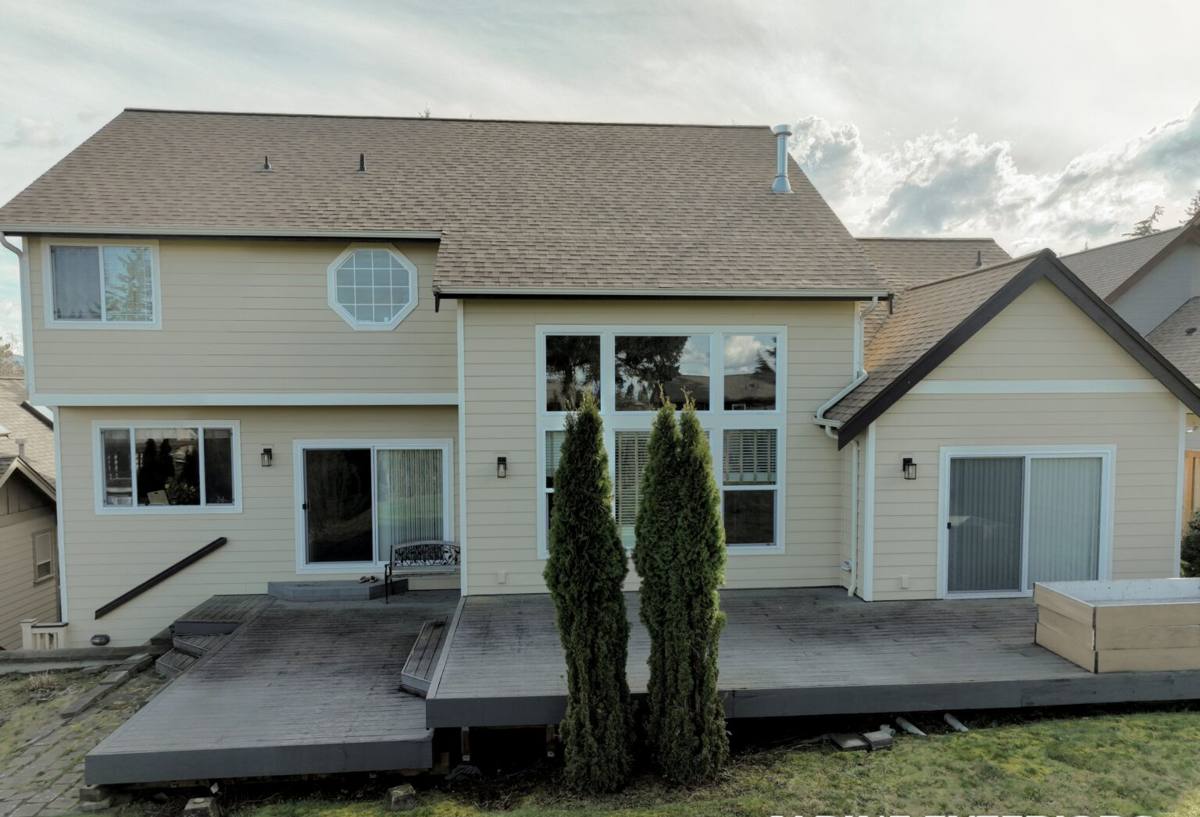
Signs a Deck Needs Repair, Not Just a Wash
Soft or Spongy Boards
If a decking board gives slightly underfoot or feels damp to the touch even on a dry day, moisture has gotten into the wood fiber. This is one of the most common calls we get from South Hill homes with older cedar or fir decking — the boards look fine from a few feet away but are already losing structural integrity.
Rail and Post Wobble
A railing that shifts when you lean on it is rarely a railing problem — it's usually a sign that the post base or the blocking behind it has rotted. This is a safety issue, not a cosmetic one, and it should not wait for a full deck rebuild to get addressed.
Dark Staining, Moss, or a Persistent Musty Smell
Green-black staining along board seams or around post bases is usually moss and algae growth feeding on trapped moisture. A musty smell coming up through the boards often means moisture is sitting underneath the deck surface where it can't evaporate — a classic problem on shaded South Hill lots.
Gaps or Rust at the Ledger Board
The ledger board — where the deck attaches to the house — is the single most important structural connection on most decks. Rust streaks, a widening gap between the ledger and the siding, or flashing that's pulled away are early warnings that deserve prompt attention.
What an Honest Deck Repair Actually Involves
A real repair starts underneath the deck, not on top of it. Anyone can screw down a new board over rotten framing and have it look good for the photos. Doing it right means checking what's holding the deck up before deciding what needs to be replaced.
Structural Framing First
Joists, beams, and posts get checked for rot, checked for undersized or corroded fasteners, and checked for proper spacing. If the framing underneath a section is compromised, replacing the decking on top of it is a waste of the homeowner's money.
Ledger and Flashing
Where the deck meets the house, we look for proper flashing that sheds water away from the band board and siding. This is one of the most common failure points on older Bellingham-area decks, since flashing details were often skipped or done poorly on original builds.
Decking Boards and Fasteners
Individual rotten or cupped boards get pulled and replaced with matched material where possible. Fasteners matter more than most homeowners realize — the wrong screw or nail in a wet, coastal-influenced climate corrodes and streaks the wood within a few years.
Rails, Stairs, and Guard Posts
Post bases, stair stringers, and rail connections get the same structural scrutiny as the deck frame. These are the components most likely to cause an injury if they fail, so we don't treat them as an afterthought.
Problems We See Regularly on South Hill Decks
Every neighborhood has its own patterns, and South Hill's terrain and tree canopy create a fairly consistent set of issues:
- North- and east-facing decks that stay damp for days after a storm due to shade from mature trees
- Elevated decks on sloped lots where runoff collects around post footings instead of draining away
- Older cedar decking that has gone past the point where sanding and refinishing will help
- Ledger connections on homes built before current flashing standards were common practice
- Fasteners and hardware showing early corrosion from the area's damp, salt-influenced air
Choosing the Right Level of Repair
Not every deck problem calls for the same fix, and a good contractor will tell you when a smaller repair is genuinely enough — not upsell a full rebuild you don't need yet.
| Repair Type | What It Addresses | Typical Lifespan Added | Cost Factor |
|---|---|---|---|
| Spot board replacement | A handful of rotten or cupped boards; framing is sound | 5-10 years | Lowest |
| Structural framing repair | Rotten joists, beams, or post bases beneath sound decking | 10-15+ years | Moderate |
| Ledger and flashing correction | Water intrusion at the house connection | Protects the whole structure long-term | Moderate |
| Full resurfacing | Widespread board wear with a still-solid frame | 15-25+ years (composite) or 10-15 (wood) | Higher |
| Full rebuild | Frame, decking, and rails all past reasonable repair | 25+ years | Highest |
Cost depends heavily on deck size, height off the ground, stair count, and whether framing needs to be opened up to inspect it properly. We'll always walk you through which category your deck actually falls into before recommending work.
How We Approach a South Hill Deck Repair
1. Inspection From the Ground Up
We check the frame from underneath before looking at the surface, since a deck that looks worn on top can be structurally fine, and one that looks fine on top can be hiding a rotten joist.
2. A Written Plan You Can Actually Use
You get a clear breakdown of what's failing, what we recommend fixing now versus monitoring, and why — not just a lump-sum number.
3. The Repair Itself
We match materials and fastener types to what the rest of the deck can handle, prioritize the structural items first, and don't cut corners on flashing or drainage details just because they're hidden from view once the job is done.
4. Sealing and Finish Work
Wood repairs get properly sealed or finished to match the existing deck as closely as possible. This step gets skipped by contractors in a hurry, and it's usually the reason a "repaired" deck starts failing again within a year or two.
Materials: Matching the Fix to the Climate
For wood decking, we look at how the existing material has held up before recommending a like-for-like replacement versus a switch to a different species. For framing, pressure-treated lumber rated for ground contact is the standard here regardless of what the original builder used, simply because Whatcom County's moisture load doesn't leave much margin for error.
Composite and wood-alternative decking come up often in repair conversations, especially for homeowners tired of repeating the same board replacements every few years. We're upfront about the trade-offs: composite costs more upfront, but it doesn't absorb moisture the way wood does, which matters a lot on the shaded, damp sections of a South Hill lot. Wood costs less initially and can be repaired board-by-board more easily, but it needs more regular maintenance to keep moisture from working its way in. Neither is automatically "right" — it depends on your deck's exposure, your maintenance appetite, and your budget.
A Homeowner's Maintenance Checklist
Between repairs, a few simple habits go a long way in this climate:
- Clear leaves and debris from board gaps before fall rains set in
- Rinse off moss and algae buildup on shaded sections at least once a year
- Check that gutters and downspouts near the deck aren't dumping extra water at the foundation or post bases
- Look underneath the deck once a year for standing water, soft framing, or pest activity
- Reseal or refinish wood decking on the manufacturer's recommended schedule, not just when it looks faded
- Watch the ledger board area for gaps, rust streaks, or peeling caulk
Why Local Experience on South Hill Matters
A deck repair crew that mostly works flatter, drier neighborhoods will approach a South Hill deck the same way they'd approach any other job — and miss the details that matter here. We know which sections of a sloped lot tend to hold water at the footings, which orientations stay damp long enough to grow moss even in a "dry" week, and which older ledger and flashing setups tend to need extra attention around this neighborhood. That local pattern recognition is what keeps a repair from becoming a repeat call in eighteen months.
It also means a faster, more accurate inspection. We're not guessing at how Bellingham's rain and Whatcom County's humidity behave on a hillside lot — we've already seen it play out on decks like yours.
If your deck has soft spots, a wobbly rail, moss that won't quit, or you just want an honest read on whether it needs a repair or a rebuild, we're happy to take a look. Use the form below to request a free, no-pressure estimate.