 Bellingham Exterior
 Deck Replacement Built for Lynden's Climate
Lynden sits inland from Bellingham Bay in the Nooksack River valley, so homes here see a bit less salt-laden air than properties right on the water — but that's about the only break Whatcom County weather gives a deck. Lynden still gets the same long, wet fall-through-spring stretch as the rest of the county: driving rain off the Sound, heavy dew and fog sitting low in the valley, and a moss and algae season that can run eight months or more on any surface that doesn't dry out fast. Add the freeze-thaw cycles we get most winters and you have conditions that are hard on fasteners, hard on ledger connections, and hard on any decking that traps moisture instead of shedding it.
A deck built or repaired without that in mind will look fine for a season or two and then start showing it — soft spots near the house, black-green film on the boards, rust bleeding from screws, joists that feel spongy underfoot. Replacement done right accounts for all of that from the framing up, not just with a fresh set of boards on top of old problems.
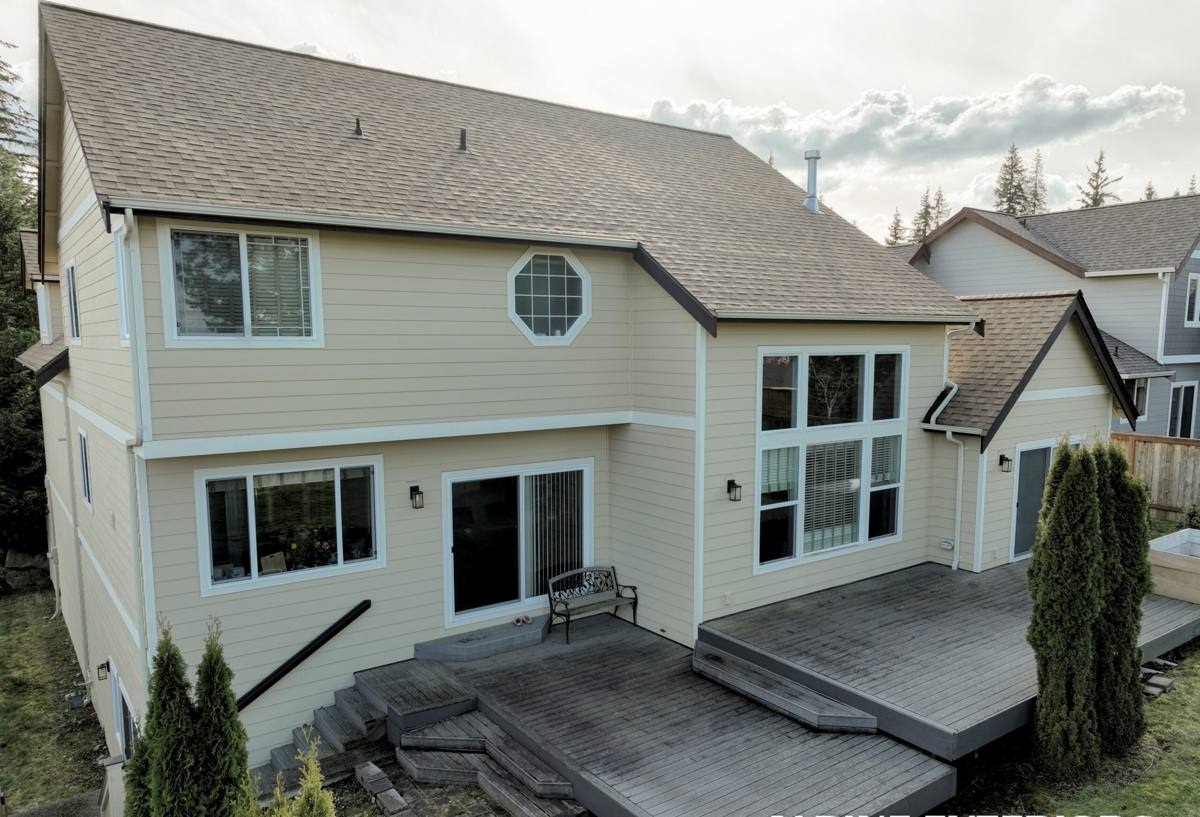
Signs a Lynden Deck Needs Replacing, Not Just Patching
Not every tired deck needs a full teardown. But there's a point where patching individual boards or re-staining stops making sense, and pushing past that point usually means spending repair money on a structure that fails anyway. Look for these signs:
- Soft, spongy, or spring-loaded decking, especially near the house or stair landings
- Rust streaks below fasteners, or screw heads that spin freely without biting
- Ledger board separating from the house, or visible gaps where flashing should be
- Persistent moss or dark staining that comes back within weeks of cleaning
- Joists or beams that show grey, punky wood when probed with a screwdriver
- Railings that flex or posts that wiggle at the base
- A deck original to a home built more than 20-25 years ago, especially with untreated or older pressure-treated framing
If you're seeing two or more of these, it's worth a real inspection before spending on cosmetic fixes. A deck that looks rough on top but has sound framing underneath is a very different job than one where the structure itself is compromised.
Why Older Decks in This Area Fail Where They Do
The most common failure points we find on Lynden decks aren't the visible decking boards — they're the ledger-to-house connection and the framing directly beneath high-traffic areas. Water works its way behind old flashing at the ledger, or pools under boards that were installed tight with no drainage gap, and it does its damage quietly for years before anything looks obviously wrong on the surface.
What a Correct Deck Replacement Actually Involves
A full deck replacement isn't just pulling old boards and screwing down new ones. Done properly for this climate, it covers:
Structure First
Posts, beams, joists, and footings get inspected and replaced as needed — not patched around. In a region with this much ground moisture, we pay particular attention to post bases sitting in or near standing water and joist ends that have been trapping moisture against the house.
Ledger and Flashing
Where the deck attaches to the house is the single most important detail on the whole project. Proper flashing, correctly lapped with the house's water-resistive barrier, keeps water from tracking into the wall assembly — a much bigger and more expensive problem than a worn deck board.
Fasteners and Hardware
Hot-dipped galvanized or stainless structural hardware, matched fastener coatings, and proper joist hangers rated for the load — mixing incompatible metals is a fast track to corrosion in a climate this wet.
Drainage and Airflow
Board spacing, ventilation under the deck, and grading around footings all matter for how long the structure stays dry after our rainy stretches. A deck that can't breathe underneath holds moisture longer and grows moss faster on top.
Decking Material Options for Whatcom County Weather
There's no single right answer for every home — it comes down to budget, maintenance appetite, and how the deck gets used. Here's how the common options hold up under our conditions:
| Material | Moisture Performance | Maintenance | Typical Lifespan Here |
|---|---|---|---|
| Pressure-treated lumber | Good if sealed and maintained; prone to checking and moss without upkeep | Annual cleaning, re-sealing every 1-2 years | 15-20 years |
| Cedar | Naturally rot-resistant, but needs regular sealing to hold color and shed water | Cleaning and sealing every 1-2 years | 15-20 years |
| Composite (capped) | Excellent — resists moisture absorption, doesn't rot | Periodic washing to prevent surface moss/algae film | 25-30+ years |
| PVC decking | Excellent — fully synthetic, no wood to absorb water | Low; occasional washing | 25-30+ years |
Composite and PVC cost more up front but hold up noticeably better against the moss and algae growth that's a fact of life here for eight or nine months of the year. Wood costs less initially but only performs as well as the maintenance schedule behind it — skip a couple of sealing cycles in a wet stretch and you'll see it in the wood's condition. We'll walk through the real trade-offs for your budget and how you use the deck rather than push one product line.
Our Deck Replacement Process
- On-site assessment — we check framing, ledger condition, footings, and drainage, not just the decking surface
- Honest scope — we tell you what actually needs replacing versus what's still sound, in writing
- Permit handling — we pull what's required for the scope and structure so you're not left exposed at resale
- Demolition and disposal — old material removed and hauled, site protected
- Framing and flashing — structure rebuilt or reinforced, ledger flashing done correctly the first time
- Decking, railing, and stairs installed — to code, with attention to drainage and airflow underneath
- Final walkthrough — we go over care and maintenance specific to whatever material you chose
Permits and Code in Lynden and Whatcom County
Deck replacement — especially anything involving the ledger, footings, or a change in size or height — typically requires a permit through the local building jurisdiction. Requirements vary depending on deck height, guardrail needs, and whether the footprint changes, so this isn't something to assume you can skip. We handle permit applications as part of the job so the finished deck is documented and won't cause problems at resale or insurance time.
Cost Factors to Expect
| Factor | Why It Matters |
|---|---|
| Deck size and height | Larger and taller decks need more material, more structural support, and often more complex railing/stair code compliance |
| Framing condition | Rotted joists, beams, or posts add cost but shouldn't be skipped — this is where failures start |
| Decking material | Wood costs less to install but more to maintain over time; composite/PVC cost more upfront and less over the deck's life |
| Ledger and flashing work | Doing this correctly against an existing house wall sometimes involves siding removal and repair, which affects scope |
| Railing and stairs | Code-required guardrails and stair geometry add labor and material beyond the deck surface itself |
We give a broad range up front once we've seen the site, then firm it up after assessing the framing — that's usually where estimates move the most, in either direction.
Keeping a New Lynden Deck Looking Right
Whatever material you choose, a little seasonal attention goes a long way in this climate:
- Sweep debris off regularly so leaves and needles don't hold moisture against the surface
- Clean moss and algae film at the first sign of it rather than letting it establish
- Check that gaps between boards stay clear so water can actually drain through
- Re-seal wood decking on the schedule appropriate to the product — don't wait until it looks dry and grey
- Inspect the ledger connection and railing posts once a year for movement or water staining
- Keep gutters and downspouts near the deck clear so runoff isn't dumping directly onto or under it
Why Hire a Crew That Already Works in Lynden
A deck built to a generic spec sheet doesn't always hold up to what this specific climate does over years, not months. Working regularly in Whatcom County means we've seen which ledger details fail here, which fastener combinations rust prematurely in this moisture, and which materials actually justify their cost given how long our moss season runs. That's knowledge you don't get from a crew passing through once. We also know the local permitting process, which keeps the project moving instead of stalling on paperwork.
If your deck is showing its age or you're planning a replacement before it becomes a safety issue, we're happy to take a look and give you a straight assessment — no pressure, no inflated scope. Request a free estimate using the form below and we'll set up a time to come out.