 Bellingham Exterior
 Why Edgemoor Roofs Wear Differently Than the Rest of Bellingham
Edgemoor sits close to Bellingham Bay, tucked under a heavy tree canopy along the water's edge. That combination is beautiful to live in and hard on a roof. Salt-laden air off the bay accelerates corrosion on exposed metal fasteners, flashing, and vent stacks. The same mature trees that give the neighborhood its character also mean constant shade, damp leaf litter, and needle debris sitting on the roof deck for weeks at a time. Add in Whatcom County's long, wet fall-through-spring stretch of driving rain, and you have a roof that's rarely fully dry. That's the environment moss thrives in, and moss is not just cosmetic — it holds moisture against the roofing material and works its way under shingle edges over years.
A new roof installation in Edgemoor has to be specified for these conditions from the start, not treated like a generic Bellingham job. That means paying close attention to fastener and flashing material, ventilation design, and how the roof sheds water and debris under a tree canopy rather than out in the open.
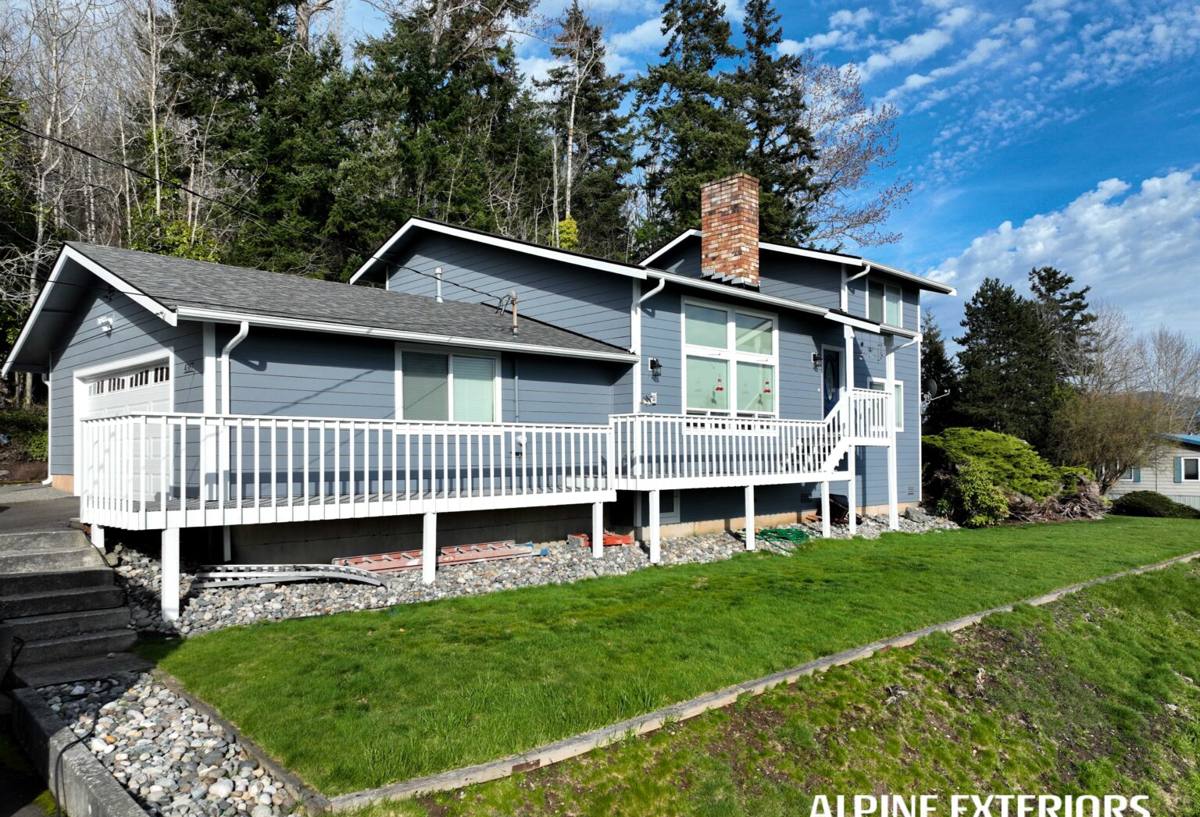
Signs an Edgemoor Roof Has Reached Replacement Age
Not every roof problem calls for a full tear-off. But in this neighborhood's climate, certain signs mean repair is no longer the honest recommendation:
- Granule loss heavy enough that you can see bare asphalt mat on multiple slopes, not just one weathered section
- Moss growth that has spread past the ridge and ranges into the field of the roof, not just shaded north-facing edges
- Shingles that are curling, cupping, or cracking across large areas rather than isolated spots
- Soft or spongy decking felt underfoot, or daylight visible through the roof deck from the attic
- Repeated leaks around the same penetration or valley even after prior patch repairs
- A roof at or past 20-25 years old for standard asphalt composition in this climate — earlier than the national average because of the added moisture load
If a roof shows one or two of these signs isolated to a small area, targeted repair can still make sense. When several show up together, replacement is usually the more honest and more economical path — repeated patching on an aging roof in a wet, mossy environment tends to cost more over a few years than doing the job right once.
What a Correct Installation Actually Involves
A new roof is more than laying new shingles over what's there. For Edgemoor homes specifically, we treat these steps as non-negotiable:
Full Tear-Off and Deck Inspection
We remove existing roofing down to the deck on every replacement. Layering new shingles over old is a shortcut that traps moisture and voids most manufacturer warranties. With the deck exposed, we inspect for rot, delamination, or soft spots — common where moss and standing moisture have been sitting for years — and replace only the sections that actually need it.
Ice and Water Barrier at Vulnerable Points
Eaves, valleys, and areas around chimneys and skylights get a self-adhering waterproof membrane underneath the roofing material. In a neighborhood that sees prolonged wind-driven rain off the bay, this is the layer that stops water from being pushed backward under shingles during a storm, rather than relying on the shingles alone to shed it.
Corrosion-Resistant Flashing and Fasteners
Because Edgemoor's proximity to salt water accelerates corrosion, we specify flashing and fastener materials rated for coastal exposure rather than the cheapest standard-grade option. Rusted or degraded flashing around chimneys, vents, and wall intersections is one of the most common sources of hidden leaks we find on older Edgemoor roofs.
Balanced Attic Ventilation
Intake at the eaves and exhaust at the ridge need to work together. Under-ventilated attics trap moisture from inside the home, which condenses on the underside of the deck and shortens the life of the new roof from below — a problem that shows up years later and is invisible until it's serious.
Debris-Shedding Detail Work
Given the tree cover, we pay extra attention to valley design and gutter transition points so needles and leaf litter don't build up in low-flow areas and hold water against the roofing material.
Material Options and What They Trade Off
There's no single "best" roofing material — the right choice depends on your home's style, budget, and how much long-term maintenance you're willing to take on given the moss and moisture load in this area.
| Material | Typical Lifespan Here | Moss/Moisture Behavior | Maintenance Load |
|---|---|---|---|
| Architectural asphalt composition | 20-30 years | Good with proper zinc/copper strips; moss-resistant granule options available | Moderate — periodic moss treatment recommended |
| Standing seam metal | 40-50+ years | Excellent — sheds moisture fast, moss struggles to gain hold | Low, but coastal-grade fasteners and coatings matter |
| Cedar shake | 20-30 years with upkeep | Requires diligent maintenance in wet, shaded settings | High — not our default recommendation for heavily shaded Edgemoor lots |
| Synthetic/composite shingle | 30-50 years | Very good; resists moisture absorption | Low to moderate |
On heavily shaded, tree-covered lots we're generally cautious about recommending cedar shake as a first choice — not because it's a bad product, but because it demands consistent upkeep to perform well in constant damp shade, and that's a maintenance commitment worth being upfront about before you invest in it. Architectural asphalt with a moss-resistant granule treatment and standing seam metal both tend to be a better match for the amount of shade and moisture Edgemoor properties see, but we'll walk through the real trade-offs for your specific roof rather than push one product line.
What Drives Cost
| Factor | Why It Matters in Edgemoor |
|---|---|
| Roof pitch and access | Steeper slopes and wooded lots with limited staging area take longer and require more safety setup |
| Deck condition | Rot from long-term moss and moisture exposure isn't known until tear-off; budget a contingency |
| Material choice | Metal and composite cost more upfront but shed moisture better and last longer |
| Ventilation upgrades | Adding intake/exhaust venting where none existed adds labor but protects the new roof from within |
| Tree and debris management | Overhanging limbs may need trimming for proper installation and long-term roof health |
Our Process
- On-site assessment. We inspect the existing roof, attic ventilation, and any visible moss, moisture, or rot before recommending repair versus replacement.
- Written scope and material selection. You get a clear breakdown of tear-off, decking allowance, underlayment, flashing, ventilation work, and material cost — no vague lump sums.
- Scheduling around the weather window. We plan installation for the driest stretch we can reasonably forecast in Whatcom County's wet season pattern, and we protect the open deck if conditions shift mid-project.
- Full tear-off and deck repair. Old roofing comes off, the deck is inspected and repaired as needed, and any rotted sections are replaced before anything new goes down.
- Installation. Ice and water membrane, underlayment, flashing, and the roofing material go on in that order, with ventilation balanced at eaves and ridge.
- Cleanup and final walkthrough. Job-site debris, old materials, and fasteners are cleared from the property, and we walk the finished roof with you.
Local Considerations Worth Knowing
Some Edgemoor properties carry design guidelines or view-related considerations tied to the surrounding lots and shoreline setting — if yours does, it's worth checking before locking in a material or color so there are no surprises. Bellingham and Whatcom County also require permits for roof replacement in most cases; we handle that paperwork as part of the job rather than leaving it to you.
Access is another practical factor. Wooded, sloped lots near the water often mean limited staging space for a dumpster or material delivery, and narrower driveways than newer subdivisions. A crew that's worked in Edgemoor before knows how to plan logistics around that instead of learning it on your job.
Pre-Estimate Checklist
Before we come out, it helps to have a few things ready or in mind:
- Approximate age of the current roof, if known
- Any known leak history or recent water stains inside the attic or ceilings
- Whether tree limbs overhang the roofline and need trimming access
- Any HOA, design covenant, or shoreline-related guidelines that apply to your property
- General material preference, if you already have one, or openness to a recommendation
Why Local Experience Matters Here
A roofing crew that only occasionally works in Edgemoor is guessing at tree access, salt-air material choices, and moss management. A crew that already works this neighborhood knows what the shaded, water-adjacent lots actually do to a roof over time, and specs the job accordingly — the right flashing metal, the right ventilation balance, the right approach to moss-prone valleys — instead of installing a generic Bellingham roof and hoping it holds up.
If your Edgemoor roof is showing its age or you're planning ahead, we're happy to take a look and give you a straightforward, no-pressure estimate using the form below.