 Bellingham Exterior
 Edgemoor's Siding Takes a Different Kind of Beating
Edgemoor sits close to Bellingham Bay, tucked into wooded, bluff-lined streets with heavy tree canopy and long sightlines to the water. That combination is beautiful to live with and hard on exterior siding. Homes here deal with three things at once: salt-laden air rolling off the bay, wind-driven rain that hits walls at an angle instead of just falling straight down, and a moss season that, thanks to shade cover and Whatcom County's damp fall-through-spring stretch, can run nearly eight months of the year. Most siding products are engineered for one or two of those stresses. Very few hold up well against all three for decades without ongoing maintenance.
When we're called out to Edgemoor for a siding evaluation, we're not looking at a generic "how old is it" checklist. We're looking at which walls face the water, which ones sit under mature trees, and which corners catch the worst of the wind-driven rain during a fall storm. That's what actually determines how a house has aged and what it needs going forward.
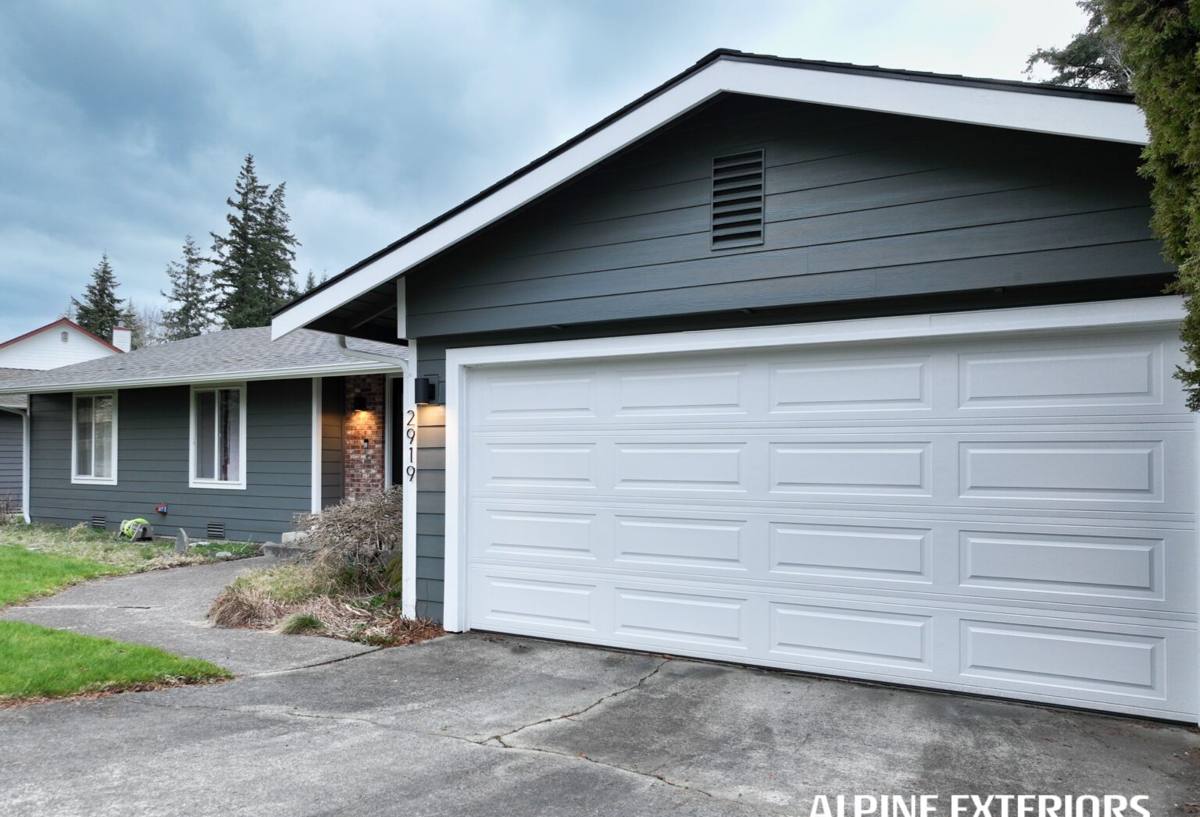
How Salt Air, Rain, and Moss Actually Damage Siding
Salt air
Airborne salt from the bay settles on exterior surfaces and accelerates corrosion of fasteners, trim flashing, and any metal components in the wall assembly. It also breaks down certain paints and coatings faster than inland exposure would, leading to chalking, fading, and adhesion failure years ahead of schedule.
Driving rain
Wind-driven rain doesn't just wet the surface of a wall — it gets pushed into laps, seams, and any gap in flashing or caulking. Over time, water finds its way behind siding that isn't installed with proper overlaps and drainage planes, leading to hidden rot in the sheathing and framing long before anything looks wrong from the street.
Moss and prolonged dampness
Shade from mature trees keeps siding surfaces from drying out between storms. Moss and algae take hold on anything that stays damp, and once established, they hold moisture against the surface even longer — a slow cycle that punishes materials sensitive to swelling, delamination, or rot.
Signs an Edgemoor Home Needs Siding Replacement, Not Just Repair
- Soft or spongy spots when you press on the siding, especially near the bottom courses and around window and door trim
- Persistent moss or algae growth that comes back within weeks of cleaning
- Visible cupping, buckling, or warping on wood-based or engineered wood siding
- Paint that's failing across large sections rather than just a few boards
- Rust streaking below nail heads or metal trim, a sign salt exposure is accelerating corrosion
- Gaps opening up at seams, corners, or where siding meets window and door trim
- Musty smell or visible staining on interior walls that back up to exterior siding
If you're seeing two or more of these, especially on walls that face the bay or sit under heavy tree cover, it's worth a full evaluation rather than a patch job. Painting over failing siding or replacing a few boards doesn't fix a wall assembly that's already letting water in.
What a Correct Siding Replacement Actually Involves
A siding replacement done right is not just swapping old boards for new ones. It's a full reset of the wall's ability to manage water, which matters even more in a neighborhood dealing with salt air and driving rain. The work should include:
- Full tear-off and inspection — removing the old siding down to the sheathing so the crew can actually see what's underneath, including any hidden rot or prior water damage.
- Sheathing repair — replacing any compromised sheathing before anything new goes up. Skipping this step means new siding over a damaged wall, which fails faster.
- Weather-resistive barrier (WRB) installation — a correctly lapped and sealed house wrap that gives the wall a drainage plane behind the siding, so any water that does get past the surface has a way out.
- Flashing at every penetration — windows, doors, hose bibs, vents, and any other wall penetration need proper flashing integrated with the WRB, not just caulk.
- Correct fastening and clearances — siding fastened per the manufacturer's specifications, with proper gaps at the bottom of walls and around trim so water can drain and materials aren't sitting in standing moisture.
- Factory-finished exterior — a coating applied under controlled conditions holds up far better against salt air and UV than field-applied paint, and it's part of why we install only factory-finished product.
Any one of these steps skipped or rushed shortens the life of the whole job, no matter how good the siding material itself is.
Why We Install Only James Hardie Fiber Cement
We standardized on James Hardie fiber cement siding for every home we work on, including Edgemoor, and we don't install vinyl, LP SmartSide, or wood-based siding products. That's a deliberate professional standard, not a sales pitch. Fiber cement is non-combustible, dimensionally stable in wet-dry cycles, and doesn't feed moss and mildew the way wood-based products can. Its factory-applied ColorPlus finish is baked on under controlled conditions, which holds color and resists the fading and chalking that salt air and UV exposure cause faster here than in drier inland climates.
We've seen what driving rain and moss season do to siding that isn't built for it, and we'd rather put a product on your home that we're confident will still be doing its job in twenty or thirty years than one that looks fine on installation day and starts showing problems within a few seasons.
Matching the Right Hardie Product to an Edgemoor Home
James Hardie makes climate-engineered product lines, and the HZ5 formulation is built for wetter, harsher climates like ours — it's what we use throughout Bellingham and Whatcom County. Beyond the base product, there are choices that matter for a bay-adjacent, tree-shaded lot:
- Lap siding — the most common choice, available in different exposure widths and smooth or cedar-textured finishes, works well on most Edgemoor homes and sheds driving rain effectively when installed with correct overlap.
- Panel siding with battens — a good fit for homes wanting a more modern or board-and-batten look, still built on the same fiber cement core.
- Trim and soffit — matching fiber cement trim around windows, doors, and eaves keeps the whole envelope consistent rather than mixing materials that age at different rates.
- ColorPlus finish selection — darker colors absorb more heat and can highlight surface dirt differently than lighter tones; for homes under heavy tree cover, this is worth discussing since shaded walls dry more slowly regardless of color.
Our Process for an Edgemoor Siding Replacement
Working in this neighborhood means accounting for tree canopy, tighter lot access in places, and homes with a mix of ages and prior renovation work. Our process stays the same on every project, but we plan around those realities from the start:
- On-site evaluation — we walk the whole exterior, checking each elevation for exposure to bay wind, driving rain, and shade, not just a general condition check.
- Written scope and product plan — you get a clear plan for tear-off, sheathing repair contingencies, WRB and flashing details, and the specific Hardie products and colors before work starts.
- Site protection and access planning — protecting landscaping, managing material staging around mature trees, and coordinating with narrower driveways or setbacks where they come up.
- Tear-off and structural check — full removal and an honest look at what's underneath, with any sheathing issues flagged and addressed before new material goes up.
- Installation to manufacturer spec — correct fastening, flashing, and clearances, not shortcuts that look fine at handoff but fail in year three.
- Final walkthrough — we go over the finished work with you directly so you know what was done and why.
Cost Factors for Edgemoor Siding Replacement
Every home is different, and we don't quote pricing without seeing the actual walls, but these are the factors that most often move the number up or down:
| Factor | Why it matters |
|---|---|
| Extent of hidden water damage | Sheathing or framing repair adds cost but is non-negotiable for a lasting job |
| Home size and wall complexity | More corners, dormers, and trim details mean more labor and material |
| Siding profile choice | Panel and batten details generally run higher than standard lap siding |
| Trim and soffit scope | Replacing trim alongside siding costs more upfront but keeps the whole envelope matched and consistent in how it ages |
| Site access | Tree cover, slope, and tighter lot access can affect staging and labor time |
| Color selection | Standard ColorPlus colors versus premium or custom-matched options |
Why Hiring a Crew That Already Works Edgemoor Matters
A crew that's already worked this neighborhood knows what to expect before they show up: which elevations tend to take the worst weather exposure, how tree cover affects drying time and moss growth, and how to work around mature landscaping without damaging it. That familiarity shows up in fewer surprises mid-project and a scope that's realistic from day one, rather than change orders once the tear-off reveals problems nobody planned for.
It also matters for warranty follow-through. James Hardie's product warranty and any labor warranty we provide are only as good as the installation behind them — a crew that knows the local conditions is less likely to cut a corner that voids coverage down the road.
Keeping New Siding Looking Good Through Moss Season
Even the right product benefits from basic upkeep in this climate:
- Rinse siding periodically, especially shaded walls, to discourage moss and algae buildup before it takes hold
- Keep gutters clear so overflow doesn't run down siding walls repeatedly
- Trim back branches and foliage that keep specific wall sections in constant shade and dampness
- Check caulking at trim and penetrations annually, since even good sealant has a service life
- Address any impact damage promptly rather than letting it sit through a wet season
None of this is heavy maintenance — it's the difference between siding that looks and performs well at year twenty versus siding that starts showing its age at year eight.
If your Edgemoor home is showing any of the signs above, or you'd just like an honest read on where your siding stands, we're happy to take a look. Reach out for a free, no-pressure estimate using the form below.